Kirjojen hintavertailu. Mukana 11 244 527 kirjaa ja 12 kauppaa.

Kirjahaku

Etsi kirjoja tekijän nimen, kirjan nimen tai ISBN:n perusteella.

759 tulosta hakusanalla Baroness Orczy

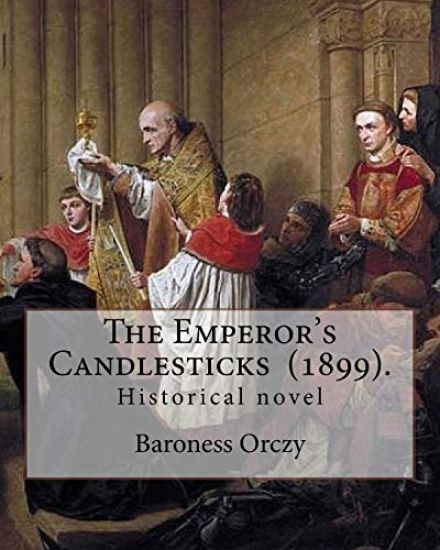
The Emperor's Candlesticks (1899). By: Baroness Orczy: Historical novel...Baroness Emma Magdolna Rozália Mária Jozefa Borbala "Emmuska" Orczy de Orci
The Emperor's Candlesticks is a historical novel by Baroness Orczy. Written soon after the birth of her son John, it is her first book as an author rather than translator and was a commercial failure. As in the Scarlet Pimpernel, the theme is international intrigue, but this time the setting is pre-World War One Europe and Russia rather than Revolutionary France. Plot introduction When a group of Russian anarchists kidnap a Russian prince in Vienna there are repercussions. On learning that the Cardinal d'Orsay has agreed to convey some hollow candlesticks from the Emperor to the Princess Marionoff in St Petersburg, two spies both see the possibility of using them to convey messages safely into Russia. One is an eager young idealist involved in the plot against the prince, the other is Madame Demidoff, a beautiful agent of the Tsar. When the candlesticks go missing at the border, the two engage in a race to get them back, both realizing that their very lives could depend on the retrieval..... Baroness Emma Magdolna Roz lia M ria Jozefa Borb la "Emmuska" Orczy de Orci ( 23 September 1865 - 12 November 1947) was a Hungarian-born British novelist and playwright. She is best known for her series of novels featuring the Scarlet Pimpernel, the alter ego of Sir Percy Blakeney, a wealthy English fop who turns into a quick-thinking escape artist in order to save ill-fated French royalty from "Madame Guillotine" during the French revolution, establishing the "hero with a secret identity" into popular culture. Opening in London's West End on 5 January 1905, The Scarlet Pimpernel became a favourite of British audiences. Some of her paintings were exhibited at the Royal Academy in London. During World War I, Orczy formed the Women of England's Active Service League, an unofficial organisation aimed at encouraging women to persuade men to volunteer for active service in the armed forces. Writing career: They had very little money and Orczy started to work with her husband as a translator and an illustrator to supplement his low earnings. John Montague Orczy-Barstow, their only child, was born on 25 February 1899. She started writing soon after his birth but her first novel, The Emperor's Candlesticks (1899), was a failure. She did, however, find a small following with a series of detective stories in the Royal Magazine. Her next novel, In Mary's Reign (1901), did better. In 1903, she and her husband wrote a play based on one of her short stories about an English aristocrat, Sir Percy Blakeney, Bart., who rescued French aristocrats from the French Revolution: The Scarlet Pimpernel. She submitted her novelisation of the story under the same title to 12 publishers. While waiting for the decisions of these publishers, Fred Terry and Julia Neilson accepted the play for production in London's West End. Initially, it drew small audiences, but the play ran four years in London, broke many stage records, eventually playing more than 2,000 performances and becoming one of the most popular shows staged in Britain. It was translated and produced in other countries, and underwent several revivals. This theatrical success generated huge sales for the novel. Introducing the notion of a "hero with a secret identity" into popular culture, the Scarlet Pimpernel exhibits characteristics that would become standard superhero conventions, including the penchant for disguise, use of a signature weapon (sword), ability to out-think and outwit his adversaries, and a calling card (he leaves behind a scarlet pimpernel at each of his interventions). By drawing attention to his alter ego Blakeney he hides behind his public face as a slow thinking foppish playboy (like Bruce Wayne), and he also establishes a network of supporters, The League of the Scarlet Pimpernel, that aid his endeavours. .............
Meadowsweet (1912). By: Baroness Orczy: Historical novel

Meadowsweet (1912). By: Baroness Orczy: Historical novel

Baroness Orczy

Createspace Independent Publishing Platform
2018
nidottu
Plot summary When their mother died, Olive and Boadicea were sent to live with their mother's sister, Caroline, and her husband Jasper Hemingford on Old Manor Farm. The farm is remote with few neighbours and while Aunt Caroline would have made a wonderful mother, the girls do exactly as they want and have her twisted completely round their thumb. Jasper is a distant figure, spending most of his time in his museum room with his nose stuck in a book or studying his collection and muttering to himself in Latin. It was hardly surprising then that Olive, the elder of the girls, sought to find herself a rich husband who would whisk her away from the lonely farm to the highs of London society, and this she did three years earlier, marrying Sir Baldwin Jefferys, a middle aged gentleman of wealth and position. The story starts in June 1835. Olive has been the subject of society gossip after spending too much time in the company of Lieutenant Jack Carrington of the HMS Dolphin and her reputation has suffered as a result. Sir Baldwin knows the Lieutenant is incapable of vulgar intrigue but Olive has given him the full charm offensive. Enraged as his wife's behaviour, Sir Baldwin has insisted that she must leave London mid-way through the season. Olive in turn accuses him of insane jealously and she agrees, only on the condition that she can spend the month at her childhood home in Thanet. After accompanying his wife to the farm for the first time since their wedding, Sir Baldwin is about to leave when he runs into Cousin Barnaby in the hall. Barnaby bemoans the addition of another female to the household and declares that he is spending all his time avoiding women and sailors, for the HMS Dolphin has just put into Ramsgate harbour. Sir Baldwin suspects this might be the reason why his wife was so amenable to leaving London, even though he doesn't want to believe her capable of such duplicity. He decides to stay until the evening, so he can talk to Olive and flushed with rage he goes to catch up with his friend Mr Culpepper for a couple of hours to calm down. After he has left there is then an almighty commotion from outside as a stranger starts shouting that a young girl is in danger, this followed by Boadicea's entrance - crashing through the loft skylight while clutching some owl eggs. The eggs are smashed by the fall, which is a source of great amusement to the stranger - who soon turns out to be none other than Lieutenant Jack Carrington. Aunt Caroline is delighted to see the son of her old friend Mamie Carrington and invites him to stay for supper. While waiting for Olive to come down, Jack starts to tease Boadicea, holding her hands and kissing her on the cheek and neck while she protests and gets redder and redder.... Baroness Emma Magdolna Roz lia M ria Jozefa Borb la "Emmuska" Orczy de Orci ( 23 September 1865 - 12 November 1947) was a Hungarian-born British novelist and playwright. She is best known for her series of novels featuring the Scarlet Pimpernel, the alter ego of Sir Percy Blakeney, a wealthy English fop who turns into a quick-thinking escape artist in order to save ill-fated French royalty from "Madame Guillotine" during the French revolution, establishing the "hero with a secret identity" into popular culture. Opening in London's West End on 5 January 1905, The Scarlet Pimpernel became a favourite of British audiences. Some of her paintings were exhibited at the Royal Academy in London. During World War I, Orczy formed the Women of England's Active Service League, an unofficial organisation aimed at encouraging women to persuade men to volunteer for active service in the armed forces.
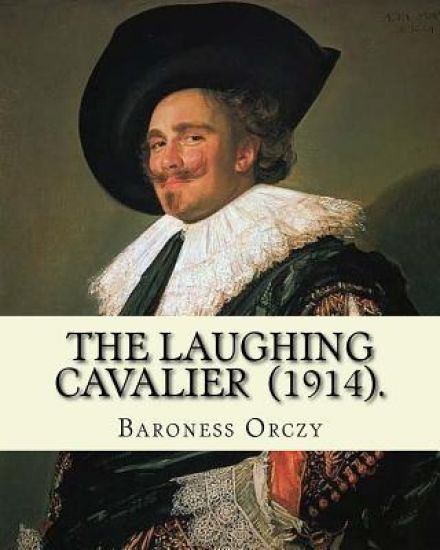
The Laughing Cavalier (1914). By: Baroness Orczy: Adventure, Historical novel

The Laughing Cavalier (1914). By: Baroness Orczy: Adventure, Historical novel

Baroness Orczy

Createspace Independent Publishing Platform
2018
nidottu
The Laughing Cavalier is a 1913 adventure novel by Baroness Orczy, which revolves around Percy Blake, a foreign adventurer and ancestor of Orczy's famous character, the Scarlet Pimpernel. The story takes place in Holland in 1623/1624 and is partly inspired by Frans Hals' painting The Laughing Cavalier: in the novel, Blake is Frans Hals' adopted son and the man who poses for the painting of the Laughing Cavalier. The sequel to this book, continuing the story of Percy Blake, is The First Sir Percy.... Plot summary In March 1623, the Dutch nobleman Willem van Oldenbarnevelt, Lord of Stoutenburg, is on the run. His father, the statesman Johan van Oldenbarnevelt ("John of Barneveld" in the book) was falsely accused of treason and sent to the gallows by the Stadtholder, Maurice of Nassau, Prince of Orange in 1619; and his brother Reinier van Oldenbarnevelt, the lord of Groeneveld, has since been arrested and executed for plotting to kill the Prince. Stoutenburg is now a fugitive and determined to get his revenge. Stoutenburg asks for shelter from Gilda Beresteyn, the daughter of a rich merchant. Gilda was once in love with Stoutenburg, but has never forgiven him for abandoning her to make a more profitable marriage. Despite her reservations she shelters him for a short time, but eventually she sends him away, knowing that her father, a friend of the Prince of Orange, will not approve. Nine months later, Gilda is walking through Haarlem to the New Year's Eve service and sees three foreign adventurers intervening to protect a Spanish woman who is being attacked by a mob. After the fracas is over, Gilda speaks to the three men. They are mercenaries who call themselves after famous philosophers: "Diogenes," "Socrates," and "Pythagoras." Gilda is attracted to "Diogenes" (really Percy Blake, the illegitimate son of an English nobleman and a Dutch woman), but he offends her by taking his leave and going off to a pub. Gilda continues to church but cannot stop thinking about the mysterious, infuriating stranger. She stays behind after the service to pray, but is disturbed by a secret meeting between Stoutenburg and his allies, including Gilda's brother Nicolaes. Fueled by rage, Stoutenburg shouts out his plan to murder the Prince. Nicolaes follows Gilda out of the church and it soon becomes apparent that she has overheard everything. She begs her brother to reconsider his part in the plot, but he refuses and instead asks her to swear that she will not tell their father. She also refuses, but Nicolaes still tells the rest of the group that she can be trusted not to betray them. Stoutenburg is not convinced and persuades Nicolaes to send Gilda away for a few days, so they can kill the Stadtholder before she can tell anyone.Nicolaes, who has seen Diogenes in the pub, follows him to Frans Hals' house and hires him to kidnap Gilda. After seeing her portrait, Diogenes recognises her as the lady he met the night before. With the help of the Spanish woman he saved from the mob, Diogenes bundles Gilda and her maid into a sledge and takes her out of Haarlem. He leaves her under the care of Socrates and Pythagoras for the night and returns to Haarlem, where he is sitting for a painting by Hals. Afterwards, in the pub, he meets Gilda's distraught father. Nicolaes is furious at Diogenes' appearance back in Haarlem, but can say nothing for fear of giving away his role in his sister's kidnapping. Caught between the two men, Diogenes finds himself promising Gilda's father that he will seek out Gilda and return her to him. One word from Gilda could send Diogenes to the gallows, yet despite her vehement verbal attacks on him, he is starting to have deep feelings for her, something which won't please Stoutenburg, who is still determined to marry her.... Baroness Emma Magdolna Roz lia M ria Jozefa Borb la "Emmuska" Orczy de Orci ( 23 September 1865 - 12 November 1947) was a Hungarian-born British novelist and playwright....
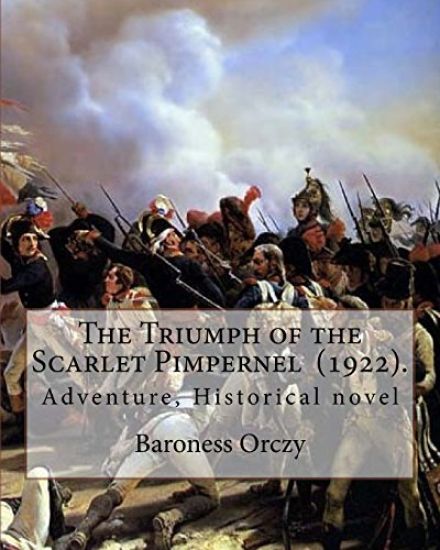
The Triumph of the Scarlet Pimpernel (1922). By: Baroness Orczy: Adventure, Historical novel
The Triumph of the Scarlet Pimpernel, first published in 1922, is a book in the series about the Scarlet Pimpernel's adventures by Baroness Orczy. Again Orczy interweaves historic fact with fiction, this time through the real life figures of Th r sa Cabarrus, and Jean-Lambert Tallien; inserting the Scarlet Pimpernel as an instigator of the role Tallien played in the Thermidorian Reaction in July. Plot summary The story starts in Paris in April 1794, year II of the French Revolution. Theresia Cabarrus is a beautiful but shallow Spaniard who is betrothed to Citizen Tallien the popular Representative in the Convention and one of Robespierre's inner circle. She is credited with exercising a mellowing influence over Tallien, whom she met in Bordeaux but although she is engaged to be married to him, what little love she has appears to be lavished on another. Bertrand Moncrif is a good-looking but impulsive young man who appears determined to martyr himself in opposition to the revolutionary government. To this end, he has gathered the siblings of his long-term sweetheart, R gine de Serval, into his plan to denounce Robespierre at one of the Fraternal suppers. Despite warnings from R gine he insists on carrying through his plans which inevitably go awry and the wrath of the mob is soon turned towards the small group. After a timely intervention on the part of the Scarlet Pimpernel, using the guise of the coal heaver Rateau (who also appears in several short stories in The League of the Scarlet Pimpernel - The Cabaret de la Libert , Needs Must and A Battle of Wits), the de Servals are saved from a lynching while Moncrif lies unconscious and unseen under a table. In England, Moncrif and the de Servals are finally free to resume an almost normal life. Theresia arrives at Dover dressed in men's clothes and claiming she has been driven out of France by her association with Bertrand, in fear of her life. An obviously staged row between the Spaniard and Chauvelin outside Sir Percy's cottage fails to persuade our hero that she is up to anything but mischief, but he seems to relish the prospect of such an intelligent and wily adversary and promises not to reveal her true identity to anyone for he "is a lover of sport." With her plans to seduce Percy scuppered, Theresia turns her attention to Sir Percy's wife Marguerite and uses an all too willing Bertrand to set the trap. Lady Blakeney is kidnapped yet again and taken to France and imprisoned as bait for Sir Percy................ Baroness Emma Magdolna Roz lia M ria Jozefa Borb la "Emmuska" Orczy de Orci ( 23 September 1865 - 12 November 1947) was a Hungarian-born British novelist and playwright. She is best known for her series of novels featuring the Scarlet Pimpernel, the alter ego of Sir Percy Blakeney, a wealthy English fop who turns into a quick-thinking escape artist in order to save ill-fated French royalty from "Madame Guillotine" during the French revolution, establishing the "hero with a secret identity" into popular culture. Opening in London's West End on 5 January 1905, The Scarlet Pimpernel became a favourite of British audiences. Some of her paintings were exhibited at the Royal Academy in London. During World War I, Orczy formed the Women of England's Active Service League, an unofficial organisation aimed at encouraging women to persuade men to volunteer for active service in the armed forces............
The Emperor's Candlesticks (1899) by. Baroness Orczy / A historical NOVEL /

The Emperor's Candlesticks (1899) by. Baroness Orczy / A historical NOVEL /

Baroness Orczy

Createspace Independent Publishing Platform
2018
nidottu
A historical novel by Baroness Orczy. Written soon after the birth of her son John, it is her first book as an author rather than translator and was a commercial failure. As in the Scarlet Pimpernel, the theme is international intrigue, but this time the setting is pre-World War One Europe and Russia rather than Revolutionary France
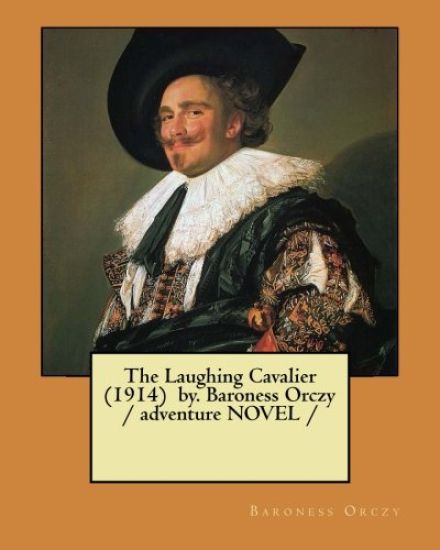
The Laughing Cavalier (1914) by. Baroness Orczy / adventure NOVEL /

The Laughing Cavalier (1914) by. Baroness Orczy / adventure NOVEL /

Baroness Orczy

Createspace Independent Publishing Platform
2018
nidottu
The Laughing Cavalier is a 1913 adventure novel by Baroness Orczy, which revolves around Percy Blake, a foreign adventurer and ancestor of Orczy's famous character, the Scarlet Pimpernel. The story takes place in Holland in 1623/1624 and is partly inspired by Frans Hals' painting The Laughing Cavalier: in the novel, Blake is Frans Hals' adopted son and the man who poses for the painting of the Laughing Cavalier. The sequel to this book, continuing the story of Percy Blake, is The First Sir Percy.In March 1623, the Dutch nobleman Willem van Oldenbarnevelt, Lord of Stoutenburg, is on the run. His father, the statesman Johan van Oldenbarnevelt ("John of Barneveld" in the book) was falsely accused of treason and sent to the gallows by the Stadtholder, Maurice of Nassau, Prince of Orange in 1619; and his brother Reinier van Oldenbarnevelt, the lord of Groeneveld, has since been arrested and executed for plotting to kill the Prince. Stoutenburg is now a fugitive and determined to get his revenge. Stoutenburg asks for shelter from Gilda Beresteyn, the daughter of a rich merchant. Gilda was once in love with Stoutenburg, but has never forgiven him for abandoning her to make a more profitable marriage. Despite her reservations she shelters him for a short time, but eventually she sends him away, knowing that her father, a friend of the Prince of Orange, will not approve. Nine months later, Gilda is walking through Haarlem to the New Year's Eve service and sees three foreign adventurers intervening to protect a Spanish woman who is being attacked by a mob. After the fracas is over, Gilda speaks to the three men. They are mercenaries who call themselves after famous philosophers: "Diogenes," "Socrates," and "Pythagoras." Gilda is attracted to "Diogenes" (really Percy Blake, the illegitimat
The Triumph of the Scarlet Pimpernel (1922) by. Baroness Orczy / Adventure, Historical NOVEL /
The Triumph of the Scarlet Pimpernel, first published in 1922, is a book in the series about the Scarlet Pimpernel's adventures by Baroness Orczy. Again Orczy interweaves historic fact with fiction, this time through the real life figures of Th r sa Cabarrus, and Jean-Lambert Tallien; inserting the Scarlet Pimpernel as an instigator of the role Tallien played in the Thermidorian Reaction in July 1794.The story starts in Paris in April 1794, year II of the French Revolution. Theresia Cabarrus is a beautiful but shallow Spaniard who is betrothed to Citizen Tallien the popular Representative in the Convention and one of Robespierre's inner circle. She is credited with exercising a mellowing influence over Tallien, whom she met in Bordeaux but although she is engaged to be married to him, what little love she has appears to be lavished on another. Bertrand Moncrif is a good-looking but impulsive young man who appears determined to martyr himself in opposition to the revolutionary government. To this end, he has gathered the siblings of his long-term sweetheart, R gine de Serval, into his plan to denounce Robespierre at one of the Fraternal suppers. Despite warnings from R gine he insists on carrying through his plans which inevitably go awry and the wrath of the mob is soon turned towards the small group. After a timely intervention on the part of the Scarlet Pimpernel, using the guise of the coal heaver Rateau (who also appears in several short stories in The League of the Scarlet Pimpernel - The Cabaret de la Libert , Needs Must and A Battle of Wits), the de Servals are saved from a lynching while Moncrif lies unconscious and unseen under a table.
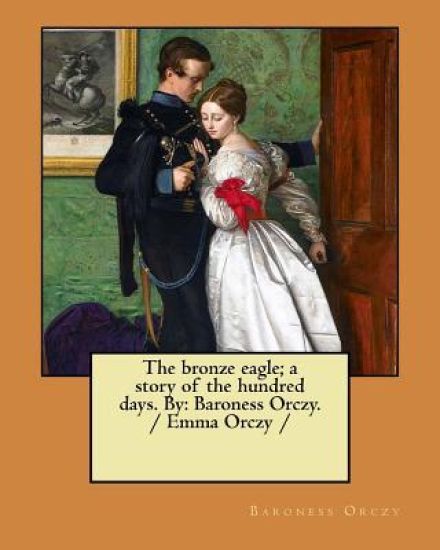
The bronze eagle; a story of the hundred days. By: Baroness Orczy. / Emma Orczy /

The bronze eagle; a story of the hundred days. By: Baroness Orczy. / Emma Orczy /

Baroness Orczy

Createspace Independent Publishing Platform
2018
nidottu
The Bronze Eagle Written by Baroness Orczy and first published in 1915, The Bronze Eagle: A Story of the Hundred Days, is a romance set in France following the period of the Revolution and the expulsion of the Bourbons. Its central plot lies in the intrigues of their followers and those of Napoleon Bonaparte. The novel was also published serially under the title of Waterloo.Crystal, the only daughter of the old, long-exiled haughty royalist, the Comte de Cambray, is on the eve of betrothal to de Marmont, (secretly an ardent Bonapartist). Bobby Clyffurde, the Englishman, who is in love with Crystal, confronts Victor de Marmont about why he is pretending to be a royalist. De Marmont replies that he has never led the Comte to suppose anything, the Comte has merely taken de Marmont's political convictions for granted. As if two potential suitors weren't enough, Crystal has yet another admirer, Maurice de St. Genis, whose impecunious state (her father sees him as a penniless, out-at-elbows, good for nothing) has precluded him from obtaining her hand in marriage. However at the moment of Crystal's betrothal to de Marmont, Maurice finally gets his revenge upon his rival. Once the guests have assembled for the ceremony, there is a disturbance from the end of the corridor and St. Genis enters the room, his rough clothes and muddy boots providing a contrast to the immaculate get-up of the Comte's guests. Looking flushed and clutching his cane he announces that he has only come to avert the awful catastrophe that is about to fall on the Comte and his family. At the young man's ominous words, M. le Comte goes pale and demands to know what catastrophe could be worse than twenty years of exile?
Leatherface; a tale of old Flanders. By: Baroness Orczy. / Emma Orczy / historical NOVEL
historical novel, "Leatherface - A Tale Of Old Flanders." In 1572, Spain rules over Flanders with an iron fist. The threat of the Inquisition and its tortures holds the people in terror of their conquerors. William, the Prince of Orange, has led an unsuccessful rebellion, and is now a fugitive hiding in the city of Ghent. His cunning and faithful watchdog, a mysterious man called Leatherface for the mask he wears, is the only reason Orange is still alive. Spanish Duke de Alva conceives a plan to capture Orange by arranging the marriage of his general's daughter Lenora with the son of Ghent's High Bailiff, thus introducing a spy into a house known to be in sympathy with Orange.
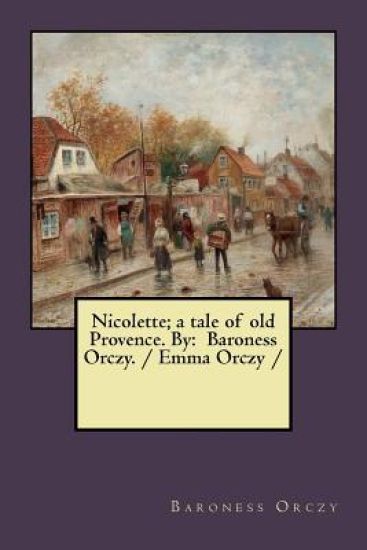
Nicolette; a tale of old Provence. By: Baroness Orczy. / Emma Orczy /

Nicolette; a tale of old Provence. By: Baroness Orczy. / Emma Orczy /

Baroness Orczy

Createspace Independent Publishing Platform
2018
nidottu
Baroness Emma Magdolna Roz lia M ria Jozefa Borb la "Emmuska" Orczy de Orci 23 September 1865 - 12 November 1947) was a Hungarian-born British novelist, playwright, and artist of noble origin. She is most known for her series of novels featuring the Scarlet Pimpernel, the alter ego of Sir Percy Blakeney, a wealthy English fop who transforms into a formidable swordsman and a quick-thinking escape artist, establishing the "hero with a secret identity" into popular culture. Opening in London's West End on 5 January 1905, The Scarlet Pimpernel became a favourite of British audiences. Some of her paintings were exhibited at the Royal Academy in London. During World War I, Orczy formed the Women of England's Active Service League, an unofficial organisation aimed at encouraging women to persuade men to volunteer for active service in the armed forces.Emmuska Orczy was born in Tarna rs, Heves County, Hungary, and was the daughter of composer Baron F lix Orczy de Orci (1835-1892) and Countess Emma Wass de Szentegyed et Cege (1839-1892). Her grandfather, Baron L szl Orczy (1787-1880) was a royal councillor, and also knight of the Sicilian order of Saint George, her grandmother was the Baroness Magdolna M ller (1811-1879). Her maternal grandparents were the Count S muel Wass de Szentegyed et Cege (1815-1879), member of the Hungarian parliament, and Roz lia Eperjessy de K rolyfej rv r (1814-1884)
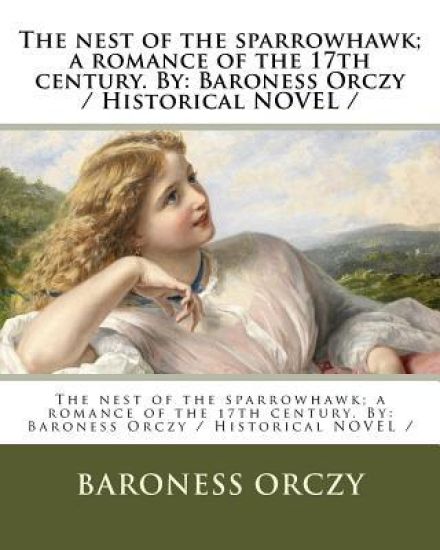
The nest of the sparrowhawk; a romance of the 17th century. By: Baroness Orczy / Historical NOVEL /
The Nest of the Sparrowhawk: A Romance of the XVIIth Century was written by Baroness Orczy, author of The Scarlet Pimpernel, in 1909.Set in puritan Kent in 1657, the story focuses on the intrigues of Sir Marmaduke de Chevasse "as stiff a Roundhead as ever upheld my Lord Protector and his Puritanic government", who is determined to secure the vast fortunes of his lovely ward, Lady Sue, for himself. Sue presents a girlish figure; she is young, alert and vigorous. The charm of her own youth and freshness even means she looks dainty and graceful in clothes that disfigure her elders. She enjoys the adulation which her appearance guarantees, laughing and chattering with the women and teasing the men. She does of course have plenty of admirers, including young Richard Lambert who worships her with protective reverence. Sir Marmaduke who has plans to woo and win Lady Sue disguised as the exiled French Prince of Orl ans, resents this faithful espionage and lays a plot to lure young Lambert to a gaming-house in London. Richard knows that gambling is an illicit pastime and that he is breaking the law, but is compelled to take his seat at the table by his employer. Richard is then duped into taking part in a brawl and is summarily arrested leaving the way open for Marmaduke to carry out his cowardly deception and he soon tricks Sue into marrying him. Sir Marmaduke persuades his widowed sister-in-law to abet him in this plot, in which she unwittingly disgraces one of her long lost sons and finds the other murdered by the villain. Though set in a completely different kind of background, the plot has some resemblance with the Sherlock Holmes story "A Case of Identity".
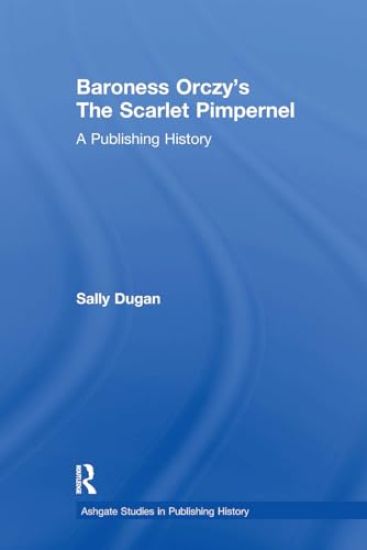
Baroness Orczy's The Scarlet Pimpernel

Baroness Orczy's The Scarlet Pimpernel

Sally Dugan

TAYLOR FRANCIS LTD
2024
nidottu
Since its publication in 1905, The Scarlet Pimpernel has experienced global success, not only as a novel but in theatrical and film adaptations. Sally Dugan charts the history of Baroness Orczy's elusive hero, from the novel's origins through its continuing afterlife, including postmodern appropriations of the myth. Drawing on archival research in Britain, the United States and Australia, her study shows for the first time how Orczy's nationalistic superhero was originally conceived as an anarchist Pole plotting against Tsarist Russia, rather than a counter-revolutionary Englishman. Dugan explores the unique blend of anarchy, myth and magic that emerged from the story's astonishing and complex beginnings and analyses the enduring elements of the legend. To his creator, the Pimpernel was not simply a swashbuckling hero but an English gentleman spreading English values among benighted savages. Dugan investigates the mystery of why this imperialist crusader has not only survived the decline of the meta-narratives surrounding his birth, but also continues to enthrall a multinational audience. Offering readers insights into the Pimpernel's appearances in print, in film and on the stage, Dugan provides a nuanced picture of the trope of the Scarlet Pimpernel and an explanation of the phenomenon's durability.
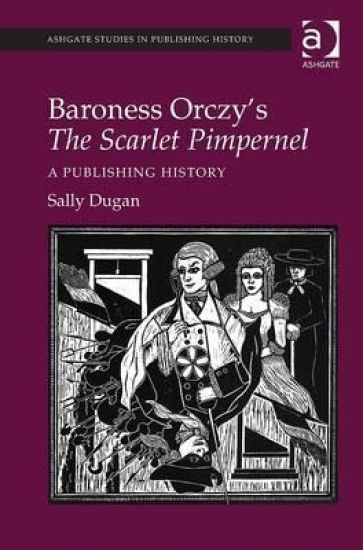
Baroness Orczy's The Scarlet Pimpernel

Baroness Orczy's The Scarlet Pimpernel

Sally Dugan

Ashgate Publishing Limited
2012
sidottu
Since its publication in 1905, The Scarlet Pimpernel has experienced global success, not only as a novel but in theatrical and film adaptations. Sally Dugan charts the history of Baroness Orczy's elusive hero, from the novel's origins through its continuing afterlife, including postmodern appropriations of the myth. Drawing on archival research in Britain, the United States and Australia, her study shows for the first time how Orczy's nationalistic superhero was originally conceived as an anarchist Pole plotting against Tsarist Russia, rather than a counter-revolutionary Englishman. Dugan explores the unique blend of anarchy, myth and magic that emerged from the story's astonishing and complex beginnings and analyses the enduring elements of the legend. To his creator, the Pimpernel was not simply a swashbuckling hero but an English gentleman spreading English values among benighted savages. Dugan investigates the mystery of why this imperialist crusader has not only survived the decline of the meta-narratives surrounding his birth, but also continues to enthrall a multinational audience. Offering readers insights into the Pimpernel's appearances in print, in film and on the stage, Dugan provides a nuanced picture of the trope of the Scarlet Pimpernel and an explanation of the phenomenon's durability.
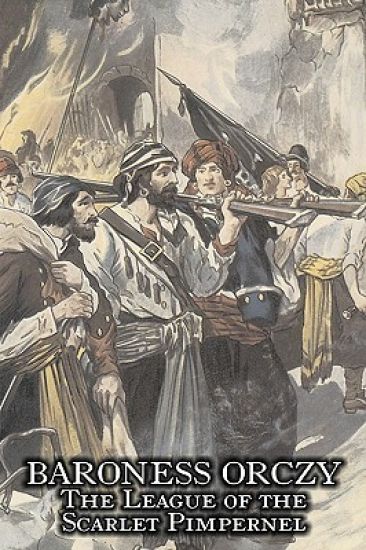
The League of the Scarlet Pimpernel by Baroness Orczy Juvenile Fiction, Action & Adventure
Citizen Chauvelin, of the Committee of Public Safety, presents citizen Fouquier-Tinville, the Public Prosecutor, with the most extraordinary claim: "The dangerous English spy known to the world as the Scarlet Pimpernel," he says, "is now safely under lock and key. He must be transferred to the Abbaye prison forthwith -- and to the guillotine as quickly as might be. No one is to take any risks this time. There must be no question either of discrediting his famous League, or of obtaining other more valuable information out of him. Such methods have proved disastrous "There are no safe Englishmen these days, except the dead ones -- and it will not take citizen Fouquier-Tinville much thought or time to frame an indictment against the notorious Scarlet Pimpernel . . . and that will do away with the necessity of a prolonged trial. The revolutionary government is at war with England now, and short work can be made of all poisonous spies
The League of the Scarlet Pimpernel by Baroness Orczy Juvenile Fiction, Action & Adventure
Citizen Chauvelin, of the Committee of Public Safety, presents citizen Fouquier-Tinville, the Public Prosecutor, with the most extraordinary claim: "The dangerous English spy known to the world as the Scarlet Pimpernel," he says, "is now safely under lock and key. He must be transferred to the Abbaye prison forthwith -- and to the guillotine as quickly as might be. No one is to take any risks this time. There must be no question either of discrediting his famous League, or of obtaining other more valuable information out of him. Such methods have proved disastrous "There are no safe Englishmen these days, except the dead ones -- and it will not take citizen Fouquier-Tinville much thought or time to frame an indictment against the notorious Scarlet Pimpernel . . . and that will do away with the necessity of a prolonged trial. The revolutionary government is at war with England now, and short work can be made of all poisonous spies
The Man in the Corner (1909) by: Emma Orczy. / Baroness Orczy /

The Man in the Corner (1909) by: Emma Orczy. / Baroness Orczy /

Emma Orczy Baroness Orczy

Createspace Independent Publishing Platform
2018
nidottu
The Old Man in the Corner is an unnamed armchair detective who appears in a series of short stories written by Baroness Orczy. He examines and solves crimes while sitting in the corner of a genteel London tea-room in conversation with a female journalist. He was one of the first of this character-type created in the wake of the huge popularity of the Sherlock Holmes stories. The character's moniker is used as the title of the collection of the earliest stories featuring the character.The character first appeared in The Royal Magazine in 1901 in a series of six "Mysteries of London". The following year he returned in seven "Mysteries of Great Cities" set in large provincial centers of the British Isles. The stories are told by an unnamed lady journalist who reports the conversation of the 'man in the corner' who sits at the same table in the A.B.C. teashop. For the book, twelve were rewritten in the third person, with the lady journalist now named Polly Burton. The title, The Old Man in the Corner (U.S. edition: The Man in the Corner) was given to one of the book collections of the earliest stories
The Gates of Kamt (1907). By: Baroness Orczy: Illustrated By: The Kinneys (Troy Sylvanus Kinney (December 1, 1871 - January 29, 1938)) was an Americ
The novel is in the tradition of Rider Haggard's 1887 She, and concerns a lost race of ancient Egyptians. In her autobiography, Links in the Chains of Life, Baroness Orczy comments: "The book that gave me more pleasure to write than any of the others is By the Gods Beloved, not only because I could allow my imagination to go roaming in hitherto unexplored realms but because I could give it full sway in picturesque descriptions of places that did not really exist, and in people and characters who could have no attributes that were entirely normal and modern."- Troy Sylvanus Kinney (December 1, 1871 - January 29, 1938) was an American artist, etcher, and author. Troy Kinney was most notable for his works portraying dance performers, fanciful subjects, and classically styled nudes. He worked with dancers, including Ruth St. Denis, Anna Pavlova, and Sophie Pflanz among others. His artistic works are part of the collections of the Art Institute of Chicago, the Cleveland Museum of Art, the New York Public Library, the Library of Congress, and many others........... Baroness Emma Magdolna Roz lia M ria Jozefa Borb la "Emmuska" Orczy de Orci ( 23 September 1865 - 12 November 1947) was a Hungarian-born British novelist and playwright. She is best known for her series of novels featuring the Scarlet Pimpernel, the alter ego of Sir Percy Blakeney, a wealthy English fop who turns into a quick-thinking escape artist in order to save ill-fated French royalty from "Madame Guillotine" during the French revolution, establishing the "hero with a secret identity" into popular culture. Opening in London's West End on 5 January 1905, The Scarlet Pimpernel became a favourite of British audiences. Some of her paintings were exhibited at the Royal Academy in London. During World War I, Orczy formed the Women of England's Active Service League, an unofficial organisation aimed at encouraging women to persuade men to volunteer for active service in the armed forces.