Kirjojen hintavertailu. Mukana 11 235 027 kirjaa ja 12 kauppaa.

Kirjahaku

Etsi kirjoja tekijän nimen, kirjan nimen tai ISBN:n perusteella.

1000 tulosta hakusanalla Barry Brummett

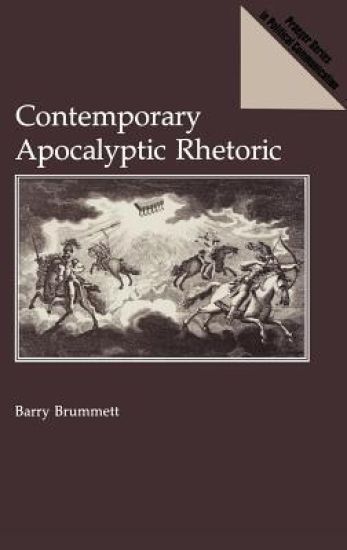
Contemporary Apocalyptic Rhetoric

Contemporary Apocalyptic Rhetoric

Barry Brummett

Praeger Publishers Inc
1991
sidottu
Intellectuals today cringe when a politician speaks of the Second Coming, the millennium, or the Antichrist. Certain questions naturally arise about those who literally expect the end of the world in our day: Why do they think this? Why do some people believe them? How do their exhortations work to persuade an audience and to move that audience to actions and commitments? These are the motivating questions of Contemporary Apocalyptic Rhetoric, which describes apocalyptic as a rhetorical genre of discourse. Barry Brummett first recasts insights drawn from past scholarly and theological studies to demonstrate their relevance to contemporary apocalyptic, then examines a variety of real apocalyptic to illustrate the ways in which these rhetorical discourses actually work. The discussion focuses on those strategies, arguments, and stylistic features that are peculiar to apocalyptic and that support its social and political claims.Following an introductory first chapter, Chapter Two describes how apocalyptic rhetoric links a psychological context to an esoteric grand order underlying all of time and the cosmos. Chapter Three compares premillennial and postmillennial apocalyptic on three dimensions to show the different approaches they take to reach their audiences. Chapter Four describes specific rhetorical techniques designed to maintain a mystic persona and urge social and political commitments on audiences. The final two chapters apply the author's theories to secular and religious apocalyptic, both premillennial (Hal Lindsey and Ravi Batra) and postmillennial (Francis Fukuyama). Contemporary Apocalyptic Rhetoric will appeal to readers across many disciplines, including communications, religion, sociology, and psychology.
Rhetoric of Machine Aesthetics

Rhetoric of Machine Aesthetics

Barry Brummett

Praeger Publishers Inc
1999
sidottu
Brummett addresses the question of how the aesthetic experience of machines can have rhetorical influence. He develops a theory of machine aesthetics, showing nine dimensions of the aesthetic experience of machines and machine-like objects or activities. He identifies three general types of machine aesthetics: Mechtech, classical machine aesthetics based on hardware, gears, pistons, and so forth; Electrotech, high technology machine aesthetics based on the ability of electricity to put machinery on the human scale; and Chaotech, the aesthetic appeal of the decayed machine. In each case, rhetorical applications of the aesthetic are explored. A final critical application shows how the film Brazil warns its audience that fascism can be supported by simulations based on machine aesthetics. Brummett's book develops and articulates ideas in the fields of rhetoric and literature that have not been brought together before. In a radical departure, Brummett sees machines not as passive backdrops to human intercourse, but rather as possessing a powerful rhetoric of their own. The book will be of great interest to scholars and students of communications, art, and aesthetics.
The World and How We Describe It

The World and How We Describe It

Barry Brummett

Praeger Publishers Inc
2003
sidottu
Brummett explores the ways people use three key terms—reality, representation, and simulation—as rhetorical devices with political and social effect. Human perception, language, and aesthetics experiences are the bases for the fluidity among these terms. Each term's rhetoric is illustrated in an analysis of texts in popular culture: William Gibson's novels, the usenet group rec.motorcycles, and the film Groundhog Day.Brummett explores the ways people use three key terms—reality, representation, and simulation—as rhetorical devices with political and social effect. People write and speak as if there were such things as reality, representation, and simulation. People treat the terms as if they were clearly referential and as if those referents were clearly distinct. But what kind of political, social work do people do when they write and speak in those terms? What kind of claim is being made, or accusation leveled when such a term is used? How do the dimensions and parameters of meaning facilitated by each term work in the management and distribution of power?These are questions of rhetoric, the manipulation of signs and symbols for influence and effect. Brummett illustates the rhetoric of reality in a critical analysis of William Gibson's science fiction novels. The rhetoric of representation is shown in discusions on the usenet group rec.motorcyles. The rhetoric of simulation is explained through the film Groundhog Day. Of particular interest to scholars, students, and researchers involved with rhetoric and popular culture, media, communication, and technology, and the literature of science and science fiction.
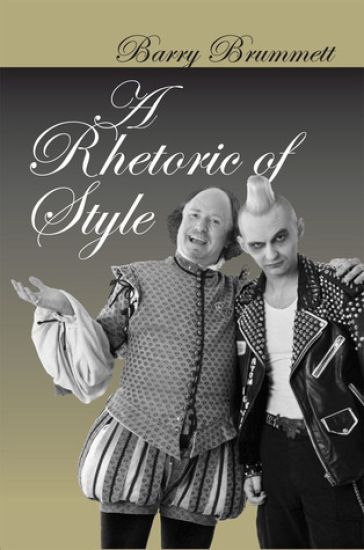
A Rhetoric of Style

A Rhetoric of Style

Barry Brummett

Southern Illinois University Press
2008
nidottu
Exploring style in a global cultureIn A Rhetoric of Style, Barry Brummett illustrates how style is increasingly a global system of communication as people around the world understand what it means to dress a certain way, to dance a certain way, to decorate a certain way, to speak a certain way. He locates style at the heart of popular culture and asserts that it is the basis for social life and politics in the twenty-first century.Brummett sees style as a system of signification grounded largely in image, aesthetics, and extrarational modes of thinking. He discusses three important aspects of this system—its social and commercial structuring, its political consequences, and its role as the chief rhetorical system of the modern world. He argues that aesthetics and style are merging into a major engine of the global economy and that style is becoming a way to construct individual identity, as well as social and political structures of alliance and opposition. It is through style that we stereotype or make assumptions about others’ political identities, their sexuality, their culture, and their economic standing.To facilitate theoretical and critical analysis, Brummett develops a systematic rhetoric of style and then demonstrates its use through an in-depth exploration of gun culture in the United States. Armed with an understanding of how this rhetoric of style works methodologically, students and scholars alike will have the tools to do their own analyses. Written in clear and engaging prose, A Rhetoric of Style presents a novel discussion of the workings of style and sheds new light on a venerable and sometimes misunderstood rhetorical concept by illustrating how style is the key to constructing a rhetoric for the twenty-first century.
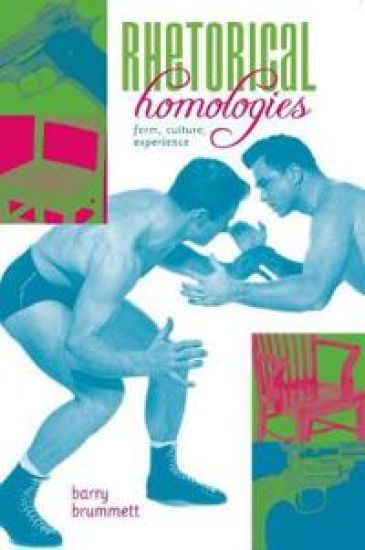
Rhetorical Homologies

Rhetorical Homologies

Barry Brummett

The University of Alabama Press
2009
nidottu
A highly developed study of the relationships between rhetoric and public culture.One of the most widely used ideas in scholarship of the humanities and social sciences is that of homology: a formal pattern structuring different kinds of texts, ideas, and experiences. Rhetorical Homologies explores the central meaning of this form in a variety of discourses and also examines the kind of homologies that shape audience responses to personal, public, and political issues. Barry Brummett is most interested in homologies among very different orders of experience and texts: experiences on the battlefield that are homologous to those at a dining room table, for instance. What the common patterns that underlie such cases mean, why they are interesting, and why homology is rhetorical are the subjects of this study. Brummett focuses on a wide range of topics, from the homologies between rhetoric and weapons throughout history to the homology of ritual injuries as manifested in representations of Christian martyrs, Laurel and Hardy films, the African-American practice of playing the dozens, and televised professional wrestling. Brummett also explores the homology of the Wise Woman, using rhetorical representations of Sojourner Truth and Oprah Winfrey. In a concluding chapter, Brummett argues that the idea of homology is important in understanding how social life is organized in general and that the centrality of discourse in organizing experience makes rhetorical homologies an important perspective for general knowledge beyond the boundaries of this study.
Equipment for Living

Equipment for Living

Barry Brummett

Lulu.com
2017
nidottu
Barry Brummett is a resident of Austin, TX and teaches at the University of Texas at Austin. This is his first book of poetry. His poems are grouped into general themes of nature, life, and death. The title is taken from a book chapter by the poet, novelist, and theorist Kenneth Burke. Literature, including poems, are "equipment for living," we turn to literature of all sorts to get us through life. Elsewhere Burke says that poems help "get things placed." That is my goal in writing poetry.
Rhetoric in Popular Culture

Rhetoric in Popular Culture

Barry S. Brummett

SAGE PUBLICATIONS INC
2023
nidottu
The Sixth Edition of Barry Brummett’s Rhetoric in Popular Culture provides readers with in-depth insight into the techniques of rhetorical criticism to analyze the full spectrum of contemporary issues in popular culture. Exploring a wide range of mass media texts including advertisements, magazines, movies, television, popular music, and social media, Barry Brummett presents key rhetorical concepts and applies them with critical analysis to a variety of exciting examples drawn from today's popular culture. Ideal for courses in rhetorical criticism, the new edition includes new and updated sample critical essays and case studies that demonstrate for readers how the critical methods discussed can be used to study the hidden rhetoric of popular culture.
Uncovering Hidden Rhetorics

Uncovering Hidden Rhetorics

Barry S. Brummett

SAGE Publications Inc
2008
sidottu
"One of the most important benefits of this book is that Brummet and his contributors demonstrate interesting ways to read critically." —T.B. Dykeman,CHOICEUnmasking the social and political messages found in popular culture Sometimes movies, television shows, political speeches, and music lyrics seem to be about one thing on the surface but express other serious social and political issues when we examine them more closely. Using methods of formal analysis, Uncovering Hidden Rhetorics: Social Issues in Disguise offers students and scholars a key to unlocking hidden text that abounds in popular culture. Key Features Weaves meticulous analysis with popular culture throughout, keeping students and scholarly readers alike engaged and interested Empowers students to find hidden themes in texts of everyday life and inspires ongoing critical thinking Using a clear and engaging style and examples of well-known works makes formal analysis more accessible Intended Audience Interested scholars and upper-level undergraduate students enrolled in such courses as rhetoric and popular culture, contemporary rhetorical theory/criticism, media criticism, popular culture and mass communication, rhetorical methods, and so forth will find this compelling text an informative and delightful read.
Uncovering Hidden Rhetorics

Uncovering Hidden Rhetorics

Barry S. Brummett

SAGE Publications Inc
2008
nidottu
"One of the most important benefits of this book is that Brummet and his contributors demonstrate interesting ways to read critically." —T.B. Dykeman,CHOICEUnmasking the social and political messages found in popular culture Sometimes movies, television shows, political speeches, and music lyrics seem to be about one thing on the surface but express other serious social and political issues when we examine them more closely. Using methods of formal analysis, Uncovering Hidden Rhetorics: Social Issues in Disguise offers students and scholars a key to unlocking hidden text that abounds in popular culture. Key Features Weaves meticulous analysis with popular culture throughout, keeping students and scholarly readers alike engaged and interested Empowers students to find hidden themes in texts of everyday life and inspires ongoing critical thinking Using a clear and engaging style and examples of well-known works makes formal analysis more accessible Intended Audience Interested scholars and upper-level undergraduate students enrolled in such courses as rhetoric and popular culture, contemporary rhetorical theory/criticism, media criticism, popular culture and mass communication, rhetorical methods, and so forth will find this compelling text an informative and delightful read.
Techniques of Close Reading

Techniques of Close Reading

Barry S. Brummett

SAGE Publications Inc
2018
nidottu
Techniques of Close Reading, Second Edition helps students gain a deeper understanding of what texts may be saying, whether they are written, oral, visual, or mediated. Renowned scholar and professor Barry Brummett explains and explores the various ways to "read" messages (such as speeches, cartoons, or magazine ads), teaching students how to see deeper levels of meaning and to share those insights with others. Students learn techniques for discovering form, rhetorical tropes, argument, and ideologies within texts. New to the Second Edition: A new Chapter 6 includes a selection of techniques from each chapter to show students how different techniques may be used together when reading text. A close reading of a group of ads from the insurance company, Liberty Mutual, offers students an opportunity to apply the techniques to recent texts.
Barry

Barry

Geoffrey A North

The History Press Ltd
1996
nidottu
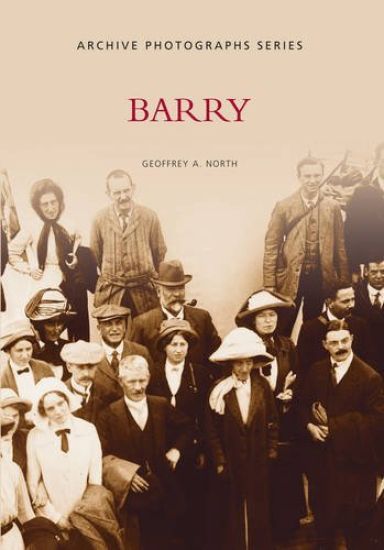
In this collection of over 200 postcards and family snapshots, author Geoffrey North taps a rich vein of nostalgia for the past of Barry and the surrounding area. The book examines all those settings which have provided the background or stimulus for the many wonderful memories held by residents and holiday-makers alike. Several striking images of pleasure cruises, a packed Barry Island, or of the Docks heaving with ships testify to Barry's dual importance as both a focal point for leisure activities and as a thriving port, despatching the coal of South Wales to all corners of the globe. The cards also reveal the quieter corners as well as the busy town centre. All in all, this is a selection which should delight everybody who holds Barry close to their heart.
Barry

Barry

Geoffrey A North

Nonsuch Publishing
2003
nidottu
With over 200 postcards and family snapshots, the author taps a vein of nostalgia for the past of Barry and the surrounding area. This collection is a series of old and rare photographs and images of Barry.