Kirjojen hintavertailu. Mukana 11 244 527 kirjaa ja 12 kauppaa.

Kirjahaku

Etsi kirjoja tekijän nimen, kirjan nimen tai ISBN:n perusteella.

1000 tulosta hakusanalla Barry D. Levine

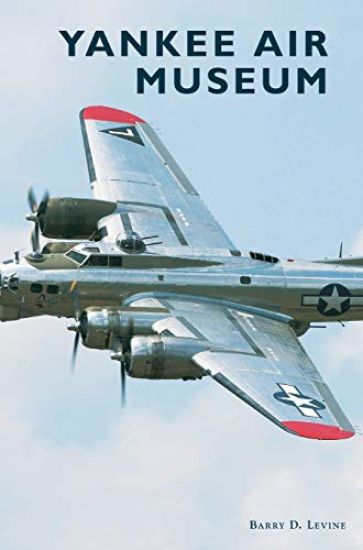
Yankee Air Museum

Yankee Air Museum

Barry D. Levine

Arcadia Publishing Library Editions
2018
sidottu
The Willow Run Bomber Plant opened in 1941 and produced over 8,600 B-24 Liberator bombers, a key element of the Allied arsenal in World War II. In 1981, a group of aviation enthusiasts established the Yankee Air Museum about a mile away from the original bomber plant. The museum built a substantial collection of flyable and static aircraft and aviation artifacts, many of which were destroyed in a 2004 fire. Despite this loss, the museum remained open in temporary facilities while considering options for a permanent home. The museum then bought the last 144,000 square feet of the original bomber plant with a goal of renovating this facility into a state-of-the-art museum in the early 2020s. Yankee Air Museum covers some of the people and events at the center of Southeast Michigan's aviation history.
Epstein-Barr Virus and Human Disease

Epstein-Barr Virus and Human Disease

Levine P. H.; Ablashi D. V.; Nonoyama M.; Pearson G. R.; Glaser R.

Humana Press Inc.
1987
sidottu
Since its discovery as the cause of infectious mononucleosis in 1964, the Epstein-Barr virus (EBV) has been etiologically implicated in an increasing number of human diseases. Generally considered the first human oncogenic virus because of a number of studies linking it with Burkitt's lymphoma and nasopharyngeal carcinoma (NPC), as well as its documented oncogenicity in nonhuman primates, EBVhas served as a model for identifying subsequent candidate oncogenic viruses and the stimulus for Evans' revision of the Henle-Koch postulates to accommodate the problems in proving viral oncogenicity in humans. Research on the role of EBV in human cancer was particularly en­ hanced (a) by the pioneering work of Werner and Gertrude Henle, and (b) by the coordinated efforts of the Special Virus Leukemia Program and its successors, the Special Virus Cancer Program and the Virus Cancer Program of the National Cancer Institute (NCI). Initiated by Dr. Frank J. Rauscher, who subsequently became director of the Ncr and is now Vice-President of the American Cancer Society, and expanded by Dr. John B. Moloney, whose contributions to cancer research were honored at this Second International Symposium on EBV and Associated Malignant Diseases, these NCI contract-sup­ ported programs brought together investigators from all over the world to participate in a joint effort to unravel the mystery of EBV behavior and pathogenicity. It was these programs that gave us the opportunity to work with such outstanding people as Professor Yohei Ito, to whom this book is dedicated.
Epstein-Barr Virus and Human Disease

Epstein-Barr Virus and Human Disease

P. H. Levine; D. V. Ablashi; M. Nonoyama; G. R. Pearson; R. Glaser

Humana Press Inc.
2011
nidottu
Since its discovery as the cause of infectious mononucleosis in 1964, the Epstein-Barr virus (EBV) has been etiologically implicated in an increasing number of human diseases. Generally considered the first human oncogenic virus because of a number of studies linking it with Burkitt's lymphoma and nasopharyngeal carcinoma (NPC), as well as its documented oncogenicity in nonhuman primates, EBVhas served as a model for identifying subsequent candidate oncogenic viruses and the stimulus for Evans' revision of the Henle-Koch postulates to accommodate the problems in proving viral oncogenicity in humans. Research on the role of EBV in human cancer was particularly en­ hanced (a) by the pioneering work of Werner and Gertrude Henle, and (b) by the coordinated efforts of the Special Virus Leukemia Program and its successors, the Special Virus Cancer Program and the Virus Cancer Program of the National Cancer Institute (NCI). Initiated by Dr. Frank J. Rauscher, who subsequently became director of the Ncr and is now Vice-President of the American Cancer Society, and expanded by Dr. John B. Moloney, whose contributions to cancer research were honored at this Second International Symposium on EBV and Associated Malignant Diseases, these NCI contract-sup­ ported programs brought together investigators from all over the world to participate in a joint effort to unravel the mystery of EBV behavior and pathogenicity. It was these programs that gave us the opportunity to work with such outstanding people as Professor Yohei Ito, to whom this book is dedicated.
Barry D. Adam

Barry D. Adam

Anjali Gonzalez

Press for Play Books
2024
pokkari
Barry D. Adam: The Fucking Activist Who Shaped LGBTQ Rights in Canada provides an inspiring account of Barry D. Adams journey from small activist groups to national impact, highlighting his role in fighting for gay rights, HIV/AIDS advocacy, and pushing for policy change. This book also explores the challenges of LGBTQ activism in Canada, Barrys personal sacrifices, and his lasting legacy in shaping LGBTQ rights globally.
Random Walks and Random Environments: Volume 1: Random Walks
This is the first volume of a two-volume work devoted to probability theory in physics, physical chemistry and engineering. This volume provides an introduction to the problem of "random walk" and its applications. In its simplest form, the random walk describes the motion of an idealized drunkard and is a discrete analogue of the diffusion through a medium with traps, laser speckle and the conformations of polymers in dilute solution. Prior knowledge of probability theory is helpful, but not assumed.
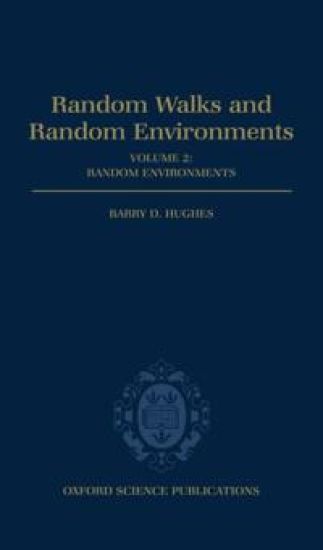
Random Walks and Random Environments: Volume 2: Random Environments
This is the second volume of a two-volume work devoted to probability theory in physical chemistry, and engineering. Rather than dealing explicitly with the idea of an ongoing random walk, each chaotic step taking place at fixed time intervals, this volume addresses models in which the disorder is frozen in space-random environments. The volume begins with a largely self-contained introduction to the geometry of random environments, emphasizing Bernoulli percolation models. The scope of the investigation then widens as we ask how structural disorder affects the transport process. The final chapters confront the interplay of two different forms of randomness; spatial randomness frozen into the environment and temporal randomness associated with the choices for next steps made by a random walker. The book ends with a discussion of "the ant in the labyrinth" problems. It is supported by an extensive bibliography and very little prior knowledge is assumed.
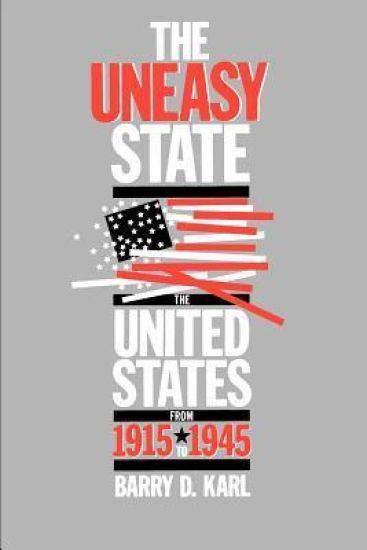
The Uneasy State

The Uneasy State

Barry D. Karl

University of Chicago Press
1985
nidottu
In this major interpretive history of the reform era, Barry Karl presents an imaginative and thoughtful perspective on America's quest for political, economic, and cultural nationalism. Challenging accepted interpretations, he argues that the two world wars and the depression did not successfully unite the country so that a national managerial state could emerge as it did in other industrial nations. Karl draws on an impressive array of sources to support his position, offering insightful comments on popular culture—movies, novels, comic strips, and detective stories—and brilliant analyses of technological change and its impact. Karl shows how Americans approached the central dilemmas of modern life, such as the clash between planned efficiency and autonomous individualism, which they managed to patch over but never fully resolve. Above all, he finds that America's commitment to the autonomous individual is both an aspiration and a curse.
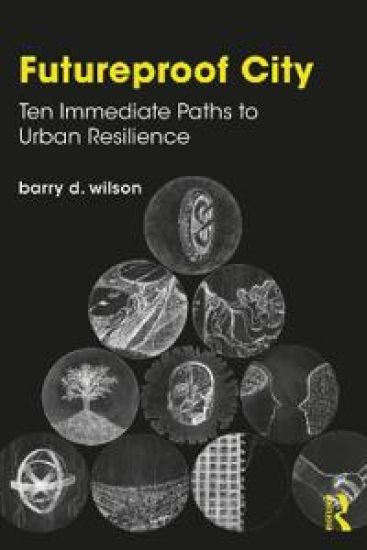
Futureproof City

Futureproof City

Barry D. Wilson

Routledge
2021
nidottu
The Futureproof City creates adaptability and resiliency in the face of the unknown challenges resulting from technological change, population explosion, global pandemic, and environmental crisis. A paradigm shift is urgently required in the means of conceiving, delivering, and managing city development to create better places to live. This book brings to the fore many new solutions currently being proposed and piloted globally, identifying ten key areas affecting the physical fabric of our cities where governments, planners, investors, and the individuals responsible for shaping lives can refocus their understanding, priorities, and funding in order to more effectively utilise the limited financial, natural, and time resources available. It will be key reading for every policy maker and professional working in sustainability, development, technology, health and welfare, investment, and risk issues in cities today.
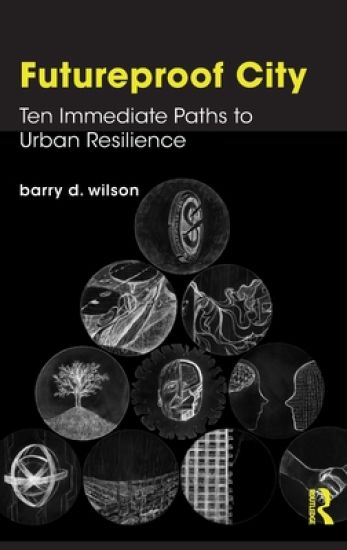
Futureproof City

Futureproof City

Barry D. Wilson

Routledge
2021
sidottu
The Futureproof City creates adaptability and resiliency in the face of the unknown challenges resulting from technological change, population explosion, global pandemic, and environmental crisis. A paradigm shift is urgently required in the means of conceiving, delivering, and managing city development to create better places to live. This book brings to the fore many new solutions currently being proposed and piloted globally, identifying ten key areas affecting the physical fabric of our cities where governments, planners, investors, and the individuals responsible for shaping lives can refocus their understanding, priorities, and funding in order to more effectively utilise the limited financial, natural, and time resources available. It will be key reading for every policy maker and professional working in sustainability, development, technology, health and welfare, investment, and risk issues in cities today.
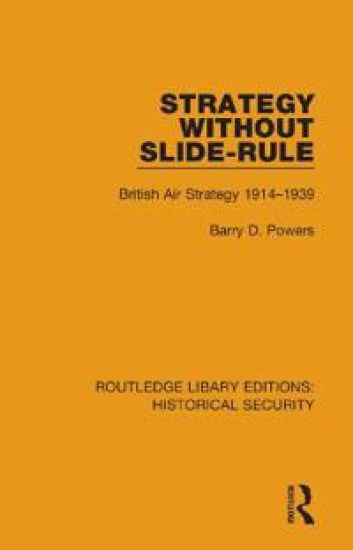
Strategy Without Slide-Rule

Strategy Without Slide-Rule

Barry D. Powers

Routledge
2021
sidottu
The early history of British aerial defence development is one of misdirection and delusion. The misdirection, judging by the criteria of successful aerial defence in World War II, was primarily in the downgrading of home defence measures including the fighter plane. The delusion, again judging by Britain’s efforts in that second world war, was primarily in the assumption of the effects to be obtained by strategic bombing.In both cases, the First World War was a major catalyst. Although events and writings before that war indicate the coming patterns, it was during that war that a great amount of the patterns are well established. Originally published in 1976, this work explores these origins and stresses the interaction between various diverse segments of English society in the formation of the major patterns. The working out of these patterns in the first half of the interwar years is also analysed, again with respect to diverse groupings in Britain.
Strategy Without Slide-Rule

Strategy Without Slide-Rule

Barry D. Powers

TAYLOR FRANCIS LTD
2023
nidottu
The early history of British aerial defence development is one of misdirection and delusion. The misdirection, judging by the criteria of successful aerial defence in World War II, was primarily in the downgrading of home defence measures including the fighter plane. The delusion, again judging by Britain’s efforts in that second world war, was primarily in the assumption of the effects to be obtained by strategic bombing.In both cases, the First World War was a major catalyst. Although events and writings before that war indicate the coming patterns, it was during that war that a great amount of the patterns are well established. Originally published in 1976, this work explores these origins and stresses the interaction between various diverse segments of English society in the formation of the major patterns. The working out of these patterns in the first half of the interwar years is also analysed, again with respect to diverse groupings in Britain.
Cracking the Codes

Cracking the Codes

Barry D. Yatt

John Wiley Sons Inc
1998
sidottu
Unleash the design potential in codes Building codes and standards are often seen as obstacles to design excellence. Not any more! With the help of this down-to-earth guide, architecture professionals and students can stop dreading these rules and start using them to their advantage. Cracking the Codes makes codes and standards accessible by promoting a sound understanding of regulatory issues —without getting caught up in the minutiae. The book works the way projects do, moving through each stage of the planning process to identify and consolidate the basic regulatory requirements that must be addressed at every step along the way. It equips readers not only to recognize issues that call for regulatory research and to work effectively with appropriate consultants, but also to suggest strategic directions that are compatible with regulatory requirements and to make informed decisions in response to consultants' advice. In addition to the model building codes, including the forthcoming International Building Code, this book covers zoning ordinances and covenants, as well as rules related to accessibility, historic preservation, environmental quality, consumer protection, and a host of other critical issues. Information is extensively cross-referenced to make topics simple to find, and the uniform methodology applied to each regulatory issue makes the book both easy to follow and design-friendly. No project team should ever be held hostage by lack of familiarity with codes and standards. Cracking the Codes gives architects the freedom they need to break the rules without breaking the regulations.
The Meaning of Jesus' Death

The Meaning of Jesus' Death

Barry D. Smith

T. T.Clark Ltd
2016
sidottu
Barry D. Smith studies the salvation-historical meaning of Jesus’ death (commonly known as the atonement) in the New Testament. Smith works his way through the four theories of the doctrine of the atonement that have emerged in the history of Christian theology: moral influence, governmental, satisfaction and Christus victor theories. Smith works from the premise that, for a theory of the atonement to be successful, no biblical data may be omitted or distorted, and the generalized concepts used to comprehend the biblical data must be easily seen as implicit in the data. From this vantage point, Smith advances a formulation of the atonement that is best supported by the biblical text itself. The conclusion Smith reaches is that the biblical data supports both the penal-substitutionary version of the satisfaction theory and the Christus victor theory of the atonement, each of which should be viewed as two parts of a more inclusive theory of atonement present in the New Testament.
The Meaning of Jesus' Death

The Meaning of Jesus' Death

Barry D. Smith

T. T.Clark Ltd
2018
nidottu
Barry D. Smith studies the salvation-historical meaning of Jesus’ death (commonly known as the atonement) in the New Testament. Smith works his way through the four theories of the doctrine of the atonement that have emerged in the history of Christian theology: moral influence, governmental, satisfaction and Christus victor theories. Smith works from the premise that, for a theory of the atonement to be successful, no biblical data may be omitted or distorted, and the generalized concepts used to comprehend the biblical data must be easily seen as implicit in the data. From this vantage point, Smith advances a formulation of the atonement that is best supported by the biblical text itself. The conclusion Smith reaches is that the biblical data supports both the penal-substitutionary version of the satisfaction theory and the Christus victor theory of the atonement, each of which should be viewed as two parts of a more inclusive theory of atonement present in the New Testament.