Kirjojen hintavertailu. Mukana 11 244 527 kirjaa ja 12 kauppaa.

Kirjahaku

Etsi kirjoja tekijän nimen, kirjan nimen tai ISBN:n perusteella.

1000 tulosta hakusanalla Barry Eichengreen

The Populist Temptation

The Populist Temptation

Barry Eichengreen

Oxford University Press Inc
2020
nidottu
Populism, on both the right and the left, has spread like wildfire throughout Europe and the United States and is making inroads in other parts of the world. In simplest terms, populism is a political ideology that vilifies elites, minorities and foreigners while lionizing "the people." It reached its apogee in the U.S. with the election of Donald Trump but has been a force in Europe since the Great Recession and the refugee crisis. We now see the rise of leaders with populist tendencies everywhere from Brazil to Turkey. In The Populist Temptation, Barry Eichengreen places this global resurgence of populism in its historical context. Populists have always thrived, he observes, in times of poor economic performance. Populism feeds on rising inequality, which augments the ranks of those left behind and fans dissatisfaction with the economic status quo. It responds to rapid economic change that heightens insecurity. These economic developments, Eichengreen shows, give rise to populist reactions when they highlight the divergent interests of the people and the elite. Banking and financial crises are a case in point: the financiers who are the precipitating agents of such crises are card-carrying members of the elite, and are seen as profiting at the expense of the people. But populism is also a protest against the declining influence of the traditions, beliefs and community of once-dominant groups. It is a reaction against the challenge posed by immigrants and minorities to the people as a homogeneous, well-defined entity. Populists capitalizing on these feelings appeal to a glorious, mythologized past grounded in the collective traditions of that once-dominant majority. They invoke nationalism and criticize politicians who embrace diversity, open borders and equal rights. Populism has particular appeal, Eichengreen shows, when these identity politics and economic grievances come together. There is no magic solution to these concerns, but Eichengreen points to a starting place: strengthening welfare state policies that make for greater equality of opportunity and social cohesion. Comparing Europe with the United States, he shows that America's patchwork welfare state is less well equipped to deal with the fallout from globalization and technical change and the growing distance between social groups. This reality will be hard to change, since America's limited welfare state reflects the country's historically-rooted suspicion of big government. It is therefore in the United States, Eichengreen concludes, where the siren song of populism is most alluring--and dangerous.

Hall of Mirrors

Hall of Mirrors

Barry Eichengreen

Oxford University Press Inc
2016
nidottu
The two great financial crises of the past century are the Great Depression of the 1930s and the Great Recession, which began in 2008. Both occurred against the backdrop of sharp credit booms, dubious banking practices, and a fragile and unstable global financial system. When markets went into cardiac arrest in 2008, policymakers invoked the lessons of the Great Depression in attempting to avert the worst. While their response prevented a financial collapse and catastrophic depression like that of the 1930s, unemployment in the U.S. and Europe still rose to excruciating high levels. Pain and suffering were widespread. The question, given this, is why didn't policymakers do better? Hall of Mirrors, Barry Eichengreen's monumental twinned history of the two crises, provides the farthest-reaching answer to this question to date. Alternating back and forth between the two crises and between North America and Europe, Eichengreen shows how fear of another Depression following the collapse of Lehman Brothers shaped policy responses on both continents, with both positive and negative results. Since bank failures were a prominent feature of the Great Depression, policymakers moved quickly to strengthen troubled banks. But because derivatives markets were not important in the 1930s, they missed problems in the so-called shadow banking system. Having done too little to support spending in the 1930s, governments also ramped up public spending this time around. But the response was indiscriminate and quickly came back to haunt overly indebted governments, particularly in Southern Europe. Moreover, because politicians overpromised, and because their measures failed to stave off a major recession, a backlash quickly developed against activist governments and central banks. Policymakers then prematurely succumbed to the temptation to return to normal policies before normal conditions had returned. The result has been a grindingly slow recovery in the United States and endless recession in Europe. Hall of Mirrors is both a major work of economic history and an essential exploration of how we avoided making only some of the same mistakes twice. It shows not just how the "lessons" of Great Depression history continue to shape society's response to contemporary economic problems, but also how the experience of the Great Recession will permanently change how we think about the Great Depression.
The Populist Temptation

The Populist Temptation

Barry Eichengreen

Oxford University Press Inc
2018
sidottu
In the last few years, populism -- of the right, left, and center varieties -- has spread like wildfire throughout the world. The impulse reached its apogee in the United States with the election of Trump, but it was a force in Europe ever since the Great Recession sent the European economy into a prolonged tailspin. In the simplest terms, populism is a political ideology that vilifies economic and political elites and instead lionizes 'the people.' The people, populists of all stripes contend, need to retake power from the unaccountable elites who have left them powerless. And typically, populists' distrust of elites shades into a catchall distrust of trained experts because of their perceived distance from and contempt for 'the people.' Another signature element of populist movements is faith in a savior who can not only speak directly to the people, but also serve as a vessel for the plain people's hopes and dreams. Going back to the 1890s, a series of such saviors have come and gone in the US alone, from William Jennings Bryan to Huey Long to -- finally -- Donald Trump. In The Populist Temptation, the eminent economic historian Barry Eichengreen focuses on the global resurgence of populism today and places it in a deep context. Alternating between the present and earlier populist waves from modern history, he argues that populists tend to thrive most in the wake of economic downturns, when it is easy to convince the masses of elite malfeasance. Yet while there is more than a grain of truth that bankers, financiers, and 'bought' politicians are responsible for the mess, populists' own solutions tend to be simplistic and economically counterproductive. Moreover, by arguing that the ordinary people are at the mercy of extra-national forces beyond their control -- international capital, immigrants, cosmopolitan globalists -- populists often degenerate into demagoguery and xenophobia. There is no one solution to addressing the concerns that populists raise, but Eichengreen argues that there is an obvious place to start: shoring up and improving the welfare state so that it is better able to act as a buffer for those who suffer most during economic slumps. For example, America's patchwork welfare state was not well equipped to deal with the economic fallout that attended globalization and the decline of manufacturing in America, and that played no small part in Trump's victory. Lucidly explaining both the appeals and dangers of populism across history, this book is essential reading for anyone seeking to understand not just the populist phenomenon, but more generally the lasting political fallout that follows in the wake of major economic crises.
Golden Fetters: The Gold Standard and the Great Depression, 1919-1939
This book offers a reassessment of the international monetary problems that led to the global economic crisis of the 1930s. It explores the connections between the gold standard--the framework regulating international monetary affairs until 1931--and the Great Depression that broke out in 1929. Eichengreen shows how economic policies, in conjunction with the imbalances created by World War I, gave rise to the global crisis of the 1930s. He demonstrates that the gold standard fundamentally constrained the economic policies that were pursued and that it was largely responsible for creating the unstable economic environment on which those policies acted. The book also provides a valuable perspective on the economic policies of the post-World War II period and their consequences.
Golden Fetters

Golden Fetters

Barry Eichengreen

Oxford University Press Inc
1996
nidottu
This book is a reassessment of the international monetary crises of the post-World War I period that led to the Great Depression of the 1930s. It also analyses the responses of the world economic powers to the Depression and how new monetary policies set the stage for the watershed post-World War II system established at Bretton Woods. It offers new theories of what effect the Great Depression had on the collapse of the world monetary system, and what effect the collapse had on deepening and prolonging the Depression, by exploring the link between global economic crisis and the the gold standard (the framework for international monetary affairs until 1931). The events described had a profound effect upon twentieth-century history: the Depression abetted the rise of Hitler and the demise of the gold standard is a historical cause of inflation.
Financial Crises and What to Do About Them

Financial Crises and What to Do About Them

Barry Eichengreen

Oxford University Press
2002
sidottu
In this study, the author provides a critical assessment of the official sector's efforts to more effectively manage financial crises in emerging markets. Professor Eichengreen reviews international initiatives on both the crisis prevention and crisis resolution fronts.
Financial Crises and What to Do About Them

Financial Crises and What to Do About Them

Barry Eichengreen

Oxford University Press
2002
nidottu
This work explains the patterns behind financial crises, examines international financial architecture, makes recommendations for avoiding the dangers of crises (and managing them better when they do occur), and shows how official efforts to strengthen the international financial system may have made life more difficult for the poorest countries.
Hall of Mirrors

Hall of Mirrors

Barry Eichengreen

Oxford University Press Inc
2015
sidottu
The Great Depression and the Great Recession are the two great economic crises of the past hundred years. While there are accounts of both episodes, no one has yet attempted a sustained comparative analysis. In Hall of Mirrors, Barry Eichengreen draws on his unparalleled expertise for a brilliantly conceived dual-track account of the two crises and their consequences. Rather than telling the stories of the two crises in sequence, instead he weaves them together. He describes the two bubble-fuelled build-ups, then the onset of crisis, the subsequent financial and economic and collapse, the policy response, and finally the recovery. A theme of Eichengreen's narrative is that while the policy response to the Great Recession was importantly shaped by perceptions of the Great Depression -- contemporary policymakers did in fact learn lessons from the Depression that enabled them, this time, to prevent the worst -- they could have done better. Their failure to do so reflected a tendency to take the lessons of the Depression too literally, leading to an inability to recognize important respects in which circumstances, and specifically the structure of financial markets, had changed -- precisely in response to the policies put in place due to the Depression. In addition, success was the mother of failure: the success of the policy response took the wind out of reformers' sails. It diminished support for the kind of far-reaching social and financial reforms adopted in the 1930s. It allowed policy makers and society to prematurely indulge their desire for a return to normal policies before a normal economy had been restored. To be sure, this more recent crisis was better managed than the earlier one, which resulted in widespread social distress and, in the worst case, the rise of fascism. But a wiser collective response after 2008 would have staved off the painfully slow growth that subsequently plagued the United States and Europe.
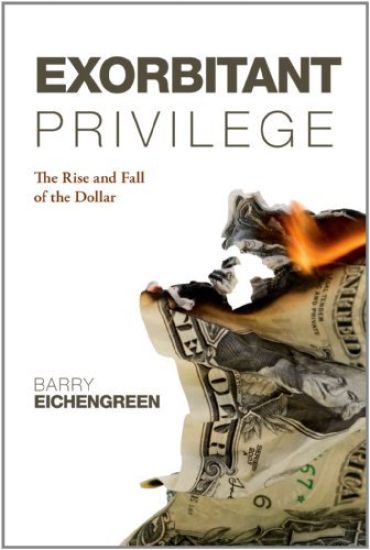
Exorbitant Privilege

Exorbitant Privilege

Barry Eichengreen

Oxford University Press
2011
sidottu
For more than half a century, the dollar has been not just America's currency but the world's. It is used globally by importers, exporters, investors, governments and central banks alike. This singular role of the dollar is a source of strength for the United States. It is, as a critic of U.S. policies once put it, America's "exorbitant privilege." But now, with U.S. budget deficits extending as far as the eye can see, holding dollars is viewed as a losing proposition. Some say that the dollar may soon cease to be the world's standard currency, which would depress U.S. living standards and weaken the country's international influence. In Exorbitant Privilege, one of our foremost economists, Barry Eichengreen, traces the rise of the dollar to international prominence. He shows how the greenback dominated internationally in the second half of the 20th century for the same reasons that the United States dominated the global economy. But now, with the rise of China, India, Brazil and other emerging economies, America no longer towers over the global economy. It follows, Eichengreen argues, that the dollar will not be as dominant. But this does not mean that coming changes need be sudden and dire or that the dollar is doomed to lose its international status. Challenging the presumption that there is room for only one true global currency, Eichengreen shows that several currencies have regularly shared this role. What was true in the distant past will be true, once again, in the not-too-distant future. The dollar will lose its international currency status, Eichengreen warns, only if the United States repeats the mistakes that led to the financial crisis and only if it fails to put its fiscal and financial house in order. Incisive, challenging and iconoclastic, Exorbitant Privilege, is a fascinating analysis of the changes that lie ahead. It is a challenge, equally, to those who warn that the dollar is doomed and to those who regard its continuing dominance as inevitable.
Exorbitant Privilege

Exorbitant Privilege

Barry Eichengreen

Oxford University Press
2012
nidottu
For more than half a century, the dollar has been not just America's currency but the world's. It is used globally by importers, exporters, investors, governments and central banks alike. This singular role of the dollar is a source of strength for the United States. It is, as a critic of U.S. policies once put it, America's "exorbitant privilege." But now, with U.S. budget deficits extending as far as the eye can see, holding dollars is viewed as a losing proposition. Some say that the dollar may soon cease to be the world's standard currency, which would depress U.S. living standards and weaken the country's international influence. In Exorbitant Privilege, one of our foremost economists, Barry Eichengreen, traces the rise of the dollar to international prominence. He shows how the greenback dominated internationally in the second half of the 20th century for the same reasons that the United States dominated the global economy. But now, with the rise of China, India, Brazil and other emerging economies, America no longer towers over the global economy. It follows, Eichengreen argues, that the dollar will not be as dominant. But this does not mean that coming changes need be sudden and dire DL or that the dollar is doomed to lose its international status. Challenging the presumption that there is room for only one true global currency, Eichengreen shows that several currencies have regularly shared this role. What was true in the distant past will be true, once again, in the not-too-distant future. The dollar will lose its international currency status, Eichengreen warns, only if the United States repeats the mistakes that led to the financial crisis and only if it fails to put its fiscal and financial house in order. Incisive, challenging and iconoclastic, Exorbitant Privilege, is a fascinating analysis of the changes that lie ahead. It is a challenge, equally, to those who warn that the dollar is doomed and to those who regard its continuing dominance as inevitable.
Exorbitant Privilege: The Rise and Fall of the Dollar and the Future of the International Monetary System
Recent events in the US--high unemployment, record federal deficits, and unprecedented financial distress--have raised serious doubts about the future of the dollar. So profound has been the impact that some say the dollar may soon cease to be the world's standard currency. Is the situation that bad? In Exorbitant Privilege, one of our foremost experts on the international financial system argues that while the dollar is bound to lose its singular status to newcomers like the Euro and the Chinese Renminbi, the coming changes will be neither sudden nor dire. Barry Eichengreen puts today's crisis in historical context, revealing that only after World War II, with Europe and Japan in ruins, did the dollar become the world's monetary lingua franca--the reserve currency of the world's banks and the kind of cash accepted virtually everywhere. Now, with the rise of China, India, Brazil and other emerging economies, America no longer towers over the global economy like before. And the U.S. itself faces very serious economic and financial challenges as it contemplates its medium-term future. But despite this, Eichengreen concludes, predictions of the dollar's demise are greatly exaggerated. The paperback edition features a new afterword that takes the story up through 2012.
Global Imbalances and the Lessons of Bretton Woods
Why the current Bretton Woods-like international financial system, featuring large current account deficits in the center country, the United States, and massive reserve accumulation by the periphery, is not sustainable.In Global Imbalances and the Lessons of Bretton Woods, Barry Eichengreen takes issue with the argument that today's international financial system is largely analogous to the Bretton Woods System of the period 1958 to 1973. Then, as now, it has been argued, the United States ran balance of payment deficits, provided international reserves to other countries, and acted as export market of last resort for the rest of the world. Then, as now, the story continues, other countries were reluctant to revalue their currencies for fear of seeing their export-led growth slow and suffering capital losses on their foreign reserves. Eichengreen argues in response that the power of historical analogy lies not just in finding parallels but in highlighting differences, and he finds important differences in the structure of the world economy today. Such differences, he concludes, mean that the current constellation of exchange rates and payments imbalances is unlikely to last as long as the original Bretton Woods System.Two of the most salient differences are the twin deficits and low savings rate of the United States, which do not augur well for the sustainability of the country's international position. Such differences, he concludes, mean that the current constellation of exchange rates and payments imbalances is unlikely to last as long as the original Bretton Woods System. After identifying these differences, Eichengreen looks in detail at the Gold Pool, the mechanism through which European central banks sought to support the dollar in the 1960s. He shows that the Pool was fragile and short lived, which does not bode well for collective efforts on the part of Asian central banks to restrain reserve diversification and support the dollar today. He studies Japan's exit from its dollar peg in 1971, drawing lessons for China's transition to greater exchange rate flexibility. And he considers the history of reserve currency competition, asking if it has lessons for whether the dollar is destined to lose its standing as preeminent international currency to the euro or even the Chinese renminbi.
European Monetary Unification

European Monetary Unification

Barry Eichengreen

MIT Press
1997
pokkari
The process of European monetary unification (EMU) is approaching a critical juncture. At the beginning of 1998 the member states of the European Union will decide whether or not to go ahead with their monetary union and determine which countries qualify as members. There is a high likelihood that Stage III of the Maastricht process-monetary union itself-will commence on January 1, 1999, and that a single currency, to be known as the Euro, will replace the national currencies of the founding member states at the beginning of 2002. Even if it is delayed, Stage III is likely to go forward soon thereafter. Whether EMU is feasible and desirable is contested among economists and politicians alike. This book sheds light on the controversy by considering seven major aspects: (1) what the theory of optimum currency areas reveals about the EMU project, (2) how Europe compares with existing monetary unions such as the United States, (3) the crisis in the European monetary system and the feasibility of stabilizing exchange rates in the absence of monetary unification, (4) fiscal policy and EMU, (5) labor markets and EMU, (6) the connections between monetary and political union, and (7) EMU and the rest of the world.The author views EMU as neither a grand achievement nor a terrible blunder, but as a process. He argues that the effects of monetary unification will depend on how it is structured and governed, and how quickly Europe's markets adapt to a single currency. The process of monetary unification will not end in 1999 or 2002; rather, the structure and operation of Europe's monetary union will continue to evolve for years to come.
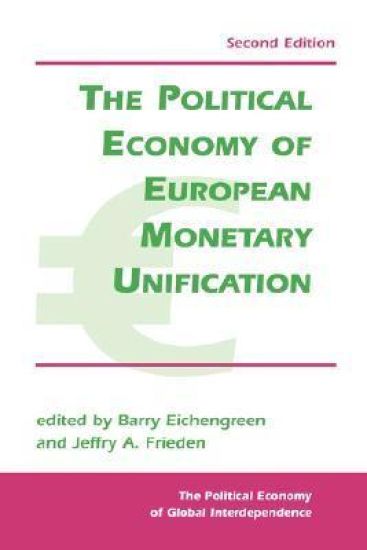
The Political Economy Of European Monetary Unification
The first edition of this book was published in 1994, as the future of monetary unification in Europe was very much in doubt. With Economic and Monetary Union now in place, it is appropriate to bring the scholarship on the topic up to date for the students of international political economics. To this effect, essayists Jeffry Frieden, Geoffrey Garrett, Lisa L. Martin, Benjamin J. Cohen revised four of the original chapters to reflect new conditions. Editors, Barry Eichengreen and Frieden completely rewrote the introductory essay. Three new chapters by Matthew Gabel, Charles Engel, and Paul De Grauwe et al cover public support for EMU, local currency pricing, and whether Europe is now better off? The updated volume's purpose remains that of bringing the latest in scholarship in Economics and Political Science to bear on the European monetary integration
Elusive Stability

Elusive Stability

Barry Eichengreen

Cambridge University Press
1993
pokkari
This volume provides a new interpretation of the operation and macroeconomic repercussions of the international monetary system during the interwar years. Each of the eleven essays is explicitly concerned with the role of exchange rates in macroeconomic fluctuations from the American and European perspective. The final essay examines the interwar experience from a long-term perspective.
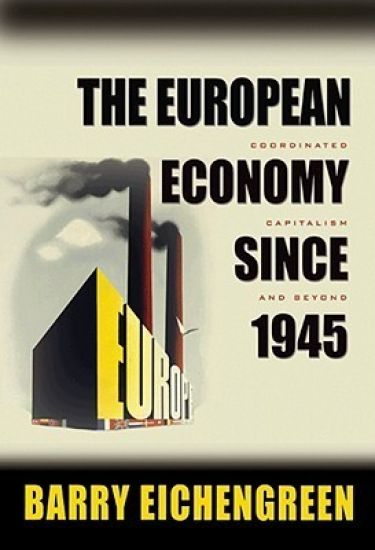
The European Economy since 1945

The European Economy since 1945

Barry Eichengreen

Princeton University Press
2008
pokkari
In 1945, many Europeans still heated with coal, cooled their food with ice, and lacked indoor plumbing. Today, things could hardly be more different. Over the second half of the twentieth century, the average European's buying power tripled, while working hours fell by a third. The European Economy since 1945 is a broad, accessible, forthright account of the extraordinary development of Europe's economy since the end of World War II. Barry Eichengreen argues that the continent's history has been critical to its economic performance, and that it will continue to be so going forward. Challenging standard views that basic economic forces were behind postwar Europe's success, Eichengreen shows how Western Europe in particular inherited a set of institutions singularly well suited to the economic circumstances that reigned for almost three decades. Economic growth was facilitated by solidarity-centered trade unions, cohesive employers' associations, and growth-minded governments--all legacies of Europe's earlier history. For example, these institutions worked together to mobilize savings, finance investment, and stabilize wages. However, this inheritance of economic and social institutions that was the solution until around 1973--when Europe had to switch from growth based on brute-force investment and the acquisition of known technologies to growth based on increased efficiency and innovation--then became the problem. Thus, the key questions for the future are whether Europe and its constituent nations can now adapt their institutions to the needs of a globalized knowledge economy, and whether in doing so, the continent's distinctive history will be an obstacle or an asset.
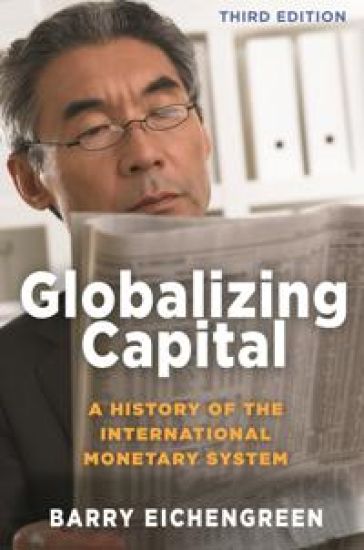
Globalizing Capital

Globalizing Capital

Barry Eichengreen

Princeton University Press
2019
pokkari
Essential reading for understanding the international economy—now thoroughly updatedLucid, accessible, and provocative, and now thoroughly updated to cover recent events that have shaken the global economy, Globalizing Capital is an indispensable account of the past 150 years of international monetary and financial history—from the classical gold standard to today's post–Bretton Woods "nonsystem." Bringing the story up to the present, this third edition covers the global financial crisis, the Greek bailout, the Euro crisis, the rise of China as a global monetary power, the renewed controversy over the international role of the U.S. dollar, and the currency war. Concise and nontechnical, and with a proven appeal to general readers, students, and specialists alike, Globalizing Capital is a must-read for anyone who wants to understand where the international economy has been—and where it may be going.
Money Beyond Borders

Money Beyond Borders

Barry Eichengreen

PRINCETON UNIVERSITY PRESS
2026
sidottu
A 2,500-year history of international currencies that reveals new insights about the future of the U.S. dollar—as well as crypto and central bank digital currencies Doubts about the international dominance of the dollar are only growing amid worries about tariffs, political dysfunction, and fraying international alliances. Will the dollar continue to reign supreme? In Money Beyond Borders, the leading authority on international currencies, Barry Eichengreen, puts the dollar’s prospects in deep historical perspective by chronicling the entire history of cross-border currencies, from the invention of coins in the seventh century BCE to the cryptocurrencies of today and the central bank digital currencies of tomorrow. Money Beyond Borders recounts how Greek and Roman coins became the first true international currencies. It tells how the Florentine gold florin became the “greenback of the Renaissance,” and how it was succeeded by Spanish silver and a Dutch fiat currency. The book explains why the British pound dominated the international economy in the nineteenth century, why the dollar rose to the top during World War II, and why the dollar has survived predictions of the imminent loss of its preeminence since the 1970s. The long history of international currencies shows that the same factors that encourage their widespread use eventually lead to their abandonment. Money Beyond Borders makes a powerful case that the dollar is now on the downside of this cycle, and it considers who the winners and losers will be when there is flight away from the greenback. Revealing important patterns in the life cycles of international currencies over the past 2,500 years, the book offers valuable lessons and insights about how currencies rise—and why they fall.
The Political Economy Of European Monetary Unification
The first edition of this book was published in 1994, as the future of monetary unification in Europe was very much in doubt. With Economic and Monetary Union now in place, it is appropriate to bring the scholarship on the topic up to date for the students of international political economics. To this effect, essayists Jeffry Frieden, Geoffrey Garrett, Lisa L. Martin, Benjamin J. Cohen revised four of the original chapters to reflect new conditions. Editors, Barry Eichengreen and Frieden completely rewrote the introductory essay. Three new chapters by Matthew Gabel, Charles Engel, and Paul De Grauwe et al cover public support for EMU, local currency pricing, and whether Europe is now better off? The updated volume's purpose remains that of bringing the latest in scholarship in Economics and Political Science to bear on the European monetary integration
Toward a New International Financial Architecture – A Practical Post–Asia Agenda

Toward a New International Financial Architecture – A Practical Post–Asia Agenda

Barry Eichengreen

The Peterson Institute for International Economics
1999
nidottu
The Asian financial crisis and the global economic turmoil that followed it have highlighted the need to avert financial crises and resolve them quickly if they do occur. This book addresses current concerns that existing institutional arrangements, including the Bretton Woods institutions, can no longer adequately cope with today's world of high capital mobility. It provides a critical assessment of competing proposals to better predict, forestall, and resolve international financial crises and outlines a practical and pragmatic agenda for reform. The recommendations are based on the belief that financial markets can malfunction, creating a compelling case for a financial safety net (and therefore a role for the IMF), but also creating problems of moral hazard that must be addressed.