
Kirjahaku
Etsi kirjoja tekijän nimen, kirjan nimen tai ISBN:n perusteella.
1000 tulosta hakusanalla Barry Hoffmaster; Cliff Hooker
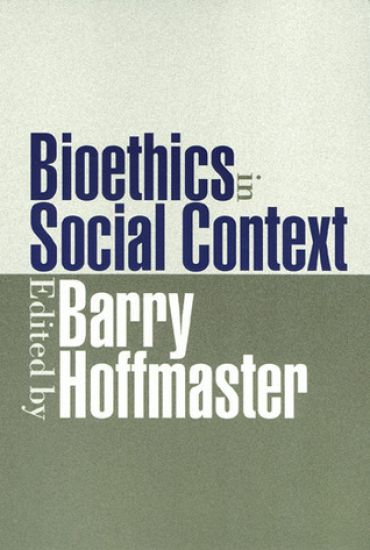
The problems of bioethics are embedded in people's lives and social worlds. They are shaped by individual biographies and relationships, by the ethos and institutions of health care, by economic and political pressures, by media depictions, and by the assumptions, beliefs, and values that permeate cultures and times. Yet these forces are largely ignored by a professional bioethics that concentrates on the theoretical justification of decisions. The original essays in this volume use qualitative research methods to expose the multiple contexts within which the problems of bioethics arise, are defined and debated, and ultimately resolved. In a provocative concluding essay, one contributor asks his fellow ethnographers to reflect on the ethical problems of ethnography.
The problems of bioethics are embedded in people's lives and social worlds. They are shaped by individual biographies and relationships, by the ethos and institutions of health care, by economic and political pressures, by media depictions, and by the assumptions, beliefs, and values that permeate cultures and times. Yet these forces are largely ignored by a professional bioethics that concentrates on the theoretical justification of decisions. The original essays in this volume use qualitative research methods to expose the multiple contexts within which the problems of bioethics arise, are defined and debated, and ultimately resolved. In a provocative concluding essay, one contributor asks his fellow ethnographers to reflect on the ethical problems of ethnography.
There is the world of ideas and the world of practice; the French are often for sup pressing the one and the English the other; but neither is to be suppressed. -Matthew Arnold The Function of Criticism at the Present Time From its inception, bioethics has confronted the need to reconcile theory and practice. At first the confrontation was purely intellectual, as writers on ethical theory (within phi losophy, theology, or other humanistic disciplines) turned their attention to topics from the world of medical practice. Recently the confrontation has grown more intense. The ap pointment of clinical ethicists in hospitals and other health care settings is an accelerating trend in North America. Concomitantly, those institutions involved in training peo ple in clinical ethics have added organized exposure to the world of practice , in the form of placement requirements, to the normal academic course load. In common with other dis ciplines, bioethics has begun to see clinical training as a con dition of didactic theory and apprenticeship.

Contemporary Issues in Biomedical Ethics
John W. Davis; Barry Hoffmaster; Sarah J. Shorten
Humana Press Inc.
1979
sidottu
Not long ago, a colleague chided me for using the term "the biological revolution. " Like many others, I have employed it as an umbrella term to refer to the seemingly vast, rapidly-moving, and fre quently bewildering developments of contemporary biomedicine: psy chosurgery, genetic counseling and engineering, artificial heart-lung machines, organ transplants-and on and on. The real "biological revo lution," he pointed out, began back in the nineteenth century in Europe. For it was then that death rates and infant mortality began to decline, the germ theory of disease was firmly established, Darwin took his famous trip on the Beagle, and Gregor Mendel stumbled on to some fundamental principles of heredity. My friend, I think, was both right and wrong. The biological revolution did have its roots in the nineteenth century; that is when it first began to unfold. Yet, like many intellectual and scientific upheav als, its force was not felt for decades. Indeed, it seems fair to say that it was not until after the Second World War that the full force of the earlier discoveries in biology and medicine began to have a major impact, an impact that was all the more heightened by the rapid bi omedical developments after the war.

Contemporary Issues in Biomedical Ethics
John W. Davis; Barry Hoffmaster; Sarah J. Shorten
Humana Press Inc.
2011
nidottu
Not long ago, a colleague chided me for using the term "the biological revolution. " Like many others, I have employed it as an umbrella term to refer to the seemingly vast, rapidly-moving, and fre quently bewildering developments of contemporary biomedicine: psy chosurgery, genetic counseling and engineering, artificial heart-lung machines, organ transplants-and on and on. The real "biological revo lution," he pointed out, began back in the nineteenth century in Europe. For it was then that death rates and infant mortality began to decline, the germ theory of disease was firmly established, Darwin took his famous trip on the Beagle, and Gregor Mendel stumbled on to some fundamental principles of heredity. My friend, I think, was both right and wrong. The biological revolution did have its roots in the nineteenth century; that is when it first began to unfold. Yet, like many intellectual and scientific upheav als, its force was not felt for decades. Indeed, it seems fair to say that it was not until after the Second World War that the full force of the earlier discoveries in biology and medicine began to have a major impact, an impact that was all the more heightened by the rapid bi omedical developments after the war.
There is the world of ideas and the world of practice; the French are often for sup pressing the one and the English the other; but neither is to be suppressed. -Matthew Arnold The Function of Criticism at the Present Time From its inception, bioethics has confronted the need to reconcile theory and practice. At first the confrontation was purely intellectual, as writers on ethical theory (within phi losophy, theology, or other humanistic disciplines) turned their attention to topics from the world of medical practice. Recently the confrontation has grown more intense. The ap pointment of clinical ethicists in hospitals and other health care settings is an accelerating trend in North America. Concomitantly, those institutions involved in training peo ple in clinical ethics have added organized exposure to the world of practice , in the form of placement requirements, to the normal academic course load. In common with other dis ciplines, bioethics has begun to see clinical training as a con dition of didactic theory and apprenticeship.

The definitive biography of motor cycling legend Barry Sheene
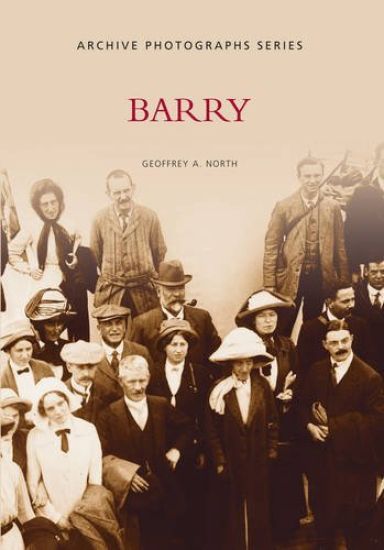
In this collection of over 200 postcards and family snapshots, author Geoffrey North taps a rich vein of nostalgia for the past of Barry and the surrounding area. The book examines all those settings which have provided the background or stimulus for the many wonderful memories held by residents and holiday-makers alike. Several striking images of pleasure cruises, a packed Barry Island, or of the Docks heaving with ships testify to Barry's dual importance as both a focal point for leisure activities and as a thriving port, despatching the coal of South Wales to all corners of the globe. The cards also reveal the quieter corners as well as the busy town centre. All in all, this is a selection which should delight everybody who holds Barry close to their heart.


With over 200 postcards and family snapshots, the author taps a vein of nostalgia for the past of Barry and the surrounding area. This collection is a series of old and rare photographs and images of Barry.

A history of Barry.

This is the life story of the former world 500cc motorcycle champion, Barry Sheene - the Brit whose death-defying crashes and playboy lifestyle made him famous. He achieved success in a variety of fields, overcoming a series of near-fatal crashes, but unfortunately died early in 2003 from cancer.

‘Ridonkulously funny and every kid should get their hooter into this Total Winner of graphic novel’ – JENNY PEARSON,The Super Miraculous Journey of Freddie Yates ‘Hugely enjoyable, surreal chaos’ GUARDIAN on Barry Loser 'The review of the 8-year-old boy in our house,“Can I keep it to give to a friend?” Best recommendation you can get’ OBSERVER Brand new adventures for Barry Loser in this new series of full colour graphic novels from the author of My Big Fat Smelly Poo Diary – perfect for fans of DogMan and Bunny vs Monkey Barry Loser is back! And his adventures are even dafter than before! Dads turning onto vending machines, grown ups stories that send you to sleep and so much more! 3 short brilliantly bit-size full colour graphic novel storiesFull of adventure, silliness, friendship and fun!Bonus ‘how to draw’ sections to help you make your own comic books! In the first book, Barry has had enough of being a loser and wants to prove he’s a Total Winner, but when his parents ban him from gaming he has to think outside of the box … Barry also has a new cat called French Fries – the keelest cat ever amen. Have you got all of Jim Smith’s amazekeel books? Barry Loser: I am not a loser Barry Loser: I am still not a loser Barry Loser: I am so over being a loser Barry Loser: I am sort of a loser Barry Loser and the holiday of doom Barry Loser and the case of the crumpled carton Barry Loser hates half term Barry Loser and the birthday billions Barry Loser: worst school trip ever! Barry Loser is the best at football NOT Barry Loser and the trouble with pets My dad is a loser free ebook My mum is a loser free ebook Future Ratboy and the attack of the killer robot grannies Future Ratboy and the invasion of the nom-noms Future Ratboy and the quest for the missing thingy The Super Weird Mysteries Danger at Donut Diner Attack of the Haunted Lunchbox My Pencil Case is a Time Machine Jim Smith’s books have sold 840k copies in the English language, and sold in 17 territories. He won the Roald Dahl Funny Prize, the Scholastic Lollies award, was shortlisted for the Waterstones prize, and had a World Book Day book.

‘Ridonkulously funny and every kid should get their hooter into this Total Winner of graphic novel’ – JENNY PEARSON,The Super Miraculous Journey of Freddie Yates ‘Hugely enjoyable, surreal chaos’ GUARDIAN on Barry Loser 'The review of the 8-year-old boy in our house,“Can I keep it to give to a friend?” Best recommendation you can get’ OBSERVER Brand new adventures for Barry Loser in this new series of full colour graphic novels from the author of My Big Fat Smelly Poo Diary – perfect for fans of DogMan and Bunny vs Monkey Barry Loser is back! And his adventures are even dafter than before! Three amazekeel stories, including when Barry’s dad turns into a vending machine, and all Barry has to do is ‘press his buttons’ to get exactly what he wants, and the most boring grown up stories to send you to sleep … 3 short brilliantly bit-size full colour graphic novel storiesFull of adventure, silliness, friendship and fun!Bonus ‘how to draw’ sections to help you make your own comic books! Have you got all of Jim Smith’s amazekeel books? Barry Loser: I am not a loser Barry Loser: I am still not a loser Barry Loser: I am so over being a loser Barry Loser: I am sort of a loser Barry Loser and the holiday of doom Barry Loser and the case of the crumpled carton Barry Loser hates half term Barry Loser and the birthday billions Barry Loser: worst school trip ever! Barry Loser is the best at football NOT Barry Loser and the trouble with pets My dad is a loser free ebook My mum is a loser free ebook Future Ratboy and the attack of the killer robot grannies Future Ratboy and the invasion of the nom-noms Future Ratboy and the quest for the missing thingy The Super Weird Mysteries Danger at Donut Diner Attack of the Haunted Lunchbox My Pencil Case is a Time Machine Jim Smith’s books have sold 840k copies in the English language, and sold in 17 territories. He won the Roald Dahl Funny Prize, the Scholastic Lollies award, was shortlisted for the Waterstones prize, and had a World Book Day book.

Set in the second half of the eighteenth century, Barry Lyndon is the fictional autobiography of an adventurer and rogue whom the reader is led to distrust from the very beginning. Born into the petty Irish gentry, and outmanoeuvred in his first love-affair, a ruined Barry joins the British army. After service in Germany he deserts and, after a brief spell as a spy, pursues the career of a gambler in the dissolute clubs and courts of Europe. In a determined effort to enter fashionable society he marries a titled heiress but finds he has met his match. First published in 1844, Barry Lyndon is Thackeray's earliest substantial novel and in some ways his most original, reflecting his views of the true art of fiction: to represent a subject, however unpleasant, with accuracy and wit, and not to moralize. The text is that of George Sainsbury's 1908 Oxford edition which restores passages cut when the novel was revised in 1856. ABOUT THE SERIES: For over 100 years Oxford World's Classics has made available the widest range of literature from around the globe. Each affordable volume reflects Oxford's commitment to scholarship, providing the most accurate text plus a wealth of other valuable features, including expert introductions by leading authorities, helpful notes to clarify the text, up-to-date bibliographies for further study, and much more.