Kirjahaku
Etsi kirjoja tekijän nimen, kirjan nimen tai ISBN:n perusteella.
1000 tulosta hakusanalla Barry Jon Supranowicz M S

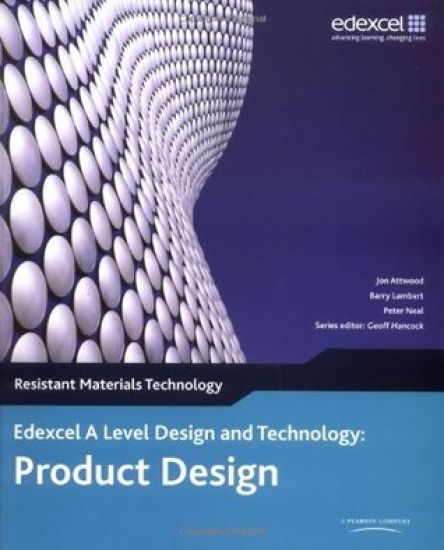
A Level Design and Technology for Edexcel: Product Design: Resistant Materials
Jon Attwood; Barry Lambert; Peter Neal; Geoff Hancock
pearson education limited
2009
nidottu
Edexcel A Level Design and Technology: Product Design - Resistant Materials Technology has been written and produced by an expert team to support the new Edexcel Graphic Products specification for 2008. The engaging full-colour Student Book is completely matched to the new Edexcel A Level Product Design course requirements, so you can be confident that it will provide all your students need to develop the skills and understanding to succeed at AS and A2 Level. Written by experienced examiners and teachers to support the new Edexcel specification.Builds on the aspects of the current editions that teachers have told us they love - a clear match to the specification with step-by-step guidance to answering exam questions.Additional exam tips, practice questions and sample answers with comments will give students the confidence to tackle all the questions that come up in the exam.A wealth of classroom activities with structured guidance helps save teachers time.Now in full colour to bring the subject to life and help make explanations of key concepts clearer.
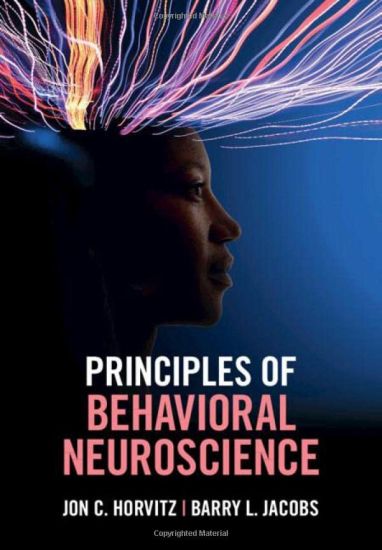
Principles of Behavioral Neuroscience
Jon C. Horvitz; Barry L. Jacobs
Cambridge University Press
2022
sidottu
How does brain activity give rise to sleep, dreams, learning, memory, and language? Do drugs like cocaine and heroin tap into the same neurochemical systems that evolved for life's natural rewards? What are the powerful new tools of molecular biology that are revolutionizing neuroscience? This undergraduate textbook explores the relation between brain, mind, and behavior. It clears away the extraneous detail that so often impedes learning, and describes critical concepts step by step, in straightforward language. Rich illustrations and thought-provoking review questions further illuminate the relations between biological, behavioral, and mental phenomena. With writing that is focused and engaging, even the more challenging topics of neurotransmission and neuroplasticity become enjoyable to learn. While this textbook filters out non-critical details, it includes all key information, allowing readers to remain focused and enjoy the feeling of mastery that comes from a grounded understanding of a topic, from its fundamentals to its implications.

Principles of Behavioral Neuroscience
Jon C. Horvitz; Barry L. Jacobs
Cambridge University Press
2022
pokkari
How does brain activity give rise to sleep, dreams, learning, memory, and language? Do drugs like cocaine and heroin tap into the same neurochemical systems that evolved for life's natural rewards? What are the powerful new tools of molecular biology that are revolutionizing neuroscience? This undergraduate textbook explores the relation between brain, mind, and behavior. It clears away the extraneous detail that so often impedes learning, and describes critical concepts step by step, in straightforward language. Rich illustrations and thought-provoking review questions further illuminate the relations between biological, behavioral, and mental phenomena. With writing that is focused and engaging, even the more challenging topics of neurotransmission and neuroplasticity become enjoyable to learn. While this textbook filters out non-critical details, it includes all key information, allowing readers to remain focused and enjoy the feeling of mastery that comes from a grounded understanding of a topic, from its fundamentals to its implications.

Business Research Methods
Christina Quinlan; Barry Babin; Jon Carr; Mitch Griffin; William Zikmund
Cengage Learning EMEA
2024
nidottu
Business Research Methods covers all the stages in undertaking research using a clear, structured step-by-step guide. Christina Quinlan's qualitive and holistic approaches are combined with William Zikmund's quantitative and advanced methods in this fully updated third edition, to give students a broad spectrum of approaches for their research project. This comprehensive text is essential reading for all business students getting to grips with research methods for their project.
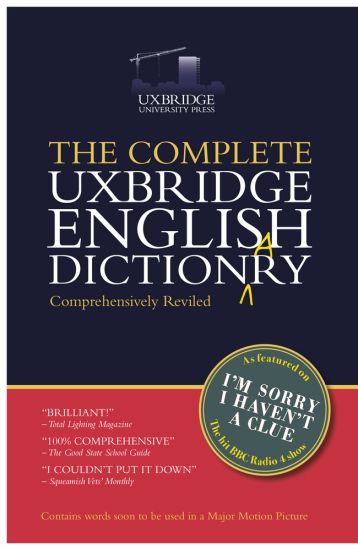
The Complete Uxbridge English Dictionary
Graeme Garden; Tim Brooke-Taylor; Barry Cryer; Jon Naismith
Windmill Books
2017
pokkari
Do words fail you? Never again, once you've become the proud owner of The Complete Uxbridge English Dictionary. Every word has a meaning, but over the years those meanings change. Dip into these helpfully illustrated pages and you'll find many of the words you use every day without ever realising that their up-to-date definition is something entirely different. Words like 'bunny' (rather like a bun), or 'cherish' (rather like a chair), 'Cardiology' (the study of knitwear) or 'buggery' (the study of insects), 'Venezuala' (a gondola with a harpoon) or 'Norway' (a Geordie exclamation of surprise), 'ivy' (the Roman for "four") or 'faculty' (cockney for "there's no more PG Tips").Thanks to The Complete Uxbridge English Dictionary you can now use familiar, everyday words in total confidence, fully appraised of their latest meanings. Happy wording!

You had one bath a week whether you needed it or not. You knew with iron certainty what was for tea on any given day of the week. There was every possibility that grown-ups, known to you or not, might clout you.But being a child of the 1950s endowed you with privileges that could only have been dreamt of by previous generations. Free secondary education and health services and, for a while, a booming economy and full employment not that you knew much about that as a kid.Did the baby-boomers, the beneficiaries of all of this, build a better world on the back of their advantages? Did they turn out to be progressive or just self-satisfied and selfish?In this series of essays that range from politics to education to sport and bits of silliness, a boomer paints the world. You can judge if its a pretty picture.

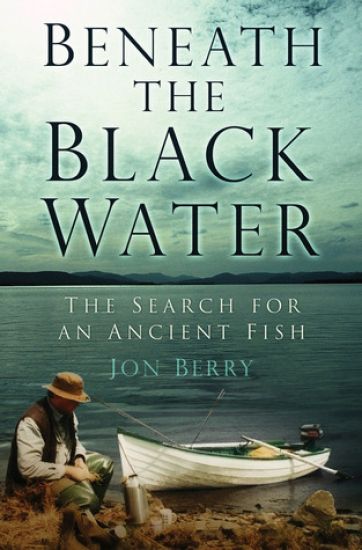
"When I was very young and on holiday in Scotland, my cousin told me about giant trout that lived in small numbers at the bottom of the Highlands deepest lochs. They were called salmo ferox, and they were rumoured to be uncatchable." In his twenties, wholly accidentally, Jon Berry caught one. This led to an obsession that would cost him every pound he had to his name, a few thousand that he did not, a couple of girlfriends and his home. It would take him to Scotland, Cumbria and the wildest corners of Ireland, in the company of a disparate band of fanatics, alcoholics, mountain men, scientists, tree-planting eco-warriors and one genuine soothsayer. Not all of them survived. This compelling account of Berry's mission to catch salmo ferox will have you hooked, fellow fisherman or not. His drive and determination is infectious, and the ups and downs of his life in the process thought-provoking. This is not just a story of a fish, albeit a cannibalistic giant trout of the glacial lochs; it is a tale of compulsion and escape, of the author's rediscovery of a landscape and a clan, and of a willing descent into madness.
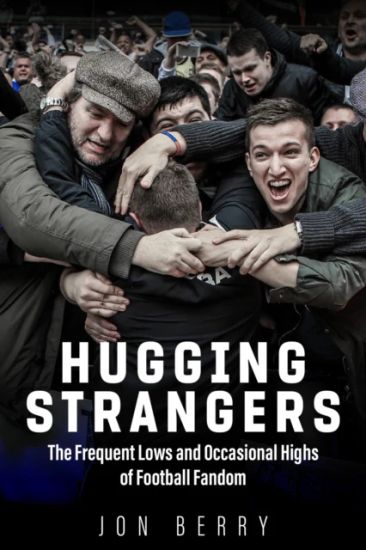
What is it like to follow one of English football's perennial non-achievers? Hugging Strangers is a celebration of what it means to support your club through thick and thin. It speaks to all who love the game but are lumbered - by way of family, geography or plain bad luck - with a team whose glory days are few and far between. At the end of the 1963/64 season Birmingham City stayed in the first division by winning on the last day of the campaign. In the 55 years that followed, the Blues kept either survival or promotion for the final fixture on a further 12 occasions. Stir in nine relegations, eight promotions, along with play-off failures and embarrassing exits from cup competitions and you'll have an idea of what it means to be a Blues fan. But you don't have to be a Birmingham fan to enjoy this book. This light-hearted collection of tales from a lifelong, hopeless football addict will strike a chord with anyone who has asked themselves quite why they allow this simple game to assume such importance in their lives.

It's an embarrassing truth for many football fans that it was only when professional football was eventually forced to close down that we recognised Covid-19 as a genuine threat to our way of life. Maybe just as shameful was the fact that once lockdown became normalised, it didn't take long for chatter to start about when the game might begin again. This book begins by charting what happened in the weeks leading up to that point, placing football in the context of furloughs, some new-found community awareness and dithering politicians. At the heart of the book are seven case studies of teams. From Burnley in the Premier League, down through the divisions to grassroots football, Project Restart looks at the hopes and fears of supporters and the actions of those charged with keeping their beloved clubs afloat. It looks at how we almost adjusted to the eerie echo of games on TV with no crowds and finishes by trying to address the biggest question in town: what will football look like in a post-Covid future?

Zurich, 2 December 2010. Sepp Blatter pulls the name of Qatar from the envelope. The accusations fly and the recriminations start. And once it s all sunk in, we start looking at maps and temperature charts and try to scrape together any fragments of knowledge about kingdoms in the Arabian desert. The Armchair Guide looks underneath some of the myths and preconceptions and tries to provide the average fan if there's any such thing with some sound information about what a World Cup in the desert might look like. Was the bidding process corrupt? How many people actually did die building stadiums? How hot will it really be? Can I go there with my mates and have a drink anywhere? What will the legacy be both in the region and for the global game? A light-hearted, sideways glance, Armchair Guide uses stories from within and beyond the game to cover everything about the 2022 Winter World Cup. It can t boast that it will pick a winner, but it ll go some way to shedding light on football s place in a changing world.

From Azeem to Ashes charts the last, miserable days of Joe Root's captaincy in early 2022 through to the T20 World Cup victory before the breathless Bazball Ashes finale at the Oval. It's a book written for cricket lovers by a cricket lover, with voices from clubs, the boardroom and the commentary box.September 2020: cricket is in the headlines for the first time since the 2005 Ashes. But the focus is racism, not runs or wickets. Azeem Rafiq's treatment has ignited fierce debate about prejudice and class.The book never ducks uncomfortable questions posed by the Rafiq affair. Why do England's cricket teams - men's and women's - look so unlike the nation they represent? How can grassroots participation be developed and preserved? In the franchise-driven, global circus of modern cricket, what place is there for Tests - or even 50-over games?From Azeem to Ashes takes a hard-nosed but affectionate and humorous look at cricket. It's a book written for those who want to protect its future.
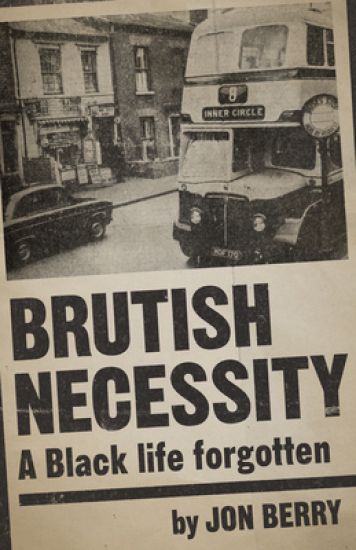
Oswald Augustus Grey was a Jamaican immigrant. He was 20 years old when he was executed and 19 when the crime for which he was convicted took place. To talk to people who lived in the city at the time, or to scour the nostalgia forums that proliferate online, is to discover an episode that has almost entirely disappeared in terms of public remembrance. This book unearths something of a place and a society that allowed a young life to become expendable and forgotten. The Birmingham in which this happened is both alien yet familiar.

In November 1962, 20-year-old Oswald Augustus Grey, an immigrant from Jamaica who had been in the UK for less than two years, became the last man to be hanged in Birmingham’s Winson Green prison. There were only five further executions in the UK before capital punishment ended in 1965. His trial lasted fewer than five working days and his subsequent appeal less than an hour. There were 24 weeks between the crime and the execution. The law failed Oswald Grey. He was treated as disposable and was the victim of careless advocacy and the unchallenged racism of his times. His story has been largely forgotten: this book puts that right.