

Kirjahaku
Etsi kirjoja tekijän nimen, kirjan nimen tai ISBN:n perusteella.
1000 tulosta hakusanalla Barry R. Parker
I remember once watching a presentation of the creation of the universe in a planetarium. It was a fascinating experience: lights flashing, particles appearing to rush by as an explosive roar echoed throughout the planetarium. Then suddenly ... black ness. And after a few seconds ... tiny lights--stars blinking into existence. I tried to imagine myself actually going back to this event. Was this really what it was like? It was an interesting facsimile, but far from what the real thing would have been like. The creation of the universe is an event that is impossible to imagine accurately. Fortunately, this has not discouraged peo ple from wondering what it was like. In Creation I have attempted to take you back to the begin ning-the big bang explosion-so that you can watch the uni verse grow and evolve. Starting with the first fraction of a sec ond, I trace the universe from its initial dramatic expansion through to the formation of the first nuclei and atoms. From here I go to the formation of galaxies and the curious distribu tion they have taken in space. Finally I talk about the formation of elements in stars, and the first life on the planets around them.


The author discusses whether time travel is scientifically possible. He examines "the history of the development of general relativity, the conceptof curved space-time and the early evolution of the universe. The remainder of the book [seeks to] explain the problems that arise when we attempt to turntheoretical holes in space-time into time machines." (N Y Times Book Review)


The author combines "the history of Mauna Kea, the Hawaiian 13,795-foot-high site of nine telescopes, with vignettes of the astronomers who work there...Stories concerning political, environmental, and scientific battles are ...[included with] descriptions of telescope construction and use. " (Choice).
Today we all take for granted the many technological marvels that have sprung from quantum physics without ever appreciating the radical paradigm shift that led to these discoveries. The story of the physicists who made the quantum leaps that have so altered our world is a provocative and intriguing one. And there is no better person to describe the history of this quantum revolution in terms that everyone can understand than award-winning physicist and science writer Barry Parker. Parker introduces us to all the major players in this history, offering interesting biographical details that shed light on their important discoveries: Max Planck, Albert Einstein, Niels Bohr, Werner Heisenberg, Erwin Schroedinger, Paul Dirac, Richard Feynman, and Julian Schwinger. Parker also discusses Einstein's objections to quantum theory ("God does not play dice with the universe."), philosophical implications and "quantum weirdness," as well as the seemingly miraculous practical applications of quantum theory - in lasers, transistors, integrated circuits, computer technology, nuclear energy, and genetics. Parker's gift for turning the subtle complexities of subatomic physics into clearly understandable terms while conveying the excitement and wide-ranging importance of quantum exploration make him the ideal guide to a field that continues to transform our world and ultimately our universe.
Acclaimed science writer Barry Parker completes his trilogy on Einstein with this new work showing the incredibly wide-ranging influence of Einstein's many discoveries. In the first volume, Einstein's Brainchild, Parker focused on relativity, the most famous and important of the great genius's ideas. In the second volume, Einstein's Passions, his human side and diverse interests beyond science were Parker's main topic. Now the author turns once again to Einstein as creative scientist, concentrating on his prolific output of far-reaching contributions that complement and broaden his discovery of relativity. Moreover, Parker provides an indelible portrait of the man behind the theories. In clear and eloquent language, the author helps us appreciate the breadth and richness of Einstein's vision: from Einstein's theories supporting time travel, to his research on curved space, the cosmological constant, black holes, worm holes, gravity waves, cosmic lenses, to quantum theory, and beyond. Parker also discusses Einstein's reluctant connection with atomic weapons, his pacifist philosophy, his quest for the elusive unified field theory, and the relationship of his work to the recent "hot" area of superstrings. Even readers already familiar with Einstein's work will discover a wealth of new material in this singular contribution to the Einstein corpus. Parker's gift for turning complex physics into lucid prose has produced the most complete and accessible volume to elucidate for everyone the magnificent contributions of this most brilliant of scientists.
Thirty years ago Albert Einstein died, his dream of a theory that would unify the universe unfulfilled. He spent the last decades of his life searching for such a theory-a theory that would explain everything from elementary particles and their interac tions to the overall structure of the universe. But he failed, not because he didn't try hard enough, but because the attempt was ahead of its time. When Einstein worked on the problem liter ally nothing was known about black holes, white holes, sin gularities, the Big Bang explosion and the early universe, quarks, gauge invariance, and weak and strong nuclear forces. Today we know that all these things are important in relation to a unified theory, and that they must be incorporated in and explained by such a theory. Thus, in a sense, our problem is much more complex today than it was in Einstein's day. But scientists have persevered and as a result we are now tan talizingly close to achieving this long-sought goal. Important breakthroughs have been made. In this book we will look at these breakthroughs and at recent unified theories-theories that go by the names supergravity, superstrings, GUTs, and twistor theory. In order to understand the problem, however, we must begin at the beginning.
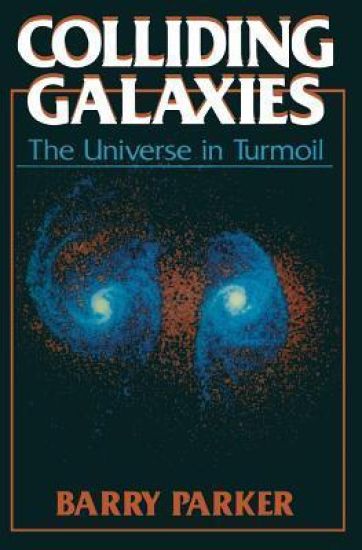
I remember sitting spellbound, watching the movie When Worlds Collide. Two planets hurled through space toward Earth while scientists and engineers frantically raced to complete a rocket ship that would take them to safety. In the final moments the spaceship lifted off as the occupants watched the Earth bulge, crack, then literally explode as one of the planets struck it. As I left the theater I wondered if it was really possible for another world to collide with Earth. Later I learned that while many catastrophic collisions no doubt occurred early in the his tory of the solar system, today they are exceedingly rare. I was relieved, but in another sense I was disappointed (not that I hoped a collision of this type would actually occur). A collision of two objects in space, say, two stars, I was sure would be a spectacular event. It is quite unlikely, however, that we will ever witness the collision of two stars. The event is just too rare. But collisions of systems of stars-galaxies-oddly enough, are relatively com mon. In fact, we see evidence of several in the sky right now.
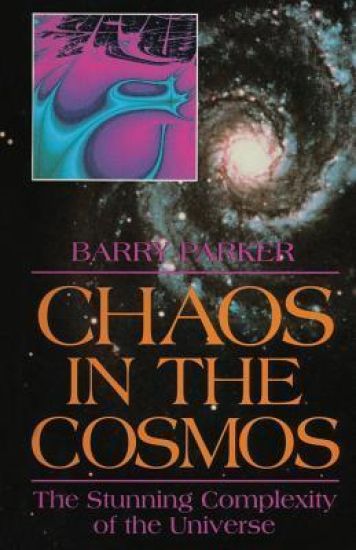
'he year was 1889. The French physicist-mathematician Henry T Poincare could not believe his eyes. He had worked for months on one of the most famous problems in science-the problem of three bodies moving around one another under mutual gravita tional attraction-and what he was seeing dismayed and trou bled him. Since Newton's time it had been assumed that the problem was solvable. All that was needed was a little ingenuity and considerable perseverance, but Poincare saw that this was not the case. Strange, unexplainable things happened when he delved into the problem; it was not solvable after all. Poincare was shocked and dismayed by the result-so disheartened he left the problem and went on to other things. What Poincare was seeing was the first glimpse of a phe nomenon we now call chaos. With his discovery the area lay dormant for almost 90 years. Not a single book was written about the phenomenon, and only a trickle of papers appeared. Then, about 1980 a resurgence of interest began, and thousands of papers appeared along with dozens of books. The new science of chaos was born and has attracted as much attention in recent years as breakthroughs in superconductivity and superstring theory.

Justice Served: A Barkley & Parker Thriller
R. Barri Flowers
Createspace Independent Publishing Platform
2012
nidottu



Barry's Mathemagical Journey Interactive Workbook
Barry R Beck
BookButler Publishing Company
2025
pokkari

Beginning Calculations in Physical Chemistry
Barry R. Johnson; Stephen K. Scott
Oxford University Press
1997
nidottu
Designed for first year students at university studying chemistry, and students taking physical chemistry as part of their degree course this Workbook is comprised of eight main sections covering revision of key elements. There are some 68 examples and 139 exercises through which students ability and confidence with tackling quantitative calculations will be developed, beginning with material based on pre-university knowledge through to topics such as chemical equilibrium that feature in first year unversity courses. The important equations are collected together at the end of each section for easy reference and a list of useful mathematical formulae is included. Students can work through the book as self-paced individuals, or in groups, alongside traditional lecture courses.

The Oxford Handbook of Political Economy
Barry R. Weingast; Donald Wittman
Oxford University Press
2008
nidottu
Over its long lifetime, "political economy" has had many different meanings: the science of managing the resources of a nation so as to provide wealth to its inhabitants for Adam Smith; the study of how the ownership of the means of production influenced historical processes for Marx; the study of the inter-relationship between economics and politics for some twentieth-century commentators; and for others, a methodology emphasizing individual rationality (the economic or "public choice" approach) or institutional adaptation (the sociological version). This Handbook views political economy as a grand (if imperfect) synthesis of these various strands, treating political economy as the methodology of economics applied to the analysis of political behavior and institutions. This Handbook surveys the field of political economy, with 58 chapters ranging from micro to macro, national to international, institutional to behavioral, methodological to substantive. Chapters on social choice, constitutional theory, and public economics are set alongside ones on voters, parties and pressure groups, macroeconomics and politics, capitalism and democracy, and international political economy and international conflict.

Throughout history, works of literature have helped to shape public discussion of social, legal, and political issues. In this book, Barry R. Schaller draws on examples from American literature in presenting an analysis of the legal aspects of several major problems facing our society. After identifying the key legal relationships in society, the book focuses on problems of violence, loss of authority, diminished faith in the American dream of progress, and the challenges posed by immense social and technological change. The author offers a set of standards to serve as a guide to effective judicial decision making and to assist the public in evaluating the soundness of those decisions.

The United States faces a small number of rogue states that either have or are working to acquire weapons of mass destruction. These NASTIs, or NBC-Arming Sponsors of Terrorism and Intervention, include such states as North Korea, Iraq, Iran, Libya, and Syria. U.S. nonproliferation programs and policies have helped to keep this number small, but U.S. and allied counterproliferation programs are essential to reduce the danger. It is up to deterrence, active defenses, passive defenses, decontamination, and counterforce to turn enemy weapons of mass destruction into instruments of limited destructive effect.Warfighters will also have to adopt a different strategy and concept of operations in fighting an adversary that is so heavily armed. This strategy will feature a combination of deception, dispersion, mobility and maneuver, diffused logistics, remote engagement, missile defense bubbles, non-combatant evacuation operations, and large area decontamination. It will also involve upgrades to NBC passive defense measures and equipment, as well as a counterforce capability that can find and destroy a variety of adversary targets, including mobile launchers and deeply buried and hardened underground structures.

Throughout history, works of literature have helped to shape public discussion of social, legal, and political issues. In this book, Barry R. Schaller draws on examples from American literature in presenting an analysis of the legal aspects of several major problems facing our society. After identifying the key legal relationships in society, the book focuses on problems of violence, loss of authority, diminished faith in the American dream of progress, and the challenges posed by immense social and technological change. The author offers a set of standards to serve as a guide to effective judicial decision making and to assist the public in evaluating the soundness of those decisions.