This children's book is the beginning of a series based on true events. It starts with a man who knew nothing about horses until he found his first, Cindy. As you read, you will learn how these two bonded, made a career, and became icons on the waterfront in Lunenburg, Nova Scotia, Canada.
This children's book is the beginning of a series based on true events. It starts with a man who knew nothing about horses until he found his first, Cindy. As you read, you will learn how these two bonded, made a career, and became icons on the waterfront in Lunenburg, Nova Scotia, Canada.
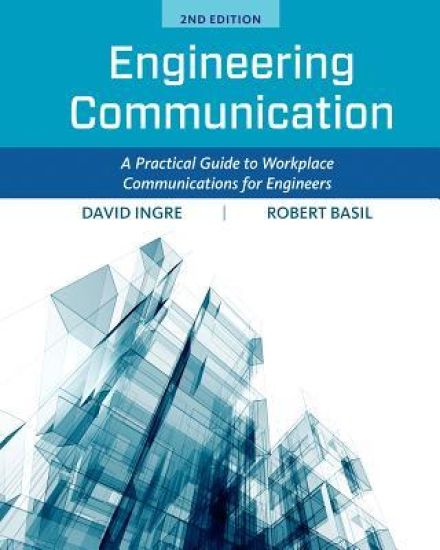
Master the communication skills and strategies most important in today's workplace with Ingre/Basil's ENGINEERING COMMUNICATION: A PRACTICAL GUIDE TO WORKPLACE COMMUNICATIONS FOR ENGINEERS, 2E. Ideal for future or practicing engineers, this practical guide is built around the successful dynamic analysis model CMAPP (context, message, audience, purpose and product). Meaningful insights and direction help you create proposals, reports, memos, letters, and job applications most appropriate for today's workplace. New coverage of digital and social media shows you how to maximize these online tools. Interrelated case studies and exercises help you strengthen the critical thinking and planning skills essential in engineering today. This edition also emphasizes important ethical and cultural considerations as you learn to develop the effective communication needed to be successful in your career.
Empower students to be the change—join the teaching mathematics for social justice movement! We live in an era in which students have —through various media and their lived experiences— a more visceral experience of social, economic, and environmental injustices. However, when people think of social justice, mathematics is rarely the first thing that comes to mind. Through model lessons developed by over 30 diverse contributors, this book brings seemingly abstract high school mathematics content to life by connecting it to the issues students see and want to change in the world. Along with expert guidance from the lead authors, the lessons in this book explain how to teach mathematics for self- and community-empowerment. It walks teachers step-by-step through the process of using mathematics—across all high school content domains—as a tool to explore, understand, and respond to issues of social injustice including: environmental injustice; wealth inequality; food insecurity; and gender, LGBTQ, and racial discrimination. This book features: Content cross-referenced by mathematical concept and social issuesDownloadable instructional materials for student useUser-friendly and logical interior design for daily useGuidance for designing and implementing social justice lessons driven by your own students’ unique passions and challenges Timelier than ever, teaching mathematics through the lens of social justice will connect content to students’ daily lives, fortify their mathematical understanding, and expose them to issues that will make them responsive citizens and leaders in the future.
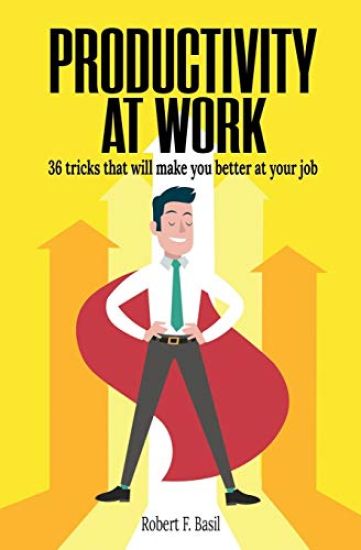
DO MORE, WITH LESS EFFORT, NOW. Some authors say that productivity is not only about saving time. Drawing from cutting-edge scientific studies, they offer systems and theories to completely change your life, become a new man (or woman), and turn you into an efficient productivity machine. Robert F. Basil loves these books. He has read them all. But this book is different. This book won't change who you are, and it won't turn you into a superhero. It is a lot less ambitious. In a fresh conversational tone (some say that the book should be under the Comedy category), Robert F. Basil shares 36 tricks that will make you better at your job. Faster, more efficient. These are little, proven, down-to-earth mundane hacks. To make the cut, each of them had to be: ConcreteEasyQuick (immediate effect)Common (apply to anyone working at an office)and, most importantly, Useful.A perfect start for anyone trying to improve his performance at work.
You are the fountain of life, light, and all grace and truth The hearts of the first Christians beat with praise for Christ. The strength of their devotion is remarkable, considering the times of uncertainty and persecution in which they lived. Despite all of this, the early church flourished, sustained by the God to whom they prayed. Christians today have a lot to learn from the devotional life of the early church. In Fount of Heaven, a collection of carefully selected prayers from the first six centuries of the church, we can pray with our spiritual forefathers. Prayers from luminaries such as Clement of Rome, Irenaeus, and Augustine are arranged by theme to reveal the right prayer for the moment. The prayers have been slightly updated to read more easily, but they retain their joy and mystery. As we turn to the prayers of the first Christians, we can return to the foundations of our own faith.
The present volume describes the general properties of the thorium atom and ions, the thermodynamics of its compounds and solutions, the behavior of solutions and solid com pounds under the influence of its own radiation as well as an external radiation field, and spectroscopic data in great detail. The different chapters are of special interest to scientists who work in these fields, and also in the corresponding fields of other elements. In some special fields there exists a detailed knowledge of this radioelement whereas in other fields, such as M6Bbauer spectra, lower oxidation states, or radiation stability, there are large gaps. Due to the fact that the significance 23 of thorium as a breeder fuel ( 2"fh to be converted to fissile 233U after thermal neutron capture) has decreased within the last decade, the behavior of thorium is not as yet so thoroughly investigated as the heavier radioactive element uranium. Many of these data, however, are not only of academic interest, e.g., the knowledge of atomic spectra is needed for some analytical methods, especially in the trace concentration region. Due to the noble gaS-like electronic configuration of the tetravalent ion, there are no absorption bands in the visible region so that in general spectra and data are very scarce. This volume is a very detailed and critically reviewed compilation, written by experts from the Federal Republic of Germany, Belgium, and the United States.
Night Fighter is a memoir written by J. R. D. Braham, a Royal Air Force (RAF) pilot who flew during World War II. The book recounts Braham's experiences as a night fighter pilot, flying missions over Germany and the surrounding areas. Braham provides a detailed account of the technical aspects of flying a night fighter, including the challenges of navigating and engaging enemy aircraft in the dark. He also shares his personal experiences and emotions, describing the fear and adrenaline of being in combat and the camaraderie among his fellow pilots. Throughout the book, Braham describes many of his most memorable missions, including his first kill, his encounters with German night fighters, and his involvement in the Battle of Berlin. He also reflects on the impact of war on himself and his fellow pilots, and the toll it took on their mental and physical health. Overall, Night Fighter provides a unique and insightful perspective on the experiences of a night fighter pilot during World War II, and is a must-read for anyone interested in aviation history or personal accounts of wartime experiences.The Story Of The R.A.F.�������s Most Decorated Fighter Pilot.This scarce antiquarian book is a facsimile reprint of the old original and may contain some imperfections such as library marks and notations. Because we believe this work is culturally important, we have made it available as part of our commitment for protecting, preserving, and promoting the world's literature in affordable, high quality, modern editions, that are true to their original work.
Why do things look blurry underwater? Why do people drive too fast in fog? How do you high-pass filter a cup of tea? What have mixer taps to do with colour vision? Basic Vision: An Introduction to Visual Perception demystifies the processes through which we see the world. Written by three authors with over 80 years of research and undergraduate teaching experience between them, it leads the reader step-by-step through the intricacies of visual processing, with full-colour illustrations on nearly every page. The writing style captures the excitement of recent research in neuroscience that has transformed our understanding of visual processing, but delivers it with a humour that keeps the reader enthused, rather than bemused. The book takes us through the various elements that come together as our perception of the world around us: the perception of size, colour, motion, and three-dimensional space. It illustrates the intricacy of the visual system, discussing its development during infancy, and revealing how the brain can get it wrong, either as a result of brain damage, through which the network of processes become compromised, or through illusion, where the brain compensates for mixed messages by seeing what it thinks should be there, rather than conveying the reality. The book also demonstrates the importance of contemporary techniques and methodology, and neuroscience-based techniques in particular, in driving forward our understanding of the visual system. Online Resources The online resources to accompany Basic Vision feature: For registered adopters: Figures from the book available to download, to facilitate lecture preparation. Test bank of multiple choice questions - a readily available tool for either formative or summative assessment. A Journal Club, with questions to lead students through key research articles that relate to topics covered in the book. For students: Annotated web links, giving students ready access to these additional learning resources.
Basic TV Technology is the essential basic guide to the fundamentals underlying all television and video systems, written for students and nontechnical professionals. You don't need to have a math or science background in order to understand this explanation of how the principal pieces of equipment work, what their functions are, and how they are integrated to form a complex video system. An understanding of this material will be necessary for you to succeed in the real world, where one person often has to perform many different roles and functions within a production. Armed with some basic technical background information, you'll be more effective at figuring out new applications and at problem-solving. The fourth edition of Basic TV Technology has been updated to reflect the industry shift to digital video and includes new information on compression, television standards, LCD displays, HD, and equipment. This book features the accessible Media Manual format, in which every topic is covered in two pages: one of explanatory text and one of figures. Need more information on TV technologies, go to: http://www.insightmedia.info/newsletters.php
The second edition (1997) of this text was a completely rewritten version of the original text Basic Coastal Engineering published in 1978. This third edition makes several corrections, improvements and additions to the second edition. Basic Coastal Engineering is an introductory text on wave mechanics and coastal processes along with fundamentals that underline the practice of coastal engineering. This book was written for a senior or first postgraduate course in coastal engineering. It is also suitable for self study by anyone having a basic engineering or physical science background. The level of coverage does not require a math or fluid mechanics background beyond that presented in a typical undergraduate civil or mechanical engineering curriculum. The material p- sented in this text is based on the author’s lecture notes from a one-semester course at Virginia Polytechnic Institute, Texas A&M University, and George Washington University, and a senior elective course at Lehigh University. The text contains examples to demonstrate the various analysis techniques that are presented and each chapter (except the first and last) has a collection of problems for the reader to solve that further demonstrate and expand upon the text material. Chapter 1 briefly describes the coastal environment and introduces the re- tively new field of coastal engineering. Chapter 2 describes the two-dimensional characteristics of surface waves and presents the small-amplitude wave theory to support this description.
Anyone who attempts to read genetics or epidemiology research literature needs to understand the essentials of biostatistics. This book, a revised new edition of the successful Essentials of Biostatistics has been written to provide such an understanding to those who have little or no statistical background and who need to keep abreast of new findings in this fast moving field. Unlike many other elementary books on biostatistics, the main focus of this book is to explain basic concepts needed to understand statistical procedures. This Book: Surveys basic statistical methods used in the genetics and epidemiology literature, including maximum likelihood and least squares.Introduces methods, such as permutation testing and bootstrapping, that are becoming more widely used in both genetic and epidemiological research.Is illustrated throughout with simple examples to clarify the statistical methodology.Explains Bayes’ theorem pictorially.Features exercises, with answers to alternate questions, enabling use as a course text. Written at an elementary mathematical level so that readers with high school mathematics will find the content accessible. Graduate students studying genetic epidemiology, researchers and practitioners from genetics, epidemiology, biology, medical research and statistics will find this an invaluable introduction to statistics.
Anyone who attempts to read genetics or epidemiology research literature needs to understand the essentials of biostatistics. This book, a revised new edition of the successful Essentials of Biostatistics has been written to provide such an understanding to those who have little or no statistical background and who need to keep abreast of new findings in this fast moving field. Unlike many other elementary books on biostatistics, the main focus of this book is to explain basic concepts needed to understand statistical procedures. This Book: Surveys basic statistical methods used in the genetics and epidemiology literature, including maximum likelihood and least squares.Introduces methods, such as permutation testing and bootstrapping, that are becoming more widely used in both genetic and epidemiological research.Is illustrated throughout with simple examples to clarify the statistical methodology.Explains Bayes’ theorem pictorially.Features exercises, with answers to alternate questions, enabling use as a course text. Written at an elementary mathematical level so that readers with high school mathematics will find the content accessible. Graduate students studying genetic epidemiology, researchers and practitioners from genetics, epidemiology, biology, medical research and statistics will find this an invaluable introduction to statistics.
A core statistics text that emphasizes logical inquiry, not math Basic Statistics for Social Research teaches core general statistical concepts and methods that all social science majors must master to understand (and do) social research. Its use of mathematics and theory are deliberately limited, as the authors focus on the use of concepts and tools of statistics in the analysis of social science data, rather than on the mathematical and computational aspects. Research questions and applications are taken from a wide variety of subfields in sociology, and each chapter is organized around one or more general ideas that are explained at its beginning and then applied in increasing detail in the body of the text. Each chapter contains instructive features to aid students in understanding and mastering the various statistical approaches presented in the book, including: Learning objectivesCheck quizzes after many sections and an answer key at the end of the chapterSummaryKey termsEnd-of-chapter exercisesSPSS exercises (in select chapters) Ancillary materials for both the student and the instructor are available and include a test bank for instructors and downloadable video tutorials for students.