

Kirjahaku
Etsi kirjoja tekijän nimen, kirjan nimen tai ISBN:n perusteella.
1000 tulosta hakusanalla Beauty Didia





The Spirit of Beauty. a Didactic Poem ... Edited by J. Sladden.
Dilnot Sladden; John Sladden
British Library, Historical Print Editions
2011
pokkari

BEAUTY
HARPERCOLLINS PUBLISHERS INC
2018
nidottu
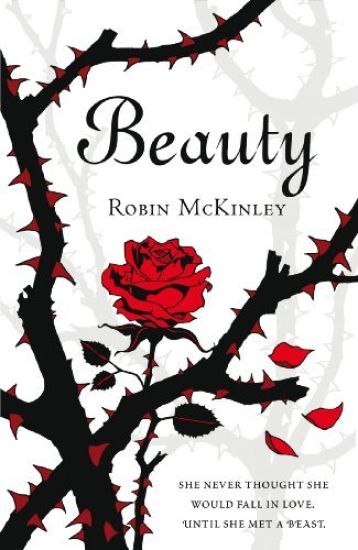
From Newbery Medal-winning author Robin McKinley, this beloved story illuminates an unlikely love story--Beauty and the Beast. This fortieth-anniversary edition features a striking new package for the award-winning novel. Publishers Weekly called Beauty "A splendid story."Beauty has never liked her nickname. She is thin and awkward; it is her two sisters who are the beautiful ones. But what she lacks in appearance, she can perhaps make up for in courage. When her father comes home with a tale of an enchanted castle in the forest and the terrible promise he had to make to the Beast who lives there, Beauty knows she must travel to the castle, a prisoner of her own free will. Her father insists that he will not let her go, but she responds, "Cannot a Beast be tamed?"Newbery Medalist Robin McKinley's beloved and acclaimed novel has been delighting readers for more than forty years. ALA Booklist called Beauty "A captivating novel." "A reader feels as though it's all unfolding for the very first time."--The GuardianAn ALA Notable Book for ChildrenA Best Book for Young Adults
Those who study the nature of beauty are at once plagued by a singular issue: what does it mean to say something is beautiful? On the one hand, beauty is associated with erotic attraction; on the other, it is the primary category in aesthetics, and it is widely supposed that the proper response to a work of art is one of disinterested contemplation. At its core, then, beauty is a contested concept, and both sides feel comfortable appealing to the authority of Plato, and via him, to the ancient Greeks generally. So, who is right--if either? Beauty offers an elegant investigation of ancient Greek notions of beauty and, in the process, sheds light on modern aesthetics and how we ought to appreciate the artistic achievements of the classical world itself. The book begins by reexamining the commonly held notion that the ancient Greeks possessed no term that can be unambiguously defined as "beauty" or "beautiful." Author David Konstan discusses a number of Greek approximations before positioning the heretofore unexamined term kállos as the key to bridging the gap between beauty and desire, and tracing its evolution as applied to physical beauty, art, literature, and more. Throughout, the discussion is enlivened with thought-provoking stories taken from Homer, Plato, Xenophon, Plutarch, and others. The book then examines corresponding terms in ancient Latin literature to highlight the survival of Greek ideas in the Latin West. The final chapter will compare the ancient Greek conception of beauty with modern notions of beauty and aesthetics. In particular, the book will focus on the reception of classical Greek art in the Renaissance and how Vasari and his contemporaries borrowed from Plato the sense that the beauty in art was transcendental, but left out the erotic dimension of viewing. A study of the ancient Greek idea of beauty shows that, even if Greece was the inspiration for modern aesthetic ideals, the Greek view of the relationship between beauty and desire was surprisingly consistent--and different from our own. Through this magisterial narrative, it is possible to identify how the Greeks thought of beauty, and what it was that attracted them. Their perceptions still have something important to tell us about art, love, desire--and beauty.
Beauty can be consoling, disturbing, sacred, profane; it can be exhilarating, appealing, inspiring, chilling. It can affect us in an unlimited variety of ways. Yet it is never viewed with indifference. In this Very Short Introduction the renowned philosopher Roger Scruton explores the concept of beauty, asking what makes an object - either in art, in nature, or the human form - beautiful, and examining how we can compare differing judgements of beauty when it is evident all around us that our tastes vary so widely. Is there a right judgement to be made about beauty? Is it right to say there is more beauty in a classical temple than a concrete office block, more in a Rembrandt than in last year's Turner Prize winner? Forthright and thought-provoking, and as accessible as it is intellectually rigorous, this introduction to the philosophy of beauty draws conclusions that some may find controversial, but, as Scruton shows, help us to find greater sense of meaning in the beautiful objects that fill our lives. ABOUT THE SERIES: The Very Short Introductions series from Oxford University Press contains hundreds of titles in almost every subject area. These pocket-sized books are the perfect way to get ahead in a new subject quickly. Our expert authors combine facts, analysis, perspective, new ideas, and enthusiasm to make interesting and challenging topics highly readable.
Those who study the nature of beauty are at once plagued by a singular issue: what does it mean to say something is beautiful? On the one hand, beauty is associated with erotic attraction; on the other, it is the primary category in aesthetics, and it is widely supposed that the proper response to a work of art is one of disinterested contemplation. At its core, then, beauty is a contested concept, and both sides feel comfortable appealing to the authority of Plato, and via him, to the ancient Greeks generally. So, who is right--if either? Beauty offers an elegant investigation of ancient Greek notions of beauty and, in the process, sheds light on modern aesthetics and how we ought to appreciate the artistic achievements of the classical world itself. The book begins by reexamining the commonly held notion that the ancient Greeks possessed no term that can be unambiguously defined as "beauty" or "beautiful." Author David Konstan discusses a number of Greek approximations before positioning the heretofore unexamined term kállos as the key to bridging the gap between beauty and desire, and tracing its evolution as applied to physical beauty, art, literature, and more. Throughout, the discussion is enlivened with thought-provoking stories taken from Homer, Plato, Xenophon, Plutarch, and others. The book then examines corresponding terms in ancient Latin literature to highlight the survival of Greek ideas in the Latin West. The final chapter will compare the ancient Greek conception of beauty with modern notions of beauty and aesthetics. In particular, the book will focus on the reception of classical Greek art in the Renaissance and how Vasari and his contemporaries borrowed from Plato the sense that the beauty in art was transcendental, but left out the erotic dimension of viewing. A study of the ancient Greek idea of beauty shows that, even if Greece was the inspiration for modern aesthetic ideals, the Greek view of the relationship between beauty and desire was surprisingly consistent--and different from our own. Through this magisterial narrative, it is possible to identify how the Greeks thought of beauty, and what it was that attracted them. Their perceptions still have something important to tell us about art, love, desire--and beauty.
90 classic titles celebrating 90 years of Penguin Books‘People should fall in love with their eyes closed. Just close your eyes. Don’t look.’From Warhol’s romantic relationships to his thoughts on interior design, these candid, highly entertaining musings - on love, sex, beauty, work and space – give an intimate glimpse into the mind of one of the most iconic figures in twentieth-century culture.
Jamie Angelo is part artist and part alchemist. His plastic surgery techniques are light-years beyond modern medicine. He can transform a haggard face into a masterpiece of ageless beauty. He is not God. But he is close. To ambitious models like Jaishree Manglani, Jamie is the ultimate fantasy-a master illusionist who can turn her dream of eternal youth into reality. Until the truth about Jami's "art" and "science" is revealed, and a nightmare ensues. Because if there's no such thing as perfect beauty, Manhattan's king of beauty might just be the gatekeeper of something other than human.
What does God think about our beauty? Discover the heart of the Creator as we study Beauty through the lens of the God who passionately loves us!
Exploring a fundamental truth of being human, this recasting of the tale of Sleeping Beauty offers an allegorical look at the importance of saving the Earth and preserving beauty
When the family business collapses, Beauty and her two sisters are forced to leave the city and begin a new life in the countryside. However, when their father accepts hospitality from the elusive and magical Beast, he is forced to make a terrible promise - to send one daughter to the Beast's castle, with no guarantee that she will be seen again.
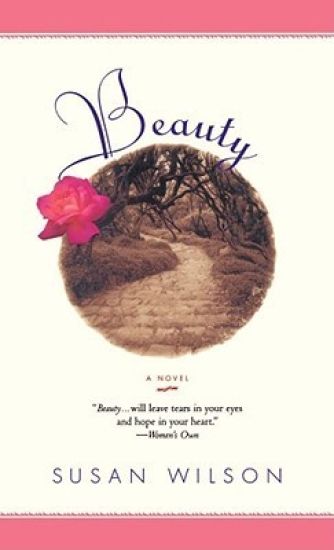
Every reader is familiar with the popular tale of Beauty and the Beast. But what if the fairy tale came true? Beauty tells the story of a modern woman who learns to love the deeper man, beyond all appearances; it is a totally credible, contemporary retelling of the classic tale. First serial to Good Housekeeping.
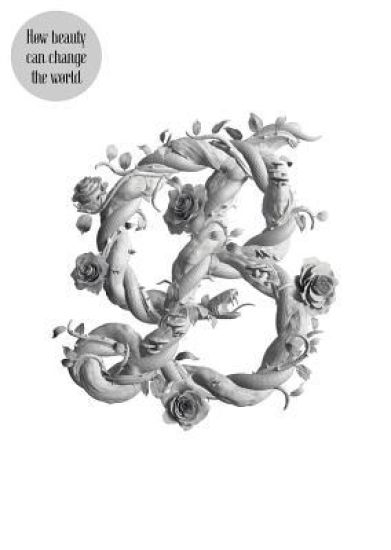
Acclaimed designers Sagmeister & Walsh explore the essence of beauty and the transformative power of beautiful designIn this groundbreaking highly visual book, world-renowned designers Stefan Sagmeister and Jessica Walsh set out on a mission: to find out what beauty is and the many ways that it impacts our lives. They turn to philosophy, history, and science to understand why we are drawn to beauty and how it influences the way we feel and behave. Determined to translate their findings into action, Sagmeister & Walsh show us how beauty can improve the world.