Kirjojen hintavertailu. Mukana 11 469 044 kirjaa ja 12 kauppaa.

Kirjahaku

Etsi kirjoja tekijän nimen, kirjan nimen tai ISBN:n perusteella.

294 tulosta hakusanalla Beezley William H.

Mexican National Identity

Mexican National Identity

Beezley William H.

University of Arizona Press
2008
sidottu
In this enlightening book, the well-known historian William Beezley contends that a Mexican national identity was forged during the nineteenth century not by a self-anointed elite but rather by a disparate mix of ordinary people and everyday events. In examining independence festivals, children's games, annual almanacs, and the performances of itinerant puppet theaters, Beezley argues that these seemingly unrelated and commonplace occurrences?not the far more self-conscious and organized efforts of politicians, teachers, and others?created a far-reaching sense of a new nation. In the century that followed Mexico's independence from Spain in 1821, Beezley maintains, sentiments of nationality were promulgated by people who were concerned not with the promotion of nationalism but with something far more immediate the need to earn a living. These peddlers, vendors, actors, artisans, writers, publishers, and puppeteers sought widespread popular appeal so that they could earn money. According to Beezley, they constantly refined their performances, as well as the symbols and images they employed, in order to secure larger revenues.Gradually they discovered the stories, acts, and products that attracted the largest numbers of paying customers. As Beezley convincingly asserts, out of ?what sold to the masses a collective national identity slowly emerged. Mexican National Identity makes an important contribution to the growing body of literature that explores the influences of popular culture on issues of national identity. By looking at identity as it was fashioned ?in the streets,? it opens new avenues for exploring identity formation more generally, not just in Mexico and Latin American countries but in every nation. Check out the "http://newbooksinhistory.com/p=73">New Books in History Interview with Bill Beezley!
Mexico in World History

Mexico in World History

William H. Beezley

Oxford University Press Inc
2011
sidottu
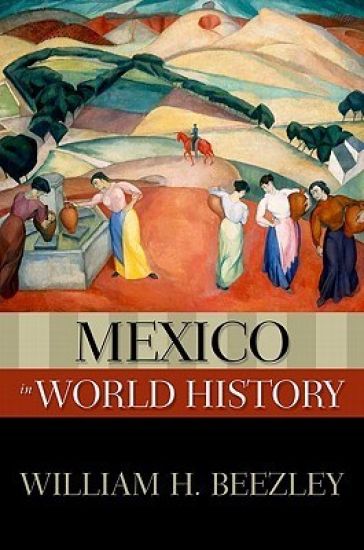
Drawing on materials ranging from archaeological findings to recent studies of migration issues and drug violence, William H. Beezley provides a dramatic narrative of human events as he recounts the story of Mexico in the context of world history. Beginning with the Mayan and Aztec civilizations and their brutal defeat at the hands of the Conquistadors, Beezley highlights the penetrating effect of Spain's three-hundred-year colonial rule, during which Mexico became a multicultural society marked by Roman Catholicism and the Spanish language. Independence, he shows, was likewise marked by foreign invasions and huge territorial losses, this time at the hands of the United States, who annexed a vast land mass--including the states of Texas, New Mexico, and California--and remained a powerful presence along the border. The 1910 revolution propelled land, educational, and public health reforms, but later governments turned to authoritarian rule, personal profits, and marginalization of rural, indigenous, and poor Mexicans. Throughout this eventful chronicle, Beezley highlights the people and international forces that shaped Mexico's rich and tumultuous history.
Mexico in World History

Mexico in World History

William H. Beezley

Oxford University Press Inc
2011
nidottu
Drawing on materials ranging from archaeological findings to recent studies of migration issues and drug violence, William H. Beezley provides a dramatic narrative of human events as he recounts the story of Mexico in the context of world history. Beginning with the Mayan and Aztec civilizations and their brutal defeat at the hands of the Conquistadors, Beezley highlights the penetrating effect of Spain's three-hundred-year colonial rule, during which Mexico became a multicultural society marked by Roman Catholicism and the Spanish language. Independence, he shows, was likewise marked by foreign invasions and huge territorial losses, this time at the hands of the United States, who annexed a vast land mass--including the states of Texas, New Mexico, and California--and remained a powerful presence along the border. The 1910 revolution propelled land, educational, and public health reforms, but later governments turned to authoritarian rule, personal profits, and marginalization of rural, indigenous, and poor Mexicans. Throughout this eventful chronicle, Beezley highlights the people and international forces that shaped Mexico's rich and tumultuous history.
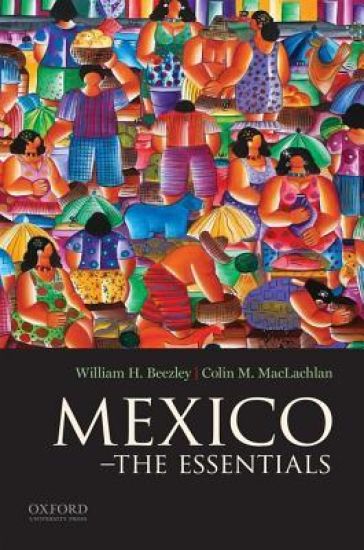
Mexico: The Essentials

Mexico: The Essentials

William H. Beezley; Colin M. MacLachlan

Oxford University Press
2015
nidottu
Mexico: The Essentials provides a concise introduction to Mexican history and culture built on ten fundamental aspects of Mexican life. Featuring a topical organization, the book offers readers easy access to these major themes--the "essentials"--that shape the nation and society: physical and living diversity, politics, family, economy, religion, Mexico City, popular arts, drugs and crimes, migration, and Mexico in global perspective. Authors William H. Beezley and Colin M. MacLachlan weave together each narrative with material from cultural investigations, ethnic and gender studies, and new sources--including visual and material evidence--to enrich and deepen students' understanding and appreciation of the Mexican past. Each of the essays is written from a historical perspective and begins with a brief section describing the colonial legacy.
Mexicans in Revolution, 1910-1946

Mexicans in Revolution, 1910-1946

William H. Beezley; Colin M. MacLachlan

University of Nebraska Press
2009
pokkari
On November 20, 1910, Mexicans initiated the world's first popular social revolution. The unbalanced progress of the previous regime triggered violence and mobilized individuals from all classes to demand social and economic justice. In the process they shaped modern Mexico at a cost of two million lives. This accessible and gripping account guides the reader through the intricacies of the revolution, focusing on the revolutionaries as a group and the implementation of social and political changes. In this volume written for the revolution's centennial, William H. Beezley and Colin M. MacLachlan recount how the revolutionary generation laid the foundation for a better life for all Mexicans.
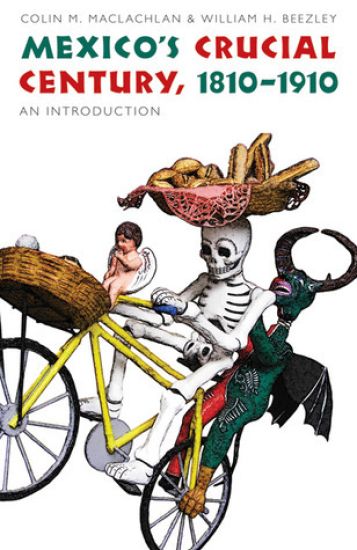
Mexico's Crucial Century, 1810-1910

Mexico's Crucial Century, 1810-1910

William H. Beezley; Colin M. MacLachlan

University of Nebraska Press
2010
pokkari
After Mexico gained its independence from Spain in 1821, it began the work of forging its identity as an independent nation, a process that would endure throughout the crucial nineteenth century. A weakened Mexico faced American territorial ambitions and economic pressure, and the U.S.-Mexican War threatened the fledgling nation's survival. In 1876 Porfirio Díaz became president of Mexico, bringing political stability to the troubled nation. Although Díaz initiated long-delayed economic development and laid the foundation of modern Mexico, his government was an oligarchy created at the expense of most Mexicans. This accessible account guides the reader through a pivotal time in Mexican history, including such critical episodes as the reign of Santa Anna, the U.S.-Mexican War, and the Porfiriato. Colin M. MacLachlan and William H. Beezley recount how the century between Mexico's independence and the outbreak of the Mexican Revolution had a lasting impact on the course of the nation's history.
Mexican National Identity

Mexican National Identity

William H. Beezley

University of Arizona Press
2008
nidottu
In this enlightening book, the well-known historian William Beezley contends that a Mexican national identity was forged during the nineteenth century not by a self-anointed elite but rather by a disparate mix of ordinary people and everyday events. In examining independence festivals, children's games, annual almanacs, and the performances of itinerant puppet theaters, Beezley argues that these seemingly unrelated and commonplace occurrences?not the far more self-conscious and organized efforts of politicians, teachers, and others?created a far-reaching sense of a new nation. In the century that followed Mexico's independence from Spain in 1821, Beezley maintains, sentiments of nationality were promulgated by people who were concerned not with the promotion of nationalism but with something far more immediate the need to earn a living. These peddlers, vendors, actors, artisans, writers, publishers, and puppeteers sought widespread popular appeal so that they could earn money. According to Beezley, they constantly refined their performances, as well as the symbols and images they employed, in order to secure larger revenues. Gradually they discovered the stories, acts, and products that attracted the largest numbers of paying customers. As Beezley convincingly asserts, out of ?what sold to the masses a collective national identity slowly emerged. Mexican National Identity makes an important contribution to the growing body of literature that explores the influences of popular culture on issues of national identity. By looking at identity as it was fashioned ?in the streets,? it opens new avenues for exploring identity formation more generally, not just in Mexico and Latin American countries but in every nation. Check out the "http://newbooksinhistory.com/p=73">New Books in History Interview with Bill Beezley!
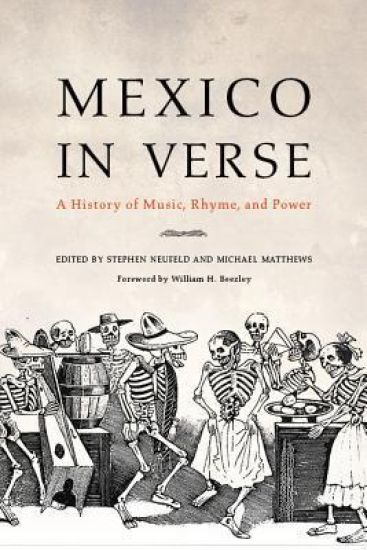
Mexico in Verse

Mexico in Verse

William H. Beezley

University of Arizona Press
2015
nidottu
The history of Mexico is spoken in the voice of ordinary people. In rhymed verse and mariachi song, in letters of romance and whispered words in the cantina, the heart and soul of a nation is revealed in all its intimacy and authenticity. Mexico in Verse, edited by Stephen Neufeld and Michael Matthews, examines Mexican history through its poetry and music, the spoken and the written word.Focusing on modern Mexico, from 1840 to the 1980s, this volume examines the cultural venues in which people articulated their understanding of the social, political, and economic change they witnessed taking place during times of tremendous upheaval, such as the Mexican-American War, the Porfiriato, and the Mexican Revolution. The words of diverse peoples—people of the street, of the field, of the cantinas—reveal the development of the modern nation. Neufeld and Matthews have chosen sources so far unexplored by Mexicanist scholars in order to investigate the ways that individuals interpreted—whether resisting or reinforcing—official narratives about formative historical moments.The contributors offer new research that reveals how different social groups interpreted and understood the Mexican experience. The collected essays cover a wide range of topics: military life, railroad accidents, religious upheaval, children's literature, alcohol consumption, and the 1985 earthquake. Each chapter provides a translated song or poem that encourages readers to participate in the interpretive practice of historical research and cultural scholarship. In this regard, Mexico in Verse serves both as a volume of collected essays and as a classroom-ready primary document reader.
Latin American Cultural Objects and Episodes

Latin American Cultural Objects and Episodes

William H. Beezley

John Wiley Sons Inc
2020
nidottu
Delight in the cultural aspects of Latin America by observing the objects that give life to history Latin American Cultural Objects and Episodes provides readers with an eclectic and fascinating exploration of Latin American history through the examination of physical objects. Distinguished author and Professor William H. Beezley takes readers on a journey that includes objects used music and visual media, such as movies, documentaries, and television. Forming an integral part of the history they represent, the objects described in this book tell the tale of the little known or neglected part of Latin American history. While most historical authors and researchers focus on the political and economic life of Latin America, this author uses the objects he highlights to explain and illuminate the daily lives of the Latin American peoples and the legacies that they share. Forming an essential part of a comprehensive understanding of Latin American history, the book includes discussions and explorations of: How objects have transformed and shaped the cultures of Latin America over the yearsUnusual and interesting objects serendipitously discovered by a variety of researchers and historiansTen chapters, each beginning with an object acting as a synecdoche or metonym that introduces a discussion of Latin American historical lifeThe significance of the objects to particular religious practices, musical traditions, or schools of visual media, such as folk art, film or television Perfect for anyone interested in Latin American life beyond politics and economics, Latin American Cultural Objects and Episodes belongs on the bookshelves of everyone with a curiosity about culture in Latin America as it's revealed through physical objects.
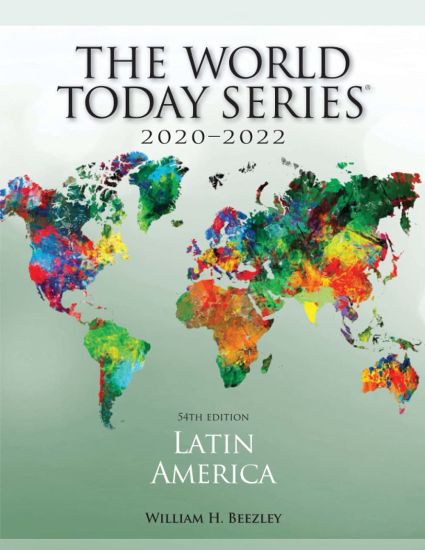
Latin America 2020-2022

Latin America 2020-2022

William H. Beezley

Rowman Littlefield
2021
nidottu
The World Today Series: Latin America offers the latest available economic, demographic, political, and cultural information. Including solid statistical data expressing freedom, violence, and governmental orientation. Consideration is given to the evolving relationships with the United States and other Latin American nations. Revisions have also addressed new historical interpretations, for example, of the history of Mexico and latest political changes, for example, in Venezuela and Cuba. Maps, charts, and photographs provide extensive visual expressions of the region, its geography, peoples, and cultures, in particular public architecture, agricultural technology, specular geology, and striking diversity. The images offer a narrative of the multiplicity of peoples as demonstrated in their clothing, economic and everyday activities, their physical surroundings. Consequently, the narrative combines global economics, national politics, and daily social life throughout the region. The chapters can be read as individual histories for each of the countries, within the context created by contrasts and similarities with the other nations of Latin America.
Judas at the Jockey Club and Other Episodes of Porfirian Mexico

Judas at the Jockey Club and Other Episodes of Porfirian Mexico

William H. Beezley

University of Nebraska Press
2018
pokkari
Featuring a new preface by the author, this brilliant and eminently readable cultural history looks at Mexican life during the dictatorship of Porfirio Díaz, from 1876 to 1911. At that time the modernization that Mexico underwent produced a fierce struggle between the traditional and the new, exacerbating class antagonisms in the process. The noted historian William H. Beezley illuminates many facets of everyday Mexican life lying at the heart of this conflict and change, including sports, storytelling, health care, technology, and the traditional Easter-time Judas burnings that became a primary focus of strife during those years. This updated volume provides a teacher’s guide, available on the University of Nebraska Press website, offering a manual of internet links, additional readings, and practice experiences that can be used in the classroom or by anyone who wants to go beyond the chapters of this book.Download the discussion guide.
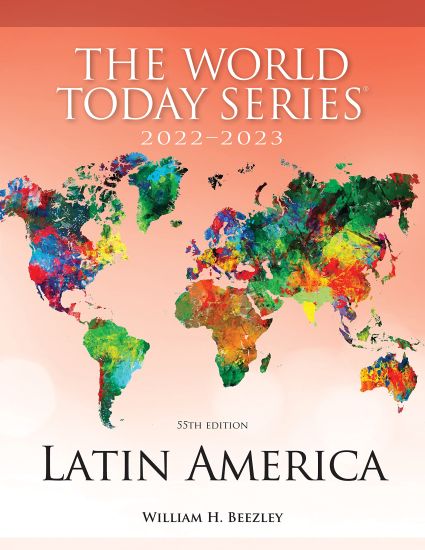
Latin America 2022–2023

Latin America 2022–2023

William H. Beezley

BLOOMSBURY PUBLISHING PLC
2022
nidottu
The World Today Series: Latin America offers the latest available economic, demographic, political, and cultural information. Including solid statistical data expressing freedom, violence, and governmental orientation. Consideration is given to the evolving relationships with the United States and other Latin American nations. Revisions have also addressed new historical interpretations, for example, of the history of Mexico and latest political changes, for example, in Venezuela and Cuba. Maps, charts, and photographs provide extensive visual expressions of the region, its geography, peoples, and cultures, in particular public architecture, agricultural technology, specular geology, and striking diversity. The images offer a narrative of the multiplicity of peoples as demonstrated in their clothing, economic and everyday activities, their physical surroundings. Consequently, the narrative combines global economics, national politics, and daily social life throughout the region. The chapters can be read as individual histories for each of the countries, within the context created by contrasts and similarities with the other nations of Latin America.
Latin America 2023–2024

Latin America 2023–2024

William H. Beezley

BLOOMSBURY PUBLISHING PLC
2023
nidottu
The World Today Series: Latin America offers the latest available economic, demographic, political, and cultural information. Including solid statistical data expressing freedom, violence, and governmental orientation. Consideration is given to the evolving relationships with the United States and other Latin American nations. Revisions have also addressed new historical interpretations, for example, of the history of Mexico and latest political changes, for example, in Venezuela and Cuba. Maps, charts, and photographs provide extensive visual expressions of the region, its geography, peoples, and cultures, in particular public architecture, agricultural technology, specular geology, and striking diversity. The images offer a narrative of the multiplicity of peoples as demonstrated in their clothing, economic and everyday activities, their physical surroundings. Consequently, the narrative combines global economics, national politics, and daily social life throughout the region. The chapters can be read as individual histories for each of the countries, within the context created by contrasts and similarities with the other nations of Latin America.
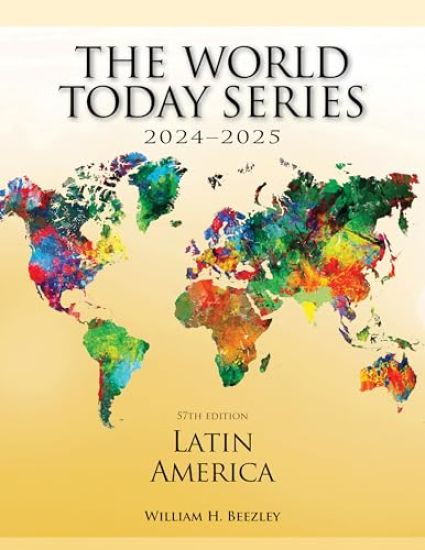
Latin America 2024–2025

Latin America 2024–2025

William H. Beezley

BLOOMSBURY PUBLISHING PLC
2024
nidottu
The World Today Series: Latin America offers the latest available economic, demographic, political, and cultural information. Including solid statistical data expressing freedom, violence, and governmental orientation. Consideration is given to the evolving relationships with the United States and other Latin American nations. Revisions have also addressed new historical interpretations, for example, of the history of Mexico and latest political changes, for example, in Venezuela and Cuba. Maps, charts, and photographs provide extensive visual expressions of the region, its geography, peoples, and cultures, in particular public architecture, agricultural technology, specular geology, and striking diversity. The images offer a narrative of the multiplicity of peoples as demonstrated in their clothing, economic and everyday activities, their physical surroundings. Consequently, the narrative combines global economics, national politics, and daily social life throughout the region. The chapters can be read as individual histories for each of the countries, within the context created by contrasts and similarities with the other nations of Latin America.
Genocide, Collective Violence, and Popular Memory

Genocide, Collective Violence, and Popular Memory

David E. Lorey; William H. Beezley

Rowman Littlefield
2001
sidottu
The twentieth century has been scarred by political violence and genocide, reaching its extreme in the Holocaust. Yet, at the same time, the century has been marked by a growing commitment to human rights. This volume highlights the importance of history-of socially processed memory-in resolving the wounds left by massive state-sponsored political violence and in preventing future episodes of violence. In Genocide, Collective Violence, and Popular Memory: The Politics of Remembrance in the Twentieth Century, the editors present and discuss the many different social responses to the challenge of coming to terms with past reigns of terror and collective violence. Designed for undergraduate courses in political violence and revolution, this volume treats a wide variety of incidents of collective violence-from decades-long genocide to short-lived massacres. The selection of essays provides a broad range of thought-provoking case studies from Latin America, Africa, Europe, and Asia. This provocative collection of readings from around the world will spur debate and discussion of this timely and important topic in the classroom and beyond.
Genocide, Collective Violence, and Popular Memory

Genocide, Collective Violence, and Popular Memory

David E. Lorey; William H. Beezley

Rowman Littlefield
2001
nidottu
The twentieth century has been scarred by political violence and genocide, reaching its extreme in the Holocaust. Yet, at the same time, the century has been marked by a growing commitment to human rights. This volume highlights the importance of history-of socially processed memory-in resolving the wounds left by massive state-sponsored political violence and in preventing future episodes of violence. In Genocide, Collective Violence, and Popular Memory: The Politics of Remembrance in the Twentieth Century, the editors present and discuss the many different social responses to the challenge of coming to terms with past reigns of terror and collective violence. Designed for undergraduate courses in political violence and revolution, this volume treats a wide variety of incidents of collective violence-from decades-long genocide to short-lived massacres. The selection of essays provides a broad range of thought-provoking case studies from Latin America, Africa, Europe, and Asia. This provocative collection of readings from around the world will spur debate and discussion of this timely and important topic in the classroom and beyond.
Glorious Theme: a Superior All-purpose Compilation of Sacred Songs; c. 2

Glorious Theme: a Superior All-purpose Compilation of Sacred Songs; c. 2

W. H. (William Howe) 1873-1 Ruebush; J. H. (James Hott) 1865-1948 Ruebush; Samuel W. B. 1873 Beazley

Hassell Street Press
2021
nidottu
This work has been selected by scholars as being culturally important and is part of the knowledge base of civilization as we know it.This work is in the public domain in the United States of America, and possibly other nations. Within the United States, you may freely copy and distribute this work, as no entity (individual or corporate) has a copyright on the body of the work.Scholars believe, and we concur, that this work is important enough to be preserved, reproduced, and made generally available to the public. To ensure a quality reading experience, this work has been proofread and republished using a format that seamlessly blends the original graphical elements with text in an easy-to-read typeface.We appreciate your support of the preservation process, and thank you for being an important part of keeping this knowledge alive and relevant.