Kirjojen hintavertailu. Mukana 11 244 527 kirjaa ja 12 kauppaa.

Kirjahaku

Etsi kirjoja tekijän nimen, kirjan nimen tai ISBN:n perusteella.

1000 tulosta hakusanalla Benjamin H. Milligan

By Water Beneath the Walls

By Water Beneath the Walls

Benjamin H. Milligan

Bantam Books Inc
2021
sidottu
A gripping history chronicling the fits and starts of American special operations and the ultimate rise of the Navy SEALs from unarmed frogmen to elite, go-anywhere commandos--as told by one of their own. How did the US Navy--the branch of the US military tasked with patrolling the oceans--ever manage to produce a unit of raiders trained to operate on land? And how, against all odds, did that unit become one of the world's most elite commando forces, routinely striking thousands of miles from the water on the battlefields of Iraq, Afghanistan, Syria, even Central Africa? Behind the SEALs' improbable rise lies the most remarkable underdog story in American military history--and in these pages, former Navy SEAL Benjamin H. Milligan captures it as never before. Told through the eyes of remarkable leaders and racing from one longshot, hair-curling raid to the next, it's a tale of the unit's heroic naval predecessors, and the evolution of the SEALs themselves. But it's also the story of the forging of American special operations as a whole--and how the SEALs emerged from the fires as America's first permanent commando force, when again and again some other unit seemed predestined to seize that role. Here Milligan thrillingly captures the outsize feats of the SEALs' frogmen forefathers in World War II, the Korean War, and elsewhere, even as he plunges us into the second front of interservice rivalries and personal ambition that shaped the SEALs' evolution. In equally vivid, masterful detail, he chronicles key early missions undertaken by units like the Marine Raiders, Army Rangers, and Green Berets, showing us how these fateful, bloody moments helped create the modern American commando--even as they opened up pivotal opportunities for the Navy. Finally, he takes us alongside as the SEALs at last seize the mantle of commando raiding, and discover the missions of capture/kill and counterterrorism that would define them for decades to come. Written with the insight that can only come from a combat veteran and a member of the book's tribe, By Water Beneath the Walls is an essential new history of the SEAL teams, a crackling account of desperate last stands and unforgettable characters accomplishing the impossible--and a riveting epic of the dawn of American special operations.
By Water Beneath the Walls

By Water Beneath the Walls

Benjamin H. Milligan

RANDOM HOUSE USA INC
2024
nidottu
A gripping history chronicling the fits and starts of American special operations and the ultimate rise of the Navy SEALs from unarmed frogmen to elite, go-anywhere commandos--as told by one of their own. "Deeply researched, well organized, and incredibly engaging . . . This is our legacy with all the warts, the challenges, and the heroics in one concise volume."--Admiral William H. McRaven, #1 New York Times bestselling author and former commander, United States Special Operations Command How did the US Navy--the branch of the US military tasked with patrolling the oceans--ever manage to produce a unit of raiders trained to operate on land? And how, against all odds, did that unit become one of the world's most elite commando forces, routinely striking thousands of miles from the water on the battlefields of Iraq, Afghanistan, Syria, even Central Africa? Behind the SEALs' improbable rise lies the most remarkable underdog story in American military history--and in these pages, former Navy SEAL Benjamin H. Milligan captures it as never before. Told through the eyes of remarkable leaders and racing from one longshot, hair-curling raid to the next, By Water Beneath the Walls is the tale of the unit's heroic naval predecessors, and the evolution of the SEALs themselves. But it's also the story of the forging of American special operations as a whole--and how the SEALs emerged from the fires as America's first permanent commando force when again and again some other unit seemed predestined to seize that role. Here Milligan thrillingly captures the outsize feats of the SEALs' frogmen forefathers in World War II, the Korean War, and elsewhere, even as he plunges us into the second front of interservice rivalries and personal ambition that shaped the SEALs' evolution. In equally vivid, masterful detail, he chronicles key early missions undertaken by units like the Marine Raiders, Army Rangers, and Green Berets, showing us how these fateful, bloody moments helped create the modern American commando--even as they opened up pivotal opportunities for the Navy. Finally, he takes us alongside as the SEALs at last seize the mantle of commando raiding, and discover the missions of capture/kill and counterterrorism that would define them for decades to come. Now required reading throughout the US special operations community, By Water Beneath the Walls is an essential history of the SEAL teams, a crackling account of desperate last stands and unforgettable characters accomplishing the impossible--and a riveting epic of the dawn of American special operations.

Benjamin H. Hill, Secession and Reconstruction

Benjamin H. Hill, Secession and Reconstruction

Haywood J. (Haywood Jeff Pearce

Hassell Street Press
2021
sidottu
This work has been selected by scholars as being culturally important and is part of the knowledge base of civilization as we know it.This work is in the public domain in the United States of America, and possibly other nations. Within the United States, you may freely copy and distribute this work, as no entity (individual or corporate) has a copyright on the body of the work.Scholars believe, and we concur, that this work is important enough to be preserved, reproduced, and made generally available to the public. To ensure a quality reading experience, this work has been proofread and republished using a format that seamlessly blends the original graphical elements with text in an easy-to-read typeface.We appreciate your support of the preservation process, and thank you for being an important part of keeping this knowledge alive and relevant.
Mucosal Health in Aquaculture

Mucosal Health in Aquaculture

Benjamin H. Beck; Eric Peatman

Academic Press Inc
2015
sidottu
Mucosal Health in Aquaculture is an essential reference on mucosal health for the diverse aquaculture community. Rich in explanatory figures and schematics, the book includes important concepts such as structural and cellular composition of mucosal surfaces in fish and shellfish, known functional roles of molecular and cellular actors during pathogen invasion, impacts of nutrition on the mucosal barriers, impacts of chemical treatments on mucosal surfaces, mucosal vaccines and vaccination strategies, and more. The health of cultured aquaculture species is critical in establishing the sustainable growth of the aquaculture industry worldwide, and mucosal health is of particular interest to those working in aquaculture because mucosal surfaces (skin, gill, intestine, reproductive tissues) constitute the first line of defense against pathogen invasion. Mucosal Health in Aquaculture captures the latest research on mucosal barriers in aquaculture species and their impacts on nutrition and immunity to ensure sustainable aquaculture development.
The Disrupted Workplace

The Disrupted Workplace

Benjamin H. Snyder

Oxford University Press Inc
2016
sidottu
The twenty-first century workplace compels Americans to be more flexible. To embrace change, work with unpredictable schedules, be available 24/7, and take charge of one's own career. What are the wider implications of these pressures for workers' lives? How do they conceive of good work and a good life amid such incessant change? In The Disrupted Workplace, Benjamin Snyder examines how three groups of American workers--financial professionals, truck drivers, and unemployed job seekers--construct moral order in a capitalist system that demands flexibility. Based on seventy in-depth interviews and three years of participant observation, he argues that the flexible economy transforms how workers experience time. New scheduling techniques, employment strategies, and technologies disrupt the flow and trajectory of working life, which makes the workplace a site of perplexing moral dilemmas. Work can feel both liberating and terrorizing, engrossing in the short term but unsustainable in the long term. Through a vivid portrait of real workers' struggles to adapt their lives to constant disruption, Benjamin Snyder mounts a compelling critique of the costs of the flexible economy.
The Disrupted Workplace

The Disrupted Workplace

Benjamin H. Snyder

Oxford University Press Inc
2016
nidottu
The twenty-first century workplace compels Americans to be more flexible. To embrace change, work with unpredictable schedules, be available 24/7, and take charge of one's own career. What are the wider implications of these pressures for workers' lives? How do they conceive of good work and a good life amid such incessant change? In The Disrupted Workplace, Benjamin Snyder examines how three groups of American workers--financial professionals, truck drivers, and unemployed job seekers--construct moral order in a capitalist system that demands flexibility. Based on seventy in-depth interviews and three years of participant observation, he argues that the flexible economy transforms how workers experience time. New scheduling techniques, employment strategies, and technologies disrupt the flow and trajectory of working life, which makes the workplace a site of perplexing moral dilemmas. Work can feel both liberating and terrorizing, engrossing in the short term but unsustainable in the long term. Through a vivid portrait of real workers' struggles to adapt their lives to constant disruption, Benjamin Snyder mounts a compelling critique of the costs of the flexible economy.
Glass Half Full

Glass Half Full

Benjamin H. Barton

Oxford University Press Inc
2015
sidottu
The hits keep coming for the American legal profession. Law schools are churning out too many graduates, depressing wages, and constricting the hiring market. Big Law firms are crumbling, as the relentless pursuit of profits corrodes their core business model. Modern technology can now handle routine legal tasks like drafting incorporation papers and wills, reducing the need to hire lawyers; tort reform and other regulations on litigation have had the same effect. As in all areas of today's economy, there are some big winners; the rest struggle to find work, or decide to leave the field altogether, which leaves fewer options for consumers who cannot afford to pay for Big Law. It would be easy to look at these enormous challenges and see only a bleak future, but Ben Barton instead sees cause for optimism. Taking the long view, from the legal Wild West of the mid-nineteenth century to the post-lawyer bubble society of the future, he offers a close analysis of the legal market to predict how lawyerly creativity and entrepreneurialism can save the profession. In every seemingly negative development, there is an upside. The trend towards depressed wages and computerized legal work is good for middle class consumers who have not been able to afford a lawyer for years. The surfeit of law school students will correct itself as the law becomes a less attractive and lucrative profession. As Big Law shrinks, so will the pernicious influence of billable hours, which incentivize lawyers to spend as long as possible on every task, rather than seeking efficiency and economy. Lawyers will devote their time to work that is much more challenging and meaningful. None of this will happen without serious upheaval, but all of it will ultimately restore the health of the faltering profession. A unique contribution to our understanding of the legal crisis, the unconventional wisdom of Glass Half Full gives cause for hope in what appears to be a hopeless situation.
The Oxford Handbook of New Testament, Gender, and Sexuality

The Oxford Handbook of New Testament, Gender, and Sexuality

Benjamin H. Dunning

Oxford University Press Inc
2019
sidottu
Over several decades, scholarship in New Testament and early Christianity has drawn attention both to the ways in which ancient Mediterranean conceptions of embodiment, sexual difference, and desire were fundamentally different from modern ones and also to important lines of genealogical connection between the past and the present. The result is that the study of "gender" and "sexuality" in early Christianity has become an increasingly complex undertaking. This is a complexity produced not only by the intricacies of conflicting historical data, but also by historicizing approaches that query the very terms of analysis whereby we inquire into these questions in the first place. Yet at the same time, recent work on these topics has produced a rich and nuanced body of scholarly literature that has contributed substantially to our understanding of early Christian history and also proved relevant to ongoing theological and social debates. The Oxford Handbook of Gender and Sexuality in the New Testament provides a roadmap to this lively scholarly landscape, introducing both students and other scholars to the relevant problems, debates, and issues. Leading scholars in the field offer original contributions by way of synthesis, critical interrogation, and proposals for future questions, hypotheses, and research trajectories.
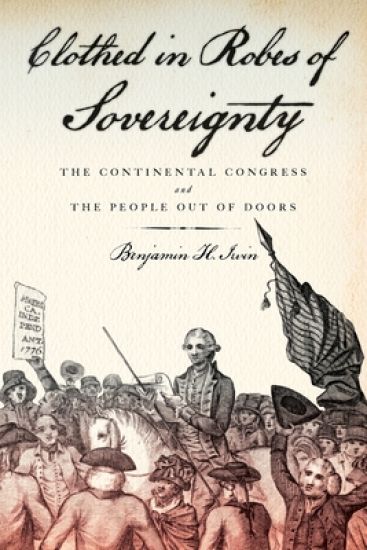
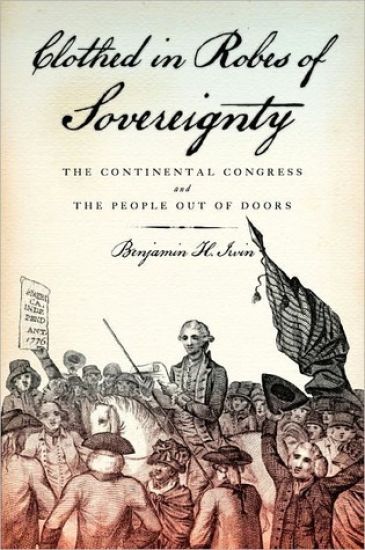
Clothed in Robes of Sovereignty

Clothed in Robes of Sovereignty

Benjamin H. Irvin

Oxford University Press Inc
2014
nidottu
In 1776, when the Continental Congress declared independence, formally severing relations with Great Britain, it immediately began to fashion new objects and ceremonies of state with which to proclaim the sovereignty of the infant republic. In this marvelous social and cultural history of the Continental Congress, Benjamin H. Irvin describes this struggle to create a national identity during the American Revolution. The book examines the material artifacts, rituals, and festivities by which Congress endeavored not only to assert its political legitimacy and to bolster the war effort, but ultimately to exalt the United States and to win the allegiance of its inhabitants. Congress, for example, crafted an emblematic great seal, celebrated anniversaries of U.S. independence, and implemented august diplomatic protocols for the reception of foreign ministers. Yet as Irvin demonstrates, Congress could not impose its creations upon a passive American public. To the contrary, "the people out of doors"-broadly defined to include not only the working poor who rallied in the streets of Philadelphia, but all persons unrepresented in the Continental Congress, including women, loyalists, and Native Americans-vigorously contested Congress's trappings of nationhood. Vividly narrating the progress of the Revolution in Philadelphia and the lived experiences of its inhabitants during the tumultuous war, Clothed in Robes of Sovereignty sharpens our understanding of the relationship between political elites and crowds of workaday protestors as it illuminates the ways in which ideologies of gender, class, and race shaped the civic identity of the Revolutionary United States.
Clothed in Robes of Sovereignty

Clothed in Robes of Sovereignty

Benjamin H. Irvin

Oxford University Press Inc
2011
sidottu
After the Continental Congress declared independence in 1776, thereby severing political relations with Great Britain, it began to fashion new objects and ceremonies of state with which to proclaim the sovereignty of the infant republic. Congress, for example, created an emblematic great seal, celebrated anniversaries of U.S. independence, and implemented robust diplomatic protocols for the reception of foreign ministers. Clothed in Robes of Sovereignty examines the material artifacts, festivities, and rituals by which Congress endeavored not only to assert its political legitimacy and to bolster the war effort, but ultimately to glorify the United States and to win the allegiance of the American people. Congress, however, could not simply impose its creations upon a quiescent public. In fact, as Benjamin H. Irvin demonstrates, the "people out of doors"--including the working poor who rallied in the streets of Philadelphia as well as women, loyalists, Native Americans and other persons not represented in Congress--vigorously contested the trappings of nationhood into which Congress had enfolded them.
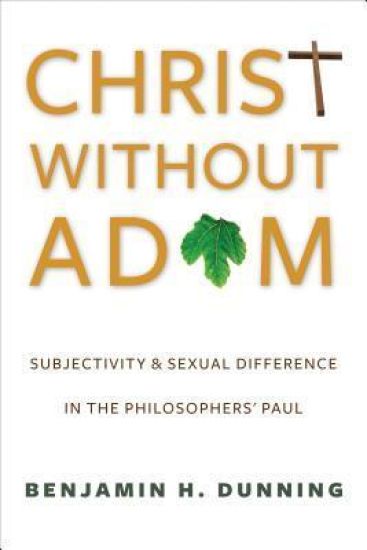
Christ Without Adam

Christ Without Adam

Benjamin H. Dunning

Columbia University Press
2014
sidottu
The apostle Paul deals extensively with gender, embodiment, and desire in his authentic letters, yet many of the contemporary philosophers interested in his work downplay these aspects of his thought. Christ Without Adam is the first book to examine the role of gender and sexuality in the turn to the apostle Paul in recent Continental philosophy. It builds a constructive proposal for embodied Christian theological anthropology in conversation with-and in contrast to-the "Paulinisms" of Stanislas Breton, Alain Badiou, and Slavoj Zizek. Paul's letters bequeathed a crucial anthropological aporia to the history of Christian thought, insofar as the apostle sought to situate embodied human beings typologically with reference to Adam and Christ, but failed to work out the place of sexual difference within this classification. As a result, the space between Adam and Christ has functioned historically as a conceptual and temporal interval in which Christian anthropology poses and re-poses theological dilemmas of embodied difference. This study follows the ways in which the appropriations of Paul by Breton, Badiou, and Zizek have either sidestepped or collapsed this interval, a crucial component in their articulations of a universal Pauline subject. As a result, sexual difference fails to materialize in their readings as a problem with any explicit force. Against these readings, Dunning asserts the importance of the Pauline Adam-Christ typology, not as a straightforward resource but as a witness to a certain necessary failure-the failure of the Christian tradition to resolve embodied difference without remainder. This failure, he argues, is constructive in that it reveals the instability of sexual difference, both masculine and feminine, within an anthropological paradigm that claims to be universal yet is still predicated on male bodies.