Kirjojen hintavertailu. Mukana 11 244 527 kirjaa ja 12 kauppaa.

Kirjahaku

Etsi kirjoja tekijän nimen, kirjan nimen tai ISBN:n perusteella.

1000 tulosta hakusanalla Benjamin J. King

The Oxford Movement and the People of God

The Oxford Movement and the People of God

Benjamin J. King

Oxford University Press
2025
sidottu
Seeing the Church in danger from the government in 1833, the clergyman John Henry Newman wanted to 'look to the people' for help. The people of God were vital to the Tractarian (or Oxford) Movement which Newman, John Keble, and Edward Pusey led, and which hundreds of thousands of Anglican laypeople followed during the nineteenth century. The faithful were central to the movement's theological vision. Spiritually disciplined, the faithful would ensure that the Church's work in the world was ongoing. Properly educated, in schools for the middle classes and for the poor, at home and across the British Empire, the faithful would preserve the Church's teaching. Yet to opponents in the nineteenth century, and most scholars since, the movement seemed to magnify the role of the clergy of the Church of England at the expense of the people. This is to neglect not only Tractarian theology, but also lay Tractarians themselves, whether the few who were important figures in the British nation and Empire, or the many who took part in shaping society. The Oxford Movement and the People of God covers topics which are not usually encountered in studies of the Tractarians-enslavement, Empire, and English engagement in the American Civil War-as well as showing how their theology of the laity sheds new light on old topics-the Church of England's privileged place in the State, the Ritualist movement, and opposition to democracy. In none of these topics was the movement on what is called, with hindsight, 'the right side of history'. But the theological reasons, such as they were, why Tractarians took the positions they did are explored in chapters concerning providence, ecclesiology, consensus fidelium, episcopacy, and lay spirituality.
Newman and the Alexandrian Fathers

Newman and the Alexandrian Fathers

Benjamin J. King

Oxford University Press
2009
sidottu
John Henry (later Cardinal) Newman is generally known to have been devoted to reading the Church Fathers. In this volume, Benjamin King draws on archive as well as published material to explore how Newman interpreted specific Fathers at different periods of his life. King draws connections between the Alexandrian Fathers Newman was reading and the development of his thought. This analysis shows that it was events in Newman's life that changed his interpretation of the Fathers, not the interpretation of the Fathers that caused Newman to change his life. King argues that Newman tailored his reading, 'trying on' the ideas of different Fathers to fit his own needs. An innovative comparison of Newman's two translations of Athanasius of Alexandria, from 1842-44 and 1881, demonstrates that by 1881 the Cardinal was swayed by the theology favored by Pope Leo XIII. King reveals that although Newman was a controversial figure in his own day, eventually his view of the Fathers and their doctrines came to be accepted by many scholars. This new exploration of his work, however, shows that the Cardinal's interpretation of the Fathers should still be controversial today.
The Benjamin Sanders Holy Bible: An Illuminated Manuscript King James Version

The Benjamin Sanders Holy Bible: An Illuminated Manuscript King James Version

Benjamin Sanders

Createspace Independent Publishing Platform
2014
nidottu
Open The Benjamin Sanders Holy Bible: An Illuminated Manuscript, and experience the beauty and majesty of God's word. This single-volume Bible combines readability with illuminated chapter markers for all sixty-six books of the Bible. Presented in the King James Version, this Bible promises elegant reading in your daily walk with the Lord.
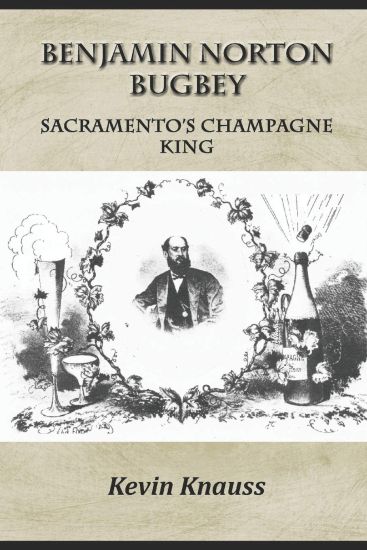
Benjamin Norton Bugbey: Sacramento's Champagne King
Biography of Benjamin Norton Bugbey who came to California in 1849 during the Gold Rush. He was elected sheriff of Sacramento County and then went on to develop the Natoma Vineyard winning awards for wine, brandy, and champagnes. He commissioned two pieces of music to market his sparkling wines: "Bugbey's Champagne Galop" and "Bugbey's Champagne Waltz". His viticulture empire collapsed in the 1870s. In a drunken frenzy he tried to kill a constable who arrive to arrest him. While in self-imposed exile from Sacramento, Bugbey worked at the U.S. Mint in San Francisco. It was there that he learned that the U.S. Supreme Court sided with his arguments against the Natoma Water and Mining Company that he was the rightful owner of the land of the Natoma Vineyard. Unfortunately, the decision came to late as Bugbey was declared bankrupt in 1878. Bugbey bounced back and went on to become a U. S. Commissioner unsuccessfully trying to charge white men from driving Chinese men from farm fields they were working on in Nicholas, Ca. He also had Chinese men and women arrested on slavery charges for importing young women for prostitution in Sacramento. He was successful at helping spirit several young Chinese women out of Sacramento to safety in San Francisco. Bugbey would later run for Sacramento County Sheriff again on a progressive platform of land reform and wealth redistribution. While he lost the election to become sheriff, he was successful at being elected Sacramento County Tax Collector in 1898 at the age of 71. He had to fight Hiram Johnson who argued that Bugbey should not be seated as the tax collector. Along the way, Bugbey was married three times with his first wife dying in a riding accident in 1869. He had no children. He was awarded a patent for his railroad refrigerator freight car and represented numerous other inventions. Bugbey led a colorful life and died in 1914. He is buried in the Historic Sacramento Cemetery.
The Nature of the Kingdom, or Church, of Christ. A Sermon Preach'd Before the King, at the Royal Chapel at St. James's, on Sunday March 31, 1717. By ... Benjamin Lord Bishop of Bangor. ... The Fifth Edition
The 18th century was a wealth of knowledge, exploration and rapidly growing technology and expanding record-keeping made possible by advances in the printing press. In its determination to preserve the century of revolution, Gale initiated a revolution of its own: digitization of epic proportions to preserve these invaluable works in the largest archive of its kind. Now for the first time these high-quality digital copies of original 18th century manuscripts are available in print, making them highly accessible to libraries, undergraduate students, and independent scholars.The Age of Enlightenment profoundly enriched religious and philosophical understanding and continues to influence present-day thinking. Works collected here include masterpieces by David Hume, Immanuel Kant, and Jean-Jacques Rousseau, as well as religious sermons and moral debates on the issues of the day, such as the slave trade. The Age of Reason saw conflict between Protestantism and Catholicism transformed into one between faith and logic -- a debate that continues in the twenty-first century.++++The below data was compiled from various identification fields in the bibliographic record of this title. This data is provided as an additional tool in helping to insure edition identification: ++++Cambridge University LibraryN004840London: printed for James Knapton, and Timothy Childe, 1717. 31, 1]p.; 8
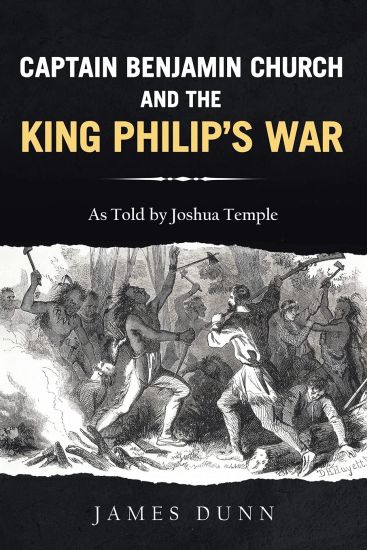
Captain Benjamin Church and the King Philip's War
This book is a story within a story. It tells the account of Captain Benjamin Church, a leader of the English Colonists during the year-long war between the Englishmen and the Wampanoag Indians from 1675-1676. He was influential in the Colonial period and helped to win the war for the English. I wanted to avoid writing a straight history piece for a number of reasons. One, is that even though this is a long-forgotten war, there are plenty of books out there that detail the events of the war. I wanted to come up with another way to tell the story. So I made it a story within a story.The information about Church is accurate according to his book and other written accounts of the time. The only times I went outside of the historical accounts of Church is the dispute between he and the magistrates and his explanation of his actions to his wife, Alice. I expounded on what it might have been like given his independent attitude and the situation of the times. But he would have been a hero to the men of 1776, so he makes the perfect example of a fighting man to use as an example to others.Church had to learn a different way of war, than what the English were used to. Their opponents, (the Indians) were guerrilla fighters, whereas they were used to open field fighting. In 1776, the Colonists who had learned to become Indian fighters, now had to relearn how to fight in the open field and defeat a stronger army in the field. The soldiers of the American Revolution had to be open to a new way of thinking again. The story is about opening up these people to new ways of thinking.I hope you find this an entertaining account of this period in history.The story-teller Joshua Temple is a fictious character. He is the conduit through which I tell account of Captain Benjamin. I try to keep a balance between his control of the storyroom/classroom and his pupils who include the men of the barracks as well as the drummer boys.
An Address to the People of Great Britain, on the Subject of Mr. Pitt's Proposed Tax on Income; In Which It's Partial Operation, It's Rank Injustice, ... Are Demonstrated; ... by Benjamin Kingsbury,
The 18th century was a wealth of knowledge, exploration and rapidly growing technology and expanding record-keeping made possible by advances in the printing press. In its determination to preserve the century of revolution, Gale initiated a revolution of its own: digitization of epic proportions to preserve these invaluable works in the largest archive of its kind. Now for the first time these high-quality digital copies of original 18th century manuscripts are available in print, making them highly accessible to libraries, undergraduate students, and independent scholars.Delve into what it was like to live during the eighteenth century by reading the first-hand accounts of everyday people, including city dwellers and farmers, businessmen and bankers, artisans and merchants, artists and their patrons, politicians and their constituents. Original texts make the American, French, and Industrial revolutions vividly contemporary.++++The below data was compiled from various identification fields in the bibliographic record of this title. This data is provided as an additional tool in helping to insure edition identification: ++++British LibraryT134087London: published at no.3, Mitre-Court, Fleet-Street, 1798. 47, 1]p.; 8
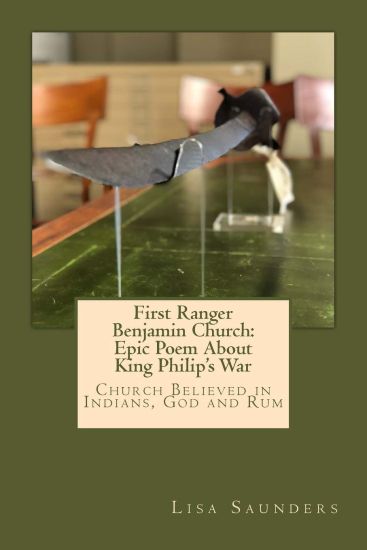
First Ranger Benjamin Church: Epic Poem About King Philip's War: Church Believed in Indians, God and Rum
Benjamin Church, considered the first American Army Ranger, believed it would take Indians, God and rum to win King Philip's War in New England (1675-1676). As the grandson of Mayflower passenger, Richard Warren, and the first white main to build in Little Compton, Rhode Island, Benjamin Church understood the value of his Native American friends and neighbors. Author Lisa Saunders retells Church's account of his fighting days alongside allied Native Americans as an epic poem and includes quotes from Benjamin Church. The book also contains more than 40 contemporary photographs including those of Benjamin Church's sword, grave, and his haunts and homes. See the locations for the Great Swamp Fight, mass grave at Smith's Garrison, Peas Field Fight, Church's capture of Anawan at "Anawan's Rock", where King Philip's head was mounted for 20 years in Plymouth, and where King Philip's War began at Myles Garrison in Swansea, Massachusetts. Images related to Captain George Denison of Stonington, Connecticut, are also included along with the approximate site of Canonchet's execution where he bravely declared, "I like it well. I shall die before my heart is soft, or I have said anything unworthy of myself."
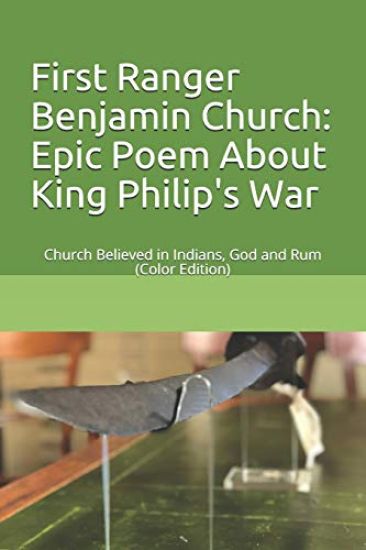
First Ranger Benjamin Church: Epic Poem about King Philip's War: Church Believed in Indians, God and Rum (Color Edition)
This second edition includes color images of the haunts and homes of Benjamin Church, considered the first American Army Ranger. Church believed it would take Indians, God and rum to win King Philip's War in New England (1675-1676). As the grandson of Mayflower passenger, Richard Warren, and the first white main to build in Little Compton, Rhode Island, Benjamin Church understood the value of his Native American friends and neighbors. Author Lisa Saunders retells Church's account of his fighting days alongside allied Native Americans as an epic poem and includes quotes from Benjamin Church. The book also contains more than 40 contemporary photographs including those of Benjamin Church's sword, grave, and his haunts and homes. See the locations for the Great Swamp Fight, mass grave at Smith's Garrison, Peas Field Fight, Church's capture of Anawan at "Anawan's Rock", where King Philip's head was mounted for 20 years in Plymouth, and where King Philip's War began at Myles Garrison in Swansea, Massachusetts. Images related to Captain George Denison of Stonington, Connecticut, are also included along with the approximate site of Canonchet's execution where he bravely declared, "I like it well. I shall die before my heart is soft, or I have said anything unworthy of myself."
The History of King Philip's War. by Benjamin Church [Or Rather, Written by T. Church from Notes by B. Church]. [A Reprint of the First Edition, 1716.] with an Introduction and Notes by Henry Martin Dexter. Part I.
Title: The History of King Philip's War. By Benjamin Church or rather, written by T. Church from notes by B. Church]. A reprint of the first edition, 1716.] With an introduction and notes by Henry Martin Dexter.Publisher: British Library, Historical Print EditionsThe British Library is the national library of the United Kingdom. It is one of the world's largest research libraries holding over 150 million items in all known languages and formats: books, journals, newspapers, sound recordings, patents, maps, stamps, prints and much more. Its collections include around 14 million books, along with substantial additional collections of manuscripts and historical items dating back as far as 300 BC.The MILITARY HISTORY & WARFARE collection includes books from the British Library digitised by Microsoft. This series offers titles on warfare from ancient to modern times. It includes detailed accounts of campaigns, battles, weapons, as well as the soldiers and commanders who devised, initiated, and supported war efforts throughout history. Specific analyses discuss the impact of war on societies, cultures, economies, and changing international relationships. ++++The below data was compiled from various identification fields in the bibliographic record of this title. This data is provided as an additional tool in helping to insure edition identification: ++++ British Library Church, Thomas; Dexter, Henry; 1865, 67. 2 pt.; 4 . 9602.bbb.30.
Report of Dr. Benjamin Franklin, and Other Commissioners, Charged by the King of France, With the Examination of the Animal Magnetism, as now Practised at Paris. Translated From the French.
The 18th century was a wealth of knowledge, exploration and rapidly growing technology and expanding record-keeping made possible by advances in the printing press. In its determination to preserve the century of revolution, Gale initiated a revolution of its own: digitization of epic proportions to preserve these invaluable works in the largest archive of its kind. Now for the first time these high-quality digital copies of original 18th century manuscripts are available in print, making them highly accessible to libraries, undergraduate students, and independent scholars.Medical theory and practice of the 1700s developed rapidly, as is evidenced by the extensive collection, which includes descriptions of diseases, their conditions, and treatments. Books on science and technology, agriculture, military technology, natural philosophy, even cookbooks, are all contained here.++++The below data was compiled from various identification fields in the bibliographic record of this title. This data is provided as an additional tool in helping to insure edition identification: ++++Countway Library of MedicineN013072A report of representatives of the Facult de m decine de Paris and the Acad mie des sciences; Franklin was a member of the latter. Includes: 'Report of a committee of the Royal Society of Medicine, appointed to examine a work, entitled, Enquiries and doubts repsecting the animal magnetism, by M. Thouret' (pp.1-17).London: printed for J. Johnson, 1785. xx,108p.; 8
The history of King Philip's war; also of expeditions against the French and Indians in the eastern parts of New-England, in the years 1689, 1690, 1692, 1696 and 1704. With some account of the divine providence towards Col. Benjamin Church
This book has been considered by academicians and scholars of great significance and value to literature. This forms a part of the knowledge base for future generations. We have represented this book in the same form as it was first published. Hence any marks seen are left intentionally to preserve its true nature.
The Top 5 Greatest Americans: George Washington, Thomas Jefferson, Benjamin Franklin, Abraham Lincoln and Martin Luther King Jr.
*Includes pictures of important people, places, and events. *Includes bibliographies. Every American can easily recite the highlights of the "Father of Our Country". The remarkable Virginian led an under-resourced rag-tag army to ultimate victory in the American Revolution before becoming the nation's first president, setting every precedent for the executive branch of the new government, from forming a "Cabinet" to limiting himself to two terms. Nobody spent more time in the thick of America's political debates than Thomas Jefferson, one of the most famous and revered Americans. Jefferson was instrumental in all of the aforementioned debates, authoring the Declaration of Independence, laying out the ideological groundwork of the notion of states' rights, leading one of the first political parties, and overseeing the expansion of the United States during his presidency. Before the United States of America even existed, the first American celebrity was Benjamin Franklin (1706-1790). Franklin was an author, printer, political theorist, politician, postmaster, scientist, musician, inventor, satirist, civic activist, statesman, and diplomat, and he used his unique status as an international celebrity to become the colonies' best diplomat. Schoolchildren can recite the life story of Lincoln, the "Westerner" who educated himself and became a self made man, rising from lawyer to leader of the new Republican Party before becoming the 16th President of the United States. Lincoln successfully navigated the Union through the Civil War but didn't live to witness his crowning achievement, becoming the first president assassinated. The life and legend of Dr. King have been told to every American, many of whom come away equating King with the Civil Rights Movement as a whole. But King's life was about far more than leading movements and having dreams.