

Kirjahaku
Etsi kirjoja tekijän nimen, kirjan nimen tai ISBN:n perusteella.
1000 tulosta hakusanalla Benjamin Walter Frisch

Die Restitution Des Epischen Unter Den Bedingungen Der Medienkonkurrenz: Das Epische Horspiel Bei Walter Benjamin, Bertolt Brecht Und Max Frisch
Eva Rosch
Universitatsverlag Winter
2022
sidottu
In dieser interdisziplinaren Studie zeigt die Autorin anhand des epischen Horspiels, dass just das Aufkommen technisch reproduzierbarer Medien zu einer Renaissance des performativen Aspekts des (mundlichen) Erzahlens fuhrt. Dieses vermeintliche Paradoxon lost sich im Ruckgriff auf Brechts und Benjamins medien- und kulturtheoretische Schriften sowie in umfassenden Analysen von 'Das kalte Herz', 'Der Flug der Lindberghs' und - als Brucke zum literarischen Horspiel - 'Herr Biedermann und die Brandstifter' auf. Das epische Horspiel wird durch die in der Arbeit entwickelten Kategorien konturiert als Figuration einer literarischen Ethik. Die transmediale sowie transgenerische Anwendbarkeit des Konzepts der Restitution des Epischen uber das Horspiel hinaus wird deutlich.


Valter Benjamin pogruzhaetsja v vospominanija o detstve. Trogatelnye zarisovki o vzroslenii na rubezhe vekov ot znamenitogo nemetskogo filosofa. V 1990 godu Valteru Benminu, malchiku iz evrejskoj semi, bylo vsego 8 let. S techeniem zhizni vospominanija o detstve istonchajutsja, stirajutsja. No Benjamin smog zagljanut v prorekhu vremeni i sobrat iz tsvetnykh oskolkov, zapakhov, polutonov i nastroenij chudesnye, nezhnye zarisovki o dorogikh serdtsu godakh. Vospominanija o katanii na konkakh, kollektsii otkrytok, zapakh rozhdestvenskoj elki i shelest knig, kotorye okruzhali ego s samogo detstva, - vse eti kroshechnye fragmenty detstva Valter Benjamin s ljubovju opisyvaet, okutyvaja chitatelja magiej svoikh prichudlivykh, poetichnykh metafor.

V sbornik "Sny i rasskazy" voshli razroznennye prozaicheskie teksty iz raznykh periodov zhizni Valtera Benjamina. Benjamin izvesten glavnym obrazom kak filosof, no v korpuse ego sochinenij mozhno vydelit gruppu tekstov v osobom podzhanre - eto zapisi snovidenij, pererabotannye v povestvovanija ili filosofskie fragmenty. Vtoruju chast sbornika sostavljajut rasskazy, napisannye esche v studencheskie, a takzhe v bolee zrelye gody. Sny i rasskazy Benjamina priotkryvajut dver v samye glubokie sloi voobrazhenija i delajut ego fantazijnyj mir ponjatnee i blizhe. Erotika, vosprijatie gorodskoj zhizni i iskusstva, o kotorykh Benjamin chasto rassuzhdal s tochki zrenija kritika, v etoj knige pokazany v lichnoj perspektive. Bolshinstvo tekstov publikujutsja na russkom vpervye.Perevod: Anna Glazova


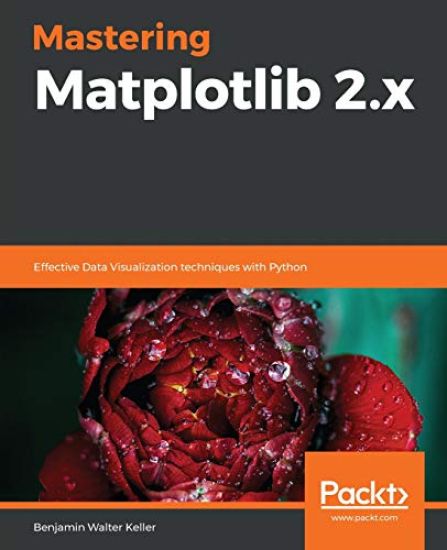
Understand and build beautiful and advanced plots with Matplotlib and PythonKey FeaturesPractical guide with hands-on examples to design interactive plotsAdvanced techniques to constructing complex plotsExplore 3D plotting and visualization using Jupyter NotebookBook DescriptionIn this book, you’ll get hands-on with customizing your data plots with the help of Matplotlib. You’ll start with customizing plots, making a handful of special-purpose plots, and building 3D plots. You’ll explore non-trivial layouts, Pylab customization, and more about tile configuration. You’ll be able to add text, put lines in plots, and also handle polygons, shapes, and annotations. Non-Cartesian and vector plots are exciting to construct, and you’ll explore them further in this book. You’ll delve into niche plots and visualize ordinal and tabular data. In this book, you’ll be exploring 3D plotting, one of the best features when it comes to 3D data visualization, along with Jupyter Notebook, widgets, and creating movies for enhanced data representation. Geospatial plotting will also be explored. Finally, you’ll learn how to create interactive plots with the help of Jupyter.Learn expert techniques for effective data visualization using Matplotlib 3 and Python with our latest offering -- Matplotlib 3.0 CookbookWhat you will learnDeal with non-trivial and unusual plotsUnderstanding Basemap methodsCustomize and represent data in 3D Construct Non-Cartesian and vector plotsDesign interactive plots using Jupyter NotebookMake movies for enhanced data representationWho this book is forThis book is aimed at individuals who want to explore data visualization techniques. A basic knowledge of Matplotlib and Python is required.
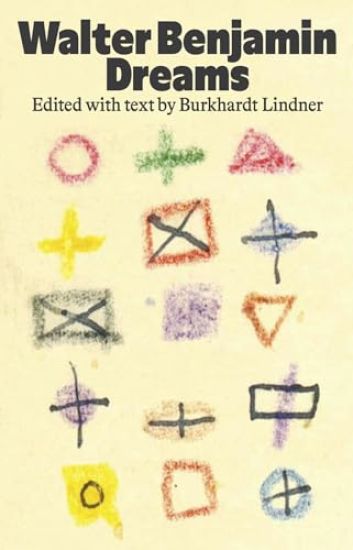
Though published during his lifetime, Walter Benjamin's dream notes and theoretical reflections on dreams are collected here for the first time in a single volume.Dreams highlights a dimension of Benjamin's thinking that was invaluable for his writing and thought but which has thus far received little attention.The first section, "Dream Notes," is a comprehensive and chronological collection of Benjamin's transcriptions of his own dreams and includes unpublished manuscript materials. The second section, "On Perception of Dreams. Awakening and Dream," features his theoretical reflections on dreams, ranging from short aphorisms and longer analyses of dream literature and the history of dreams to the political conception of a "dreaming collective" and its awakening.Editor Burkhardt Lindner describes Benjamin's literary approach to his own dreams in the epilogue and gives a sketch of Benjamin's own definition of the dream sphere, independent of and in contrast to Surrealism and Freud's interpretation of dreams.This pocket-size reader presents Benjamin as both a great dreamerand an important theorist of dreams.
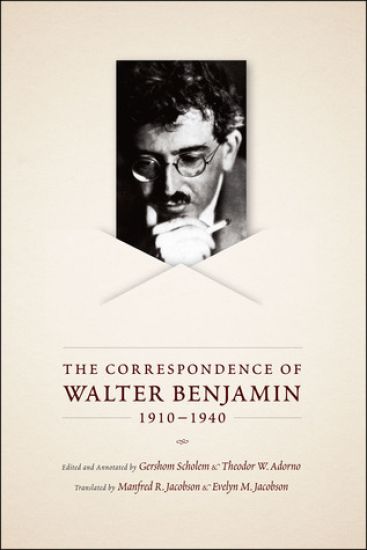
The Correspondence of Walter Benjamin, 1910-1940
Walter Benjamin
University of Chicago Press
2012
nidottu
Called "the most important critic of his time" by Hannah Arendt, Walter Benjamin has only become more influential over the years, as his work has assumed a crucial place in current debates over the interactions of art, culture, and meaning. A "natural and extraordinary talent for letter writing was one of the most captivating facets of his nature," writes Gershom Scholem in his foreword to this volume; and Benjamin's correspondence reveals the evolution of some of his most powerful ideas, while also offering an intimate picture of Benjamin himself and the times in which he lived. Writing at length to Scholem and Theodor Adorno, and exchanging letters with Rainer Maria Rilke, Hannah Arendt, Max Brod, and Bertolt Brecht, Benjamin elaborates on his ideas about metaphor and language. He reflects on literary figures from Kafka to Karl Kraus, and expounds his personal attitudes toward such subjects as Marxism and French national character. Providing an indispensable tool for any scholar wrestling with Benjamin's work, "The Correspondence of Walter Benjamin" is a revelatory look at the man behind much of the twentieth century's most significant criticism.
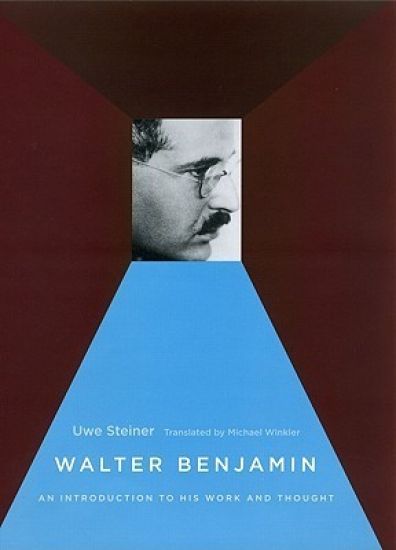
Seven decades after his death, German Jewish writer, philosopher, and literary critic Walter Benjamin (1892-1940) continues to fascinate and influence. Here Uwe Steiner offers a comprehensive and sophisticated introduction to the oeuvre of this intriguing theorist. Acknowledged only by a small circle of intellectuals during his lifetime, Benjamin is now a major figure whose work is essential to an understanding of modernity. Steiner traces the development of Benjamin's thought chronologically through his writings on philosophy, literature, history, politics, the media, art, photography, cinema, technology, and theology. "Walter Benjamin" reveals the essential coherence of its subject's thinking while also analyzing the controversial or puzzling facets of Benjamin's work. That coherence, Steiner contends, can best be appreciated by placing Benjamin in his proper context as a member of the German philosophical tradition and a participant in contemporary intellectual debates. As Benjamin's writing attracts more and more readers in the English-speaking world, "Walter Benjamin" will be a valuable guide to this fascinating body of work.
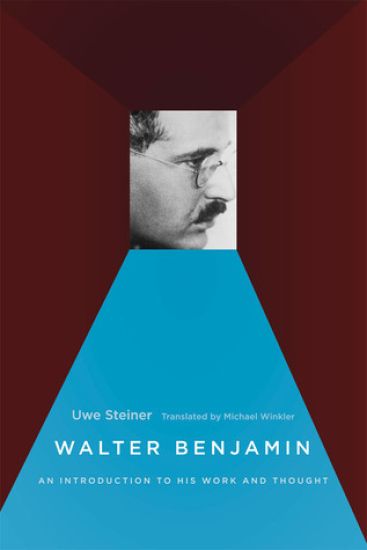
Seven decades after his death, German Jewish writer, philosopher, and literary critic Walter Benjamin (1892-1940) continues to fascinate readers and influence academic writing, both stylistically and conceptually. Here Uwe Steiner offers a comprehensive and sophisticated introduction to the oeuvre of this perpetually relevant theorist. Acknowledged only by a small circle of intellectuals during his lifetime, Benjamin is now a major figure whose work is essential to an understanding of modernity. Steiner traces the development of Benjamin's thought chronologically through his writings on philosophy, literature, history, politics, the media, art, photography, cinema, technology, and theology. "Walter Benjamin" reveals the essential coherence of its subject's thinking while also analyzing the controversial or puzzling facets of Benjamin's work. That coherence, Steiner contends, can best be appreciated by placing Benjamin in his proper context as a member of the German philosophical tradition and a participant in contemporary intellectual debates. As Benjamin's writing attracts more and more readers in the English-speaking world, "Walter Benjamin" will be a valuable guide to this fascinating body of work.
In September 1940, Walter Benjamin committed suicide in Port Bou on the Spanish-French border when it appeared that he and his travelling partners would be denied passage into Spain in their attempt to escape the Nazis. In 2002, one of anthropology's - and indeed today's - most distinctive writers, Michael Taussig, visited Benjamin's grave in Port Bou. The result is "Walter Benjamin's Grave," a moving essay about the cemetery, eyewitness accounts of Benjamin's border travails, and the circumstances of his demise. It is the most recent of eight revelatory essays collected in this volume of the same name. "Looking over these essays written over the past decade," writes Taussig, "I think what they share is a love of muted and defective storytelling as a form of analysis. Strange love indeed; love of the wound, love of the last gasp." Although thematically these essays run the gamut - covering the monument and graveyard at Port Bou, discussions of peasant poetry in Colombia, a pact with the devil, the peculiarities of a shaman's body, transgression, the disappearance of the sea, New York City cops, and the relationship between flowers and violence - each shares Taussig's highly individual brand of storytelling, one that depends on a deep appreciation of objects and things as a way to retrieve even deeper philosophical and anthropological meanings. Whether he finds himself in Australia, Colombia, Manhattan, or Spain, in the midst of a book or a beach, whether talking to friends or staring at a monument, Taussig makes clear through these marvelous essays that materialist knowledge offers a crucial alternative to the increasingly abstract, globalized, homogenized, and digitized world we inhabit. Pursuing an adventure that is part ethnography, part autobiography, and part cultural criticism refracted through the object that is Walter Benjamin's grave, Taussig, with this collection, provides his own literary memorial to the twentieth century's greatest cultural critic.
In September 1940, Walter Benjamin committed suicide in Port Bou on the Spanish-French border when it appeared that he and his travelling partners would be denied passage into Spain in their attempt to escape the Nazis. In 2002, one of anthropology's - and indeed today's - most distinctive writers, Michael Taussig, visited Benjamin's grave in Port Bou. The result is "Walter Benjamin's Grave," a moving essay about the cemetery, eyewitness accounts of Benjamin's border travails, and the circumstances of his demise. It is the most recent of eight revelatory essays collected in this volume of the same name. "Looking over these essays written over the past decade," writes Taussig, "I think what they share is a love of muted and defective storytelling as a form of analysis. Strange love indeed; love of the wound, love of the last gasp." Although thematically these essays run the gamut - covering the monument and graveyard at Port Bou, discussions of peasant poetry in Colombia, a pact with the devil, the peculiarities of a shaman's body, transgression, the disappearance of the sea, New York City cops, and the relationship between flowers and violence - each shares Taussig's highly individual brand of storytelling, one that depends on a deep appreciation of objects and things as a way to retrieve even deeper philosophical and anthropological meanings. Whether he finds himself in Australia, Colombia, Manhattan, or Spain, in the midst of a book or a beach, whether talking to friends or staring at a monument, Taussig makes clear through these marvelous essays that materialist knowledge offers a crucial alternative to the increasingly abstract, globalized, homogenized, and digitized world we inhabit. Pursuing an adventure that is part ethnography, part autobiography, and part cultural criticism refracted through the object that is Walter Benjamin's grave, Taussig, with this collection, provides his own literary memorial to the twentieth century's greatest cultural critic.
Walter Benjamin and the Aesthetics of Change
Palgrave Macmillan
2010
sidottu
Following the spirit of Benjamin's Arcades Project, this book acts as a kaleidoscope of change in the 21st century, tracing its different reflections in the international contemporary while seeking to understand individual/collective reactions to change through a series of creative methodologies.
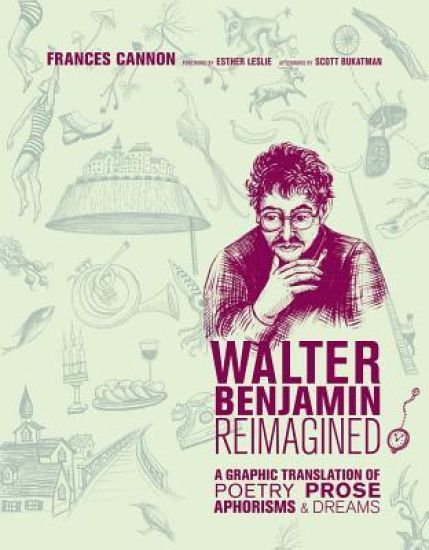
An illuminated tour of Walter Benjamin's ideas; a graphic translation; an encyclopedia of fragments.Walter Benjamin was a man of letters, an art critic, an essayist, a translator, a philosopher, a collector, and an urban flaneur. In his writings, he ambles, samples, and explores. With Walter Benjamin Reimagined, Frances Cannon offers a visual and literary response to Benjamin's work. With detailed and dreamlike pen-and-ink drawings and hand-lettered text, Cannon gives readers an illuminated tour of Walter Benjamin's thoughts-a graphic translation, an encyclopedia of fragments.Cannon has not created a guide to Benjamin's greatest ideas-this is not an illustrated Walter Benjamin cheat sheet-but rather a beautifully rendered work of graphic literature. Cannon doesn't plod through thickets of minutiae; she strolls-a flaneuse herself-using Benjamin's words and her own drawings to construct a creative topography of Benjamin's writing. Phrases from "Unpacking My Library," for example, are accompanied by images of flying papers, stray books, stacked books-books "not yet touched by the mild boredom of order"-and a bearded mage. Cannon takes the reader through different periods of Benjamin's writing: "Artifacts of Youth," nostalgic musings on his childhood; "Fragments of a Critical Eye," early writings, political observations, and cultural criticism; "Athenaeum of Imagination," meditations on philosophy and psychology; "A Stroll through the Arcades," Benjamin's unfinished magnum opus; and "A Collection of Dreams and Stories," experimental and fantastical writings.With drawings and text, Cannon offers a phantasmagorical tribute to Benjamin's wandering eye.
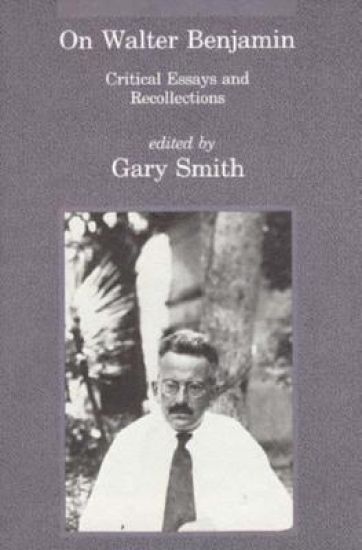
On Walter Benjamin
MIT Press
1991
pokkari
Bringing together the best critical essays on one of the most fascinating literary figures of our time, this book immediately takes its place as a major source for Benjamin scholarship. Hannah Arendt called Walter Benjamin "the outstanding literary critic of the twentieth century" when she introduced him to English-language readers in 1968 with the selection of essays entitled Illuminations. Since then, his life and work have entered the domain of literary legend. The seventeen essays collected here cover the full range of Benjamin's interests, from hashish to Goethe to the modern city. They include important critical essays by Gershom Scholem and Jurgen Habermas as well as several moving and evocative recollections of Benjamin by friends and colleagues such as Theodor Adorno and Ernst Bloch. Gary Smith served as coeditor of the seventh volume of Benjamin's Gesammelte Schriften and prepared both the German and English editions of Benjamin's Moscow Diary.