Bosnian Muslims, East African Masai, Czech-speaking Austrians, North American indigenous peoples, and Jewish immigrants from across Europe—the nineteenth-century British and Habsburg Empires were characterized by incredible cultural and racial-ethnic diversity. Notwithstanding their many differences, both empires faced similar administrative questions as a result: Who was excluded or admitted? What advantages were granted to which groups? And how could diversity be reconciled with demands for national autonomy and democratic participation? In this pioneering study, Benno Gammerl compares Habsburg and British approaches to governing their diverse populations, analyzing imperial formations to reveal the legal and political conditions that fostered heterogeneity.
Bosnian Muslims, East African Masai, Czech-speaking Austrians, North American indigenous peoples, and Jewish immigrants from across Europe—the nineteenth-century British and Habsburg Empires were characterized by incredible cultural and racial-ethnic diversity. Notwithstanding their many differences, both empires faced similar administrative questions as a result: Who was excluded or admitted? What advantages were granted to which groups? And how could diversity be reconciled with demands for national autonomy and democratic participation? In this pioneering study, Benno Gammerl compares Habsburg and British approaches to governing their diverse populations, analyzing imperial formations to reveal the legal and political conditions that fostered heterogeneity.
Emotions are as old as humankind. But what do we know about them and what importance do we assign to them? Emotional Lexicons is the first cultural history of terms of emotion found in German, French, and English language encyclopaedias since the late seventeenth century. Insofar as these reference works formulated normative concepts, they documented shifts in the way the educated middle classes were taught to conceptualise emotion by a literary medium targeted specifically to them. As well as providing a record of changing language use (and the surrounding debates), many encyclopaedia articles went further than simply providing basic knowledge; they also presented a moral vision to their readers and guidelines for behaviour. Implicitly or explicitly, they participated in fundamental discussions on human nature: Are emotions in the mind or in the body? Can we "read" another person's feelings in their face? Do animals have feelings? Are men less emotional than women? Are there differences between the emotions of children and adults? Can emotions be "civilised"? Can they make us sick? Do groups feel together? Do our emotions connect us with others or create distance? The answers to these questions are historically contingent, showing that emotional knowledge was and still is closely linked to the social, cultural, and political structures of modern societies. Emotional Lexicons analyses European discourses in science, as well as in broader society, about affects, passions, sentiments, and emotions. It does not presume to refine our understanding of what emotions actually are, but rather to present the spectrum of knowledge about emotion embodied in concepts whose meanings shift through time, in order to enrich our own concept of emotion and to lend nuances to the interdisciplinary conversation about them.
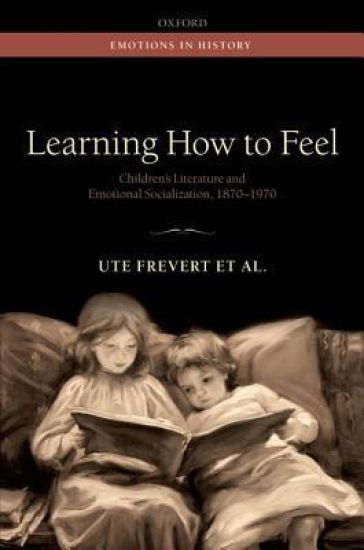
Learning How to Feel explores the ways in which children and adolescents learn not just how to express emotions that are thought to be pre-existing, but actually how to feel. The volume assumes that the embryonic ability to feel unfolds through a complex dialogue with the social and cultural environment and specifically through reading material. The fundamental formation takes place in childhood and youth. A multi-authored historical monograph, Learning How to Feel uses children's literature and advice manuals to access the training practices and learning processes for a wide range of emotions in the modern age, circa 1870-1970. The study takes an international approach, covering a broad array of social, cultural, and political milieus in Britain, Germany, India, Russia, France, Canada, and the United States. Learning How to Feel places multidirectional learning processes at the centre of the discussion, through the concept of practical knowledge. The book innovatively draws a framework for broad historical change during the course of the period. Emotional interaction between adult and child gave way to a focus on emotional interactions among children, while gender categories became less distinct. Children were increasingly taught to take responsibility for their own emotional development, to find 'authenticity' for themselves. In the context of changing social, political, cultural, and gender agendas, the building of nations, subjects and citizens, and the forging of moral and religious values, Learning How to Feel demonstrates how children were provided with emotional learning tools through their reading matter to navigate their emotional lives.
Bo Jacobsen; Mimi Yung Mehlsen; Allan Holmgren; Benny Karpatschof; Bjarne Sode Funch; Boje Katzenelson; Carsten René Jørgensen; Christian Gerlach; Dan Zahavi; Henrik Høgh-Olesen; Henrik Skovlund; Ivy Schousboe; Jan Tønnesvang; Jens Rasmussen; Johs. Mørk Pedersen; Judy Gammelgaard; Klaus Nielsen; Lars Hem; Lisbeth Harms; Morten Overgaard; Nicole K. Rosenberg; Peter Krøjgaard; Peter la Cour; Pia Skogemann; Seth Chaiklin; Simo Køppe; Susan Hart; Svend Brinkmann; Thor Grünbaum; Randi Starrfelt; Søren Kyllingsbæk; Axel Larsen
"Klassisk og moderne psykologisk teori" er en indføring i psykologiens centrale teorier, personer, temaer og begreber. Bogens første del er en kronologisk gennemgang af psykologiens udvikling fra 1879, hvor Wilhelm Wundt etablerede det første psykologiske laboratorium, til nutidens dominerende teorier og begreber. Bogens anden del er bygget op om centrale temaer i psykologien og her introduceres læseren til teorier om bl.a. tilknytning, bevidsthed og selvet. "Klassisk og moderne psykologisk teori" præsenterer og gennemgår de enkelte teoriers baggrund og grundideer. Hvert kapitel indeholder endvidere korte biografiske oplysninger om teoriernes ophavsmænd samt en oversigt over nøglebegreber og definitioner. En fyldig litteraturliste, der medtager både originalværker, skandinaviske oversættelser og den vigtigste sekundær litteratur på området, suppleret af omfattende navne- og emneindeks gør bogen anvendelig som opslagsværk og som redskab til litteratursøgning. Denne 2. udgave er udvidet med kapitler om: 'positiv psykologi', 'amerikansk funktionalisme','hukommelse, sprog og tænkning', 'socialkonstruktionisme og diskurspsykologi', 'neuroaffektiv udvikling', 'voksenudvikling', 'individ, organisation og samfund'.
Benno: My Life in Football is a fascinating look into the footballing life of one of Coventry City's greatest ever players, FA Cup-winning hero Dave Bennett.Follow the effervescent Benno's life from battling racism on the streets of Manchester and throughout his career to climbing those famous steps at the home of English football.Benno had it tough from day one of his career. He was subjected to on-pitch racist abuse on his debut at Manchester City. He saw what should have been a shining moment of his career overshadowed when he was referred to as 'the little coloured boy' during 1981 FA Cup Final commentary.But he fought back and overcame four leg breaks. He also enjoyed season after season in the top flight, becoming one of the country's leading wingers in the process - and he did it all with a huge smile on his face. My Life in Football is Benno's story - an extraordinary tale that reveals the best and worst of football in the 1980s.
"Benno was genuinely under that assumption, yet he could only come to the conclusion that it was an act of spite from a recent bar brawl that had gone wrong. Walter would survive his consequences if Benno could be stopped, however, the blacksmith was no longer a man. He had become a savage whirlwind of agony and wrath. Unbeknownst to Frederick and the other Crimson Devils, Kulpeper mansion was in the path of the very same storm."
Der deutsch-jüdische Rabbiner und Bibelforscher Benno Jacob (1862-1945) ist vor allem für seine beiden großen Kommentare zum Buch Genesis (1934) und Exodus (1997) bekannt. Weniger bekannt ist, dass sich in seinem umfangreichen Nachlass auch Manuskripte und Fragmente zum dritten biblischen Buch, Levitikus, befinden, welches in der jüdischen Tradition einen hohen Stellenwert einnimmt. Das Buch Levitikus enthält überwiegend kultische Texte, wie Opferbestimmungen, die für moderne Leser nur schwer zugänglich sind, aber auch das ethische Kapitel 19 mit dem wohl bekanntesten biblischen Satz "Liebe deinen Nächsten wie dich selbst!", der im 19. Jh. eine wichtige Rolle im Streit um den Wert der jüdischen Ethik gespielt hat. In der vorliegenden Arbeit editiert und kommentiert Hans-Christoph Aurin eines der frühen Levitikus-Manuskripte Benno Jacobs und berücksichtigt dafür zahlreiche weitere unveröffentlichte Texte wie seine exegetischen Notizhefte.