Kirjojen hintavertailu. Mukana 11 699 587 kirjaa ja 12 kauppaa.

Kirjahaku

Etsi kirjoja tekijän nimen, kirjan nimen tai ISBN:n perusteella.

1000 tulosta hakusanalla Benson Robert Hugh

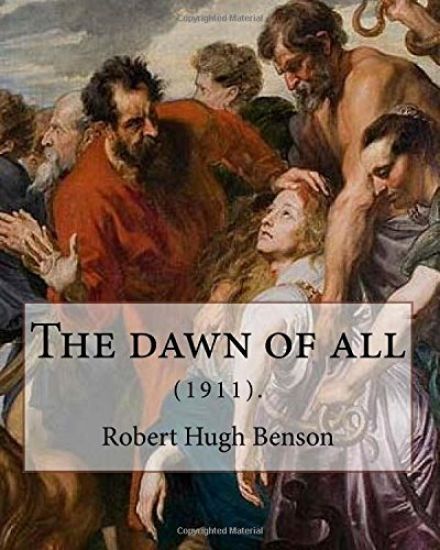
The dawn of all (1911). By: Robert Hugh Benson: Robert Hugh Benson (18 November 1871 - 19 October 1914) was an English Anglican priest who in 1903
In a former book, called "Lord of the World," I attempted to sketch the kind of developments a hundred years hence which, I thought, might reasonably be expected if the present lines of what is called "modern thought" were only prolonged far enough; and I was informed repeatedly that the effect of the book was exceedingly depressing and discouraging to optimistic Christians. In the present book I am attempting -- also in parable form -- not in the least to withdraw anything that I said in the former, but to follow up the other lines instead, and to sketch -- again in parable -- the kind of developments, about sixty years hence which, I think, may reasonably be expected should the opposite process begin, and ancient thought (which has stood the test of centuries, and is, in a very remarkable manner, being "rediscovered" by persons even more modern than modernists) be prolonged instead. We are told occasionally by moralists that we live in very critical times, by which they mean that they are not sure whether their own side will win or not. In that sense no times can ever be critical to Catholics, since Catholics are never in any kind of doubt as to whether or no their side will win. But from another point of view every period is a critical period, since every period has within itself the conflict of two irreconcilable forces. It has been for the sake of tracing out the kind of effects that, it seemed to me, each side would experience in turn, should the other, at any rate for a while, become dominant, that I have written these two books......... Robert Hugh Benson AFSC KC*SG KGCHS (18 November 1871 - 19 October 1914) was an English Anglican priest who in 1903 was received into the Roman Catholic Church in which he was ordained priest in 1904. He was a prolific writer of fiction and wrote the notable dystopian novel Lord of the World (1907). His output encompassed historical, horror and science fiction, contemporary fiction, children's stories, plays, apologetics, devotional works and articles. He continued his writing career at the same time as he progressed through the hierarchy to become a Chamberlain to the Pope in 1911 and subsequently titled Monsignor. Early life: Benson was the youngest son of Edward White Benson (Archbishop of Canterbury) and his wife, Mary, and the younger brother of Edward Frederic Benson and A. C. Benson. Benson was educated at Eton College and then studied classics and theology at Trinity College, Cambridge, from 1890 to 1893. In 1895, Benson was ordained a priest in the Church of England by his father, who was the then Archbishop of Canterbury. Career: After his father died suddenly in 1896, Benson was sent on a trip to the Middle East to recover his own health. While there he began to question the status of the Church of England and to consider the claims of the Roman Catholic Church. His own piety began to tend toward the High Church tradition, and he started exploring religious life in various Anglican communities, eventually obtaining permission to join the Community of the Resurrection...............
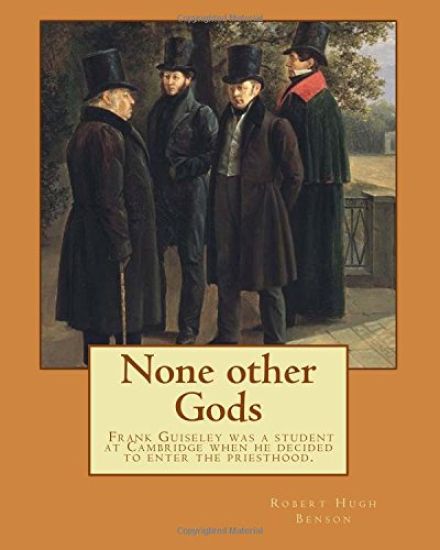
None other Gods By: Robert Hugh Benson: Robert Hugh Benson (18 November 1871 - 19 October 1914) was an English Anglican priest who in 1903
Frank Guiseley was a student at Cambridge when he decided to enter the priesthood. When he heard of that, his father disowned him, leaving without much more than the clothes on his back. Note even his best friend -- Jack Kirby -- could dissuade Frank from this madness. In the middle of the night, Frank left the confines of college and set off to join the clergy with only a handful of currency in his pocket. Lord Talgarth -- Frank's father -- wrote the letter to disown his son certain that it would cause his son to change his plans. Frank was supposed to have been devastated -- and returned a submissive letter stating that he would not join clergy. But that didn't happen, and Frank has run away. Lord Talgarth has grown ill with worry. Jenny Launton was Frank Guiseley's fiance. She seems unperturbed by Frank's decision and even tells her cousins that she has a plan. A clever and wonderful plan that will bring everything back together again and make everything right as rain. . . . Robert Hugh Benson AFSC KC*SG KGCHS (18 November 1871 - 19 October 1914) was an English Anglican priest who in 1903 was received into the Roman Catholic Church in which he was ordained priest in 1904. He was a prolific writer of fiction and wrote the notable dystopian novel Lord of the World (1907). His output encompassed historical, horror and science fiction, contemporary fiction, children's stories, plays, apologetics, devotional works and articles. He continued his writing career at the same time as he progressed through the hierarchy to become a Chamberlain to the Pope in 1911 and subsequently titled Monsignor. Early life: Benson was the youngest son of Edward White Benson (Archbishop of Canterbury) and his wife, Mary, and the younger brother of Edward Frederic Benson and A. C. Benson. Benson was educated at Eton College and then studied classics and theology at Trinity College, Cambridge, from 1890 to 1893. In 1895, Benson was ordained a priest in the Church of England by his father, who was the then Archbishop of Canterbury. Career: After his father died suddenly in 1896, Benson was sent on a trip to the Middle East to recover his own health. While there he began to question the status of the Church of England and to consider the claims of the Roman Catholic Church. His own piety began to tend toward the High Church tradition, and he started exploring religious life in various Anglican communities, eventually obtaining permission to join the Community of the Resurrection. Benson made his profession as a member of the community in 1901, at which time he had no thoughts of leaving the Church of England. As he continued his studies and began writing, however, he became more and more uneasy with his own doctrinal position and, on 11 September 1903, he was received into the Catholic Church. He was awarded the Dignitary of Honour of the Order of the Holy Sepulchre. Benson was ordained as a Roman Catholic priest in 1904 and sent to Cambridge. He continued his writing career along with his ministry as a priest. Novelist: Like both his brothers, Edward Frederic Benson ("Fred") and Arthur Christopher Benson, Robert wrote many ghost and horror stories, as well as children's stories and historical fiction. His horror and ghost fiction are collected in The Light Invisible (1903) and A Mirror of Shallott (1907). His novel, Lord of the World (1907), is generally regarded as one of the first modern dystopian novels (see List of dystopian literature). The bibliography below reveals a prodigious output.................
The religion of the plain man (1906). By: Robert Hugh Benson: Robert Hugh Benson (18 November 1871 - 19 October 1914) was an English Anglican priest w
Robert Hugh Benson AFSC KC*SG KGCHS (18 November 1871 - 19 October 1914) was an English Anglican priest who in 1903 was received into the Roman Catholic Church in which he was ordained priest in 1904. He was a prolific writer of fiction and wrote the notable dystopian novel Lord of the World (1907). His output encompassed historical, horror and science fiction, contemporary fiction, children's stories, plays, apologetics, devotional works and articles. He continued his writing career at the same time as he progressed through the hierarchy to become a Chamberlain to the Pope in 1911 and subsequently titled Monsignor. Early life: Benson was the youngest son of Edward White Benson (Archbishop of Canterbury) and his wife, Mary, and the younger brother of Edward Frederic Benson and A. C. Benson. Benson was educated at Eton College and then studied classics and theology at Trinity College, Cambridge, from 1890 to 1893. In 1895, Benson was ordained a priest in the Church of England by his father, who was the then Archbishop of Canterbury. Career: After his father died suddenly in 1896, Benson was sent on a trip to the Middle East to recover his own health. While there he began to question the status of the Church of England and to consider the claims of the Roman Catholic Church. His own piety began to tend toward the High Church tradition, and he started exploring religious life in various Anglican communities, eventually obtaining permission to join the Community of the Resurrection. Benson made his profession as a member of the community in 1901, at which time he had no thoughts of leaving the Church of England. As he continued his studies and began writing, however, he became more and more uneasy with his own doctrinal position and, on 11 September 1903, he was received into the Catholic Church. He was awarded the Dignitary of Honour of the Order of the Holy Sepulchre. Benson was ordained as a Roman Catholic priest in 1904 and sent to Cambridge. He continued his writing career along with his ministry as a priest. Novelist: Like both his brothers, Edward Frederic Benson ("Fred") and Arthur Christopher Benson, Robert wrote many ghost and horror stories, as well as children's stories and historical fiction. His horror and ghost fiction are collected in The Light Invisible (1903) and A Mirror of Shallott (1907). His novel, Lord of the World (1907), is generally regarded as one of the first modern dystopian novels (see List of dystopian literature). The bibliography below reveals a prodigious output.
Spiritual letters of Monsignor R. Hugh Benson: to one of his converts (1915). By: Robert Hugh Benson: Robert Hugh Benson (18 November 1871 - 19 Octobe
Robert Hugh Benson AFSC KC*SG KGCHS (18 November 1871 - 19 October 1914) was an English Anglican priest who in 1903 was received into the Roman Catholic Church in which he was ordained priest in 1904. He was a prolific writer of fiction and wrote the notable dystopian novel Lord of the World (1907). His output encompassed historical, horror and science fiction, contemporary fiction, children's stories, plays, apologetics, devotional works and articles. He continued his writing career at the same time as he progressed through the hierarchy to become a Chamberlain to the Pope in 1911 and subsequently titled Monsignor. Early life: Benson was the youngest son of Edward White Benson (Archbishop of Canterbury) and his wife, Mary, and the younger brother of Edward Frederic Benson and A. C. Benson. Benson was educated at Eton College and then studied classics and theology at Trinity College, Cambridge, from 1890 to 1893. In 1895, Benson was ordained a priest in the Church of England by his father, who was the then Archbishop of Canterbury. Career: After his father died suddenly in 1896, Benson was sent on a trip to the Middle East to recover his own health. While there he began to question the status of the Church of England and to consider the claims of the Roman Catholic Church. His own piety began to tend toward the High Church tradition, and he started exploring religious life in various Anglican communities, eventually obtaining permission to join the Community of the Resurrection. Benson made his profession as a member of the community in 1901, at which time he had no thoughts of leaving the Church of England. As he continued his studies and began writing, however, he became more and more uneasy with his own doctrinal position and, on 11 September 1903, he was received into the Catholic Church. He was awarded the Dignitary of Honour of the Order of the Holy Sepulchre. Benson was ordained as a Roman Catholic priest in 1904 and sent to Cambridge. He continued his writing career along with his ministry as a priest. Novelist: Like both his brothers, Edward Frederic Benson ("Fred") and Arthur Christopher Benson, Robert wrote many ghost and horror stories, as well as children's stories and historical fiction. His horror and ghost fiction are collected in The Light Invisible (1903) and A Mirror of Shallott (1907). His novel, Lord of the World (1907), is generally regarded as one of the first modern dystopian novels (see List of dystopian literature). The bibliography below reveals a prodigious output.......