Kirjojen hintavertailu. Mukana 11 244 527 kirjaa ja 12 kauppaa.

Kirjahaku

Etsi kirjoja tekijän nimen, kirjan nimen tai ISBN:n perusteella.

1000 tulosta hakusanalla Berkeley Dorothy Smith

Doctor Alexander Garden of Charles Town

Doctor Alexander Garden of Charles Town

Berkeley Dorothy Smith

The University of North Carolina Press
2011
nidottu
This is a first biography of Alexander Garden, a famous physician of colonial times who was also an influential participant in the city of Charles Town's pre-Revolutionary intellectual and cultural life. His botanical interest and pursuits very much influenced the planting of Charleston's now famous gardens. The book will be valuable to the intellectual, cultural, and science historian in general and to botanists in particular.A UNC Press Enduring Edition -- UNC Press Enduring Editions use the latest in digital technology to make available again books from our distinguished backlist that were previously out of print. These editions are published unaltered from the original, and are presented in affordable paperback formats, bringing readers both historical and cultural value.
Dr. John Mitchell

Dr. John Mitchell

Berkeley Dorothy Smith

The University of North Carolina Press
2011
nidottu
This is the first full-length biography of a man who was primarily a botanist but who is best known for his map of North America. He left a well-established medical practice in his native Virginia in 1746 to live in London where he became active in scientific, social, and political circles. One of the period's outstanding cartographical achievements, Mitchell's map served as the basis for the Treaty of 1783 and for the still-existing United States-Canadian border.A UNC Press Enduring Edition -- UNC Press Enduring Editions use the latest in digital technology to make available again books from our distinguished backlist that were previously out of print. These editions are published unaltered from the original, and are presented in affordable paperback formats, bringing readers both historical and cultural value.
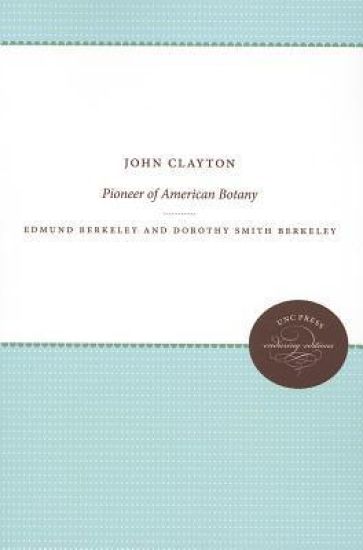
John Clayton

John Clayton

Berkeley Edmund; Berkeley Dorothy Smith

The University of North Carolina Press
2012
nidottu
As a plant collector and early systematic botanist, John Clayton occupies a key position in the eighteenth-century international botanical circle. His chief monument is the Flora Virginica, published in Leiden in 1739 and 1762. Compiled by J. F. Gronovius from plants and descriptions supplied by Clayton, it is the first important North American flora and the only one devoted solely to Virginia.Originally published in 1963.A UNC Press Enduring Edition -- UNC Press Enduring Editions use the latest in digital technology to make available again books from our distinguished backlist that were previously out of print. These editions are published unaltered from the original, and are presented in affordable paperback formats, bringing readers both historical and cultural value.
George William Featherstonhaugh

George William Featherstonhaugh

Edmund Berkeley; Dorothy Smith Berkeley

The University of Alabama Press
2006
nidottu
"U.S. historians can read this book with considerable profit for the details it offers; general readers can enjoy it as a straightforward and informative biography." --Choice"For anyone interested in the history of American geology, knowledge of G. W. Featherstonhaugh (1780-1866) is both essential and hard to obtain. He was the force behind the first railroad in America; a pioneer in scientific agriculture; an essayist, poet, and novelist; a lobbyist; a linguist; and a daring diplomat who saved the king and queen of France from certain death. [Yet] his strongest tie was with the geology. [This] biography is interesting, well researched and well written. It is a balanced study of a complex man who did so much work and generated such controversy." --Earth Sciences History
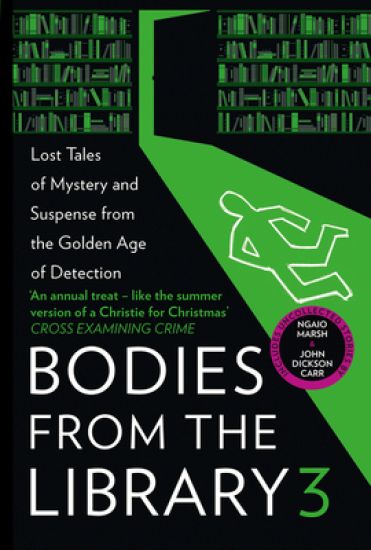
Bodies from the Library 3

Bodies from the Library 3

Agatha Christie; Ngaio Marsh; Dorothy L. Sayers; Anthony Berkeley; Nicholas Blake

Collins Crime Club
2021
nidottu
This anthology of rare stories of crime and suspense brings together 18 tales from the Golden Age of Detective Fiction for the first time in book form, including uncollected stories by Ngaio Marsh and John Dickson Carr. The Golden Age of detective fiction had begun inauspiciously with the publication of E.C. Bentley’s schismatic Trent’s Last Case in 1913, but it hit its stride in 1920 when both Agatha Christie and Freeman Wills Crofts – latterly crowned queen and king of the genre – had crime novels published for the first time. They ushered in two decades of exemplary mystery writing, the era of the whodunit, the impossible crime and the locked-room mystery, with stories that have thrilled and baffled generations of readers. This new volume in the Bodies from the Library series features the work of 18 prolific authors who, like Christie and Crofts, saw their popularity soar during the Golden Age. Aside from novels, they all wrote short fiction – stories, serials and plays – and although most of them have been collected in books over the last 100 years, here are the ones that got away… In this book you will encounter classic series detectives including Colonel Gore, Roger Sheringham, Hildegarde Withers and Henri Bencolin; Hercule Poirot solves ‘The Incident of the Dog’s Ball’; Roderick Alleyn returns to New Zealand in a recently discovered television drama by Ngaio Marsh; and Dorothy L. Sayers’ chilling ‘The House of the Poplars’ is published for the first time. With a full-length novella by John Dickson Carr and an unpublished radio script by Cyril Hare, this diverse collection concludes with some early ‘flash fiction’ commissioned by Collins’ Crime Club in 1938. Each mini story had to feature an orange, resulting in six very different tales from Peter Cheyney, Ethel Lina White, David Hume, Nicholas Blake, John Rhode and – in his only foray into writing detective fiction – the publisher himself, William Collins.
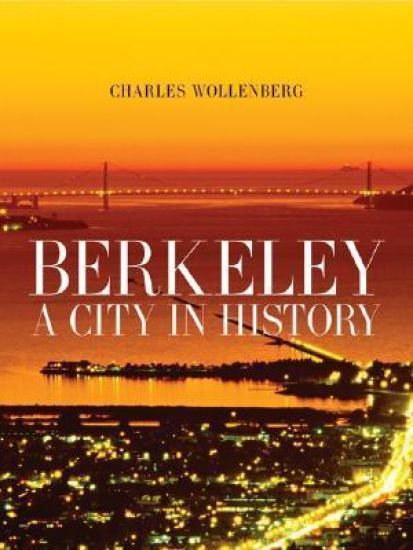
Berkeley

Berkeley

Charles M. Wollenberg

University of California Press
2008
pokkari
The Railroad Age, The Depression, World War II, The Atomic Age, The Sixties - these periods shaped and were in turn shaped by Berkeley, California - a city that has had a remarkable influence given its modest size. This concise book, the only up-to-date history of Berkeley, is a rich chronicle connecting the people, trends, and events that made the city to much larger themes in history. From the native builders of shellmounds to the blue-collar residents of Ocean View, the rise of the University of California, the World War II shipyards, and today's demographics and politics, it's all here in this fascinating account of the other beloved city by the bay.Along the way, we find the answers to many intriguing questions: why is Adeline Street is so oddly aligned? How did Berkeley benefit from the 1906 earthquake that destroyed much of San Francisco? What differentiated Holy Hill from Nut Hill? "Berkeley: A City in History" offers a delightful sense of place to anyone who has lived in, worked in, or traveled through this unique city.
Berkeley

Berkeley

Jonathan Dancy

Blackwell Publishers
1987
nidottu
This new introduction to the main themes of Berkeley's philosophy assumes no previous knowlege of philosophy and will be accessible to first-year students and to the interested general reader. It also offers and defends its own interpretation of Berkeley' position. Jonathan Dancy argues that we understand Berkeley's idealism best if we take seriously his claim that realism (the view that material things have an existence independent of the mind) derives from a mistaken use of abstraction. Stress is laid on Berkelye's determination to use idealism to bring his God as close to us as possible. Instances of this are his claims that the world we live in is a collection of ideas in God's mind, and that natural events are divine utterances which science is the attempts to interpret. Dancy also discusses Berkelye's attack on the distinction between primary and secondary qualities, and his views on perception and knowledge. There is an account of his theory of the mind and of the nature of human action, and a final chapter contrasts the interpretation offered here with others. Students who have read this book will be well equipped to understand and assess the frequent references to Berkeley in current literature.
Berkeley

Berkeley

Keota Fields

Lexington Books
2011
sidottu
Berkeley: Ideas, Immaterialism, and Objective Presence offers a novel interpretation of the arc of George Berkeley's philosophical thought, from his theory of vision through his immaterialism and finally to his proof of God's existence. Keota Fields unifies these themes to focus on Berkeley's use of the Cartesian doctrine of objective presence, which demands causal explanations of the content of ideas. This is particularly so with respect to Berkeley's arguments for immaterialism. One of those arguments is typically read as a straightforward transitivity argument. After identifying material bodies with sensible objects, and the latter with ideas of sense, Berkeley concludes that putative material bodies are actually identical to collections of ideas of sense. George Pappas has recently defended an alternative reading that grounds Berkeley's immaterialism in his rejection of what Pappas calls category-transcendent abstract ideas: abstract ideas of beings, entia, or existence. Fields uses Pappas's interpretation as a framework for understanding Berkeley's immaterialism in terms of transcendental arguments. Early moderns routinely used the doctrine of objective presence to justify transcendental arguments for the existence of material substance. The claim was that physical qualities are necessary for any causal explanation of the content of sensory ideas; since those qualities are represented to perceivers as ontologically dependent, material substance is the necessary condition for the existence of physical qualities and a fortiori any causal explanation of the content of sensory ideas. On the reading defended here, Berkeley rejects Locke's transcendental argument for the existence of material substratum on the grounds that it turns decisively on the aforementioned category-transcendent abstract ideas, which Berkeley rejects as logically inconsistent. In its place, Berkeley offers his own transcendental argument designed to show that only minds and ideas exist. He uses that argument as a
Berkeley

Berkeley

Daniel E. Flage

Polity Press
2014
sidottu
Irish philosopher George Bishop Berkeley was one of the greatest philosophers of the early modern period. Along with David Hume and John Locke he is considered one of the fathers of British Empiricism. Berkeley is a clear, concise, and sympathetic introduction to George Berkeley’s philosophy, and a thorough review of his most important texts. Daniel E. Flage explores his works on vision, metaphysics, morality, and economics in an attempt to develop a philosophically plausible interpretation of Berkeley’s oeuvre as whole. Many scholars blur the rejection of material substance (immaterialism) with the claim that only minds and things dependent upon minds exist (idealism). However Flage shows how, by distinguishing idealism from immaterialism and arguing that Berkeley’s account of what there is (metaphysics) is dependent upon what is known (epistemology), a careful and plausible philosophy emerges. The author sets out the implications of this valuable insight for Berkeley’s moral and economic works, showing how they are a natural outgrowth of his metaphysics, casting new light on the appreciation of these and other lesser-known areas of Berkeley’s thought. Daniel E. Flage’s Berkeley presents the student and general reader with a clear and eminently readable introduction to Berkeley’s works which also challenges standard interpretations of Berkeley’s philosophy.
Berkeley

Berkeley

Daniel E. Flage

Polity Press
2014
nidottu
Irish philosopher George Bishop Berkeley was one of the greatest philosophers of the early modern period. Along with David Hume and John Locke he is considered one of the fathers of British Empiricism. Berkeley is a clear, concise, and sympathetic introduction to George Berkeley’s philosophy, and a thorough review of his most important texts. Daniel E. Flage explores his works on vision, metaphysics, morality, and economics in an attempt to develop a philosophically plausible interpretation of Berkeley’s oeuvre as whole. Many scholars blur the rejection of material substance (immaterialism) with the claim that only minds and things dependent upon minds exist (idealism). However Flage shows how, by distinguishing idealism from immaterialism and arguing that Berkeley’s account of what there is (metaphysics) is dependent upon what is known (epistemology), a careful and plausible philosophy emerges. The author sets out the implications of this valuable insight for Berkeley’s moral and economic works, showing how they are a natural outgrowth of his metaphysics, casting new light on the appreciation of these and other lesser-known areas of Berkeley’s thought. Daniel E. Flage’s Berkeley presents the student and general reader with a clear and eminently readable introduction to Berkeley’s works which also challenges standard interpretations of Berkeley’s philosophy.
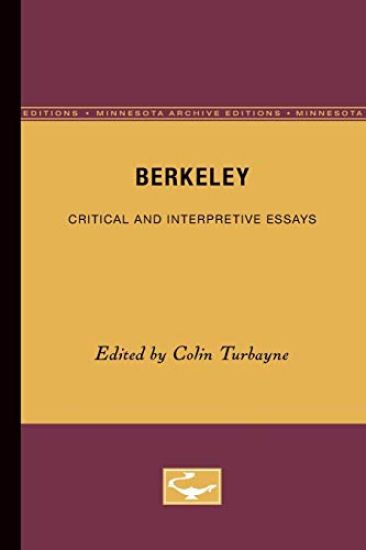
Berkeley

Berkeley

University of Minnesota Press
1982
nidottu
Berkeley was first published in 1982. Minnesota Archive Editions uses digital technology to make long-unavailable books once again accessible, and are published unaltered from the original University of Minnesota Press editions. In contemporary philosophy the works of George Berkeley are considered models of argumentative discourse; his paradoxes have a further value to teachers because, like Zeno's, they challenge a beginning student to find the submerged fallacy. And as a final, triumphant perversion of Berkeley's intent, his central contribution is still commonly viewed as an argument for skepticism - the very position he tried to refute. This limited approach to Berkeley has obscured his accomplishments in other areas of thought - his account of language, his theories of meaning and reference, his philosophy of science. These subjects and others are taken up in a collection of twenty essays, most of them given at a conference in Newport, Rhode Island, commemorating the 250th anniversary of Berkeley's American sojourn of 1728–31. The essays constitute a broad survey of problems tackled by Berkeley and still of interest to philosophers, as well as topics of historical interest less familiar to modern readers. Its comprehensive scope will make this book appropriate for text use.
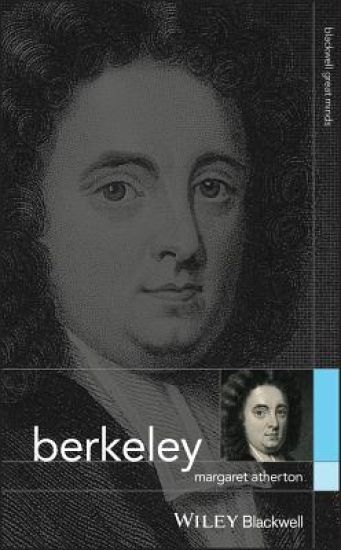
Berkeley

Berkeley

Margaret Atherton

Wiley-Blackwell (an imprint of John Wiley Sons Ltd)
2019
sidottu
Presents a concise and comprehensive analysis of George Berkeley’s thought and the impact of his intellectual contributions to philosophy In this latest addition to the Blackwell Great Minds series, noted scholar of early modern philosophy Margaret Atherton examines Berkeley’s most influential work and demonstrates the significant conceptual impact of his ideas in metaphysics and the philosophy of religion. A concise and rigorous primer on Berkeley’s essential writings and contributions to modern philosophyWritten by a leading scholar of early modern philosophyOffers insight into the foundations of modern metaphysical and religious philosophyEquips readers to find firm footing in Berkeley’s wider body of published work in the canon of Western philosophy
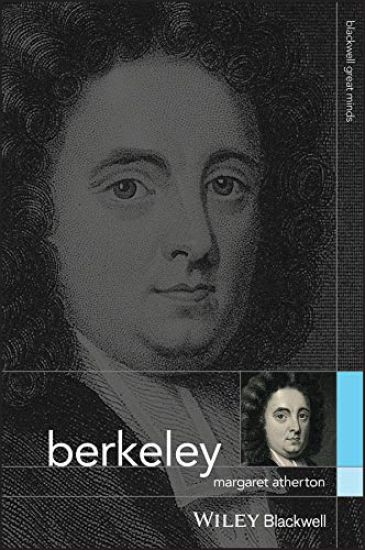
Berkeley

Berkeley

Margaret Atherton

Wiley-Blackwell (an imprint of John Wiley Sons Ltd)
2019
nidottu
Presents a concise and comprehensive analysis of George Berkeley’s thought and the impact of his intellectual contributions to philosophy In this latest addition to the Blackwell Great Minds series, noted scholar of early modern philosophy Margaret Atherton examines Berkeley’s most influential work and demonstrates the significant conceptual impact of his ideas in metaphysics and the philosophy of religion. A concise and rigorous primer on Berkeley’s essential writings and contributions to modern philosophyWritten by a leading scholar of early modern philosophyOffers insight into the foundations of modern metaphysical and religious philosophyEquips readers to find firm footing in Berkeley’s wider body of published work in the canon of Western philosophy
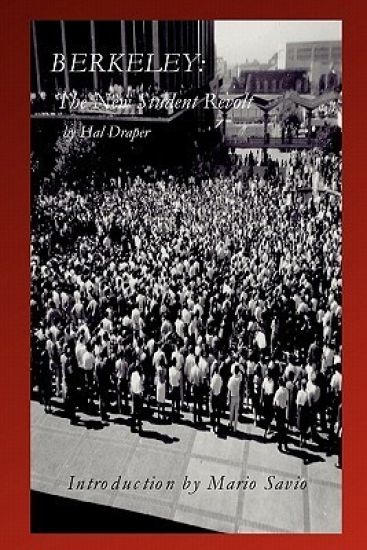
Berkeley

Berkeley

Hal Draper

Haymarket Books
2020
pokkari
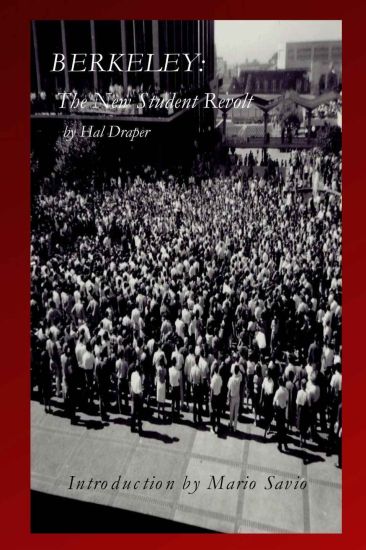
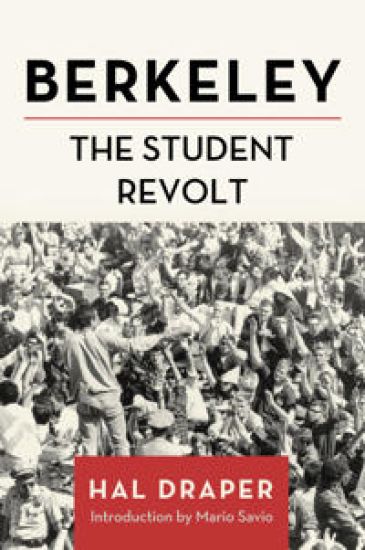
"There's a time when the operation of the machine becomes so odious, makes you so sick at heart, that you can't take part! You can't even passively take part! And you've got to put your bodies upon the gears and upon the wheels ... upon the levers, upon all the apparatus, and you've got to make it stop!"These fiery words of protest, spoken by Mario Savio during the Berkeley Free Speech Movement, became a call to action that helped galvanize an entire generation of radicals during the 1960s. Led by student politicized through the fight for Civil Rights, the movement would reshape the American left and influence a generation of protesters across the globe.In this rousing and insightful participant's account, Hal Draper recounts the now iconic events of the FSM. From the impromptu speak out atop a police car after the administration decided to clamp down on students "distributing communist literature," to the inspiring Student Strike that shut down the entire campus, Draper's narrative captures the energy and dynamism of each twist and turn in the struggle, and offers invaluable analysis along the way.Brimming with lessons still relevant for today's activists, Berkeley: The Student Revolt is a classic of on-the-ground historical reportage.
Berkeley

Berkeley

Hal Draper

Haymarket Books
2020
sidottu
"There's a time when the operation of the machine becomes so odious, makes you so sick at heart, that you can't take part! You can't even passively take part! And you've got to put your bodies upon the gears and upon the wheels ... upon the levers, upon all the apparatus, and you've got to make it stop!"These fiery words of protest, spoken by Mario Savio during the Berkeley Free Speech Movement, became a call to action that helped galvanize an entire generation of radicals during the 1960s. Led by student politicized through the fight for Civil Rights, the movement would reshape the American left and influence a generation of protesters across the globe.In this rousing and insightful participant's account, Hal Draper recounts the now iconic events of the FSM. From the impromptu speak out atop a police car after the administration decided to clamp down on students "distributing communist literature," to the inspiring Student Strike that shut down the entire campus, Draper's narrative captures the energy and dynamism of each twist and turn in the struggle, and offers invaluable analysis along the way.Brimming with lessons still relevant for today's activists, Berkeley: The New Student Rebellion is a classic of on-the-ground historical reportage.
Berkeley

Berkeley

Wendy P. Markel

Arcadia Publishing (SC)
2009
nidottu
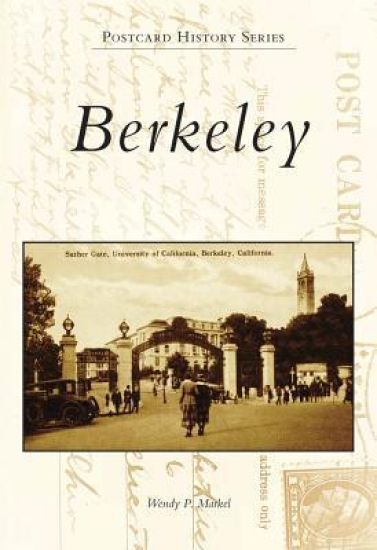
The Huchiun Ohlone people were the first inhabitants of the land that is today Berkeley. Early in the 1800s, the 47,000-acre ranches of the Peralta family stretched into the hills from San Leandro Creek to El Cerrito Creek. Only a scant 50 years later, newly arrived American settlers established the community of Ocean View on the bay, and in 1860, land nestled into the foothills was dedicated for the establishment of the future University of California. With a university to the east and Ocean View to the west, the threat of annexation by the larger town of Oakland finally brought the two communities together into one, and Athens of the West, as Berkeley was known, became a municipality in 1878.
Berkeley at War

Berkeley at War

W.J. Rorabaugh

Oxford University Press Inc
1992
nidottu
Berkeley, California stood at the center of the political, social, and cultural upheaval that made the 1960s a unique period in American history. In Berkeley at War, W.J. Rorabaugh, who attended the graduate school of the University of California at Berkeley in the 1970s, presents a lively, informative account of the events that changed forever what had once been a quiet, conservative white suburb. Rorabaugh's meticulously researched, authoritative narrative covers the entire period, from the rise of the Free Speech Movement to the growth and increasing militance of a black community struggling to end segregation; from the emergence of radicalism and the anti-war movement to the blossoming "hippie" culture; and from the explosive conflict over People's Park to the beginnings of modern-day feminism and environmentalism. An invaluable account of its time and place, Berkeley at War anchors the sixties in American history, both before and since that colorful decade.