Growing up in the suburbs confused about his sexuality, about his consumer-oriented world, about the death of his older brother Bernard Cooper falls in love with Pop art and sets off for the California Institute of the Arts, the center of the burgeoning field of conceptual art, in this beguiling memoir. The most famous, and infamous, artists of the time drift through the place, including Allan Kaprow and John Baldessari, not to mention the student who phones the Identi-Kit division of the Los Angeles Police Department and has them make a composite drawing of the Mona Lisa. My Avant-Garde Education is at once an artist's coming-of-age story and a personal chronicle of the era of conceptual art, from a writer "of uncommon subtlety and nuance" (David Ulin, Los Angeles Times). It is a record of the wonders and follies of a certain era in art history, always aware that awakening to art is, for a young person, inseparable from awakening to the ever-shifting nature of the self."
Edward Cooper was a hard man to know. Dour and exuberant by turns, his moods dictated the always-uncertain climate of the Cooper household. Now – balding, octogenarian – he makes an unlikely literary muse. But to his now middle-aged son, he looms larger than life, an overwhelming, baffling presence. Edward Cooper made his name as a divorce attorney in LA whose cases were devoured by the tabloids. Now, he is slowly succumbing to dementia. As Bernard attempts to forge a coherent picture of his family history, he uncovers Edward's lawsuits against other family members, and recalls the itemized invoice his father once sent him for the total cost of his upbringing, for the sum of two million dollars. 'Bernard Cooper's The Bill from My Father is a glorious cornucopia of love and pain. Not only is Cooper an exemplary writer but he can parse an emotion down to its most resonant note. This memoir amazes' Alice Sebold, author of The Lovely Bones 'Cooper is a beautiful writer . . . his book is in a class of its own . . . Somehow, this is a story about all parents and their grown-up children and how they manage to keep going through all the insults and mixed messages and botched attempts to express love' Observer 'Cooper's wry, rueful memoir of a lifetime's wrangling with the old guy is memorably moving, emotionally disciplined, devilish in the detail and smartly funny. Read it now' The Times
The essays in Maps to Anywhere plot terrain that is at once familiar and subtly strange. Writing on subjects ranging from his family to the origin of the barbershop pole, Bernard Cooper digs into the glimmering surface of the southern California landscape, observing the collision of the American Dream with the realities of everyday life. From the fragments, he discovers landmarks by which he attempts to make sense of contemporary America.
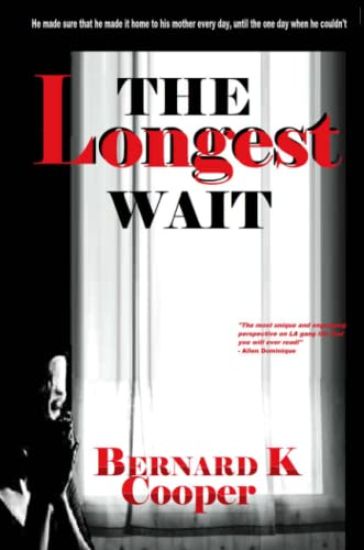
Cufuan at the age of thirteen began a lifestyle as an 8 Trey Gangster Crip gang member. His mother known as Bonnie BB a single parent mother of 6 whose only mission was to keep her baby boy out the streets and out prison.
This in-depth musicological and critical study examines how Bernard Herrmann's score for Alfred Hitchcock's Vertigo plays a crucial role in the articulation and development of the film's narrative and how it affects readings of the film. Herrmann's collaboration with Hitchcock spanned eleven years and nine films, and Herrmann's film score for Vertigo is widely regarded as being one of his finest. Cooper considers the development of Herrmann's career up to 1958, providing a detailed discussion of his musical style. The explicit information about the structure of Herrmann's music is based on a study of Herrmann's autograph score. Cooper examines not only the context of the film's production, but also its reception and critical readings of the film. In addition, this study explores how the effects track co-operates with Herrmann's non-diegetic and diegetic score and concludes with a detailed musicological study. The author advances a new theory, in his discussion of signification, about the establishment of meaning in film music through association with images on the screen. This sophisticated musicological approach will appeal to film music and film communication scholars.
Regarded as one of the greatest film composers of all time, Bernard Herrmann was responsible for some of the most memorable music in film. His work with Alfred Hitchcock produced a slew of classics including Vertigo (1958), North by Northwest (1959), and Psycho (1960). Several years before collaborating with Hitchcock, however, Herrmann composed the brilliant score for The Ghost and Mrs. Muir (1947), which remained a personal favorite of the composer's. Herrmann's score reinforces the film's romantic theme, and much of the music has an appropriately elegiac quality. In mood, orchestration, and even to some extent thematic identity, it seems to prefigure his music for Vertigo. In this latest addition to the Scarecrow Film Score Guide series, author David Cooper examines Herrmann's career in general, as well as the specific elements that went into the creation of The Ghost and Mrs. Muir's score. Cooper traces the development of Herrmann's craft as a film composer, especially through his radio work, where he made contact with many of the great artists of the age, most notably Orson Welles. This association was to give him a passport to Hollywood and led to the scoring of his first film, Citizen Kane. Herrmann's subsequent film scores of the 1940s included The Devil and Daniel Webster, The Magnificent Ambersons, and Jane Eyre. In this guide, Cooper considers Herrmann's musical technique and offers a theorization of some of the ways in which music can be "meaningful" in film. He also explores non-musical contexts of the film, including the screenplay's relationship to the popular novel from which it was adapted, as well as the contribution of director Joseph L. Mankiewicz, the performances of Gene Tierney and Rex Harrison, and the editing of Dorothy Spencer. Cooper also provides a quantitative, evidence-based study of the score. In doing so, he discusses the extent to which Herrmann adopted screenwriter Philip Dunne's suggestions for music in
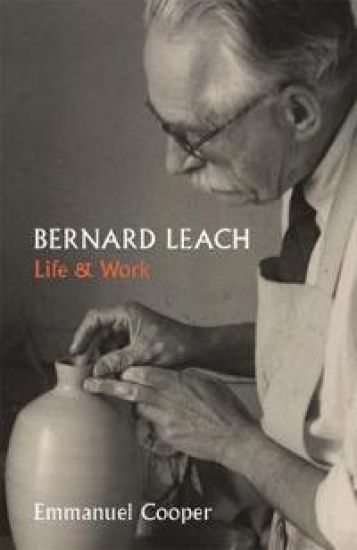
An exceptionally thoughtful and well-written biography of one of the most influential studio potters in Britain Widely recognized as the father of studio pottery, Bernard Leach (1887–1979) played a pioneering role in creating an identity for artist potters in Britain and around the world. Born in the East (Hong Kong) and educated in the West (England), throughout his life Leach perceived himself as a courier between the disparate cultures. His exquisite pots reflect the inspiration he drew from East and West as well as his response to the basic tenets of modernism—truth to materials, the importance of function to form, and simplicity of decoration. This outstanding biography provides for the first time a vivid and detailed account of Leach’s life and its relation to his art. Emmanuel Cooper, himself a potter of international reputation, explores Leach’s working methods, the seams of his pottery, his writings and philosophy, his recognition in Japan and Britain, and his continuing legacy, bringing into sharp focus a complex man who captured in his work as a potter the “still center” that always eluded him in his tumultuous personal life.Distributed for the Paul Mellon Centre for Studies in British Art
Liberal democracy is in crisis around the world, unable to address pressing problems such as climate change. There is, however, another path—cooperation democracy. From consumer co-ops to credit unions, worker cooperatives to insurance mutuals, nonprofits to mutual aid, countless examples prove that people working together can extend the ideals of participatory democracy and sustainability into every aspect of their lives. These forms of cooperation do not depend on electoral politics. Instead, they harness the longstanding practices and values of cooperatives: self-determination, democratic participation, equity, solidarity, and respect for the environment.Bernard E. Harcourt develops a transformative theory and practice that builds on worldwide models of successful cooperation. He identifies the most promising forms of cooperative initiatives and then distills their lessons into an integrated framework: Coöperism. This is a political theory grounded on recognition of our interdependence. It is an economic theory that can ensure equitable distribution of wealth. Finally, it is a social theory that replaces the punishment paradigm with a cooperation paradigm.A creative work of normative critical theory, Cooperation provides a positive vision for addressing our most urgent challenges today. Harcourt shows that by drawing on the core values of cooperation and the power of people working together, a new world of cooperation democracy is within our grasp.
Liberal democracy is in crisis around the world, unable to address pressing problems such as climate change. There is, however, another path—cooperation democracy. From consumer co-ops to credit unions, worker cooperatives to insurance mutuals, nonprofits to mutual aid, countless examples prove that people working together can extend the ideals of participatory democracy and sustainability into every aspect of their lives. These forms of cooperation do not depend on electoral politics. Instead, they harness the longstanding practices and values of cooperatives: self-determination, democratic participation, equity, solidarity, and respect for the environment.Bernard E. Harcourt develops a transformative theory and practice that builds on worldwide models of successful cooperation. He identifies the most promising forms of cooperative initiatives and then distills their lessons into an integrated framework: Coöperism. This is a political theory grounded on recognition of our interdependence. It is an economic theory that can ensure equitable distribution of wealth. Finally, it is a social theory that replaces the punishment paradigm with a cooperation paradigm.A creative work of normative critical theory, Cooperation provides a positive vision for addressing our most urgent challenges today. Harcourt shows that by drawing on the core values of cooperation and the power of people working together, a new world of cooperation democracy is within our grasp.
Cooperative Strategy Competing Successfully through Strategic Alliances Pierre Dussauge and Bernard Garrette HEC-School of Management, France In recent years, such corporate giants as Boeing, Toyota, Nestlé, Philips, United Airlines, IBM, and Intel have increasingly turned to alliances in order to develop new products and technologies, enter new markets, and globalize their activities. Indeed, no one firm, however dominant, can beat the competition entirely on its own. Unfortunately, managers have found collaboration to be a difficult, and sometimes dangerous, strategy; they have often over-estimated the benefits of alliances while overlooking their pitfalls which only materialize over time. C.K. Prahalad notes in the foreword that "managers need a robust framework for navigating through these uncharted waters" and that "this book provides an invaluable source of ideas and practical guidance in their search". As the dynamics of the business landscape change and alliances become an increasingly used competitive weapon, Cooperative Strategy will enable managers to plan, implement and make the best use of strategic alliances. "This book significantly advances the literature on strategic alliances. The case studies are fresh and the insights they provide are powerful. This book is a must read for both managers and academics interested in cooperative strategies." Nitin Nohria, Professor of Business Administration, Harvard Business School "This book provides an excellent guide to the new skills needed in an environment where more and more managers must learn to collaborate in order to enhance the competitive position of their company. No-one can become a global leader alone." John M. Stopford, Professor of International Business, London Business School "The framework developed by Pierre Dussauge and Bernard Garrette provides new and valuable insights on the strategic and managerial issues raised by alliances, in particular when these alliances bring together companies that compete in the same industries. Indeed, getting former competitors to collaborate efficiently is a difficult endeavour; this book offers managers guidelines that will make this challenge less daunting." Jean-Luc Lagardère, CEO, Matra-Hachette "This excellent book provides insightful clarity on the various types of alliances and successfully explores the issues, pitfalls and traps which ensnare the misinformed. The examples are rich and the perspective truly global. In particular, it disentangles the more creative forms of 'co-opetition' between rival firms, and lays out the longer term outcomes of alliances. It is pragmatic and practical, bristling with concrete suggestions on how to make alliances successful." Bruce Simpson, Principal, McKinsey&Company
The Old City of Jerusalem, small and densely populated, is a complex microcosm of Israeli society. It is a multilingual community characterized by unequal power relations between the speakers of the two official languages of Israel - Arabs and Jews. The authors begin with a sociolinguistic sketch of the Old City in the present day. They then provide a historical background to their field study, discussing Jewish multilingualism from the period of the Second Temple until modern times, the sociolinguistics of Jerusalem one hundred years ago, and the recent revival and spread of Hebrew. They go on to develop a model of the rules of language choice which arises from their analysis of language use in street signs, and which they then apply to language use in the market place. In the final chapters they examine language learning and language spread in their social context. The authors demonstrate that, because of the close association between language use and social structure, the study of language use in a multilingual society is at the same time both a powerful and a delicate method of studying the dynamics of group interactions.