Kirjojen hintavertailu. Mukana 11 213 693 kirjaa ja 12 kauppaa.

Kirjahaku

Etsi kirjoja tekijän nimen, kirjan nimen tai ISBN:n perusteella.

1000 tulosta hakusanalla Bernard Cottret

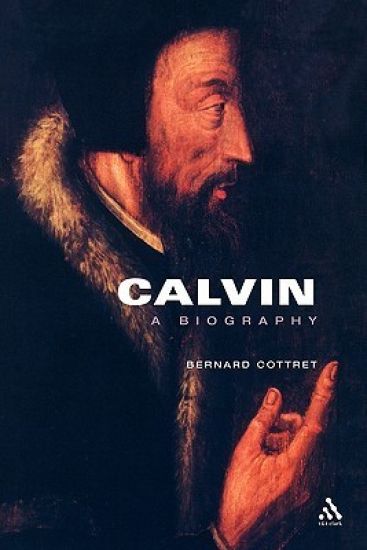
Calvin, A Biography

Calvin, A Biography

Bernard Cottret

T. T.Clark Ltd
2003
nidottu
A major new authoritative and comprehensive biography, shedding new light on the life and personality of the great Reformer - and the milieu in which he lived and worked. Cottret's Calvin is not the Gstatic theologian of earlier biographies, but a man of enormous vigour, constantly on the move in his thinking as well as in his life. Professor Cottret introduces the reader to the world into which Calvin was born, and follows him from childhood to humanistic and literary pursuits in Basel, to ministry in Geneva, to the halcyon Strasbourg years and finally back to Geneva. The vital issues of the day are encountered as it were through Calvins eyes, as the author leads the reader through the dramatic upheavals of sixteenth-century Europe. A classic biography which will be an indispensable resource for students and scholars for years to come. Praise for Calvin:
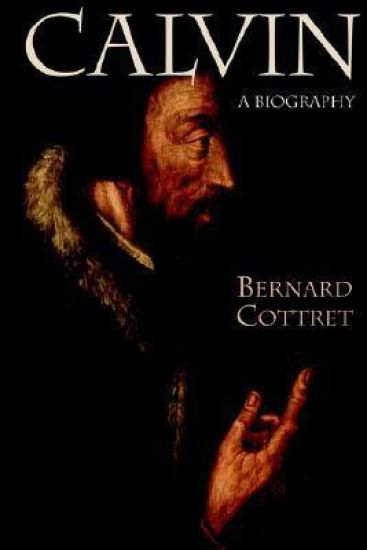
Calvin

Calvin

Cottret Bernard

William B Eerdmans Publishing Co
2000
pokkari
"Modesty, softness, and mildness" - such was John Calvin, in his own words. This brief self-portrait will surprise posterity, quick, as it is to detect in Calvin a deeply passionate man of zealous action. Calvin adds elsewhere: "I acknowledge myself to be timid, soft, and cowardly by nature." He repeated the same idea feelingly on the eve of his death, calling himself "timid" and "fearful" before an astounded group of pastors who knew by experience that the old fellow could raise up storms. These various descriptions of Calvin strongly underline the vigor of a character that owed all its energy to God alone. At the same time, the apparent contradictions within Calvin's personality make it hard to capture his true nature. The large number of biographies attempted to date attest to this fact, many of which simply picture Calvin as a rigid fundamentalist or as a totalitarian who ruled Geneva with an iron hand. Such interpretations, however, are much too one-dimensional. This sterling new biography by Bernard Cottret opts for a Calvin "in movement," thus distinguishing itself from works that present Calvin as a man of relatively static character.The aim of this book is simply to recover the truth, or rather to reclaim the intelligibility of a man in his time. This is a historian's Calvin, the work of a university professor who is neither a theologian nor an ordained minister. Cottret's welcome approach sheds new light on the great Reformer's personality by concentrating on the milieu in which Calvin did his life's work. In the largest part of the book, Cottret explores Calvin's life chronologically. We are introduced to the world into which Calvin was born, a Europe in the throes of upheaval owing to the development of the printing press and divergent religious views. We follow Calvin from his birth and childhood in Noyon to his school years in Paris. We accompany Calvin on his humanistic and literary pursuits in Basel, his early ministry in Geneva, and his halcyon Strasbourg years. Finally, we move again to Geneva, where the brunt of Calvin's serious-and better known-life was lived. Along the way we encounter the major issues of Calvin's day-the sacrifice of the Mass, iconoclasm, predestination, the Arianism of Michael Servetus - issues to which he reacted with all his religious emotion.We tarry with him in Geneva and get an up-close look at the governance of Calvinism's "holy city." And we share in Calvin's joys and sorrows through a reading of his prolific correspondence. In the final chapters, Cottret explores thematic aspects of Calvin's persona-Calvin the polemicist, the preacher, and the writer-and looks in greater depth at his foremost work, the Institutes of the Christian Religion. Widely acclaimed in its French edition, this balanced and beautifully written biography will take its place among the best and most enjoyable-portraits of Calvin's life, work, and lasting influence.
Responce, Doyen de l'Oratoire de Sainct Bernard Des Feuillans Lez Paris, À Une Lettre
Responce de domp Bernard doyen de l'Oratoire de Sainct Bernard des Feuillans lez Paris, a une lettre a luy escrite & envoyee par Henry de Valois.Date de l'edition originale: 1589Ce livre est la reproduction fidele d'une oeuvre publiee avant 1920 et fait partie d'une collection de livres reimprimes a la demande editee par Hachette Livre, dans le cadre d'un partenariat avec la Bibliotheque nationale de France, offrant l'opportunite d'acceder a des ouvrages anciens et souvent rares issus des fonds patrimoniaux de la BnF.Les oeuvres faisant partie de cette collection ont ete numerisees par la BnF et sont presentes sur Gallica, sa bibliotheque numerique.En entreprenant de redonner vie a ces ouvrages au travers d'une collection de livres reimprimes a la demande, nous leur donnons la possibilite de rencontrer un public elargi et participons a la transmission de connaissances et de savoirs parfois difficilement accessibles.Nous avons cherche a concilier la reproduction fidele d'un livre ancien a partir de sa version numerisee avec le souci d'un confort de lecture optimal. Nous esperons que les ouvrages de cette nouvelle collection vous apporteront entiere satisfaction.Pour plus d'informations, rendez-vous sur www.hachettebnf.fr
Bernard Of Clairvaux

Bernard Of Clairvaux

Emilie Griffin

HarperOne
2005
nidottu
Bernard of Clairvaux holds a distinguished place in the history of Christian spirituality. During the twelfth century this gentle monk from France became the primary guide for those who follow the path of selfless love as well as a spokesman for a revival in monastic life. This collection of his most important writings provides a superb introduction to a man who has greatly shaped the Western monastic and mystical traditions.
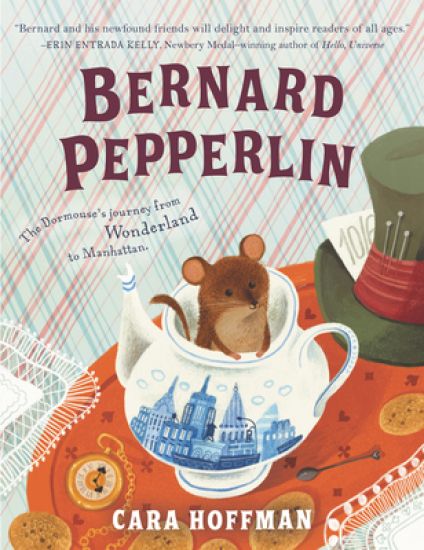
Bernard Pepperlin

Bernard Pepperlin

Cara Hoffman

Harpercollins
2019
sidottu
"Bernard and his newfound friends--revolutionary rats, wise-cracking cats, and coffee-chugging squirrels, to name a few--will delight and inspire readers of all ages " --Erin Entrada Kelly, Newbery Medal-winning author of Hello, UniverseThe drowsy Dormouse from Lewis Carroll's Alice's Adventures in Wonderland is transported to modern-day New York City for the adventure of a lifetime in this middle grade novel that's perfect for fans of Stuart Little and written by critically acclaimed author Cara Hoffman.When a girl in a blue dress crashes the Mad Hatter's eternal tea party, the sleepy Dormouse feels more awake than he has in a long time. He wishes he could follow her and be a part of her adventure.And as luck would have it, a surprising twist of fate sends the Dormouse on an adventure of his own, where he must not fall asleep. For he is destined to save a magical world outside Wonderland, and it will take all his courage--and a few new friends--to do it.
Bernard Pepperlin

Bernard Pepperlin

Cara Hoffman

Harpercollins
2020
nidottu
"Bernard and his newfound friends--revolutionary rats, wise-cracking cats, and coffee-chugging squirrels, to name a few--will delight and inspire readers of all ages " --Erin Entrada Kelly, Newbery Medal-winning author of Hello, UniverseThe drowsy Dormouse from Lewis Carroll's Alice's Adventures in Wonderland is transported to modern-day New York City for the adventure of a lifetime in this middle grade novel that's perfect for fans of Stuart Little and written by critically acclaimed author Cara Hoffman.When a girl in a blue dress crashes the Mad Hatter's eternal tea party, the sleepy Dormouse feels more awake than he has in a long time. He wishes he could follow her and be a part of her adventure.And as luck would have it, a surprising twist of fate sends the Dormouse on an adventure of his own, where he must not fall asleep. For he is destined to save a magical world outside Wonderland, and it will take all his courage--and a few new friends--to do it.
Bernard Buffet

Bernard Buffet

Nicholas Foulkes

Arrow Books Ltd
2017
pokkari
It is said that asphyxiation brings on a state of hallucinatory intoxication...in which case the 71 year old artist who lay in his sprawling Provencal villa died happy. In the early afternoon of Monday 4 October 1999, wracked with Parkinson's, and unable to paint because of a fall in which he had broken his wrist, Bernard Buffet calmly placed a plastic bag over his head, taped it tight around his neck and patiently waited the few minutes it took for death to arrive. Bernard Buffet:The Invention of the Modern Mega-artist tells the remarkable story of a French figurative painter who tasted unprecedented critical and commercial success at an age when his contemporaries were still at art school. Then, with almost equal suddenness the fruits of fame turned sour and he found himself an outcast. Scarred with the contagion of immense commercial success no leper was more untouchable. He was the first artist of the television age and the jet age and his role in creating the idea of a post-war France is not to be underestimated. As the first of the so-called Fabulous Five (Francoise Sagan, Roger Vadim, Brigitte Bardot and Yves Saint Laurent) he was a leader of the cultural revolution that seemed to forge a new France from the shattered remains of a discredited and demoralized country. Rich in incident Buffet’s remarkable story of bisexual love affairs, betrayal, vendettas lasting half a century, shattered reputations, alcoholism, and drug abuse, is played out against the backdrop of the beau monde of the 1950s and 1960s in locations as diverse as St Tropez, Japan, Paris, Dallas, St Petersburg and New York, before coming to its miserable conclusion alone in his studio.
Bernard Williams on Philosophy and History
For Bernard Williams, philosophy and history are importantly connected. His work exploits this connection in a number of directions: he believes that philosophy cannot ignore its own history the way science can; that even when engaging with philosophy's history primarily to produce history, one needs to draw on philosophy; and that when doing the history of philosophy primarily to produce philosophy, one still needs a sense of how historically distant past philosophers are, because the point of reading them is to confront something different from the present. But Williams also holds that systematic philosophy itself needs to be done historically, engaging not just with its own history, but with that of the concepts it seeks to understand. To explore these different ways in which philosophy and history intertwine, this volume assembles specially commissioned contributions by A. W. Moore, Terence Irwin, Sophie-Grace Chappell, Catherine Rowett, Marcel van Ackeren, John Cottingham, Gerald Lang, Lorenzo Greco, Paul Russell, Carla Bagnoli, Peter Kail, David Owen, Giuseppina D'Oro, James Connelly, Matthieu Queloz, Nikhil Krishnan, John Marenbon, Ralph Wedgwood, Garrett Cullity, Hans-Johann Glock, Geraldine Ng, Ilaria Cozzaglio, Amanda R. Greene, and Miranda Fricker. They critically appraise Williams's work in and on the history of philosophy as well as his 'historicist turn' and his use of genealogy. The collection uniquely combines substantive discussions of historical figures from Homer to Wittgenstein with methodological discussions of how and why the history of philosophy should be done, and how and why philosophy should draw on history.
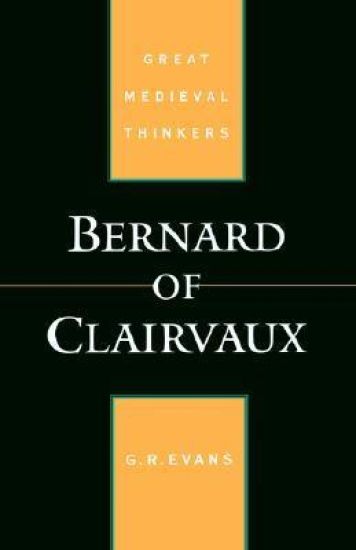
Bernard of Clairvaux

Bernard of Clairvaux

Gillian R. Evans

Oxford University Press Inc
2000
sidottu
Renowned medievalist G.R. Evans here provides a concise introduction to St. Bernard of Clairvaux (1090-1153), a figure of towering importance on the twelfth-century monastic and theological scene. After a brief overview of Bernard's life, Evans focuses on a few major themes in his work, including his theology of spirituality and his theology of the political life of the Church. The only available introduction to Bernard's life and thought, this latest addition to the Great Medieval Thinkers series will appeal to a wide audience of students and scholars of history and theology.
Bernard of Clairvaux

Bernard of Clairvaux

Gillian R. Evans

Oxford University Press Inc
2000
nidottu
Renowned medievalist G.R. Evans here provides a concise introduction to St. Bernard of Clairvaux (1090-1153), a figure of towering importance on the twelfth-century monastic and theological scene. After a brief overview of Bernard's life, Evans focuses on a few major themes in his work, including his theology of spirituality and his theology of the political life of the Church. The only available introduction to Bernard's life and thought, this latest addition to the Great Medieval Thinkers series will appeal to a wide audience of students and scholars of history and theology.
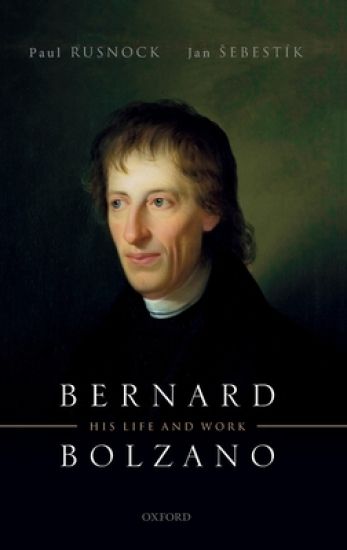
Bernard Bolzano

Bernard Bolzano

Paul Rusnock; Jan Sebestík

Oxford University Press
2019
sidottu
Bernard Bolzano (1781-1850) is increasingly recognized as one of the greatest nineteenth-century philosophers. A philosopher and mathematician of rare talent, he made ground-breaking contributions to logic, the foundations and philosophy of mathematics, metaphysics, and the philosophy of religion. Many of the larger features of later analytic philosophy (but also many of the details) first appear in his work: for example, the separation of logic from psychology, his sophisticated understanding of mathematical proof, his definition of logical consequence, his work on the semantics of natural kind terms, or his anticipations of Cantor's set theory, to name but a few. To his contemporaries, however, he was best known as an intelligent and determined advocate for reform of Church and State. Based in large part on a carefully argued utilitarian practical philosophy, he developed a program for the non-violent reform of the authoritarian institutions of the Hapsburg Empire, a program which he himself helped to set in motion through his teaching and other activities. Rarely has a philosopher had such a great impact on the political culture of his homeland. Persecuted in his lifetime by secular and ecclesiastical authorities, long ignored or misunderstood by philosophers, Bolzano's reputation has nevertheless steadily increased over the past century and a half. Much discussed and respected in Central Europe for over a century, he is finally beginning to receive the recognition he deserves in the English-speaking world. This book provides a comprehensive and detailed critical introduction to Bolzano, covering both his life and works.
Bernard Malamud

Bernard Malamud

Philip Davis

Oxford University Press
2007
sidottu
Philip Davis tells the story of Bernard Malamud (1914-1986), the self-made son of poor Jewish immigrants who went on to become one of the foremost novelists and short-story writers of the post-war period. The time is ripe for a revival of interest in a man who at the peak of his success stood alongside Saul Bellow and Philip Roth in the ranks of Jewish American writers. Nothing came easily to Malamud: his family was poor, his mother probably committed suicide when Malamud was 14, and his younger brother inherited her schizophrenia. Malamud did everything the second time round - re-using his life in his writing, even as he revised draft after draft. Davis's meticulous biography shows all that it meant for this man to be a writer in terms of both the uses of and the costs to his own life. It also restores Bernard Malamud's literary reputation as one of the great original voices of his generation, a writer of superb subtlety and clarity. Bernard Malamud: A Writer's Life benefits from Philip Davis's exclusive interviews with family, friends, and colleagues, unfettered access to private journals and letters, and detailed analysis of Malamud's working methods through the examination of hitherto unresearched manuscripts. It is very much a writer's life. It is also the story of a struggling emotional man, using an extraordinary but long-worked-for gift, in order to give meaning to ordinary human life.
Bernard Malamud

Bernard Malamud

Philip Davis

Oxford University Press
2010
nidottu
Philip Davis tells the story of Bernard Malamud (1914-1986), the self-made son of poor Jewish immigrants who went on to become one of the foremost novelists and short-story writers of the post-war period. The time is ripe for a revival of interest in a man who at the peak of his success stood alongside Saul Bellow and Philip Roth in the ranks of Jewish American writers. Nothing came easily to Malamud: his family was poor, his mother probably committed suicide when Malamud was 14, and his younger brother inherited her schizophrenia. Malamud did everything the second time round - re-using his life in his writing, even as he revised draft after draft. Davis's meticulous biography shows all that it meant for this man to be a writer in terms of both the uses of and the costs to his own life. It also restores Bernard Malamud's literary reputation as one of the great original voices of his generation, a writer of superb subtlety and clarity. Bernard Malamud: A Writer's Life benefits from Philip Davis's exclusive interviews with family, friends, and colleagues, unfettered access to private journals and letters, and detailed analysis of Malamud's working methods through the examination of hitherto unresearched manuscripts. It is very much a writer's life. It is also the story of a struggling emotional man, using an extraordinary but long-worked-for gift, in order to give meaning to ordinary human life.
Bernard Bolzano: Theory of Science
This is the first complete English translation of Bernard Bolzano's four-volume Wissenschaftslehre or Theory of Science, a masterwork of theoretical philosophy. Bolzano (1781-1848), one of the greatest philosophers of the nineteenth century, was a man of many parts. Best known in his own time as a teacher and public intellectual, he was also a mathematician and logician of rare ability, the peer of other pioneers of modern mathematical logic such as Boole, Frege, and Peirce. As Professor of Religion at the Charles University in Prague from 1805, he proved to be a courageous and determined critic of abuses in church and state, a powerful advocate for reform. Dismissed by the Emperor in 1819 for political reasons, he left public life and spent the next decade working on his "theory of science," which he also called logic. The resulting Wissenschaftslehre, first published in 1837, is a monumental, wholly original study in logic, epistemology, heuristics, and scientific methodology. Unlike most logical studies of the period, it is not concerned with the "psychological self-consciousness of the thinking mind." Instead, it develops logic as the science of "propositions in themselves" and their parts, especially the relations between these entities. It offers, for the first time in the history of logic, a viable definition of consequence (or deducibility), and a novel view of probability. Giving constant attention to Bolzano's predecessors and contemporaries, with particular emphasis on Kant, this richly documented work is also a valuable source for the history of logic and philosophy. Each volume of the edition is accompanied by a detailed introduction, which alerts the reader to the historical context of Bolzano's work and illuminates its continued relevance.
Bernard and the Cloth Monkey

Bernard and the Cloth Monkey

Judith Bryan

Penguin Books Ltd
2021
pokkari
WINNER OF THE SAGA PRIZE 1997: a literary award for trailblazing new Black British novelists'A quietly outstanding work of fiction . . . an exemplary novel' Bernardine Evaristo A shattering portrayal of family, guilt and unshakable bonds as a family's deepest secrets explosively unravel When Anita finally returns home to London after a long absence, everything has changed. Her father is dead, her mother is away, and she and her sister Beth are alone together for the first time in years. They share a house. They share a family. They share a past. Tentatively, they reach out to one another for connection, but the house echoes with words unspoken. Dazzling and heart-breaking, Bernard and the Cloth Monkey is a searing portrait of family, a rebellion against silence and a testament to the human capacity for survival.Selected by Booker Prize-winning author Bernardine Evaristo, this series rediscovers and celebrates pioneering books depicting black Britain that remap the nation.