Kirjojen hintavertailu. Mukana 11 342 296 kirjaa ja 12 kauppaa.

Kirjahaku

Etsi kirjoja tekijän nimen, kirjan nimen tai ISBN:n perusteella.

1000 tulosta hakusanalla Bernard F Dick

The Star-Spangled Screen, updated and expanded edition

The Star-Spangled Screen, updated and expanded edition

Bernard F Dick

THE UNIVERSITY PRESS OF KENTUCKY
2022
nidottu
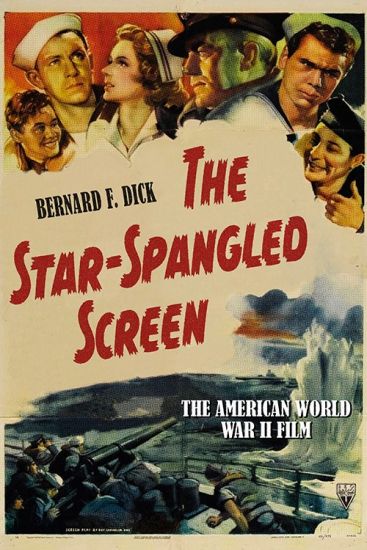
The American World War II film depicted a united America, a mythic America in which the average guy, the girl next door, the 4-F patriot, and the grieving mother were suddenly transformed into heroes and heroines, warriors and goddesses. The Star-Spangled Screen examines the historical accuracy - or lack thereof - of films about the Third Reich, the Resistance, and major military campaigns. Concerned primarily with the films of the war years, it also includes discussions of such postwar movies as Battleground (1949), Attack! (1956), The Bridge on the River Kwai (1957), and Patton (1970). This revised edition includes new material covering recent films such as Saving Private Ryan (1998), JoJo Rabbit (2019), Pearl Harbor (2001), and Dunkirk (2017), and their place in the war movie tradition. The Star-Spangled Screen makes a major contribution to popular culture by recreating an era that, for all its tragedy, was one of the most creative in the history of American film.
Hal Wallis

Hal Wallis

Bernard F Dick

THE UNIVERSITY PRESS OF KENTUCKY
2022
nidottu
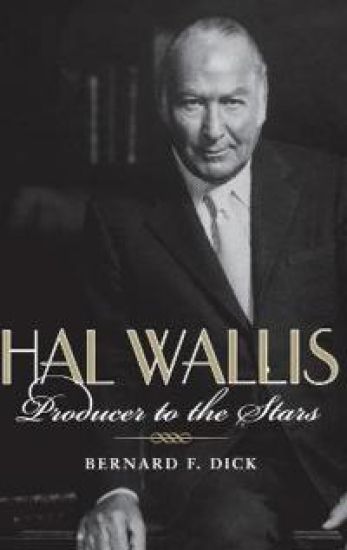
Hal Wallis might not be as well known as David O. Selznick or Samuel Goldwyn, but the films he produced—Casablanca, Jezebel, Now Voyager, The Life of Emile Zola, Becket, True Grit, and many other classics (as well as scores of Elvis movies)—have certainly endured. As producer of numerous films, Wallis made an indelible mark on the course of America's film industry, but his contributions are often overlooked and no full-length study has yet assessed his incredible career.A former office boy and salesman, Wallis first engaged with the film business as the manager of a Los Angeles movie theater in 1922. He attracted the notice of the Warner brothers, who hired him as a publicity assistant. Within three months he was director of the department, and appointments to studio manager and production executive quickly followed. Wallis went on to oversee dozens of productions and formed his own production company in 1944.Bernard F. Dick draws on numerous sources such as Wallis's personal production files and exclusive interviews with many of his contemporaries to finally tell the full story of his illustrious career. Dick combines his knowledge of behind-the-scenes Hollywood with fascinating anecdotes to create a portrait of one of Hollywood's early power players.
Hal Wallis

Hal Wallis

Bernard F Dick

The University Press of Kentucky
2004
sidottu
Hal Wallis might not be as well known as David O. Selznick or Samuel Goldwyn, but the films he produced -- Casablanca, Jezebel, Now Voyager, The Life of Emile Zola, Becket, True Grit, and many other classics (as well as scores of Elvis movies) -- have certainly endured. As producer of numerous films, Wallis made an indelible mark on the course of America's film industry, but his contributions are often overlooked and no full-length study has yet assessed his incredible career. A former office boy and salesman, Wallis first engaged with the business of film as the manager of a Los Angeles movie theater in 1922. He attracted the notice of the Warner brothers, who hired him as a publicity assistant. Within three months he was director of the department, and appointments to studio manager and production executive quickly followed. Wallis went on to oversee dozens of productions and formed his own production company in 1944. Bernard F. Dick draws on numerous sources such as Wallis's personal production files and exclusive interviews with many of his contemporaries to finally tell the full story of his illustrious career. Dick combines his knowledge of behind-the-scenes Hollywood with fascinating anecdotes to create a portrait of one of Hollywood's early power players.
The Golden Age Musicals of Darryl F. Zanuck

The Golden Age Musicals of Darryl F. Zanuck

Bernard F. Dick

UNIVERSITY PRESS OF MISSISSIPPI
2022
sidottu
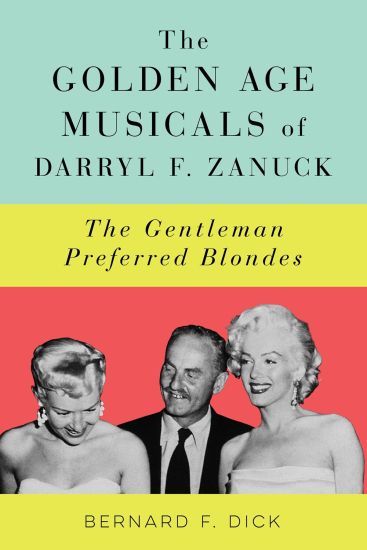
Beginning with The Jazz Singer (1927) and 42nd Street (1933), legendary Hollywood film producer Darryl F. Zanuck (1902–1979) revolutionized the movie musical, cementing its place in American popular culture. Zanuck, who got his start writing stories and scripts in the silent film era, worked his way to becoming a top production executive at Warner Bros. in the later 1920s and early 1930s. Leaving that studio in 1933, he and industry executive Joseph Schenck formed Twentieth Century Pictures, an independent Hollywood motion picture production company. In 1935, Zanuck merged his Twentieth Century Pictures with the ailing Fox Film Corporation, resulting in the combined Twentieth Century-Fox, which instantly became a new major Hollywood film entity.The Golden Age Musicals of Darryl F. Zanuck: The Gentleman Preferred Blondes is the first book devoted to the musicals that Zanuck produced at these three studios. The volume spotlights how he placed his personal imprint on the genre and how—especially at Twentieth Century-Fox—he nurtured and showcased several blonde female stars who headlined the studio’s musicals—including Shirley Temple, Alice Faye, Betty Grable, Vivian Blaine, June Haver, Marilyn Monroe, and Sheree North. Building upon Bernard F. Dick’s previous work in That Was Entertainment: The Golden Age of the MGM Musical, this volume illustrates the richness of the American movie musical, tracing how these song-and-dance films fit within the career of Darryl F. Zanuck and within the timeline of Hollywood history.
Radical Innocence

Radical Innocence

Bernard F. Dick

The University Press of Kentucky
2021
nidottu
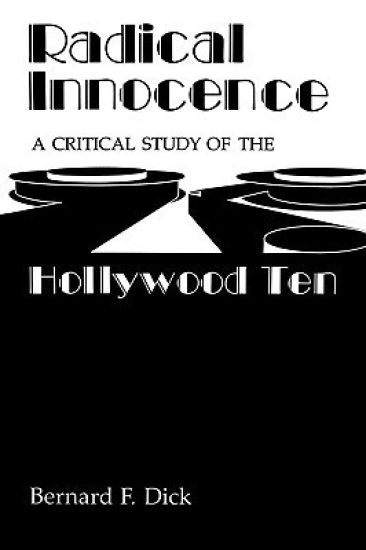
On October 30, 1947, the House Committee on Un-American Activities concluded the first round of hearings on the allege Communist infiltration of the motion picture industry. Hollywood was ordered to "clean its own house," and ten witnesses who had refused to answer questions about their membership in the Screen Writers Guild and the Communist party eventually received contempt citations. By 1950 the Hollywood Ten, as they quickly became known, were serving prison sentences ranging from six months to a year. Since that time the group, which included writers, directors, and a producer, have been either dismissed as industry hacks or eulogized as Cold War martyrs, but never have they been discussed in terms of their profession.Radical Innocence is the first study to focus on the work of the Ten: their short stories, plays, novels, criticism, poems, memoirs, and, of course, their films. Drawing on myriad sources, including archival materials, unpublished manuscripts, black-market scripts, screenplay drafts, letters, and personal interviews, Bernard F. Dick describes the Ten's survival tactics during the blacklisting and analyzes the contribution of these ten individuals no only to film but also to the arts. Radical Innocence captures the personality of each of the Ten - the arrogant Herbert J. Biberman, the witty Ring Lardner, Jr., the patriarchal Samuel Ornitz, the compassionate Adrian Scott, and the feisty Dalton Trumbo.
Engulfed

Engulfed

Bernard F. Dick

The University Press of Kentucky
2021
nidottu
From Double Indemnity to The Godfather, the stories behind some of the greatest films ever made pale beside the story of the studio that made them. In the golden age of Hollywood, Paramount was one of the Big Five studios. Gulf + Western's 1966 takeover of the studio signaled the end of one era and heralded the arrival of a new way of doing business in Hollywood. Bernard Dick reconstructs the battle that culminated in the reduction of the studio to a mere corporate commodity. He then traces Paramount's devolution from free-standing studio to subsidiary - first of Gulf + Western, then Paramount Communications, and currently Viacom-CBS.Dick portrays the new Paramount as a paradigm of today's Hollywood, where the only real art is the art of the deal. Former merchandising executives find themselves in charge of production, on the assumption that anyone who can sell a movie can make one. CEOs exit in disgrace from one studio only to emerge in triumph at another. Corporate raiders vie for power and control through the buying and selling of film libraries, studio property, television stations, book publishers, and more. The history of Paramount is filled with larger-than-life people, including Billy Wilder, Adolph Zukor, Sumner Redstone, Sherry Lansing, Barry Diller, Michael Eisner, Jeffrey Katzenberg, and more.
The Merchant Prince of Poverty Row

The Merchant Prince of Poverty Row

Bernard F. Dick

The University Press of Kentucky
2021
nidottu
Ben Hecht called him "White Fang," and director Charles Vidor took him to court for verbal abuse. The image of Harry Cohn as vulgarian is such a part of Hollywood lore that it is hard to believe there were other Harry Cohns: the only studio president who was also head of production; the ex-song plugger who scrutinized scripts and grilled writers at story conferences; a man who could look at actresses as either "broads" or goddesses. Drawing on personal interviews as well as previously unstudied source material (conference notes, memos, and especially the teletypes between Harry and his brother Jack), Bernard Dick offers a radically different portrait of the man who ran Columbia Pictures - and who "had to be boss" - from 1932 to 1958.
City of Dreams

City of Dreams

Bernard F. Dick

The University Press of Kentucky
2021
nidottu
Horror films. Deanna Durbin musicals. Francis the talking mule. Ma and Pa Kettle. Ross Hunter weepies. Theme parks. ET. Apollo 13. These are only a few of the many faces of Universal Pictures. In February 1906 Carl Laemmle, German immigrant and former clothing store manager, opened his first nickelodeon in Chicago. He quickly moved from exhibition to distribution and to film production. A master of publicity and promotions, within ten years "Uncle Carl" had moved his entire operation to southern California, founded a city, and established Universal Pictures as one of the major Hollywood studios. In time Universal found its niche in horror films featuring Karloff and Lugosi, comedies starring Abbott and Costello and W.C. Fields, and low-budget musicals. But Carl Laemmle Jr. proved less adept than his father at empire building. Eventually he was forced out by financial difficulties, opening the way for a string of studio heads who entered and exited one after another. Thus the age of corporate Hollywood arrived at Universal Pictures earlier than at other studios. The Universal-International merger in 1946, Decca's stock takeover in the early 1950s, and MCA's buyout in 1962 all presaged today's Hollywood, where the art of the deal often eclipses the art of making movies. Stars and executives have come and gone, shaping and reshaping the studio's image, but through it all Universal's revolving globe logo has remained on movie screens around the world. And, unlike several other studios of Hollywood's golden age, Universal still makes movies today.
The Screen Is Red

The Screen Is Red

Bernard F. Dick

University Press of Mississippi
2016
sidottu
The Screen Is Red portrays Hollywood's ambivalence toward the former Soviet Union before, during, and after the Cold War. In the 1930s, communism combated its alter ego, fascism, yet both threatened to undermine the capitalist system, the movie industry's foundational core value. Hollywood portrayed fascism as the greater threat and communism as an aberration embraced by young idealists unaware of its dark side. In Ninotchka, all a female commissar needs is a trip to Paris to convert her to capitalism and the luxuries it can offer.The scenario changed when Nazi Germany invaded the Soviet Union in 1941, making Russia a short-lived ally. The Soviets were quickly glorified in such films as Song of Russia, The North Star, Mission to Moscow, Days of Glory, and Counter-Attack. But once the Iron Curtain fell on Eastern Europe, the scenario changed again. America was now swarming with Soviet agents attempting to steal some crucial piece of microfilm. On screen, the atomic detonations in the Southwest produced mutations in ants, locusts, and spiders, and revived long-dead monsters from their watery tombs. The movies did not blame the atom bomb specifically but showed what horrors might result in addition to the iconic mushroom cloud.Through the lens of Hollywood, a nuclear war might leave a handful of survivors (Five), none (On the Beach, Dr. Strangelove), or cities in ruins (Fail-Safe). Today the threat is no longer the Soviet Union, but international terrorism. Author Bernard F. Dick argues, however, that the Soviet Union has not lost its appeal, as evident from the popular and critically acclaimed television series The Americans. More than eighty years later, the screen is still red.
The Screen Is Red

The Screen Is Red

Bernard F. Dick

University Press of Mississippi
2018
nidottu
The Screen Is Red portrays Hollywood’s ambivalence toward the former Soviet Union before, during, and after the Cold War. In the 1930s, communism combated its alter ego, fascism, yet both threatened to undermine the capitalist system, the movie industry’s foundational core value. Hollywood portrayed fascism as the greater threat and communism as an aberration embraced by young idealists unaware of its dark side. In Ninotchka, all a female commissar needs is a trip to Paris to convert her to capitalism and the luxuries it can offer.The scenario changed when Nazi Germany invaded the Soviet Union in 1941, making Russia a short-lived ally. The Soviets were quickly glorified in such films as Song of Russia, The North Star, Mission to Moscow, Days of Glory, and Counter-Attack. But once the Iron Curtain fell on Eastern Europe, the scenario changed again. America was now swarming with Soviet agents attempting to steal some crucial piece of microfilm. On screen, the atomic detonations in the Southwest produced mutations in ants, locusts, and spiders, and revived long-dead monsters from their watery tombs. The movies did not blame the atom bomb specifically but showed what horrors might result in addition to the iconic mushroom cloud.Through the lens of Hollywood, a nuclear war might leave a handful of survivors (Five), none (On the Beach, Dr. Strangelove), or cities in ruins (Fail-Safe). Today the threat is no longer the Soviet Union, but international terrorism. Author Bernard F. Dick argues, however, that the Soviet Union has not lost its appeal, as evident from the popular and critically acclaimed television series The Americans. More than eighty years later, the screen is still red.
That Was Entertainment

That Was Entertainment

Bernard F. Dick

University Press of Mississippi
2018
sidottu
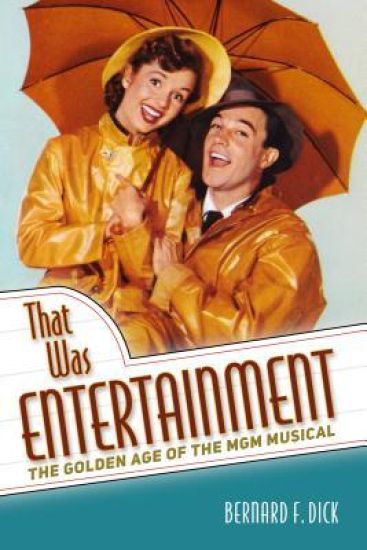
That Was Entertainment: The Golden Age of the MGM Musical traces the development of the MGM musical from The Broadway Melody (1929) through its heyday in the 1940s and 1950s and its decline in the 1960s, culminating in the notorious 1970 MGM auction when Judy Garland's ruby slippers from The Wizard of Oz, Charlton Heston's chariot from Ben-Hur, and Fred Astaire's trousers and dress shirt from Royal Wedding vanished to the highest bidders.That Was Entertainment uniquely reconstructs the life of Arthur Freed, whose unit at MGM became the gold standard against which the musicals of other studios were measured. Without Freed, Judy Garland, Gene Kelly, Fred Astaire, Ann Miller, Betty Garrett, Cyd Charisse, Arlene Dahl, Vera-Ellen, Lucille Bremer, Gloria DeHaven, Howard Keel, and June Allyson would never have had the signature films that established them as movie legends.MGM's past is its present. No other studio produced such a range of musicals that are still shown today on television and all of which are covered in this volume, from integrated musicals in which song and dance were seamlessly embedded in the plot (Meet Me in St. Louis and Seven Brides for Seven Brothers) to revues (The Hollywood Revue of 1929 and Ziegfeld Follies); original musicals (Singin' in the Rain, Easter Parade, and It's Always Fair Weather); adaptations of Broadway shows (Girl Crazy, On the Town, Show Boat, Kiss Me Kate, Brigadoon, Kismet, and Bells Are Ringing); musical versions of novels and plays (Gigi, The Pirate, and Summer Holiday); operettas (the films of Jeanette MacDonald and Nelson Eddy); mythico-historical biographies of composers (Johann Strauss Jr. in The Great Waltz and Sigmund Romberg in Deep in My Heart); and musicals featuring songwriting teams (Rodgers and Hart in Words and Music and Kalmar and Ruby in Three Little Words), opera stars (Enrico Caruso in The Great Caruso and Marjorie Lawrence in Interrupted Melody), and pop singers (Ruth Etting in Love Me or Leave Me). Also covered is the water ballet musical--in a class by itself--with Esther Williams starring as MGM's resident mermaid. This is a book for longtime lovers of the movie musical and those discovering the genre for the first time.
The Musicals of Cole Porter

The Musicals of Cole Porter

Bernard F. Dick

UNIVERSITY PRESS OF MISSISSIPPI
2025
sidottu
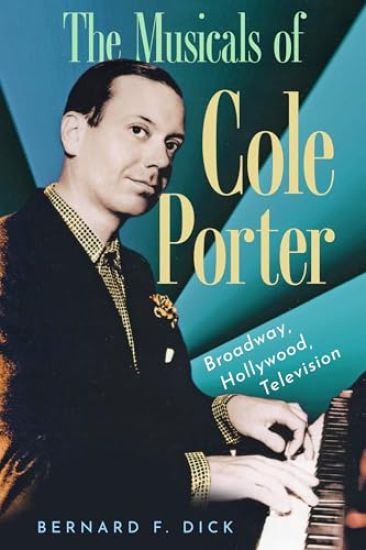
Cole Porter (1891–1964) remains one of America’s most popular composer-songwriters, known for the many urbane, witty, romantic songs he wrote for stage musicals and Hollywood films. Porter was unique among his contemporaries for writing both the music and lyrics for his compositions. To this day, several of his numbers—"Night and Day," "I’ve Got You Under My Skin," "You’re the Top," and "I Get a Kick Out of You," to name a few—endure as standards. In The Musicals of Cole Porter: Broadway, Hollywood, Television, Bernard F. Dick presents a critical study of Porter’s Broadway and movie musicals, and his one foray into live television, Aladdin—covering the period from his first failure, See America First (1916), to the moderately successful Silk Stockings (1955), which ended his Broadway career. Taking a chronological approach, interspersed with chapters on Porter’s "list songs" that owe much to such operas as Mozart’s Don Giovanni and Rossini’s The Barber of Seville; his love songs, often bittersweet and bleakly poignant; and, above all, his love of figurative language, Dick discusses in detail the various literary sources and cultural reference points that inspired the lyrics to Porter’s numbers. The first volume of its kind exclusively dedicated to exploring the extensive body of work by this influential twentieth-century songwriter, The Musicals of Cole Porter is a compelling resource for students and scholars interested in the craft of a great composer-lyricist.
Claudette Colbert

Claudette Colbert

Bernard F. Dick

UNIVERSITY PRESS OF MISSISSIPPI
2025
pokkari
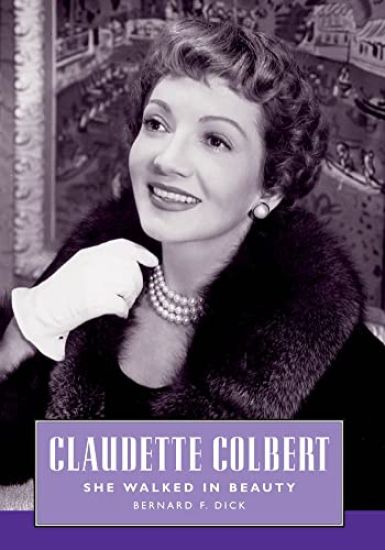
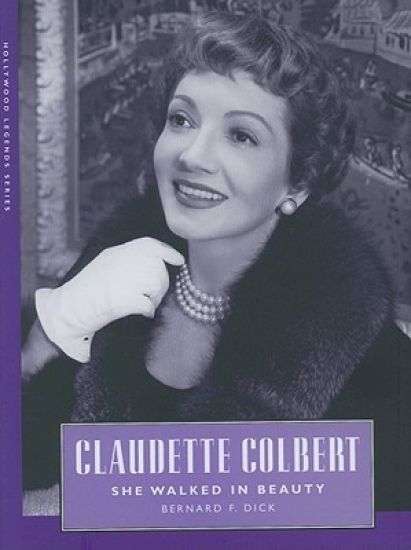
Claudette Colbert's mixture of beauty, sophistication, wit, and vivacity quickly made her one of the film industry's most famous and highest-paid stars of the 1930s and 1940s. Though she began her career on the New York stage, she was beloved for her roles in such films as Preston Sturges's The Palm Beach Story, Cecil B. DeMille's Cleopatra, and Frank Capra's It Happened One Night, for which she won an Academy Award. She showed remarkable prescience by becoming one of the first Hollywood stars to embrace television, and she also returned to Broadway in her later career. This is the first major biography of Colbert (1903–1996) published in over twenty years. Bernard F. Dick chronicles Colbert's long career, but also explores her early life in Paris and New York. Along with discussing how she left her mark on Broadway, Hollywood, radio, and television, the book explores Colbert's lifelong interests in painting, fashion design, and commercial art. Using correspondence, interviews, periodicals, film archives, and other research materials, the biography reveals a smart, talented actress who conquered Hollywood and remains one of America's most captivating screen icons.
Hollywood Madonna

Hollywood Madonna

Bernard F. Dick

UNIVERSITY PRESS OF MISSISSIPPI
2025
pokkari
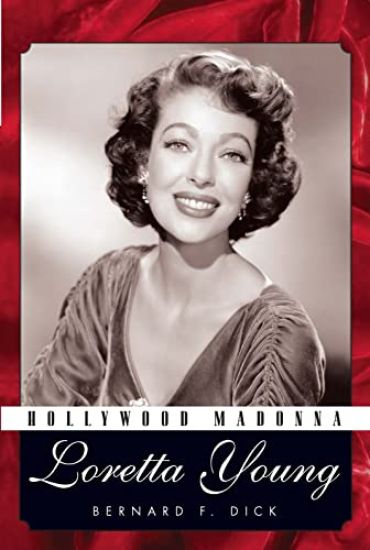
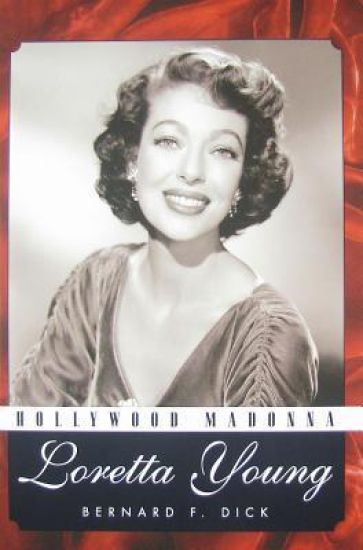
Loretta Young (1913–2000) was an Academy Award-winning actress known for devout Catholicism and her performances in The Farmer's Daughter, The Bishop's Wife, and Come to the Stable, and for her long-running and tremendously popular television series. But that was not the whole story. Hollywood Madonna explores the full saga of Loretta Young's professional and personal life. She made her film debut at age four, became a star at fifteen, and many awards and accolades later, made her final television movie at age seventy-six. This biography withholds none of the details of her affair with Clark Gable and the daughter that powerful love produced. Bernard F. Dick places Young's affair in the proper context of the time and the choices available to women in 1935, especially a noted Catholic like Young, whose career would have been in ruins if the public knew of her tryst. With the birth of a daughter, who would have been branded a love child, Loretta Young reached the crossroads of disclosure and deception, choosing the latter path. That choice resulted in an illustrious career for her and a tortured childhood for her daughter.
Claudette Colbert

Claudette Colbert

Bernard F. Dick

University Press of Mississippi
2008
sidottu
Claudette Colbert's mixture of beauty, sophistication, wit, and vivacity quickly made her one of the film industry's most famous and highest-paid stars of the 1930s and 1940s. Though she began her career on the New York stage, she was beloved for her roles in such films as Preston Sturges's The Palm Beach Story, Cecil B. DeMille's Cleopatra, and Frank Capra's It Happened One Night, for which she won an Academy Award. She showed remarkable prescience by becoming one of the first Hollywood stars to embrace television, and she also returned to Broadway in her later career. This is the first major biography of Colbert (1903-1996) published in over twenty years. Bernard F. Dick chronicles Colbert's long career, but also explores her early life in Paris and New York. Along with discussing how she left her mark on Broadway, Hollywood, radio, and television, the book explores Colbert's lifelong interests in painting, fashion design, and commercial art. Using correspondence, interviews, periodicals, film archives, and other research materials, the biography reveals a smart, talented actress who conquered Hollywood and remains one of America's most captivating screen icons. Bernard F. Dick is professor of communication and English at Fairleigh Dickinson University and is the author of Hal Wallis: Producer to the Stars; Engulfed: The Death of Paramount Pictures and the Birth of Corporate Hollywood; Forever Mame: The Life of Rosalind Russell (University Press of Mississippi); and other books.
Forever Mame

Forever Mame

Bernard F. Dick

University Press of Mississippi
2011
nidottu
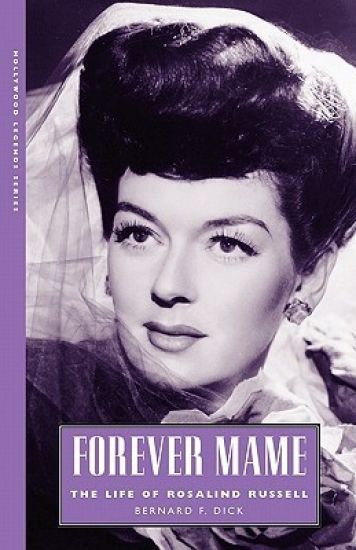
When it comes to living life to its fullest, Rosalind Russell's character Auntie Mame is still the silver screen's exemplar. And Mame, the role Russell (1907-1976) will always be remembered for, embodies the rich and rewarding life Bernard F. Dick reveals in his biography, Forever Mame: The Life of Rosalind Russell, now available in paperback.Drawing on personal interviews and information from the archives of Russell and her producer-husband Frederick Brisson, Dick begins with Russell's childhood in Waterbury, Connecticut, and chronicles her early attempts to achieve recognition after graduating from the American Academy of Dramatic Arts. Frustrated by her inability to land a lead in a Broadway show, she headed for Hollywood in 1934 and two years later played her first starring role, the title character in Craig's Wife.Dick discusses all of her films along with her triumphal return to Broadway, first in the musical Wonderful Town and later in Auntie Mame. Forever Mame details Russell's social circle of such stars as Loretta Young, Cary Grant, and Frank Sinatra. It traces an extraordinary career, ending with Russell's courageous battle against the two diseases that eventually caused her death: rheumatoid arthritis and cancer. Russell devoted her last years to campaigning for arthritis research. So successful was she in her efforts to alert lawmakers to this crippling disease that a leading San Francisco research center is named after her.
Hollywood Madonna

Hollywood Madonna

Bernard F. Dick

University Press of Mississippi
2011
sidottu
Loretta Young (1913-2000) was an Academy Award-winning actress known for devout Catholicism and her performances in The Farmer's Daughter, The Bishop's Wife, and Come to the Stable, and for her long-running and tremendously popular television series. But that was not the whole story.Hollywood Madonna explores the full saga of Loretta Young's professional and personal life. She made her film debut at age four, became a star at fifteen, and many awards and accolades later, made her final television movie at age seventy-six. This biography withholds none of the details of her affair with Clark Gable and the daughter that powerful love produced. Bernard F. Dick places Young's affair in the proper context of the time and the choices available to women in 1935, especially a noted Catholic like Young, whose career would have been in ruins if the public knew of her tryst. With the birth of a daughter, who would have been branded a love child, Loretta Young reached the crossroads of disclosure and deception, choosing the latter path. That choice resulted in an illustrious career for her and a tortured childhood for her daughter.
The President’s Ladies

The President’s Ladies

Bernard F. Dick

University Press of Mississippi
2014
sidottu
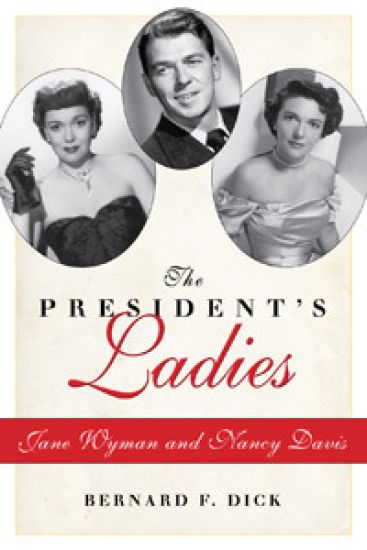
Ronald Reagan, a former actor and one of America's most popular presidents, married not one but two Hollywood actresses. This book is three biographies in one, discovering fascinating connections among Jane Wyman (1917-2007), Ronald Reagan (1911-2004), and Nancy Davis (b. 1921).Jane Wyman, who married Reagan in 1940 and divorced him seven years later, knew an early life of privation. She gravitated to the movies and made her debut at fifteen as an unbilled member of the chorus, then toiled as an extra for four years until she finally received billing. She proved herself as a dramatic actress in The Lost Weekend, and the following year, she was nominated for an Oscar for The Yearling and soon won for her performance in Johnny Belinda, in which she did not speak a single line. Other Oscar nominations followed, along with a Golden Globe for her portrayal of Angela Channing in Falcon Crest.Conversely, Nancy Davis led a relatively charmed life, the daughter of an actress and the stepdaughter of a neurosurgeon. Surrounded by her mother's friends--Walter Huston, Spencer Tracy, Katharine Hepburn, Lillian Gish, and Alla Nazimova, her godmother--Davis started in the theater, then moved on to Hollywood, where she enjoyed modest success, and finally began working in television. When she married Reagan in 1952, she unwittingly married into politics, eventually leaving acting to concentrate on being the wife of the governor of California, and then the wife of the president of the United States. In her way, Davis played her greatest role as Reagan's friend, confidante, and adviser in life and in politics.This book considers three actors who left an indelible mark on both popular and political culture for more than fifty years.
Radical Innocence

Radical Innocence

Bernard F. Dick

The University Press of Kentucky
2009
nidottu
On October 30, 1947, the House Committee on Un-American Activities concluded the first round of hearings on the allege Communist infiltration of the motion picture industry. Hollywood was ordered to "clean its own house," and ten witnesses who had refused to answer questions about their membership in the Screen Writers Guild and the Communist party eventually received contempt citations. By 1950 the Hollywood Ten, as they quickly became known, were serving prison sentences ranging from six months to a year. Since that time the group, which included writers, directors, and a producer, have been either dismissed as industry hacks or eulogized as Cold War martyrs, but never have they been discussed in terms of their profession. Radical Innocence is the first study to focus on the work of the Ten: their short stories, plays, novels, criticism, poems, memoirs, and, of course, their films. Drawing on myriad sources, including archival materials, unpublished manuscripts, black-market scripts, screenplay drafts, letters, and personal interviews, Bernard F. Dick describes the Ten's survival tactics during the blacklisting and analyzes the contribution of these ten individuals no only to film but also to the arts. Radical Innocence captures the personality of each of the Ten -- the arrogant Herbert J. Biberman, the witty Ring Lardner, Jr., the patriarchal Samuel Ornitz, the compassionate Adrian Scott, and the feisty Dalton Trumbo.
Reproductive Health and Human Rights

Reproductive Health and Human Rights

Rebecca J. Cook; Bernard M. Dickens; Mahmoud F. Fathalla

Clarendon Press
2003
sidottu
The concept of reproductive health promises to play a crucial role in improving health care provision and legal protection for women around the world. This is an authoritative and much-needed introduction to and defence of the concept of reproductive health, which though internationally endorsed, is still contested. The authors are leading authorities on reproductive medicine, women's health, human rights, medical law, and bioethics. They integrate their disciplines to provide an accessible but comprehensive picture. They analyse 15 cases from different countries and cultures, and explore options for resolution. The aim is to equip readers to fashion solutions in their own health care circumstances, compatibly with ethical, legal and human rights principles.