Kirjahaku
Etsi kirjoja tekijän nimen, kirjan nimen tai ISBN:n perusteella.
1000 tulosta hakusanalla Bernardino Rutilio
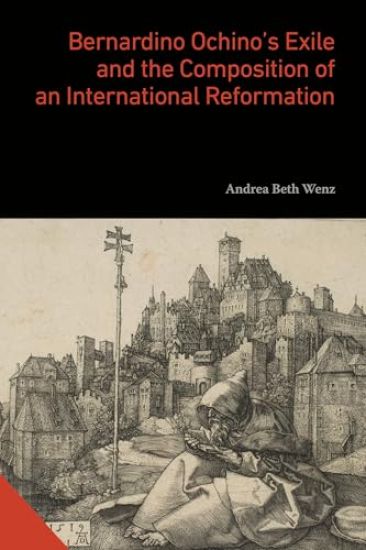
Bernardino Ochino’s Exile and the Composition of an International Reformation
Andrea Beth Wenz
Pennsylvania State University Press
2025
sidottu
Bernardino Ochino was one of the most celebrated Italian Catholic preachers of the sixteenth century—until the Roman Inquisition forced him into exile. But rather than silencing him, displacement granted Ochino an unprecedented platform: unimpeded access to the printing press and the ability to spread his ideas across Europe.In this groundbreaking study, Andrea Beth Wenz reexamines Ochino’s vast body of vernacular writings, challenging conventional portrayals of him as a wandering heretic. Instead, she reveals how his mobility allowed him to become a central figure in the international Protestant Reformation. By moving Ochino from the margins of Reformation history to its core, Wenz complicates traditional distinctions between magisterial and radical reformers. She explores how his works—printed in nine languages—reached a diverse audience and how his pastoral vision resonated across linguistic and geographical boundaries. Situating Ochino’s life within broader discussions of religious exile, migration, and the power of print, this book offers fresh insight into the dynamics of sixteenth-century religious change.Bringing to the fore Ochino’s significance and that of Italian reform more widely, Bernardino Ochino’s Exile and the Composition of an International Reformation will appeal to scholars of the Reformation, exile studies, and the history of the book.
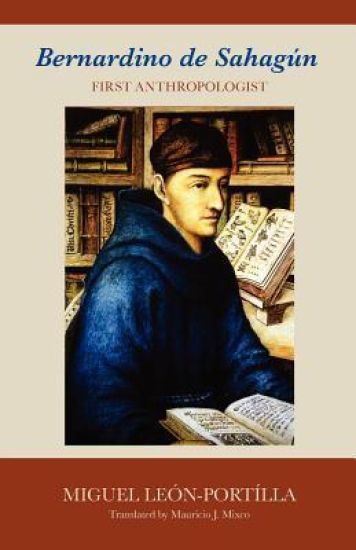
He was sent from Spain on a religious crusade to Mexico to ""detect the sickness of idolatry,"" but Bernardino de Sahagún (c. 1499-1590) instead became the first anthropologist of the New World. The Franciscan monk developed a deep appreciation for Aztec culture and the Nahuatl language. In this biography, Miguel León-Portilla presents the life story of a fascinating man who came to Mexico intent on changing the traditions and cultures he encountered but instead ended up working to preserve them, even at the cost of persecution.Sahagún was responsible for documenting numerous ancient texts and other native testimonies. He persevered in his efforts to study the native Aztecs until he had developed his own research methodology, becoming a pioneer of anthropology. Sahagún formed a school of Nahua scribes and labored with them for more than sixty years to transcribe the pre-conquest language and culture of the Nahuas. His rich legacy, our most comprehensive account of the Aztecs, is contained in his Primeros Memoriales (1561) and Historia General de las Cosas de Nueva España (1577).Near the end of his life at age 91, Sahagún became so protective of the Aztecs that when he died, his former Indian students and many others felt deeply affected.Translated into English by Mauricio J. Mixco, León-Portilla's absorbing account presents Sahagún as a complex individual-a man of his times yet a pioneer in many ways.
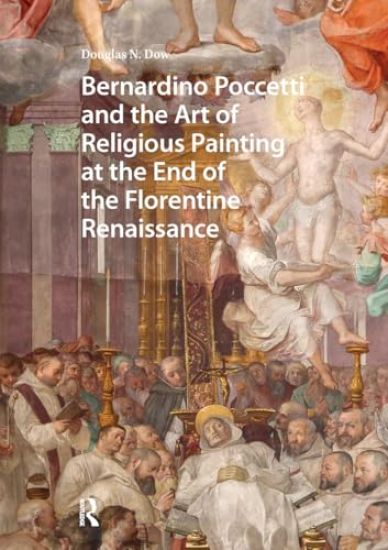
Bernardino Poccetti and the Art of Religious Painting at the End of the Florentine Renaissance
Douglas Dow
TAYLOR FRANCIS LTD
2025
nidottu
By almost any measure Bernardino Barbatelli, called Poccetti, was a successful and sought after painter in late sixteenth-century Florence, but his works have remained largely overlooked. This study situates representative examples of his religious painting within their respective contexts to demonstrate how Poccetti and his patrons negotiated the increasingly fraught terrain of sacred painting in the period of religious reform. These case studies demonstrate how patrons ranging from the Dominicans to the Carthusians to prominent Florentine patricians relied on Poccetti’s skill in creating compelling narratives that reflected current concerns within the Catholic world. In the process, Poccetti invoked an august Florentine tradition of fresco painting, shaping it to better address the demands placed on religious imagery at the end of the Renaissance.
Bernardino Cipelli
KESSINGER PUBLISHING, LLC
2010
nidottu
Bernardino Luinis Bildnis eines Mannes mit Pfeilen im Körper. Der Liebende oder der Heilige Sebastian?
Victoria Landmann
GRIN Verlag
2020
nidottu
Bernardino de Cárdenas Memorial y relación de cosas muy graves y muy importantes al remedio y aumento del reino del Perú
Marta Ortiz Canseco
Peter Lang AG
2020
sidottu
El franciscano Bernardino de Cardenas ha pasado a la historia por su labor como obispo y gobernador de Paraguay a mediados del siglo XVII. Es menos conocida, sin embargo, su labor previa en el virreinato del Peru, como misionero y extirpador de idolatrias, experiencia sobre la que escribio un memorial del que se conservan dos versiones: una impresa en 1634 y otra manuscrita, que probablemente constituya un borrador previo al impreso. Se trata de un manuscrito autografo, escrito en Cochabamba, de contenido mas extenso y opiniones mas afiladas sobre la situacion politica, social y religiosa del altiplano andino. Este libro ofrece una edicion moderna de dicho manuscrito, asi como un estudio introductorio sobre las circunstancias de su escritura y una comparacion con la version impresa.