This work has been selected by scholars as being culturally important and is part of the knowledge base of civilization as we know it.This work is in the public domain in the United States of America, and possibly other nations. Within the United States, you may freely copy and distribute this work, as no entity (individual or corporate) has a copyright on the body of the work.Scholars believe, and we concur, that this work is important enough to be preserved, reproduced, and made generally available to the public. To ensure a quality reading experience, this work has been proofread and republished using a format that seamlessly blends the original graphical elements with text in an easy-to-read typeface.We appreciate your support of the preservation process, and thank you for being an important part of keeping this knowledge alive and relevant.
This work has been selected by scholars as being culturally important and is part of the knowledge base of civilization as we know it.This work is in the public domain in the United States of America, and possibly other nations. Within the United States, you may freely copy and distribute this work, as no entity (individual or corporate) has a copyright on the body of the work.Scholars believe, and we concur, that this work is important enough to be preserved, reproduced, and made generally available to the public. To ensure a quality reading experience, this work has been proofread and republished using a format that seamlessly blends the original graphical elements with text in an easy-to-read typeface.We appreciate your support of the preservation process, and thank you for being an important part of keeping this knowledge alive and relevant.
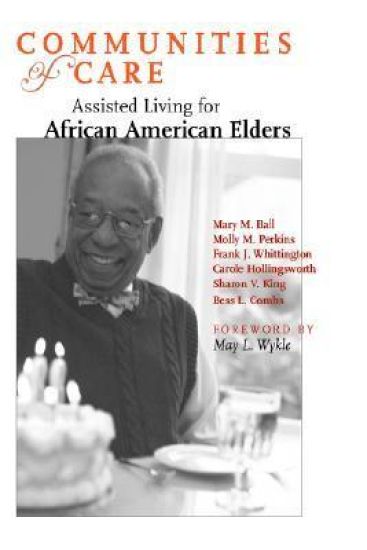
Very little is known about why and when African American elders seek formal long-term care, or about the characteristics of assisted living environments they consider most desirable. Drawing on qualitative studies conducted between 1998 and 2001, the authors of Communities of Care provide important information on historic and current trends in assisted living systems serving African Americans. Focusing on six facilities that have become models of long-term care for African Americans, the authors shed light on the daily lives of the people who live, work, and visit these "communities of care."With detailed profiles of the facilities, interviews, and case histories of care recipients, the authors explore both the institutional and personal characteristics of the facilities and the issues central to their residents. This definitive work brings to the forefront critical questions about how race, gender, and culture affect the quality of, access to, and cost of care. These questions have broad implications for the policy, administration, and operation of assisted living.
Ce livre classique a t initialement publi il y a des d cennies sous le titre " Gypsies of the Air . Il a maintenant t traduit par Writat en langue fran aise pour leurs lecteurs francophones. Chez Writat, nous sommes passionn s par la pr servation du patrimoine litt raire du pass . Nous avons traduit ce livre en fran ais afin que les g n rations pr sentes et futures puissent le lire et le conserver.
Ancr dans la tradition Kabbalistique, L'Ange de la Magie est un guide pratique qui r v le au grand jour un art sacr et un culte de la Lumi re exerc s depuis des mill naires par tous les p lerins sinc res qui ont arpent le sentier sinueux de la condition humaine. Douze semaines pour parfaire et redessiner les contours et les al as d'une vie bien souvent en proie la d ch ance et la souffrance. galement douze semaines de pratiques intimes et authentiques qui placeront l'adepte face lui-m me dans une s r nit et une paix profonde de sorte r veiller le Veilleur, en fait l'Ange de la Magie, dans sa vie car nous sommes naturellement des Mages. Pour comprendre v ritablement, il faut savoir puis une fois la connaissance acquise il faut vouloir le changement, l' mergence d'un tre nouveau. Ce changement ne se produira qu'en trouvant son propre chemin, le chemin de son coeur. Pour le trouver, il faut oser en rallumant la lampe d'Aladin.
Flynn Tales is comprised of two stories providing rich insight into fascinating family history through anecdotes relating to travel. One set in 1954, tells of leaving the US with few plans other than what ship they were traveling on and the first few stops of the trip. Bess and her husband confront common travel experiences of the time; you might encounter similar happenings while traveling in a foreign country where you don't understand the language. They traveled before the conveniences of modern technology and relied on letters sent through the post and contact with various travel offices. Europe was a land of many borders and different currencies; this and their advanced years added to the complexity of the trip. You'll confront common travel experiences of the time and find some impressions have changed little. The second story takes place in the mid-1930s. It's the story of Jimmy Flynn; a casual statement shared with his family and a series of serendipitous events that propelled him on a journey beyond his expectations. He encountered hard work, different cultures and economic classes. He shares the story of his exploits with you from a trip that opened the door to his independence and was to become the first of many exciting and unique adventures in his life.
Conflicts between faculty and administration have become particularly virulent and disruptive in recent years, as institutions have struggled to adapt to intensifying pressures for efficiency and accountability. Analyzing common sources of conflict and challenges on campus that impede attempts to address these conflicts, Bridging the Divide between Faculty and Administration provides a theory-driven and research-based approach for authentic discourse between faculty and administration. This important resource presents a wealth of strategies for improving communication in colleges and universities, ultimately enhancing organizational effectiveness and institutional performance.Special Features: End-of-chapter "Implications for Practice" provide practical tips and advice for faculty and administrators to use in their own contexts. Analysis of actual conflicts based on extensive interviews with administrators and faculty across a variety of college and university settings. Exploration of creative ways for faculty and administrators to work across differences in their belief systems and to address the underlying sources of conflict.
Conflicts between faculty and administration have become particularly virulent and disruptive in recent years, as institutions have struggled to adapt to intensifying pressures for efficiency and accountability. Analyzing common sources of conflict and challenges on campus that impede attempts to address these conflicts, Bridging the Divide between Faculty and Administration provides a theory-driven and research-based approach for authentic discourse between faculty and administration. This important resource presents a wealth of strategies for improving communication in colleges and universities, ultimately enhancing organizational effectiveness and institutional performance.Special Features: End-of-chapter "Implications for Practice" provide practical tips and advice for faculty and administrators to use in their own contexts. Analysis of actual conflicts based on extensive interviews with administrators and faculty across a variety of college and university settings. Exploration of creative ways for faculty and administrators to work across differences in their belief systems and to address the underlying sources of conflict.
Styles of effective leadership in the much-admired research arm of Japanese organizations are examined for the first time in this scientifically validated study of research and development units. Creative R & D Leadership provides new data about how and why certain types of leaders are more successful than others and offers insightful social and cultural explanations for that success. Bess shows that it is the unique blending of personalities among leaders and subordinates that results in creative and innovative teams — hallmarks not only for good R & D performance, but organizational effectiveness as well. Bess' findings and interpretations will have significant implications for policymakers throughout the world, including the United States, as new ways for American management to restructure organizational techniques and strategies to enhance competitiveness worldwide are revealed. A major contribution to the literature on organizational behavior and development, leadership studies, R & D management, and cross-cultural understanding.
Now available in paperback, this two-volume work is intended to help readers develop powerful new ways of thinking about organizational principles, and apply them to policy-making and management in colleges and universities.The book is written with two audiences in mind: administrative and faculty leaders in institutions of higher learning, and students (both doctoral and Master's degree) studying to become upper-level administrators, leaders, and policy makers in higher education.It systematically presents a range of theories that can be applied to many of the difficult management situations that college and university leaders encounter. It provides them with the theoretical background to knowledgeably evaluate the many new ideas that emerge in the current literature, and in workshops and conferences. The purpose is to help leaders develop their own effective management style and approaches, and feel confident that their actions are informed by appropriate theory and knowledge of the latest research in the field.Without theory, organizational leaders are forced to treat each problem that they encounter as unique–as if it were a first-time occurrence. While leaders may have some experience with a particular issue, their solutions are usually not informed by the accumulated wisdom of others who have already encountered and resolved similar situations. The authors approach the theory of the organization and administration of colleges and universities from three quite different perspectives, or paradigms, each relying on different assumptions about the “reality” of organizational life in colleges and universities. The positivist paradigm–primarily an omnibus systems theory–integrates the chapters into a comprehensive, yet easily accessible whole. Social constructionism, the second paradigm, is introduced in each chapter to illuminate the difficulty of seeking and finding meaningful consensus on problems and policies, while also addressing important ethical issues that tend to be overlooked in leadership thought and action. The third paradigm, postmodernism, draws attention to difficulties of logic and communication under the constraints of strictly linear thinking that “authorities” at all levels attempt to impose on organizations.This “multiple paradigm” approach enables readers to become more cognizant of their own assumptions, how they may differ from those of others in their organization, and how those differences may both create difficulties in resolving problems and expand the range of alternatives considered in organizational decision making. The book offers readers the tools to balance the real-world needs to succeed in today’s challenging and competitive environment with the social and ethical aspirations of all its stakeholders and society at large. The authors’ aim is to elucidate how administration can be made more efficient and effective through rational decision-making while also respecting humanistic values. This approach highlights a range of phenomena that require attention if the institution is ultimately to be considered successful.Also available:Volume 1: The State of the SystemTwo volume set
Now available in paperback, this two-volume work is intended to help readers develop powerful new ways of thinking about organizational principles, and apply them to policy-making and management in colleges and universities. The book is written with two audiences in mind: administrative and faculty leaders in institutions of higher learning, and students (both doctoral and Master's degree) studying to become upper-level administrators, leaders, and policy makers in higher education. It systematically presents a range of theories that can be applied to many of the difficult management situations that college and university leaders encounter. It provides them with the theoretical background to knowledgeably evaluate the many new ideas that emerge in the current literature, and in workshops and conferences. The purpose is to help leaders develop their own effective management style and approaches, and feel confident that their actions are informed by appropriate theory and knowledge of the latest research in the field. Without theory, organizational leaders are forced to treat each problem that they encounter as unique–as if it were a first-time occurrence. While leaders may have some experience with a particular issue, their solutions are usually not informed by the accumulated wisdom of others who have already encountered and resolved similar situations. The authors approach the theory of the organization and administration of colleges and universities from three quite different perspectives, or paradigms, each relying on different assumptions about the “reality” of organizational life in colleges and universities. The positivist paradigm–primarily an omnibus systems theory–integrates the chapters into a comprehensive, yet easily accessible whole. Social constructionism, the second paradigm, is introduced in each chapter to illuminate the difficulty of seeking and finding meaningful consensus on problems and policies, while also addressing important ethical issues that tend to be overlooked in leadership thought and action. The third paradigm, postmodernism, draws attention to difficulties of logic and communication under the constraints of strictly linear thinking that “authorities” at all levels attempt to impose on organizations. This “multiple paradigm” approach enables readers to become more cognizant of their own assumptions, how they may differ from those of others in their organization, and how those differences may both create difficulties in resolving problems and expand the range of alternatives considered in organizational decision making. The book offers readers the tools to balance the real-world needs to succeed in today’s challenging and competitive environment with the social and ethical aspirations of all its stakeholders and society at large. The authors’ aim is to elucidate how administration can be made more efficient and effective through rational decision-making while also respecting humanistic values. This approach highlights a range of phenomena that require attention if the institution is ultimately to be considered successful. Also available: Volume 1: The State of the System Two volume set
Now available in paperback, this two-volume work is intended to help readers develop powerful new ways of thinking about organizational principles, and apply them to policy-making and management in colleges and universities.The book is written with two audiences in mind: administrative and faculty leaders in institutions of higher learning, and students (both doctoral and Master's degree) studying to become upper-level administrators, leaders, and policy makers in higher education.It systematically presents a range of theories that can be applied to many of the difficult management situations that college and university leaders encounter. It provides them with the theoretical background to knowledgeably evaluate the many new ideas that emerge in the current literature, and in workshops and conferences. The purpose is to help leaders develop their own effective management style and approaches, and feel confident that their actions are informed by appropriate theory and knowledge of the latest research in the field.Without theory, organizational leaders are forced to treat each problem that they encounter as unique–as if it were a first-time occurrence. While leaders may have some experience with a particular issue, their solutions are usually not informed by the accumulated wisdom of others who have already encountered and resolved similar situations. The authors approach the theory of the organization and administration of colleges and universities from three quite different perspectives, or paradigms, each relying on different assumptions about the “reality” of organizational life in colleges and universities. The positivist paradigm–primarily an omnibus systems theory–integrates the chapters into a comprehensive, yet easily accessible whole. Social constructionism, the second paradigm, is introduced in each chapter to illuminate the difficulty of seeking and finding meaningful consensus on problems and policies, while also addressing important ethical issues that tend to be overlooked in leadership thought and action. The third paradigm, postmodernism, draws attention to difficulties of logic and communication under the constraints of strictly linear thinking that “authorities” at all levels attempt to impose on organizations.This “multiple paradigm” approach enables readers to become more cognizant of their own assumptions, how they may differ from those of others in their organization, and how those differences may both create difficulties in resolving problems and expand the range of alternatives considered in organizational decision making. The book offers readers the tools to balance the real-world needs to succeed in today’s challenging and competitive environment with the social and ethical aspirations of all its stakeholders and society at large. The authors’ aim is to elucidate how administration can be made more efficient and effective through rational decision-making while also respecting humanistic values. This approach highlights a range of phenomena that require attention if the institution is ultimately to be considered successful.Also available:Volume 1: The State of the SystemTwo volume set
Regular physical activity is an important key to a healthy, happy lifestyle. The many benefits of daily physical activity include more energy; less stress; better sleep; reduced risk of chronic diseases such as heart disease and diabetes; stronger bones, joints, and muscles; and an overall healthier and longer independent life. If you're ready to become active, fit, and healthy, Active Living Every Day, Third Edition With Web Resource, provides all the tools you need to get moving and make physical activity part of your everyday life. More than a book, Active Living Every Day presents a scientifically tested step-by-step program with evidence-based behavior change strategies for becoming more physically active. Designed to make active lifestyles available to people everywhere, it offers updated research showing the need to be physically active and demonstrates the proven effectiveness of this program. Practical and accessible, this third edition offers streamlined delivery for a clear, focused read. Learn simple and enjoyable ways to fit physical activity into your life, concentrating on activities you can easily add into your daily routine. Create your own personalized activity plan unique to your individual preferences and lifestyle. With an emphasis on moderate-intensity activities, you'll also learn how everyday activities, like housecleaning and gardening, can count toward your weekly physical activity goals. Develop confidence by gaining problem-solving skills, overcoming obstacles, and learning how to increase intensity when desired. The tips and participants' stories in this book, plus a web resource offering activities for practice, offer the support and guidance you need to make healthy changes in your life. With Active Living Every Day, Third Edition, join thousands of people just like you who have used this program to achieve lifelong success in becoming active every day.Earn continuing education credits/units! A continuing education course and exam that uses this book is also available. It may be purchased separately or as part of a package that includes all the course materials and exam.
Expanding your child's reading horizons is easy with fiction books from Teacher Created Materials In "Bess" by Pamela Brunskill, girls aren't allowed to act in Shakespeare's London, so Bess pretends to be a boy to get a role. When it's show time, can she let her parents--and the Globe--know it's her? Find out more in this historical fiction book your child will love. Includes 'Book Club' literacy and comprehension questions.