Felker Jones' purpose is to devise a theology of the body that is compatible with the feminist program. She argues that the doctrine of the resurrection of the body is central to this undertaking. She offers close readings of Augustine and Calvin in aid of her effort to find a way of speaking about body and soul that is consonant with the doctrine of bodily resurrection. Felker Jones concludes by inviting us to imagine a way for the gendered body to be redeemed without the erasure of difference.
Who is the mysterious Holy Spirit, and why does it matter for the Christian life? How do we know when the Spirit is working? This book introduces the doctrine of the Holy Spirit in the Wesleyan theological tradition and within the greater church. It covers key biblical bases for thinking about the Spirit, and it seeks to inspire confidence in the Spirit's power.
This introductory theology text helps students articulate basic Christian doctrines, think theologically so they can act Christianly in a diverse world, and connect Christian thought to their everyday lives of faith.Written from a solidly evangelical yet ecumenically aware perspective, this book models a way of doing theology that is generous and charitable. It attends to history and contemporary debates and features voices from the global church. Sidebars made up of illustrative quotations, key Scripture passages, classic hymn texts, and devotional poetry punctuate the chapters.The first edition of this book has been well received (over 25,000 copies sold). Updated and revised throughout, this second edition also includes a new section on gender and race as well as new end-of-chapter material connecting each doctrine to a spiritual discipline.
Le titre de ce livre t moigne de mon conviction que la doctrine chr tienne est intimement li e une pratique fid le de la vie chr tienne. Ce livre pr sente les bases de la doctrine chr tienne, mais s'il ne la mettons pas en pratique, le livre sera d nu de sens. La doctrine chr tienne d termine l'identit et les actes des chr tiens. Certes, la notion de doctrine implique la foi, mais la doctrine repr sente bien plus qu'une simple foi en certaines choses. Le mot doctrine rev t des connotations froides et dures. Plusieurs personnes pensent qu'il s'agit d'une question de rigidit et de contr le ou qu'il s'agit d'un domaine de connaissance inaccessible, hors de la port e du chr tien lambda. Mon objectif est de contribuer r habiliter le terme doctrine travers ce livre, d montrer qu'un bon enseignement chr tien peut nous aider grandir dans la foi, faire preuve d'amour et envisager l'avenir avec espoir.-Tir de l'introduction
Many believers accept traditional Christian sexual morality but have very little idea why it matters for the Christian life. In Faithful, author Beth Felker Jones sketches a theology of sexuality that demonstrates sex is not about legalistic morals with no basis in reality but rather about the God who is faithful to us. In Hosea 2:19-20 God says to Israel, "I will take you for my wife forever; I will take you for my wife in righteousness and in justice, in steadfast love, and in mercy. I will take you for my wife in faithfulness; and you shall know the Lord." This short book explores the goodness of sexuality as created and redeemed, and it suggests ways to navigate the difficulties of living in a world in which sexuality, like everything else, suffers the effects of the fall. As part of Zondervan's Ordinary Theology series, Faithful takes a deeper look at a subject Christians talk about often but not always thoughtfully. This short, insightful reflection explores the deeper significance of the body and sexuality.
Whether on the printed page, the television screen or the digital app, we live in a world saturated with images. Some images help shape our understanding of ourselves and the world around us in positive ways, while others lead us astray and distort our relationships. Christians confess that human beings have been created in the image of God, yet we chose to rebel against that God and so became unfaithful bearers of God's image. The good news of the gospel is that Jesus, who is the image of God, restores the divine image in us, partially now and fully in the day to come. The essays collected in The Image of God in an Image Driven Age explore the intersection of theology and culture. With topics ranging across biblical exegesis, the art gallery, Cormac McCarthy, racism, sexuality and theosis, the contributors to this volume offer a unified vision—ecumenical in nature and catholic in spirit—of what it means to be truly human and created in the divine image in the world today. This collection from the 2015 Wheaton Theology Conference includes contributions by Daniela C. Augustine, Craig L. Blomberg, William A. Dyrness, Timothy R. Gaines and Shawna Songer Gaines, Phillip Jenkins, Beth Felker Jones, Christina Bieber Lake, Catherine McDowell, Ian A. McFarland, Matthew J. Milliner, Soong-Chan Rah and Janet Soskice, as well as original poems by Jill Peláez Baumgaertner and Brett Foster.
This short book of devotional reflections and prayers, from Wheaton College theologian Beth Felker Jones, was written in March and April of 2020, in the face of the pandemic crisis. These twenty-five short readings share the love of God and the hope we have in Jesus Christ as we face a time of fear, anxiety, isolation, and suffering. The devotions include material from Psalms of Lament, Julian of Norwich, and reflection on the meaning of Christ's death and resurrection. These reflections are a companion for anyone walking through suffering and crisis.
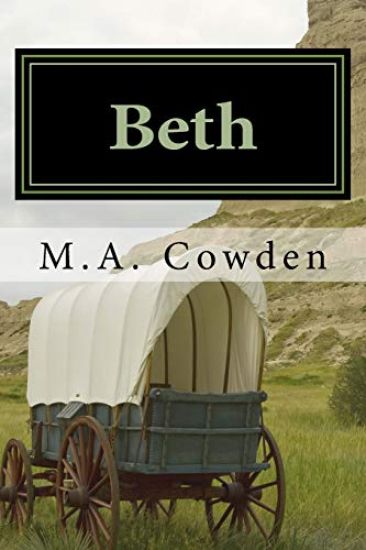
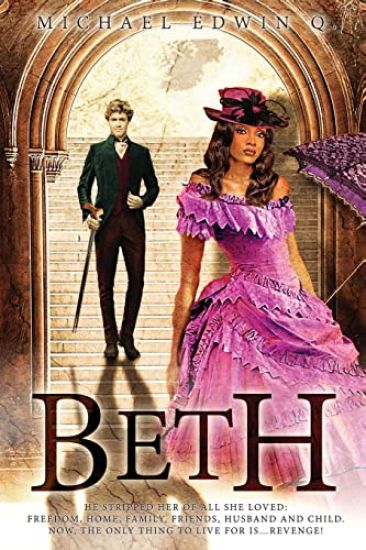
Born the daughter of a legal clerk in Indiana in the 1830s, Beth's life seemed predictable, and her future mapped out for her. But when the rest of her family dies of the plague, Beth is married off to an older man who wants to join the settlers in Oregon. Having little choice, she agrees and reluctantly starts her new life. Her strength is quickly noticed by her new husband, as she insists on driving one of the wagons on their journey. While enjoying the view from atop a cliff during a rest stop, the ground collapses from beneath her. After searching for her for hours and finding no trace, the wagon train must go on without her. She awakens days later in a teepee surrounded by Indians. What dangers lie ahead for this young woman, and will she find the happiness that has eluded her until now?
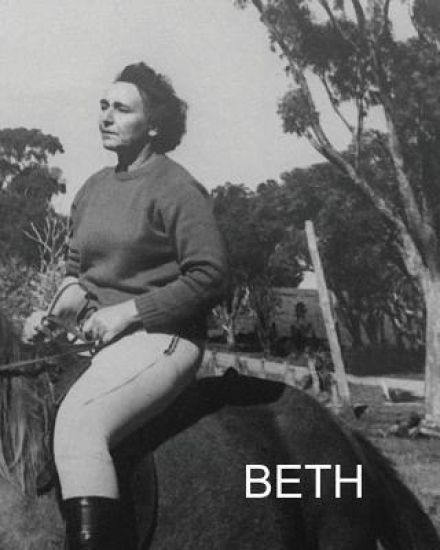
This is my story. Do not look for accuracy here: people from the bush set more stock in spinning a good yarn rather than getting caught up in facts.I was born near the great meandering river. The old Wiradjuri called it the Wambool. These days it is called the Macquarie River. The river turns in great lazy circles on the plains. It floods some years and then slows to a trickle joining deep waterholes in others. I have always lived close to the River. Even today, the stream that runs through my farm near to Orange is part of its headwaters.My story is about two very different families. Clan Edmonstone were adventurers. The Bootles were shy bush folk. While both lived in one of the great bends of the River and had many common interests, the families had very little to do with one another. I cannot remember my grandfathers meeting, but I remember them both clearly: the gentle bushman Ernest, Grandfather Bootle, and the enterprising Howard, Grandfather Edmonstone. And there is me as well, looking pensive.