Kirjojen hintavertailu. Mukana 11 699 587 kirjaa ja 12 kauppaa.

Kirjahaku

Etsi kirjoja tekijän nimen, kirjan nimen tai ISBN:n perusteella.

1000 tulosta hakusanalla Bettina Bien Greaves

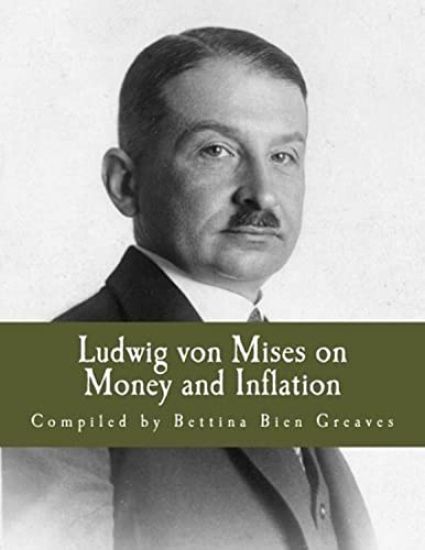
Ludwig von Mises on Money and Inflation (Large Print Edition): A Synthesis of Several Lectures

Ludwig von Mises on Money and Inflation (Large Print Edition): A Synthesis of Several Lectures

Bettina Bien Greaves

Createspace Independent Publishing Platform
2013
nidottu
LARGE PRINT EDITION More at LargePrintLiberty.com.In the 1960s, Ludwig von Mises lectured often on money and inflation. Bettina Bien Greaves was there taking shorthand. She has been working to transcribe them for a very long time. At last the results are here and they are fantastic.To have this work is like having Mises as your private tutor, telling you about money and inflation in a casual setting and in plain language. He is the prophet of the 20th century on these topics, and here he presents his entire apparatus.True, this book is not technically by Mises. It is not something he signed off on. But they are his lectures, and they provide a glimpse into the workings of an incredible mind on a topic that is crucial to our future.

Free Market Economics: A Syllabus

Free Market Economics: A Syllabus

Bettina Bien Greaves

Ludwig Von Mises Institute
2015
nidottu
This little gem is a complete economics education for high-school age students. It provides lessons, study questions, activities, and an excellent list of readings for each topic under consideration. Bettina chose well because the readings all hold up, even though the syllabus came out in 1974. It still works as an excellent course in economics.It is meant to be used alongside the book of readings also available from Mises.org. Together the set will put any student on the road to a lifetime of economic understanding.Bettina Greaves was Mises's secretary and assistant but also an excellent economist in her own right.
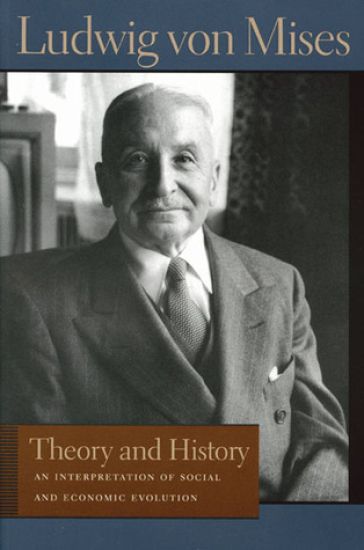
Theory & History

Theory & History

Ludwig Mises; Bettina Bien Greaves

Liberty Fund Inc
2005
sidottu
Ludwig von Mises was the leading exponent of the Austrian School of economics throughout most of the twentieth century. He has long been regarded as a most knowledgeable and respected economist, even though his teachings were generally outside the 'mainstream'. THEORY AND HISTORY is primarily a critique of Karl Marx, his materialism, and his prediction of the inevitability of socialism. Marx attributes the creation of tools and machines, as well as the economic structure of society, to undefined 'material productive forces'; Mises rejects this materialistic view; he points out that tools and machines are actually created by individuals acting on the basis of non-materialistic ideas. This book discusses the theory of economics, i.e., the study of purposive human action, and with history, the record of the past actions of individuals. All actions are determined by ideas. Thoughts and ideas are 'real things', Mises writes. "Although intangible and immaterial, they are factors in bringing about changes in the realm, of tangible and material things." Rather than rejecting the study of historical change as a 'useless pastime', Mises considers it of the utmost practical importance. "History looks backward into the past, but the lesson it teaches concerns things to come." History opens the mind to an understanding of human nature, increases wisdom, and distinguishes civilized man from the barbarian. Moreover, historical knowledge is of the utmost importance in helping to anticipate and plan for the future. Though THEORY AND HISTORY may not be studied as often as other, more popular Mises works, it provides great insight into Mises's fundamental thoughts and is a fascinating exploration of human action.
On the Manipulation of Money & Credit

On the Manipulation of Money & Credit

Ludwig Mises; Bettina Bien Greaves

Liberty Fund Inc
2011
sidottu
Published by Liberty Fund for the first time in English, "On the Manipulation of Money and Credit" consists primarily of three pieces on monetary theory written by Ludwig von Mises between 1923 and 1931. As a precursor to Human Action, Mises's magnum opus, this volume includes some of his most important contributions to trade-cycle theory. The first essay, "Stabilization of the Monetary Unit from the Viewpoint of Theory" written in 1923 during a period of German hyperinflation, discusses the consequences of the fluctuating purchasing power of paper money and explores such ideas as the outcome of inflation, that is, the result of the increase in the amount of money, and an emancipation of monetary value from the influence of government. Written in 1928, the second essay, "Monetary Stabilization and Cyclical Policy" critiques schemes for stabilising prices and for "measuring" purchasing power. The third selection is a speech Mises gave in 1931, "The Causes of the Economic Crisis". It explores the nature and role of the market and cyclical changes in business conditions.
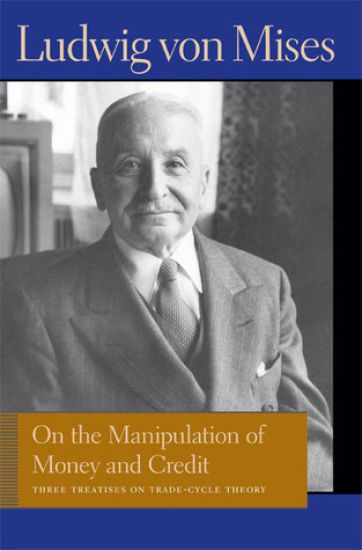
On the Manipulation of Money & Credit

On the Manipulation of Money & Credit

Ludwig Mises; Bettina Bien Greaves

Liberty Fund Inc
2011
nidottu
Published by Liberty Fund for the first time in English, "On the Manipulation of Money and Credit" consists primarily of three pieces on monetary theory written by Ludwig von Mises between 1923 and 1931. As a precursor to Human Action, Mises's magnum opus, this volume includes some of his most important contributions to trade-cycle theory. The first essay, "Stabilization of the Monetary Unit from the Viewpoint of Theory" written in 1923 during a period of German hyperinflation, discusses the consequences of the fluctuating purchasing power of paper money and explores such ideas as the outcome of inflation, that is, the result of the increase in the amount of money, and an emancipation of monetary value from the influence of government. Written in 1928, the second essay, "Monetary Stabilization and Cyclical Policy" critiques schemes for stabilising prices and for "measuring" purchasing power. The third selection is a speech Mises gave in 1931, "The Causes of the Economic Crisis". It explores the nature and role of the market and cyclical changes in business conditions.
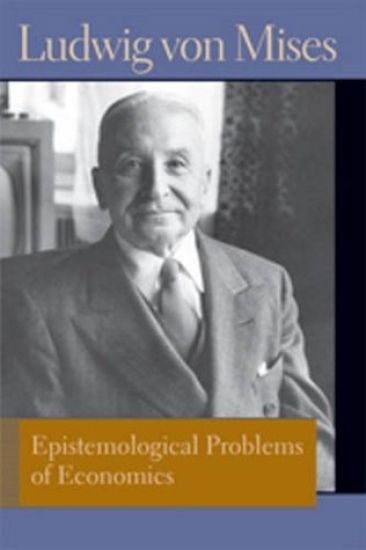
Epistemological Problems of Economics

Epistemological Problems of Economics

Ludwig Mises; Bettina Bien Greaves

Liberty Fund Inc
2013
sidottu
First published in German in 1933 and in English in 1960, Epistemological Problems of Economics presents Ludwig von Mises's views on the logical and epistemological features of social interpretation as well as his argument that the Austrian theory of value is the core element of a general theory of human behavior that transcends traditional limitations of economic science. Epistemological Problems of Economics presents the first outline of Mises's general science of human action, and may, therefore, be of special interest to individuals with knowledge in sociology or philosophy or those who are seeking a suitable initiation to Mises's thought. This volume is unique among Mises's works in that it contains a collection of essays in which he contested the theories of intellectuals he respected, such as Carl Menger, Eugen von Böhm-Bawerk, and Max Weber. Mises describes how value theory applies to human action at all times and places, as opposed to economic theory, which applies only to human action guided by economic calculation.
Epistemological Problems of Economics

Epistemological Problems of Economics

Ludwig Mises; Bettina Bien Greaves

Liberty Fund Inc
2013
nidottu
First published in German in 1933 and in English in 1960, Epistemological Problems of Economics presents Ludwig von Mises's views on the logical and epistemological features of social interpretation as well as his argument that the Austrian theory of value is the core element of a general theory of human behavior that transcends traditional limitations of economic science. Epistemological Problems of Economics presents the first outline of Mises's general science of human action, and may, therefore, be of special interest to individuals with knowledge in sociology or philosophy or those who are seeking a suitable initiation to Mises's thought. This volume is unique among Mises's works in that it contains a collection of essays in which he contested the theories of intellectuals he respected, such as Carl Menger, Eugen von Böhm-Bawerk, and Max Weber. Mises describes how value theory applies to human action at all times and places, as opposed to economic theory, which applies only to human action guided by economic calculation.
Notes & Recollections

Notes & Recollections

Ludwig Mises; Bettina Bien Greaves

Liberty Fund Inc
2013
sidottu
Published for the first time together in one volume is Ludwig von Mises's Notes and Recollections with The Historical Setting of the Austrian School of Economics. Written between 1940 and 1941, shortly after he arrived in the United States, Notes and Recollections is in effect Mises's pre-1940 intellectual autobiography. This work reveals how Mises developed his theories, wrote his books, lectured, and taught; it describes his life in Vienna and the people with whom he worked. He also discusses his activities as an adviser to Austrian government officials and his frustrations in attempting to keep inflation and communist and Nazi ideas from destroying the Austrian economy. The Historical Setting of the Austrian School of Economics is an essay originally published in English in 1969 that reveals Mises's intellectual development in the context of the origins of the Austrian School. It serves as a good introduction to the theory and history of the Austrian School. As Mises explains in these two works, his viewpoint that modern economics is based on subjective value and marginal-utility theory separated him from classical economists such as Adam Smith, David Ricardo, and John Stuart Mill.
Notes & Recollections

Notes & Recollections

Ludwig Mises; Bettina Bien Greaves

Liberty Fund Inc
2013
nidottu
Published for the first time together in one volume is Ludwig von Mises's Notes and Recollections with The Historical Setting of the Austrian School of Economics. Written between 1940 and 1941, shortly after he arrived in the United States, Notes and Recollections is in effect Mises's pre-1940 intellectual autobiography. This work reveals how Mises developed his theories, wrote his books, lectured, and taught; it describes his life in Vienna and the people with whom he worked. He also discusses his activities as an adviser to Austrian government officials and his frustrations in attempting to keep inflation and communist and Nazi ideas from destroying the Austrian economy. The Historical Setting of the Austrian School of Economics is an essay originally published in English in 1969 that reveals Mises's intellectual development in the context of the origins of the Austrian School. It serves as a good introduction to the theory and history of the Austrian School. As Mises explains in these two works, his viewpoint that modern economics is based on subjective value and marginal-utility theory separated him from classical economists such as Adam Smith, David Ricardo, and John Stuart Mill.
Bettina

Bettina

APERTURE
2022
sidottu
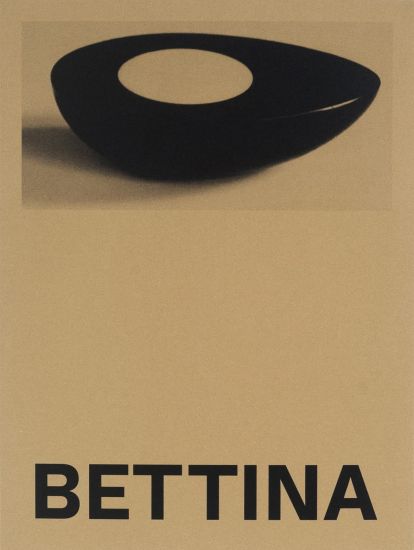
Bettina is the first monograph to showcase the work of the previously unsung artist Bettina Grossman, whose wildly interdisciplinary practice spanned photography, sculpture, textile, cinema, drawing, and more.An eccentric personality fully dedicated to her art, Bettina lived in the famous Chelsea Hotel from 1968 until her death in late 2021. In her tiny studio, she produced and accumulated a considerable body of work, much of which has remained unseen and unpublished until now. Her interests ranged from geometric and abstract studies, drawn from observations of people on the street, to pieces that transformed language into graphic, abstract “verbal forms.” Incorporating strategies of chance and the abstraction of everyday form through repetition and seriality, Bettina pushed the photographic medium to and beyond its limits. As Robert Blackburn, artist and founder of the Printmaking Workshop, astutely observed of Bettina’s work: “The photography, film, sculpture are as one, for the photographic medium is employed not only for documentation but as an endless source of inspiration from which other disciplines emerge—and merge.” Bettina was the winner of the Luma Rencontres Dummy Book Award Arles 2020 and is copublished by Aperture and Éditions Xavier Barral.
Bettina Hubby: Uniforms
Los Angeles artist Bettina Hubby (born 1968) takes a detour from her curatorial, community-based projects with Uniforms, an artist’s book of paper collages as precise and elegant as they are chaotic and devious. Here, clothed bodies collide, recombine and somersault across the page; machines mimic birds; jackets seem to genuflect in prayer. Constructed with the muted hues and contemplative negative space of a Noh play, Hubby’s mash-ups reassemble the familiar photographic imagery of fashion, commerce and reportage into a open-ended riff on personal identity and the human organism. Complementing the work is an original fictional narrative by Dave Cull, delivered in brief installments throughout the book. Uniforms is published in an edition of 750 copies on the occasion of Pretty Limber, Hubby’s fall 2013 exhibition at Klowden Mann Gallery.
Bettina Bee and the Expedition to Seek Big Treasure

Bettina Bee and the Expedition to Seek Big Treasure

D. K. Chadeesingh

Createspace Independent Publishing Platform
2011
nidottu
The melipone bee and the vanilla orchid plant hailed from the heart of the tropical rainforests of Mesoam rica. Over time, they evolved along-side each other because the melipone bee was tiny enough to pollinate the vanilla orchid flower. The only other insect that could possibly pollinate the vanilla orchid was a gnat-like fly called the midge. This story is about a melipone bee named Bettina Bee who was from the Cocoa Stand-where Bees and Flies lived in harmony, had adventures, and searched for nectar that was called Treasure. Nectar from the Vanilla orchid was called Big Treasure because it was valued more than any jewel or gold that a king or queen could find anywhere. More than anything, Bettina Bee wanted to discover Big Treasure. So, she led a secret expedition with her best friend, Midge Fly, into the Jungle-never thinking about how dangerous that would be. Maybe she would have been better off staying at home. You can be the judge of that because she had adventures and encounters, but also made a discovery-just not in the way that you and I might think.
Bettina von Arnim Handbuch
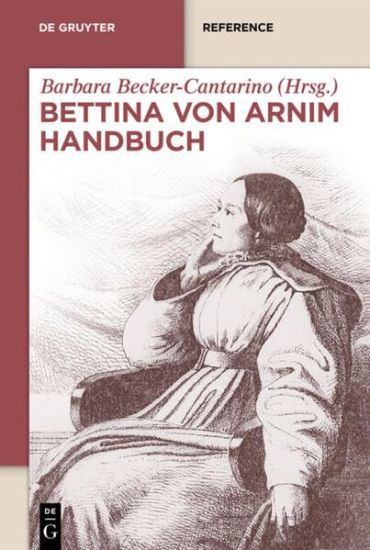
Bettina von Arnim (1785–1859) ist eine der wichtigsten Autorinnen der deutschen Literatur. Die mit einflussreichen Romantikern eng verbundene Autorin (Schwester Clemens Brentanos, Ehefrau Achim von Arnims) wurde mit ihrem kontrovers rezipierten "Goethes Briefwechsel mit einem Kinde" (1835) berühmt, mit ihren autobiografischen Briefbüchern und preußenkritischen, sozialpolitischen Schriften zur Mentorin junger Intellektueller des Vormärz und zu einer Identifikationsfigur für Generationen von Frauen.Das Handbuch bringt erstmals eine detaillierte Gesamtschau ihres literarischen, politischen und künstlerischen Schaffens in Weiterführung der neuesten Forschung. Dargestellt werden ihre autobiografischen Brief- und Gesprächsbücher im literarischen Feld, ihre Vernetzung mit Intellektuellen und Künstlern, ihre publizistischen und politischen Aktivitäten, sowie ihr von der Zensur verhindertes „Armenbuch“ und die anonym publizierte „Polenbroschüre“. Einzelartikel zeigen die ästhetische Qualität, den Bezug zu Romantik und Vormärz, die Modernität des Werkes, Poetik und Briefwechsel und ihre Rolle im literarischen Markt. So bietet das Handbuch ein wissenschaftliches Kompendium für die Beschäftigung mit Bettina von Arnims Persönlichkeit, Werk und Epoche.
Bettina Von Arnim Handbuch
Bettina von Arnim (1785-1859) ist eine der wichtigsten Autorinnen der deutschen Literatur. Die mit einflussreichen Romantikern eng verbundene Autorin (Schwester Clemens Brentanos, Ehefrau Achim von Arnims) wurde mit ihrem kontrovers rezipierten "Goethes Briefwechsel mit einem Kinde" (1835) ber hmt, mit ihren autobiografischen Briefb chern und preu enkritischen, sozialpolitischen Schriften zur Mentorin junger Intellektueller des Vorm rz und zu einer Identifikationsfigur f r Generationen von Frauen.Das Handbuch bringt erstmals eine detaillierte Gesamtschau ihres literarischen, politischen und k nstlerischen Schaffens in Weiterf hrung der neuesten Forschung. Dargestellt werden ihre autobiografischen Brief- und Gespr chsb cher im literarischen Feld, ihre Vernetzung mit Intellektuellen und K nstlern, ihre publizistischen und politischen Aktivit ten, sowie ihr von der Zensur verhindertes "Armenbuch" und die anonym publizierte "Polenbrosch re". Einzelartikel zeigen die sthetische Qualit t, den Bezug zu Romantik und Vorm rz, die Modernit t des Werkes, Poetik und Briefwechsel und ihre Rolle im literarischen Markt. So bietet das Handbuch ein wissenschaftliches Kompendium f r die Besch ftigung mit Bettina von Arnims Pers nlichkeit, Werk und Epoche.