

Kirjahaku
Etsi kirjoja tekijän nimen, kirjan nimen tai ISBN:n perusteella.
1000 tulosta hakusanalla Betty M Smith

Academic Vocabulary Building in English, Low-Intermediate
Betsy Davis; Dawn E. McCormick; Greg Mizera; M. Christine O'Neill; Stacy Ranson; Marilyn Smith Slaathaug; Dorolyn Smith; Alan Juffs
The University of Michigan Press
2015
nidottu
The English Language Institute at the University of Pittsburgh is known for its popular eight-volume series Words for Students of English (University of Michigan Press). In the years since the series was first published, faculty at Pitt ELI has been considering new ways to address learners’ challenges in acquiring vocabulary. The result of the research and experience is a new five-volume series, Academic Vocabulary Building in English. This series weaves together three sets of knowledge: (1) the results of recent research from applied linguists and psycholinguists, (2) the rich classroom experience of the Institute faculty, who together have many decades of practical classroom ESL experience, and (3) the data gathered from our online student database and corpus studies that have informed us of which words students need to know more deeply. Each unit contains sections that emphasize various components of word learning. First, each chapter opens with a chart of target words and their various morphological forms. The next step establishes form-meaning mappings: Each word is listed with a definition and two example sentences. The lists and definitions are followed by exercises that concentrate students’ attention on establishing form-meaning links. These exercises consist of practice opportunities that require multiple retrievals in order to promote label-to-concept links and begin awareness of derivational and inflectional variations. Follow-up exercises focus on collocations related to the unit’s theme. Each chapter closes with exercises that can be used as quizzes. By the time students have finished a unit, they should have had both receptive and productive practice with the form, meaning, morphosyntax, and collocational properties of each lexical item.
Academic Vocabulary Building in English, Intermediate
Betsy Davis; Alan Juffs; Dawn E. McCormick; Greg Mizera; M. Christine O'Neill; Stacy Ranson; Marilyn Smith Slaathaug; Dorolyn Smith
The University of Michigan Press
2015
nidottu
The English Language Institute at the University of Pittsburgh is known for its popular eight-volume series Words for Students of English (University of Michigan Press). In the years since the series was first published, faculty at Pitt ELI has been considering new ways to address learners’ challenges in acquiring vocabulary. The result of the research and experience is a new five-volume series, Academic Vocabulary Building in English. This series weaves together three sets of knowledge: (1) the results of recent research from applied linguists and psycholinguists, (2) the rich classroom experience of the Institute faculty, who together have many decades of practical classroom ESL experience, and (3) the data gathered from our online student database and corpus studies that have informed us of which words students need to know more deeply. Each unit contains sections that emphasize various components of word learning. First, each chapter opens with a chart of target words and their various morphological forms. The next step establishes form-meaning mappings: Each word is listed with a definition and two example sentences. The lists and definitions are followed by exercises that concentrate students’ attention on establishing form-meaning links. These exercises consist of practice opportunities that require multiple retrievals in order to promote label-to-concept links and begin awareness of derivational and inflectional variations. Follow-up exercises focus on collocations related to the unit’s theme. Each chapter closes with exercises that can be used as quizzes. By the time students have finished a unit, they should have had both receptive and productive practice with the form, meaning, morphosyntax, and collocational properties of each lexical item.

Family Dialogue Journals
JoBeth Allen; Jennifer Beaty; Angela Dean; Joseph Jones; Stephanie Smith Mathews; Jen McCreight; Elyse Schwedler; Amber M. Simmons; Luis Moll
Teachers' College Press
2015
nidottu
This honest, clearly written, and accessible book shows how to use Family Dialogue Journals to increase and deepen learning among students in grades K-12. Written by teachers who have been implementing and studying the use of weekly journals for several years, the book shares what they have learned and why they have found these journals to be an invaluable tool for forming effective partnerships with families. Learn from first-hand accounts how students write weekly about one big idea they have studied, and then invite a family member to participate in the discussion by asking him/her to write a response to the student’s question about the topic in the journal. Through these journal entries, students share their family knowledge with classmates while actively engaging with the curriculum. In turn, teachers extend the academic discussion by writing to each family and incorporating the family contributions into classroom lessons. Family participation in journal entries is remarkably high across ages, ethnicities, and diverse economic backgrounds.
Family Dialogue Journals
JoBeth Allen; Jennifer Beaty; Angela Dean; Joseph Jones; Stephanie Smith Mathews; Jen McCreight; Elyse Schwedler; Amber M. Simmons; Luis Moll
Teachers' College Press
2015
sidottu
This honest, clearly written, and accessible book shows how to use Family Dialogue Journals to increase and deepen learning among students in grades K-12. Written by teachers who have been implementing and studying the use of weekly journals for several years, the book shares what they have learned and why they have found these journals to be an invaluable tool for forming effective partnerships with families. Learn from first-hand accounts how students write weekly about one big idea they have studied, and then invite a family member to participate in the discussion by asking him/her to write a response to the student’s question about the topic in the journal. Through these journal entries, students share their family knowledge with classmates while actively engaging with the curriculum. In turn, teachers extend the academic discussion by writing to each family and incorporating the family contributions into classroom lessons. Family participation in journal entries is remarkably high across ages, ethnicities, and diverse economic backgrounds.

This landmark volume is the first to trace the exciting developments in the field of dwarfism research and treatment over the past century-particularly during the past fifty years. Dr. Betty M. Adelson, a psychologist, has unearthed and synthesized the most significant information about dwarfing conditions, from articles written a century ago to current books and specialized databases. Highlighting the outstanding contributions of Dr. Victor McKusick and several of his colleagues, Dr. Adelson reveals how dwarfism specialists have helped redefine the nature of medical care-transforming it from an authoritarian enterprise into a holistic, collaborative venture among physicians, affected individuals, and their families. The parent of an adult dwarf daughter, Adelson examines the social forces that affect the dwarfism community. She offers personal descriptions of the day-to-day challenges dwarf individuals face and portrays their accomplishments. Insightful and accessible, this work will prove a valuable resource for affected individuals, their families, and medical professionals-physicians, nurses, genetic counselors, social workers, psychologists, and medical students.

This work has been selected by scholars as being culturally important and is part of the knowledge base of civilization as we know it.This work is in the public domain in the United States of America, and possibly other nations. Within the United States, you may freely copy and distribute this work, as no entity (individual or corporate) has a copyright on the body of the work.Scholars believe, and we concur, that this work is important enough to be preserved, reproduced, and made generally available to the public. To ensure a quality reading experience, this work has been proofread and republished using a format that seamlessly blends the original graphical elements with text in an easy-to-read typeface.We appreciate your support of the preservation process, and thank you for being an important part of keeping this knowledge alive and relevant.



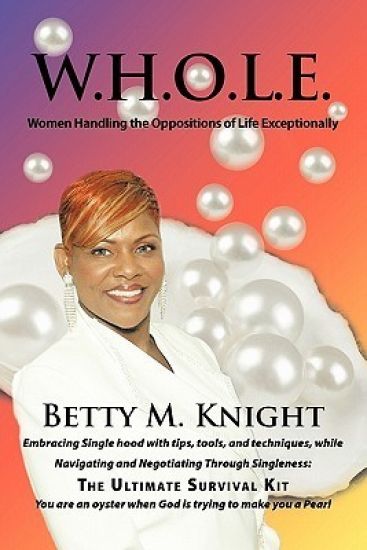
W.H.O.L.E.-Women Handling The Oppositions of Life Exceptionally
Betty M. Knight
AuthorHouse
2009
pokkari

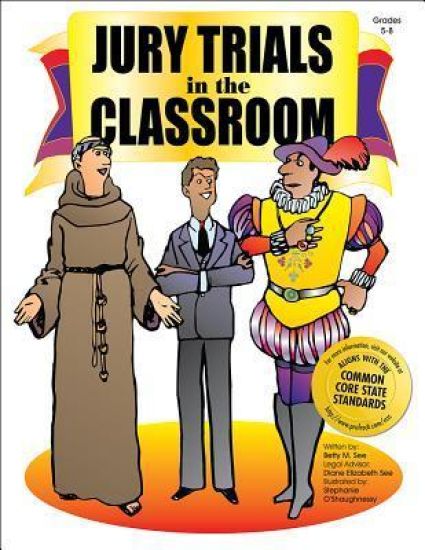
Transform your classroom into a courtroom and get ready for students to take part in a great learning adventure. The six trial simulations in this book let students delve into criminal and civil law with motivating cases that mirror situations in fairy tales, nursery rhymes, literature, and history. In the roles of attorneys, members of the jury, defendants, witnesses, and courtroom personnel, students prepare and conduct cases. They will learn to use statements of fact and witness affidavits to determine guilt or innocence.The book is divided into three sections that:define the types of courts in the U.S. court system; explain how to carry out a mock trial; and give six ready-to-use court cases, including all necessary documents. The court cases allow students to understand both criminal and civil trials, with three types of each case. The cases allow you to stage trials involving Hansel and Gretel, John Wilkes Booth, Little Miss Muffet, Romeo and Juliet, Jack and Jill, and Little Red Riding Hood. Don't miss this opportunity to teach critical thinking and teach students how to weigh opposing points of view. The exciting results will motivate students to exercise their reasoning skills, polish their communication skills, and apply knowledge of the legal system. This will become one of your favorite classroom adventures.For more judicial activities, see Blind Justice and On Trial.Grades 5-8
Electing the President is a motivating, hands-on simulation that lets students experience the exciting process of electing the President and Vice President of the United States. As the two parties square off, students take on the roles of candidates, convention delegates, and members of the Electoral College. Updated to reflect the most recent Census data, this book includes complete teacher instructions and all necessary student handouts to provide an easy-to-stage simulation that can be used with small or large groups.
Legends of the Seminoles
Betty M Jumper; Guy LaBree; Peter Gallagher
Pineapple Press Inc.,U.S.
2021
pokkari