Kirjahaku
Etsi kirjoja tekijän nimen, kirjan nimen tai ISBN:n perusteella.
1000 tulosta hakusanalla Beverley Milton-Edwards; Stephen Farrell
Declared a terrorist menace yet voted into government in a free election, Hamas then used its Gaza power base to launch cross-border attacks that scorched Israel and transformed the dynamics of the Israeli-Palestinian conflict. How did a small Palestinian offshoot of the Muslim Brotherhood grow to challenge long-established rivals such as the PLO? Who supports Hamas and what is its agenda? How powerful has it become and how strong will it remain? With decades of combined experience researching and reporting from the occupied West Bank and Gaza, Jerusalem, and around the Middle East, Beverley Milton-Edwards and Stephen Farrell gained unrivalled access to Hamas. Drawing on years of frontline reporting and interviews with members of the group’s founding generation and their successors who now lead it, they trace Hamas’ path to the shocking attacks of 07 October 2023 and their devastating aftermath. Its critics believe Hamas must be ousted to reach a solution to the Middle East conflict. Hamas’s supporters believe it is the solution. Nobody now believes it can be ignored. Based on their landmark 2010 study which has been thoroughly revised and updated, this book brings the story of Hamas up to the present and will be essential reading for anyone who wants to understand the Middle East today. Also available as an audiobook.
The conflict between Israelis and Palestinians is one of the most enduring and complex in the modern world. But, why did the conflict break out? Who is demanding what, and why is peace so difficult to achieve?The Israeli-Palestinian Conflict tackles the subject and analyses the conflict from its historical roots in the late nineteenth century to the present attempts at conflict resolution in the twenty-first century.Framing the debate and analysis around issues such as Zionism, Palestinian nationalism, international peace efforts, the refugees, state-building, democracy and religious opposition and highlighted by first hand quotes and sources of the conflict from its major participants, Beverley Milton-Edwards explores the deep impact of the conflict on regional politics in the Middle East and why the enmity between Palestinians and Israelis has become a number one global issue drawing in the world’s most important global actors. An essential insight into the complexities of one of the world’s most enduring conflicts between Israelis and Palestinians, this textbook is designed to make a complex subject accessible to all. Key features include a chronology of events and annotated further reading at the end of each chapter.The Israeli-Palestinian Conflict is an ideal and authoritative introduction into aspects of politics in Israel, among the Palestinians – a vitally important issue for those studying the politics of the Middle East.
Featuring a brand new examination of Islamic fundamentalism in the wake of the Arab Spring, this fully revised and updated second edition of Islamic Fundamentalism since 1945 analyzes the roots and emergence of Islamic movements in the modern world and the main thinkers that inspired them.Providing a much-needed historical overview of a fast-changing socio-political landscape, the main facets of Islamic fundamentalism are put in a global context, with a thematic debate of issues such as:- the effects of colonialism on Islam - secularism and the Islamic reaction - Islam and violence in the 9/11 era- globalization and transnational Islamist movements - Islam in the wake of the Arab AwakeningIslamic Fundamentalism since 1945 provides an authoritative account of the causes and diversity of Islamic fundamentalism, a modern phenomenon which has grabbed the headlines as a grave threat to the West and a potentially revolutionary trend in the Middle East. It is a valuable resource for students and those interested in the history, effects and consequences of these Islamic movements
The Muslim Brotherhood is the most significant and enduring Sunni Islamist organization of the contemporary era. Its roots lie in the Middle East but it has grown into both a local and global movement, with its well-placed branches reacting effectively to take the opportunities for power and electoral competition offered by the Arab Spring.Regarded by some as a force of moderation among Islamists, and by others as a façade hiding a terrorist fundamentalist threat, the potential influence of the Muslim Brotherhood on Middle Eastern politics remains ambiguous. The Muslim Brotherhood: The Arab Spring and its Future Face provides an essential insight into the organisation, with chapters devoted to specific cases where the Brotherhood has important impacts on society, the state and politics. Key themes associated with the Brotherhood, such as democracy, equality, pan-Islamism, radicalism, reform, the Palestine issue and gender, are assessed to reveal an evolutionary trend within the movement since its founding in Egypt in 1928 to its manifestation as the largest Sunni Islamist movement in the Middle East in the 21st century. The book addresses the possible future of the Muslim Brotherhood; whether it can surprise sceptics and effectively accommodate democracy and secular trends, and how its ascension to power through the ballot box might influence Western policy debates on their engagement with this manifestation of political Islam. Drawing on a wide range of sources, this book presents a comprehensive study of a newly resurgent movement and is a valuable resource for students, scholars and policy makers focused on Middle Eastern Politics.
The dreadful events of 11 September have brought Islam to the forefront of world politics. This authoritative new book provides the analysis for a far-reaching introduction to Islamic politics for those coming to the subject for the first time. This account provides a deep insight into dimensions of Muslim political life; from democracy to despots, women to world affairs and history to heresy. Milton-Edwards offers an account of key contemporary concepts and debates that focus on the relationship between Islam and topical issues including politics, protest and opposition, violence, the West, democracy, the state and women. Giving an broad global overview the author includes a range of first-hand interviews with major Islamic figures and leaders of movements. Milton-Edwards charts the development of a political trend in Islam throughout the twentieth century and explores its myriad dimensions. The author also explores the prospects for political Islam in the new millennium. With further reading suggestions, and a glossary, Islam and Politics in the Contemporary World is an indispensable introduction to the subject and will prove invaluable as a textbook for students of politics and religion.
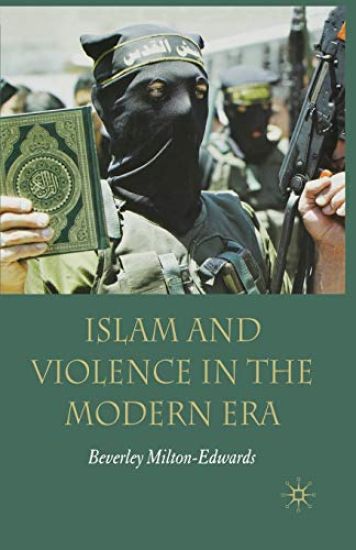
This book examines dimensions of Islam and violence within wider debates about politics, history, faith, power and struggle both within Muslims' realms and outside. It explores the motif of violence in its myriad aspects including debates about sacrifice, private and public violence, responses and reactions, as well as suicide and martyrdom.
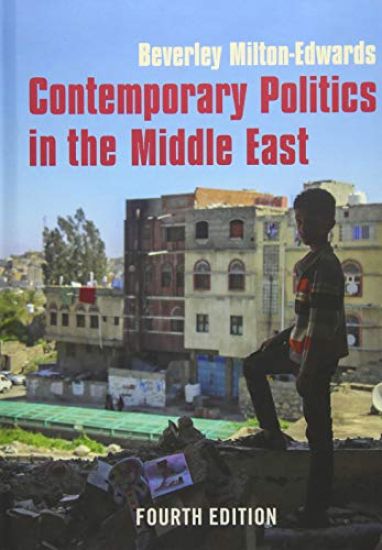
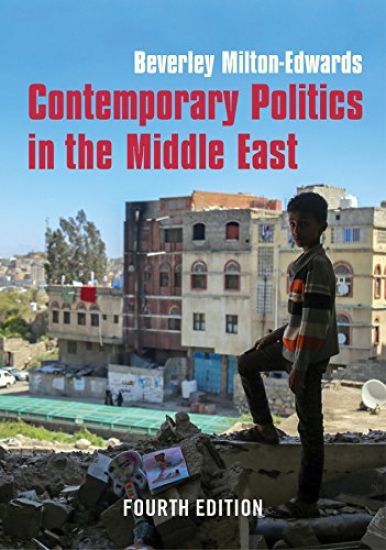
The fourth edition of this dynamic and popular text provides a comprehensive introduction to contemporary politics in the Middle East. Fully revised and updated throughout, it features a new chapter on the Arab Spring and its aftermath, plus a wide range of vibrant case studies, data, questions for class discussion and suggestions for further reading. Purposefully employing a clear thematic structure, the book begins by introducing key concepts and contentious debates before outlining the impact of colonialism, and the rise and relevance of Arab nationalism in the region. Major political issues affecting the Middle East are then explored in full. These include political economy, conflict, political Islam, gender, the regional democracy deficit, and ethnicity and minorities. The book also examines the role of key foreign actors, such as the USA, Russia and the EU, and concludes with an in-depth analysis of the Arab uprisings and their impact in an era of uncertainty.
Created as a mechanism for maintaining British influence through a local patron, Jordan’s future never looked certain. Nevertheless, under the leadership of the Hashemite monarchy led by Abdullah and then his grandson Hussein, the Kingdom of Jordan became a permanent feature on the map of the modern Middle East. Under the rule of King Abdullah II, Jordan has remained an influential regional player in the Middle East Peace Process, its strategic position on the borders of Palestine, Israel, Egypt, Saudi Arabia and Iraq ensuring that it cannot be overlooked in the regional and international politics.Updated and expanded to include recent developments in Jordan and the Middle East, the new edition includes coverage and discussion of: the reign of King Abdullah IIthe involvement of the US in the Iraq war and the effect on this on Jordan’s alignment with the West the country’s recent economic growth, with an emphasis on economic liberalisation, privatisation, promotion of tourism and encouragement of foreign investmentthe position of Jordan as a point of continuity in an increasingly unstable Middle East.This volume, intended for both academic and general readers, offers an overview of the history, politics and economics of this fascinating country and its role in a region disfigured by the Arab-Israeli conflict.
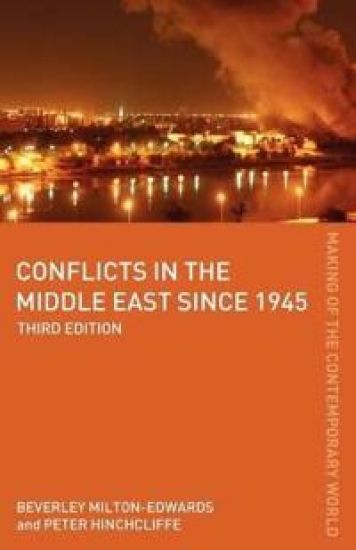
Conflicts in the Middle East since 1945
Peter Hinchcliffe; Beverley Milton-Edwards
Routledge
2007
sidottu
This third edition of Conflicts in the Middle East since 1945 analyzes the nature of conflict in the Middle East, with its racial, ethnic, political, cultural, religious and economic factors. Throughout the book Peter Hinchcliffe and Beverley Milton-Edwards put the main conflicts into their wider context, with thematic debates on issues such as the emergence of radical Islam, the resolution of conflicts, diplomacy and peace-making, and the role of the superpowers. The book is brought fully up to date with events in the Middle East, covering, for instance, developments in Iraq in 2006 where a democratically elected government is in place but the insurgency show no sign of coming under control. The analysis of the Palestinian/Israeli conflict is also brought up to the present day, to include the election of the Hamas government and the 2006 conflict between Israel and Lebanon’s Hizballah. Including a newly updated bibliography and maps of the area, this is the perfect introduction for all students wishing to understand the complex situation in the Middle East, in its historical context.
Conflicts in the Middle East since 1945
Peter Hinchcliffe; Beverley Milton-Edwards
Routledge
2007
nidottu
This third edition of Conflicts in the Middle East since 1945 analyzes the nature of conflict in the Middle East, with its racial, ethnic, political, cultural, religious and economic factors. Throughout the book Peter Hinchcliffe and Beverley Milton-Edwards put the main conflicts into their wider context, with thematic debates on issues such as the emergence of radical Islam, the resolution of conflicts, diplomacy and peace-making, and the role of the superpowers. The book is brought fully up to date with events in the Middle East, covering, for instance, developments in Iraq in 2006 where a democratically elected government is in place but the insurgency show no sign of coming under control. The analysis of the Palestinian/Israeli conflict is also brought up to the present day, to include the election of the Hamas government and the 2006 conflict between Israel and Lebanon’s Hizballah. Including a newly updated bibliography and maps of the area, this is the perfect introduction for all students wishing to understand the complex situation in the Middle East, in its historical context.
Beverley's Roll of Honour, Being Sketches of the Worthies of Beverley.
Edmund Wrigglesworth
British Library, Historical Print Editions
2011
pokkari
Title: Beverley's Roll of Honour, being sketches of the worthies of Beverley.Publisher: British Library, Historical Print EditionsThe British Library is the national library of the United Kingdom. It is one of the world's largest research libraries holding over 150 million items in all known languages and formats: books, journals, newspapers, sound recordings, patents, maps, stamps, prints and much more. Its collections include around 14 million books, along with substantial additional collections of manuscripts and historical items dating back as far as 300 BC.The HISTORY OF BRITAIN & IRELAND collection includes books from the British Library digitised by Microsoft. As well as historical works, this collection includes geographies, travelogues, and titles covering periods of competition and cooperation among the people of Great Britain and Ireland. Works also explore the countries' relations with France, Germany, the Low Countries, Denmark, and Scandinavia. ++++The below data was compiled from various identification fields in the bibliographic record of this title. This data is provided as an additional tool in helping to insure edition identification: ++++ British Library Wrigglesworth, Edmund; 1882 130 p.; 8 . 10360.ccc.6.