Kirjojen hintavertailu. Mukana 11 611 203 kirjaa ja 12 kauppaa.

Kirjahaku

Etsi kirjoja tekijän nimen, kirjan nimen tai ISBN:n perusteella.

163 tulosta hakusanalla Bhikkhu Bodhi

Numerical Discourses of the Buddha

Numerical Discourses of the Buddha

Bhikkhu Bodhi

AltaMira Press,U.S.
2000
pokkari
Drawn from the Anguttara Nikaya, Numerical Discourses of the Buddha brings together teachings of the Buddha ranging from basic ethical observances recommended to the busy man or woman of the world, to the more rigorous instructions on mental training prescribed for the monks and nuns. The Anguttara Nikaya is a part of the Pali Canon, the authorized recension of the Buddha's Word for followers of Theravada Buddhism, the form of Buddhism prevailing in the Buddhist countries of southern Asia.
Connected Discourses of the Buddha

Connected Discourses of the Buddha

Bhikkhu Bodhi

Wisdom Publications,U.S.
2003
sidottu
This volume offers a complete translation of the Samyutta Nikaya, The Connected Discourses of the Buddha, the third of the four great collections in the Sutta Pitaka of the Pali Canon. The Samyutta Nikaya consists of fifty-six chapters, each governed by a unifying theme that binds together the Buddha's suttas or discourses. The chapters are organized into five major parts. The first, The Book with Verses, is a compilation of suttas composed largely in verse. This book ranks as one of the most inspiring compilations in the Buddhist canon, showing the Buddha in his full grandeur as the peerless "teacher of gods and humans." The other four books deal in depth with the philosophical principles and meditative structures of early Buddhism. They combine into orderly chapters all the important short discourses of the Buddha on such major topics as dependent origination, the five aggregates, the six sense bases, the seven factors of enlightenment, the Noble Eightfold Path, and the Four Noble Truths. Among the four large Nikayas belonging to the Pali Canon, the Samyutta Nikaya serves as the repository for the many shorter suttas of the Buddha where he discloses his radical insights into the nature of reality and his unique path to spiritual emancipation. This collection, it seems, was directed mainly at those disciples who were capable of grasping the deepest dimensions of wisdom and of clarifying them for others, and also provided guidance to meditators intent on consummating their efforts with the direct realization of the ultimate truth. The present work begins with an insightful general introduction to the Samyutta Nikaya as a whole. Each of the five parts is also provided with its own introduction, intended to guide the reader through this vast, ocean-like collection of suttas. To further assist the reader, the translator has provided an extensive body of notes clarifying various problems concerning both the language and the meaning of the texts. Distinguished by its lucidity and technical precision, this new translation makes this ancient collection of the Buddha's discourses accessible and comprehensible to the thoughtful reader of today. Like its two predecessors in this series, The Connected Discourses of the Buddha is sure to merit a place of honour in the library of every serious student of Buddhism.
In the Buddha's Words

In the Buddha's Words

Bhikkhu Bodhi

Wisdom Publications,U.S.
2005
nidottu
This landmark collection is the definitive introduction to the Buddha's teachings - in his own words. The American scholar-monk Bhikkhu Bodhi, whose voluminous translations have won widespread acclaim, here presents selected discourses of the Buddha from the Pali Canon, the earliest record of what the Buddha taught. Divided into ten thematic chapters, In the Buddha's Words reveals the full scope of the Buddha's discourses, from family life and marriage to renunciation and the path of insight. A concise, informative introduction precedes each chapter, guiding the reader toward a deeper understanding of the texts that follow. This book contains: Clear translations of the Buddha's original teachings Thoughtfully curated selections from the Pali Canon Chapters on the Buddha's life, rebirth, suffering, liberation, and practice A foreword by His Holiness the Dalai Lama In the Buddha's Words allows even readers unacquainted with Buddhism to grasp the significance of the Buddha's contributions to our world heritage. Taken as a whole, these texts bear eloquent testimony to the breadth and intelligence of the Buddha's teachings, and point the way to an ancient yet ever-vital path. Practitioners and scholars alike will find this systematic presentation indispensable. Dive into the world of the Buddha through these easy-to-read English translations of the Pali Canon. The Pali Canon is the literary, intellectual, and spiritual foundation of Theravada Buddhism. This volume, being organized in a progressive manner "from the simple to the difficult, from the elementary to the profound," makes it well-suited for those looking for an accessible introduction to the Theravadin scriptural corpus, as well as being a valuable resource for those familiar with the Pali Canon but wanting a more structured presentation of the materials.
Pensando o Buddhismo: Coletanea de ensaios

Pensando o Buddhismo: Coletanea de ensaios

Bhikkhu Bodhi

Createspace Independent Publishing Platform
2012
nidottu
"Pensando o Buddhismo" uma colet nea de ensaios do Vener vel Bhikkhu Bodhi, o bem conhecido expositor moderno das doutrinas buddhistas, tradutor em rito e ex-Presidente da Buddhist Publication Society (BPS). Os ensaios apareceram entre 1985 e 1999 como editoriais dos boletins da BPS e apresentam um diversificado panorama do Buddhismo e suas v rias facetas. "Nosso primeiro encontro com o Buddhismo nos confronta com um paradoxo. Intelectualmente, ele parece ser o deleite do livre pensador: s brio, realista, n o dogm tico, quase cient fico, em sua estrutura e em seu m todo. Mas, se entramos em contato ntimo com o Dhamma vivo, descobrimos logo que ele tem outro lado que parece ser a ant tese de todos os nossos pressupostos racionalistas. Ainda aqui n o encontramos credos r gidos ou especula es aleat rias, mas n o deixamos de encontrar ideais religiosos de ren ncia, contempla o e devo o; um corpo de doutrinas lidando com temas que transcendem percep o sensorial e o pensamento; e - talvez o que seja mais desconcertante - um programa de treinamento no qual a f aparece como uma virtude cardeal e a d vida como um obst culo, barreira e grilh o".
The Numerical Discourses of the Buddha

The Numerical Discourses of the Buddha

Bhikkhu Bodhi

Wisdom Publications,U.S.
2012
sidottu
Discover with the original teachings of the Buddha in this thorough translation of some of the oldest Buddhist texts in the world. Like the River Ganges flowing down from the Himalayas, the entire Buddhist tradition flows down to us from the teachings and deeds of the historical Buddha, who lived and taught in India during the fifth century B.C.E. To ensure that his legacy would survive the ravages of time, his direct disciples compiled records of the Buddha's teachings soon after his passing. In the Theravada Buddhist tradition, which prevails in Sri Lanka and Southeast Asia, these records are regarded as the definitive "word of the Buddha." Preserved in Pali, an ancient Indian language closely related to the language that the Buddha spoke, this full compilation of texts is known as the Pali Canon. At the heart of the Buddha's teaching were the suttas (Sanskrit sutras), his discourses and dialogues. If we want to find out what the Buddha himself actually said, these are the most ancient sources available to us. The suttas were compiled into collections called "Nikayas," of which there are four, each organized according to a different principle. The Digha Nikaya consists of longer discourses; the Majjhima Nikaya of middle-length discourses; the Samyutta Nikaya of thematically connected discourses; and the Anguttara Nikaya of numerically patterned discourses. The Numerical Discourses contains a full translation of the Anguttara Nikaya. The Anguttara arranges the Buddha's discourses in accordance with a numerical scheme intended to promote retention and easy comprehension. In an age when writing was still in its infancy, this proved to be the most effective way to ensure that the disciples could grasp and replicate the structure of a teaching. Here's what makes the Numerical Discourses special: Insightful commentary from eminent scholar-monk Bhikkhu Bodhi Its comprehensive translation of the Anguttara Nikaya, part of the Pali Canon Teachings specifically for lay people and families Themes including family life, right livelihood, friendship, and meditation techniques laid out in a carefully organized thematic guide In 2013, Venerable Bhikkhu Bodhi was awarded the 2013 Khyentse Foundation Prize for Outstanding Translation. Bhikkhu Bodhi's translation and compilation also includes a useful thematic guide to the Anguttara Nikaya, so that readers can browse the volume by topic. Find the teachings to further your practice and bring clarity to your life today by diving into this rich treasure of the Buddhist literary tradition. With this volume, readers can learn about the life of the Buddha, instructions for maintaining a harmonious household, monastic practice and lifestyle, meditation practice, and the Sangha (Buddhist community).
The Buddha's Teaching on Social and Communal Harmony

The Buddha's Teaching on Social and Communal Harmony

Bhikkhu Bodhi

Wisdom Publications,U.S.
2016
nidottu
In a world of conflict and strife, how can we be advocates of peace and justice? In this volume acclaimed scholar-monk Bhikkhu Bodhi has collected and translated the Buddha's teachings on conflict resolution, interpersonal and social problem-solving, and the forging of harmonious relationships. The selections, all drawn from the Pali Canon, the earliest record of the Buddha's discourses, are organized into ten thematic chapters. The chapters deal with such topics as the quelling of anger, good friendship, intentional communities, the settlement of disputes, and the establishing of an equitable society. Each chapter begins with a concise and informative introduction by the translator that guides us toward a deeper understanding of the texts that follow. In times of social conflict, intolerance, and war, the Buddha's approach to creating and sustaining peace takes on a new and urgent significance. Even readers unacquainted with Buddhism will appreciate these ancient teachings, always clear, practical, undogmatic, and so contemporary in flavor. The Buddha's Teachings on Social and Communal Harmony will prove to be essential reading for anyone seeking to bring peace into their communities and into the wider world.
The Suttanipata

The Suttanipata

Bhikkhu Bodhi

Wisdom Publications,U.S.
2017
sidottu
This landmark volume in the Teachings of the Buddha series translates the Suttanipata, a text that matches the Dhammapada in its concise power and its centrality to the Buddhist tradition. Celebrated translator Bhikkhu Bodhi illuminates this text and its classical commentaries with elegant renderings and authoritative annotations. The Suttanipata, or "Group of Discourses" is a collection of discourses ascribed to the Buddha that includes some of the most popular suttas of the Pali Canon, among them the Discourse on Loving-Kindness Sutta. The suttas are primarily in verse, though several are in mixed prose and verse. The Suttanipata contains discourses that extol the figure of the muni, the illumined sage, who wanders homeless completely detached from the world. Other suttas, such as the Discourse on Downfall and the Discourse on Blessings, establish the foundations of Buddhist lay ethics. The last two chapters--the Atthakavagga (Chapter of Octads) and the Parayanavagga (The Way to the Beyond)--are considered to be among the most ancient parts of the Pali Canon. The Atthakavagga advocates a critical attitude toward views and doctrines. The Parayanavagga is a beautiful poem in which sixteen spiritual seekers travel across India to meet the Buddha and ask him profound questions pertaining to the highest goal. The commentary, the Paramatthajotika, relates the background story to each sutta and explains each verse in detail. The volume includes numerous excerpts from the Niddesa, an ancient commentary already included in the Pali Canon, which offers detailed expositions of each verse in the Atthakavagga, the Parayanavagga, and the Rhinoceros Horn Sutta. Translator Bhikkhu Bodhi provides an insightful, in-depth introduction, a guide to the individual suttas, extensive notes, a list of parallels to the discourses of the Suttanipata, and a list of the numerical sets mentioned in the commentaries.
Reading the Buddha's Discourses in Pali

Reading the Buddha's Discourses in Pali

Bhikkhu Bodhi

Wisdom Publications,U.S.
2021
sidottu
Renowned scholar-monk and bestselling translator Bhikkhu Bodhi's definitive, practical guide on how to read ancient Buddhist texts in the original language. Bhikkhu Bodhi's sophisticated and practical instructions on how to read the Pali of the Buddha's discourses will acquaint students of Early Buddhism with the language and idiom of these sacred texts. Here the renowned English translator of the Pali Canon opens a window into key suttas from the Sa?yutta Nikaya, giving a literal translation of each sentence followed by a more natural English rendering, then explaining the grammatical forms involved. In this way, students can determine the meaning of each word and phrase and gain an intimate familiarity with the distinctive style of the Pali suttas--with the words, and world, of the earliest Buddhist texts. Ven. Bodhi's meticulously selected anthology of suttas provides a systematic overview of the Buddha's teachings, mirroring the four noble truths, the most concise formulation of the Buddha's guide to liberation. Reading the Buddha's Discourses in Pali shares with readers not only exceptional language instruction but also a nuanced study of the substance, style, and method of the early Buddhist discourses.
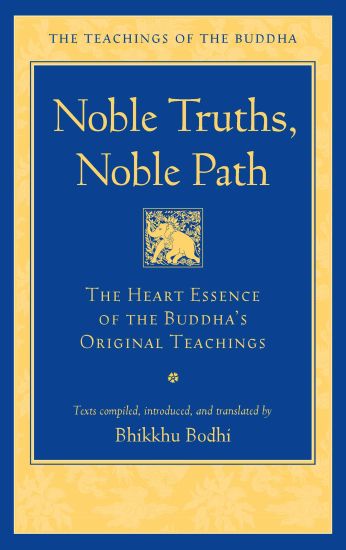
Noble Truths, Noble Path

Noble Truths, Noble Path

Bhikkhu Bodhi

WISDOM PUBLICATIONS,U.S.
2023
sidottu
The renowned translator Bhikkhu Bodhi has crafted this anthology of suttas from the Samyutta Nikaya to enable students of Early Buddhism to penetrate into the heart of the Buddha's teachings on the four noble truths and the eightfold path as directly and clearly as possible. The aim is to attain direct insight into foundational Buddhist teachings on liberation. Brilliantly translated by Bhikkhu Bodhi, this anthology of suttas from the Samyutta Nikaya takes us straight to the heart of the Buddha's teaching on liberation through the four noble truths and the noble eightfold path--the two mainstays of Buddhist doctrine that illuminate the nature of things by generating direct insight into the teachings. These suttas all pertain to the ultimate good, the attainment of nibbana, or liberation. They illuminate the Buddha's radical diagnosis of the human condition--and more broadly, the condition of all sentient existence--in light of the four noble truths. They underscore the pervasive flaws inherent in the round of rebirths, trace our existential predicament to its deepest roots, and lay out the path to unraveling our bondage and winning irreversible release. Ven. Bodhi arranged the chapters, each with its own introduction, to provide an overview of the Dhamma that mirrors the four noble truths, thus enabling students of Early Buddhism to see into the heart of the Buddha's teachings as directly and clearly as possible.
Noble Truths, Noble Path

Noble Truths, Noble Path

Bhikkhu Bodhi

WISDOM PUBLICATIONS,U.S.
2024
nidottu
The renowned translator Bhikkhu Bodhi has crafted this anthology of suttas from the Samyutta Nikaya to enable students of Early Buddhism to penetrate into the heart of the Buddha's teachings on the four noble truths and the eightfold path as directly and clearly as possible. The aim is to attain direct insight into foundational Buddhist teachings on liberation. Brilliantly translated by Bhikkhu Bodhi, this anthology of suttas from the Samyutta Nikaya takes us straight to the heart of the Buddha's teaching on liberation through the four noble truths and the noble eightfold path--the two mainstays of Buddhist doctrine that illuminate the nature of things and generate direct insight into the teachings. These suttas all pertain to the ultimate good, the attainment of nibbana, or liberation. They illuminate the Buddha's radical diagnosis of the human condition--and more broadly, the condition of all sentient existence--in light of the four noble truths. They underscore the pervasive flaws inherent in the round of rebirths, trace our existential predicament to its deepest roots, and lay out the path to unraveling our bondage and winning irreversible release. Ven. Bodhi arranged the chapters, each with its own introduction, to provide an overview of the Dhamma that mirrors the four noble truths, thus enabling students of Early Buddhism to see into the heart of the Buddha's teachings as directly and clearly as possible.
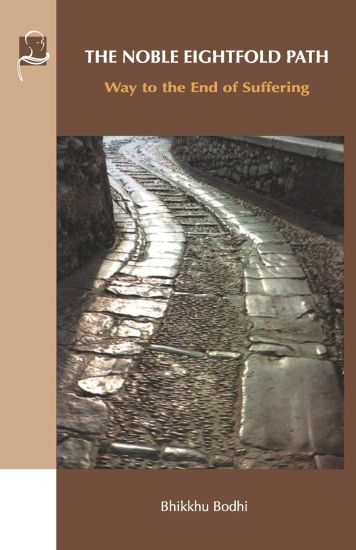
The Noble Eightfold Path

The Noble Eightfold Path

Bhikkhu Bodhi

Bps Pariyatti Editions
2020
pokkari
This book offers a clear, concise account of the Eightfold Path prescribed to uproot and eliminate the deep underlying cause of suffering-ignorance. Each step of the path is believed to cultivate wisdom through mental training, and includes an enlightened and peaceful middle path that avoids extremes. The theoretical as well as practical angles of each of the paths-right view, right intention, right speech, right action, right livelihood, right effort, right mindfulness, and right concentration-are illustrated through examples from contemporary life. The work's final chapter addresses the Buddhist path and its culmination in enlightenment. (Note: This title was previously published under ISBN: 9781928706076. Due to technical issues a new ISBN had to be assigned. Rest assured that both versions of this title are exactly the same.)
Dhamma Reflections

Dhamma Reflections

Bhikkhu Bodhi

Bps Pariyatti Editions
2020
pokkari
This volume brings together 53 essays of Bhikkhu Bodhi previously published by the Buddhist Publication Society in newsletters and other publications. These essays reveal the depth and breadth of Bhikkhu Bodhi's ability to communicate the timeless teachings of the Buddha and his skillful guidance in applying the Dhamma in everyday life. (Note: This title was previously published under ISBN 9781681720326. Due to technical issues a new ISBN had to be assigned. Rest assured that both versions of this title are exactly the same.)
The Great Discourse on Causation

The Great Discourse on Causation

Bhikkhu Bodhi

Pariyatti Press
2022
pokkari
The Mahanidana Sutta, "The Great Discourse on Causation," is the longest and most detailed of the Buddha's discourses dealing with dependent arising (paticca samuppada), a doctrine generally regarded as the key to his entire teaching. The Buddha often described dependent arising as deep, subtle, and difficult to see, the special domain of noble wisdom. So when his close disciple Ananda comes to him and suggests that this doctrine might not be as deep as it seems, the stage is set for a particularly profound and illuminating exposition of the Dhamma.This book contains a translation by Bhikkhu Bodhi of the Mahanidana Sutta together with all the doctrinally important passages from its authorized commentary and subcommentary. A long introductory essay discusses the rich philosophical implications of the sutta; an appendix explains the treatment of dependent arising according to the Abhidhamma system of conditional relations.
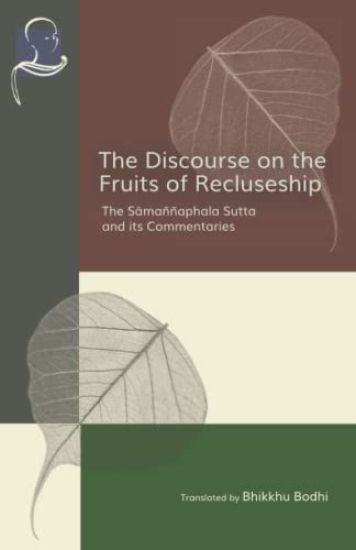
The Discourse on the Fruits of Recluseship

The Discourse on the Fruits of Recluseship

Bhikkhu Bodhi

Bps Pariyatti Editions
2022
pokkari
The Buddha traces the entire progress of a disciple from the first step on the path to the attainment of Nibbana in this second sutta of the Sutta Pitaka, one of the most elevating of the Buddha's discourses. On a full-moon night in Autumn, in reply to a question asked by King Ajatasattu of Magadha, the Buddha expounds the visible fruits of the Buddhist monk's life, sketching the progress of the disciple."...the Sāma aphala Sutta sounds a triumphant and lyrical proclamation of the fruitfulness of the course of spiritual training founded upon right view. It is the Buddha's announcement to the world that the life of renunciation he adopted for himself and opened up to humanity by founding the sangha brings immediately visible benefits in each of its stages. It is 'good in the beginning' through the bliss of blamelessness that comes with the purification of conduct; 'good in the middle' in yielding an exalted joy and bliss through the seclusion of the mind from the sensual hindrances; and 'good in the end' because it culminates in the highest wisdom and peace by transcending all mundane bonds." (From the translator's Preface)The work is not only a great spiritual classic, but also a literary gem distinguished by its beauty of poetic imagery.