Kirjojen hintavertailu. Mukana 11 627 362 kirjaa ja 12 kauppaa.

Kirjahaku

Etsi kirjoja tekijän nimen, kirjan nimen tai ISBN:n perusteella.

1000 tulosta hakusanalla Bill McKibben

The Bill McKibben Reader

The Bill McKibben Reader

Bill McKibben

Henry Holt Company Inc
2008
nidottu
Powerful, impassioned essays on living and being in the world, from the bestselling author of "The End of Nature "and "Deep Economy"For a generation, Bill McKibben has been among America's most impassioned and beloved writers on our relationship to our world and our environment. His groundbreaking book on climate change, "The End of Nature," is considered "as important as Rachel Carson's classic "Silent Spring""* and "Deep Economy, "his "deeply thoughtful and mind-expanding"** exploration of globalization, helped awaken and fuel a movement to restore local economies.Now, for the first time, the best of McKibben's essays fiery, magical, and infused with his uniquely soulful investigations of modern life are collected in a single volume. Whether meditating on today's golden age in radio, the natural place of biting black flies in our lives, or the patriotism of a grandmother fighting to get corporate money out of politics, McKibben inspires us to become better caretakers of the Earth and of one another.*"The Plain Dealer "(Cleveland )**Michael Pollan"
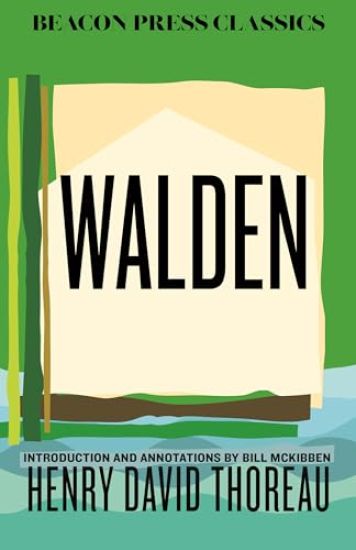
Walden: Introduction and Annotations by Bill McKibben
A deluxe edition of Henry David Thoreau's groundbreaking environmentalist masterpiece, including an introduction and annotations by renowned social and environmental critic Bill McKibben A Beacon Classics edition, featuring spot gloss cover and retro, classic palette First published in 1854, Henry David Thoreau's Walden has influenced generations of readers and continues to inspire and inform anyone with an open mind, a love of nature, and a longing for simplicity and contemplation. Recounting the author's reflections on simple living after a period he spent in a small cabin he built near Walden Pond, the book places Thoreau firmly in his role as cultural and spiritual seer. Bill McKibben offers both an intelligent and captivating introduction and a body of insightful annotations to Thoreau's original edition. He addresses two philosophical questions posed by Thoreau: "How much is enough?" and, "How do I know what I want?", to draw meaningful connections between Thoreau's writing and our lived experience in the 21st century. This beautiful hardcover edition is more accessible and relevant than ever in an age of technological change and ecological crisis.
Walden: With an Introduction and Annotations by Bill McKibben
In honor of the bicentennial of Henry David Thoreau's birth, this edition of Walden features an introduction and annotations by renowned environmentalist Bill McKibben "Bill McKibben gives us Thoreau's Walden as the gospel of the present moment, as a neccessary book because it is useful right now."--Robert Richardson, author of Henry Thoreau, A Life of the Mind and Emerson: The Mind on Fire "We need to understand that when Thoreau sat in the dooryard of his cabin 'from sunrise till noon, rapt in a revery, in undisturbed solitude and stillness, while the birds sang around or flitted noiseless through the house, ' he was offering counsel and example exactly suited for our perilous moment in time."--Bill McKibben, from the introduction First published in 1854, Henry David Thoreau's groundbreaking book has influenced generations of readers and continues to inspire and inform anyone with an open mind, a love of nature, and a longing for simplicity and contemplation. Bill McKibben provides a newly revised introduction and helpful annotations that place Thoreau firmly in his role as cultural and spiritual seer. This beautiful edition of Walden, published in honor of the bicentennial of Thoreau's birth, is more accessible and relevant than ever in an age of technological change and ecological crisis.
The Global Warming Reader: A Century of Writing About Climate Change
Van Jones, Al Gore, Elizabeth Kolbert, Naomi Klein, and other essential voices on global warming, from its 19th-century discovery to the present, in a volume edited by Bill McKibben, our most widely respected environmental writer With the rise of extreme weather events worldwide--witness the devastation wrought by Hurricanes Sandy, Irene, and Katrina, and the sustained drought across the American West--global warming has become increasingly difficult to deny. What is happening to our planet? And what can we do about it? The Global Warming Reader provides more than thirty-five answers to these burning questions, from more than one hundred years of engagement with the topic. Here is Elizabeth Kolbert's groundbreaking essay "The Darkening Sea," Michael Crichton's skeptical view of climate change, George Monbiot's biting indictment of those who are really using up the planet's resources, NASA scientist James Hansen's testimony before the U.S. Congress, and clarion calls for action by Al Gore, Arundhati Roy, Naomi Klein, Van Jones, and many others. The Global Warming Reader is a comprehensive resource, expertly edited by someone who lives and breathes this defining issue of our time.
An Idea Can Go Extinct

An Idea Can Go Extinct

Bill McKibben

Penguin Classics
2021
nidottu
In twenty short books, Penguin brings you the classics of the environmental movement.An Idea Can Go Extinct is Bill McKibben's impassioned, groundbreaking account of how, by changing the earth's entire atmosphere, the weather and the most basic forces around us, 'we are ending nature.'Over the past 75 years, a new canon has emerged. As life on Earth has become irrevocably altered by humans, visionary thinkers around the world have raised their voices to defend the planet, and affirm our place at the heart of its restoration. Their words have endured through the decades, becoming the classics of a movement. Together, these books show the richness of environmental thought, and point the way to a fairer, saner, greener world.
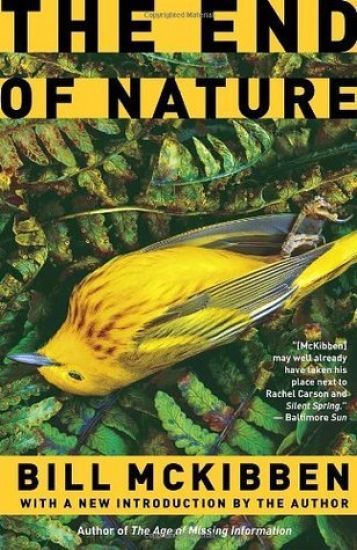
The End of Nature

The End of Nature

Bill McKibben

Penguin Classics
2022
pokkari
One of the earliest warnings about climate change and one of environmentalism's lodestars'Nature, we believe, takes forever. It moves with infinite slowness,' begins the first book to bring climate change to public attention.Interweaving lyrical observations from his life in the Adirondack Mountains with insights from the emerging science, Bill McKibben sets out the central developments not only of the environmental crisis now facing us but also the terms of our response, from policy to the fundamental, philosophical shift in our relationship with the natural world which, he argues, could save us. A moving elegy to nature in its pristine, pre-human wildness, The End of Nature is both a milestone in environmental thought, indispensable to understanding how we arrived here.
Gaia in Turmoil

Gaia in Turmoil

Bill McKibben

MIT Press
2009
pokkari
Essays link Gaian science to such global environmental quandaries as climate change and biodiversity destruction, providing perspectives from science, philosophy, politics, and technology.Gaian theory, which holds that Earth's physical and biological processes are inextricably bound to form a self-regulating system, is more relevant than ever in light of increasing concerns about global climate change. The Gaian paradigm of Earth as a living system, first articulated by James Lovelock and Lynn Margulis in the 1970s, has inspired a burgeoning body of researchers working across disciplines that range from physics and biology to philosophy and politics. Gaia in Turmoil reflects this disciplinary richness and intellectual diversity, with contributions (including essays by both Lovelock and Margulis) that approach the topic from a wide variety of perspectives, discussing not only Gaian science but also global environmental problems and Gaian ethics and education.Contributors focus first on the science of Gaia, considering such topics as the workings of the biosphere, the planet's water supply, and evolution; then discuss Gaian perspectives on global environmental change, including biodiversity destruction and global warming; and finally explore the influence of Gaia on environmental policy, ethics, politics, technology, economics, and education. Gaia in Turmoil breaks new ground by focusing on global ecological problems from the perspectives of Gaian science and knowledge, focusing especially on the challenges of climate change and biodiversity destruction. ContributorsDavid Abram, Donald Aitken, Connie Barlow, J. Baird Callicott, Bruce Clarke, Eileen Crist, Tim Foresman, Stephan Harding, Barbara Harwood, Tim Lenton, Eugene Linden, Karen Litfin, James Lovelock, Lynn Margulis, Bill McKibben, Martin Ogle, H. Bruce Rinker, Mitchell Thomashow, Tyler Volk, Hywel Williams
Eaarth: Making a Life on a Tough New Planet

Eaarth: Making a Life on a Tough New Planet

Bill McKibben

St. Martin's Griffin
2011
nidottu
"Read it, please. Straight through to the end. Whatever else you were planning to do next, nothing could be more important." --Barbara Kingsolver Twenty years ago, with The End of Nature, Bill McKibben offered one of the earliest warnings about global warming. Those warnings went mostly unheeded; now, he insists, we need to acknowledge that we've waited too long, and that massive change is not only unavoidable but already under way. Our old familiar globe is suddenly melting, drying, acidifying, flooding, and burning in ways that no human has ever seen. We've created, in very short order, a new planet, still recognizable but fundamentally different. We may as well call it Eaarth. That new planet is filled with new binds and traps. A changing world costs large sums to defend--think of the money that went to repair New Orleans, or the trillions it will take to transform our energy systems. But the endless economic growth that could underwrite such largesse depends on the stable planet we've managed to damage and degrade. We can't rely on old habits any longer. Our hope depends, McKibben argues, on scaling back--on building the kind of societies and economies that can hunker down, concentrate on essentials, and create the type of community (in the neighborhood, but also on the Internet) that will allow us to weather trouble on an unprecedented scale. Change--fundamental change--is our best hope on a planet suddenly and violently out of balance.
Maybe One: A Case for Smaller Families
In light of climate change warnings, more families are looking for ways to reduce their carbon footprint and help prevent disasters like rising sea levels, wildfires, and increasing global temperatures. In this compelling book, the author of The End of Nature and Falter argues for a solution with sociological, population, and environmental benefits: having fewer children. The earth is becoming dangerously overcrowded, and if more families chose to have only one child, it would make a crucial difference toward ensuring a healthy future for ourselves and our planet for generations to come. But the environment alone may not persuade most people to consider having just one child, as 80% of Americans have siblings. Powerful stereotypes about only children--that they're spoiled, selfish, or maladjusted in some way--still persist. McKibben, the proud father of an only child himself, debunks these myths, citing research about the many emotional and intellectual strengths only children possess, including higher test scores, higher levels of achievement in school, and greater development of positive personality traits like maturity and self-control. At once a powerful personal argument and an accessible exploration of what overpopulation could mean to human life and environmental sustainability, Maybe One is a provocative yet well-reasoned opening to what has become important and lasting debate.
The End of Nature

The End of Nature

Bill McKibben

Bloomsbury Publishing PLC
2003
nidottu
For centuries, humankind has taken nature for granted, treating it as invincible and as a wilderness apart from man. This text argues that if the world is to survive, we have to rethink this relationship.
Enough

Enough

Bill McKibben

Bloomsbury Publishing PLC
2004
nidottu
Sometime in the next few years, scientists may reprogramme a human egg or sperm cell, make a change in the genetic instructions carried by that cell, a change that will be passed on down into eternity. The scientific expertise exists to do this, as does the motivation: to erase the chance of inheriting a disease, to improve the intelligence or the stamina or the beauty of a child. On the brink of an era that may be defined by genetic engineering, McKibben asks: should this happen? He argues that genetic engineering and the technologies that lie beyond it will launch us free of our past, of our humanity, of meaning. We are sleepwalking towards a future that will take us far away from all we have known: Enough is our wake-up call.
Enough: Staying Human in an Engineered Age

Enough: Staying Human in an Engineered Age

Bill McKibben

St. Martin's Griffin
2004
nidottu
"Passionate, succinct, chilling, closely argued, sometimes hilarious, touchingly well-intentioned, and essential." --Margaret Atwood, The New York Review of Books Nearly fifteen years ago, in The End of Nature, Bill McKibben demonstrated that humanity had begun to irrevocably alter and endanger our environment on a global scale. Now he turns his eye to an array of technologies that could change our relationship not with the rest of nature but with ourselves. He explores the frontiers of genetic engineering, robotics, and nanotechnology--all of which we are approaching with astonishing speed--and shows that each threatens to take us past a point of no return. We now stand, in Michael Pollan's words, "on a moral and existential threshold," poised between the human past and a post-human future. McKibben offers a celebration of what it means to be human, and a warning that we risk the loss of all meaning if we step across the threshold. Instantly acclaimed for its passion and insight, this wise and eloquent book argues that we cannot forever grow in reach and power--that we must at last learn how to say, "Enough."
Deep Economy: The Wealth of Communities and the Durable Future
The bestselling author of The End of Nature issues an impassioned call to arms for an economy that creates community and ennobles our lives In this powerful and provocative manifesto, Bill McKibben offers the biggest challenge in a generation to the prevailing view of our economy. For the first time in human history, he observes, "more" is no longer synonymous with "better"--indeed, for many of us, they have become almost opposites. McKibben puts forward a new way to think about the things we buy, the food we eat, the energy we use, and the money that pays for it all. Our purchases, he says, need not be at odds with the things we truly value. McKibben's animating idea is that we need to move beyond "growth" as the paramount economic ideal and pursue prosperity in a more local direction, with cities, suburbs, and regions producing more of their own food, generating more of their own energy, and even creating more of their own culture and entertainment. He shows this concept blossoming around the world with striking results, from the burgeoning economies of India and China to the more mature societies of Europe and New England. For those who worry about environmental threats, he offers a route out of the worst of those problems; for those who wonder if there isn't something more to life than buying, he provides the insight to think about one's life as an individual and as a member of a larger community. McKibben offers a realistic, if challenging, scenario for a hopeful future. Deep Economy makes the compelling case that the more we nurture the essential humanity of our economy, the more we will recapture our own.
The Age of Missing Information

The Age of Missing Information

Bill McKibben

Random House Trade
2006
nidottu
"Highly personal and original . . . McKibben goes beyond Marshall McLuhan's theory that the medium is the message."----The New York Times Imagine watching an entire day's worth of television on every single channel. Acclaimed environmental writer and culture critic Bill McKibben subjected himself to this sensory overload in an experiment to verify whether we are truly better informed than previous generations. Bombarded with newscasts and fluff pieces, game shows and talk shows, ads and infomercials, televangelist pleas and Brady Bunch episodes, McKibben processed twenty-four hours of programming on all ninety-three Fairfax, Virginia, cable stations. Then, as a counterpoint, he spent a day atop a quiet and remote mountain in the Adirondacks, exploring the unmediated man and making small yet vital discoveries about himself and the world around him. As relevant now as it was when originally written in 1992-and with new material from the author on the impact of the Internet age-this witty and astute book is certain to change the way you look at television and perceive media as a whole. "By turns humorous, wise, and troubling . . . a penetrating critique of technological society."-Cleveland Plain Dealer "Masterful . . . a unique, bizarre portrait of our life and times."-Los Angeles Times "Do yourself a favor: Put down the remote and pick up this book."-Houston Chronicle
The End of Nature

The End of Nature

Bill McKibben

Random House Trade
2006
nidottu
Addressing the moral and practical aspects of dealing with environmental issues, this study spells out the tragic consequences of the greenhouse effect and discusses options for avoiding ecological calamity. Reprint. 20,000 first printing.
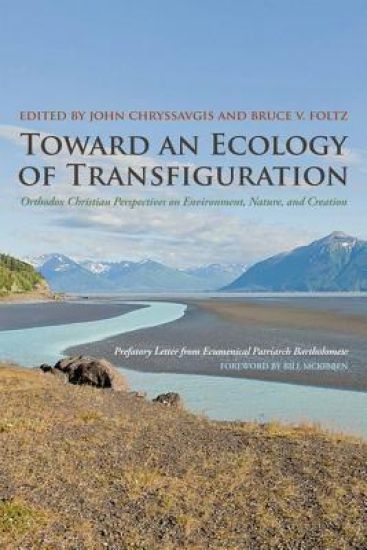
Toward an Ecology of Transfiguration

Toward an Ecology of Transfiguration

Bill McKibben

Fordham University Press
2013
sidottu
Can Orthodox Christianity offer spiritual resources uniquely suited to the environmental concerns of today? This book makes the case emphatically that it can indeed. In addition to being the first substantial and comprehensive collection of essays, in any language, to address environmental issues from the Orthodox point of view, this volume (with contributions from many of the most influential theologians and philosophers in contemporary world Orthodoxy) will engage a wide audience, in academic as well as popular circles—resonating not only with Orthodox audiences but with all those in search of a fresh approach to environmental theory and ethics that can bring to bear the resources of ancient spirituality, often virtually unknown in the West, on modern challenges and dilemmas.
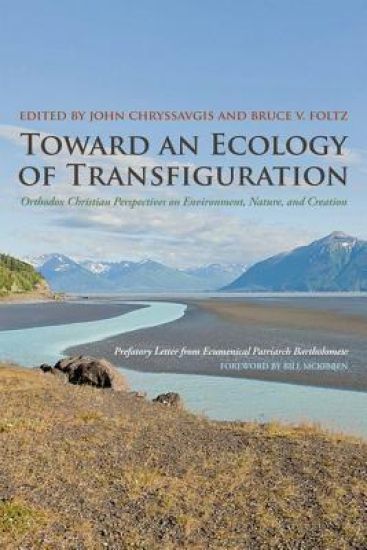
Toward an Ecology of Transfiguration

Toward an Ecology of Transfiguration

Bill McKibben

Fordham University Press
2013
pokkari
Can Orthodox Christianity offer spiritual resources uniquely suited to the environmental concerns of today? This book makes the case emphatically that it can indeed. In addition to being the first substantial and comprehensive collection of essays, in any language, to address environmental issues from the Orthodox point of view, this volume (with contributions from many of the most influential theologians and philosophers in contemporary world Orthodoxy) will engage a wide audience, in academic as well as popular circles—resonating not only with Orthodox audiences but with all those in search of a fresh approach to environmental theory and ethics that can bring to bear the resources of ancient spirituality, often virtually unknown in the West, on modern challenges and dilemmas.
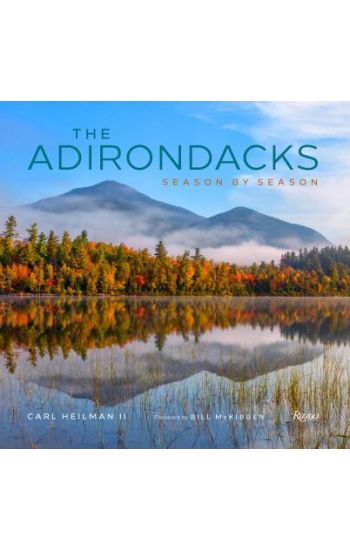
The Adirondacks

The Adirondacks

Bill McKibben

Rizzoli International Publications
2017
sidottu
Covering more ground than Yellowstone, Yosemite, and the Grand Canyon combined, the Adirondack Park is one of the great wilderness areas in this country. This volume presents an all-new selection of images, with a focus on how the seasons transform the landscape: the tree-covered mountains in autumnal glory, rivers hushed by winter snow, verdant meadows alive with spring, wildlife such as bears and moose, as well as historic resorts and villages. Each chapter covers a different corner of the park, from Lake Placid and the High Peaks to Saranac Lake, Lake George, and the Fulton Chain. To appreciate the wonders of the Adirondacks through the lens of one of the area s most accomplished photographers is like exploring them for the first time.
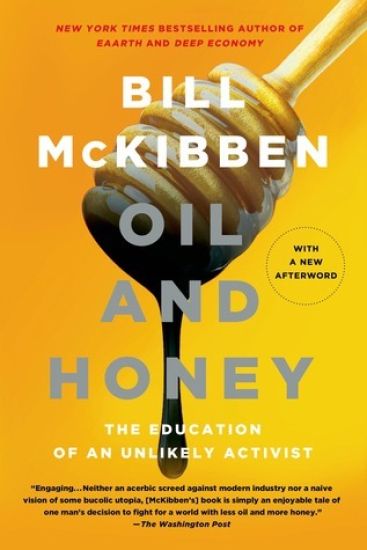
Oil and Honey

Oil and Honey

Bill McKibben

Saint Martin's Griffin,U.S.
2014
nidottu
With the Arctic melting, the Midwest in drought, and Irene scouring the Atlantic, McKibben recognized that action was needed if solutions were to be found. Some of those would come at the local level, where McKibben joins forces with a Vermont beekeeper raising his hives as part of the growing trend toward local food. Other solutions would come from a much larger fight against the fossil-fuel industry as a whole. Oil and Honey is McKibben's account of these two necessary and mutually reinforcing sides of the global climate fight - from the centre of the maelstrom and from the growing hive of small-scale local answers. With empathy and passion he makes the case for a renewed commitment on both levels, telling the story of raising one year's honey crop and building a social movement that's still cresting.
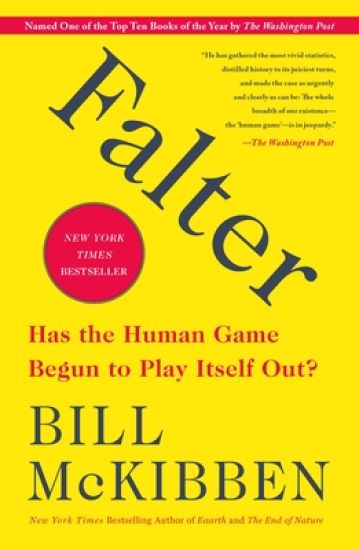
Falter: Has the Human Game Begun to Play Itself Out?
Thirty years ago Bill McKibben offered one of the earliest warnings about climate change. Now he broadens the warning: the entire human game, he suggests, has begun to play itself out. Bill McKibben's groundbreaking book The End of Nature -- issued in dozens of languages and long regarded as a classic -- was the first book to alert us to global warming. But the danger is broader than that: even as climate change shrinks the space where our civilization can exist, new technologies like artificial intelligence and robotics threaten to bleach away the variety of human experience. Falter tells the story of these converging trends and of the ideological fervor that keeps us from bringing them under control. And then, drawing on McKibben's experience in building 350.org, the first truly global citizens movement to combat climate change, it offers some possible ways out of the trap. We're at a bleak moment in human history -- and we'll either confront that bleakness or watch the civilization our forebears built slip away.Falter is a powerful and sobering call to arms, to save not only our planet but also our humanity.