Kirjojen hintavertailu. Mukana 11 244 527 kirjaa ja 12 kauppaa.

Kirjahaku

Etsi kirjoja tekijän nimen, kirjan nimen tai ISBN:n perusteella.

1000 tulosta hakusanalla Bill O'Neal

Encyclopedia of Western Gunfighters

Encyclopedia of Western Gunfighters

Bill O'Neal

University of Oklahoma Press
1991
nidottu
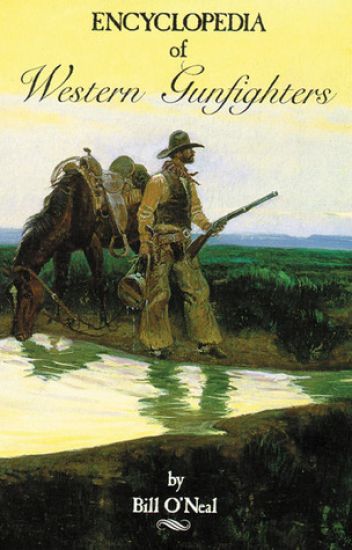
Much information (some of it factual, a lot of it fictional) is available about the famous gunfighters of the Old West - the Jameses, Billy the Kid, Wild Bill Hickok, Wyatt Earp, John Wesley Hardin, and that latter-day folk idol, Butch Cassidy. Dozens of less-well-known but sometimes even more murderous gunslingers - such men as Cullen Baker, Harvey Logan, Longhaired Jim Courtright, and Mysterious Dave Mather - have received only scant mention in scattered accounts.This encyclopedia - a who's who of the gunfighting West-provides a compilation of facts, sifted myths, folklore, and outright lies, about the lives and deaths of 255 men, both the famous and the all but forgotten. Also included are detailed accounts of the almost six hundred gunfights the men took part in, mostly between the end of the Civil War and the turn of the century.Each entry follows a concise and useful format: an alphabetical listing of the gunman; nicknames or aliases; dates and places of birth and death, is known; the occupations the man pursued; a brief biography; and, in chronological order, accounts of the verified gunfights in which he participated. In the Introduction, from the information he amassed in this volume, Bill O'Neal provides a fascinating summary of the data and offers new insights into the nature of the western gunmen and of the feuds and fights that bloodied the West. For example, he relates how a large number of the gunfighters used guns as tools of their trades, legitimate and otherwise - lawmen and detectives, buffalo hunters, army scouts, thieves, hired killers, and the like. Of the gunfighters included here 108 served as law officers at some time in their careers. The average lifespan, including those who died of natural causes, was forty-seven years, and more than 50 percent of the gunmen died from gunshot wounds.Encyclopedia of Western Gunfighters offers a unique compilation of information about these men - a comprehensive and reliable source.
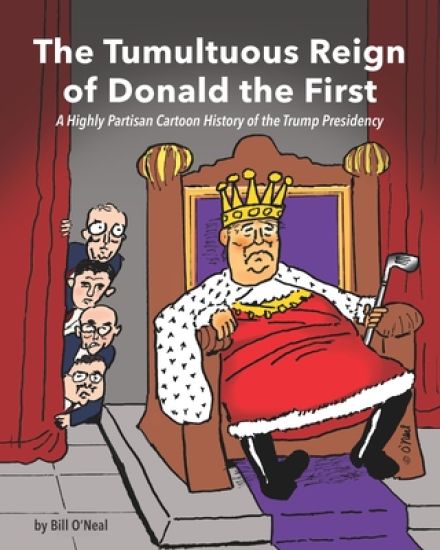
The Tumultuous Reign of Donald the First: A Highly Partisan Cartoon History of the Trump Presidency
This sardonic cartoon history chronicles the presidency of Donald Trump, from his first inaugural tweets to his bizarre final days in office. Trump's many personas are on full display, including Trumpzilla, Tariffman, World's Greatest Diplomat and, of course, King Donald the First. Each of the book's 150 cartoons is accompanied by a commentary providing historical context. The cartoons, in turn, provide the political bite.
Frontier Forts of Texas

Frontier Forts of Texas

Bill O'Neal

Arcadia Publishing (SC)
2018
irtolehti
These mailable vintage-photograph postcards document the frontier period in Texas, where more combat events transpired between Native American warriors and Anglo soldiers and settlers than any other state or territory. The US Army, therefore, erected more military outposts in Texas, a tradition begun by Spanish soldados and their presidios. Settlers built blockhouses and even stockades, the most famous of which was Parker's Fort, the site of an infamous massacre in 1836. Successive north to south lines of Army forts attempted to screen westward-moving settlers from war parties, while border posts stretched along the Rio Grande from Fort Brown on the Gulf of Mexico to Fort Bliss at El Paso del Norte. Texas was the site of the first US Cavalry regiment employed against horseback warriors, as well as the experimental US Camel Corps. From Robert E. Lee to Albert Sidney Johnston to Ranald Mackenzie, the Army's finest officers served out of Texas forts, and 61 Medals of Honor were earned by soldiers campaigning in the Lone Star State.
Frontier Forts of Texas

Frontier Forts of Texas

Bill O'Neal

Arcadia Publishing Library Editions
2018
sidottu
These mailable vintage-photograph postcards document the frontier period in Texas, where more combat events transpired between Native American warriors and Anglo soldiers and settlers than any other state or territory. The US Army, therefore, erected more military outposts in Texas, a tradition begun by Spanish soldados and their presidios. Settlers built blockhouses and even stockades, the most famous of which was Parker's Fort, the site of an infamous massacre in 1836. Successive north to south lines of Army forts attempted to screen westward-moving settlers from war parties, while border posts stretched along the Rio Grande from Fort Brown on the Gulf of Mexico to Fort Bliss at El Paso del Norte. Texas was the site of the first US Cavalry regiment employed against horseback warriors, as well as the experimental US Camel Corps. From Robert E. Lee to Albert Sidney Johnston to Ranald Mackenzie, the Army's finest officers served out of Texas forts, and 61 Medals of Honor were earned by soldiers campaigning in the Lone Star State.
Sam Houston Slept Here

Sam Houston Slept Here

Bill O'Neal

Eakin Press
2004
pokkari
More than 250 on-site photographs illustrate this tour of homes of many of the Lone Star State's most powerful political leaders. From the Governor's Mansion in Austin to the Texas White House near Johnson City, from Sam Houston's ?Wigwam? in Huntsville to the Eisenhower birthplace in Denison, almost a score of homes of Texas governors and presidents are open to the public. Two fine Victorian residences which once were governors? homes now are B&Bs, in Galveston and Weatherford. Another three dozen houses, while privately owned today, may be viewed when driving through homestowns from Lubbock to LaPorte, from Uvalde to Haskell. This travel book provides directions to these houses, as well as photos and stories of the men and women and their families who brought life to these plantation homes, log cabins, ranch houses, and mansions.
The Johnson-Sims Feud

The Johnson-Sims Feud

Bill O'Neal

University of North Texas Press,U.S.
2012
nidottu
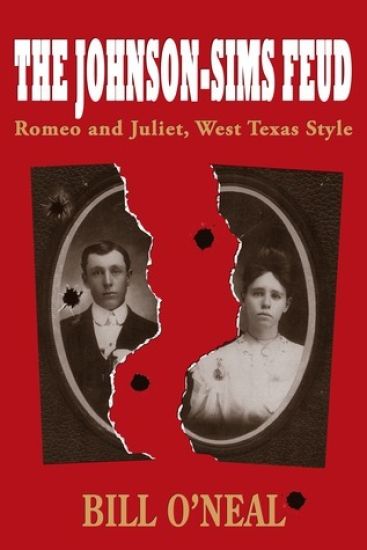
In the early 1900s, two families in Scurry and Kent counties in West Texas united in a marriage of fourteen-year-old Gladys Johnson to twenty-one-year-old Ed Sims. Billy Johnson, the father, set up Gladys and Ed on a ranch, and the young couple had two daughters. But Gladys was headstrong and willful, and Ed drank too much, and both sought affection outside their marriage. A nasty divorce ensued, and Gladys moved with her girls to her father’s luxurious ranch house, where she soon fell in love with famed Texas Ranger Frank Hamer. When Ed tried to take his daughters for a prearranged Christmas visit in 1916, Gladys and her brother Sid shot him dead on the Snyder square teeming with shoppers. One of the best lawyers in West Texas, Judge Cullen Higgins (son of the old feudist Pink Higgins) managed to win acquittal for both Gladys and Sid. In the tradition of Texas feudists since the 1840s, the Sims family sought revenge. Sims’ son-in-law, Gee McMeans, led an attack in Sweetwater and shot Billy Johnson’s bodyguard, Frank Hamer, twice, while Gladys—by now Mrs. Hamer—fired at another assassin. Hamer shot back, killed McMeans, and was no-billed on the spot by a grand jury watching the shootout through a window. An attempt against Billy Johnson failed, but a three-man team shotgunned the widely respected Cullen Higgins. Texas Rangers and other lawmen caught one of the assassins, extracted a confession, and then prompted his “suicide” in a Sweetwater jail cell.
War in East Texas

War in East Texas

Bill O'Neal

University of North Texas Press,U.S.
2018
nidottu
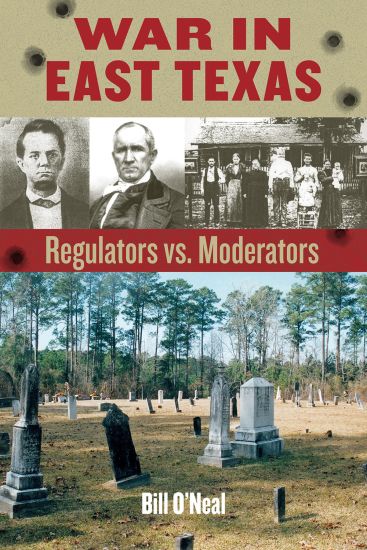
From 1840 through 1844 East Texas was wracked by murderous violence between Regulator and Moderator factions. More than thirty men were killed in assassinations, lynchings, ambushes, street fights, and pitched battles. The sheriff of Harrison County was murdered, and so was the founder of Marshall, as well as a former district judge. Senator Robert Potter, a signer of the Texas Declaration of Independence, was slain by Regulators near his Caddo Lake home. Courts ceased to operate and anarchy reigned in Shelby County, Panola District, and Harrison County. Only the personal intervention of President Sam Houston and an invasion of the militia of the Republic of Texas halted the bloodletting.The Regulator-Moderator War was the first and largest of the many blood feuds of Texas. Bill O'Neal includes rosters of names of the Regulator and Moderator factions arranged by the counties in which the individuals were associated, along with a roster of the victims of the war.