Kirjahaku
Etsi kirjoja tekijän nimen, kirjan nimen tai ISBN:n perusteella.
1000 tulosta hakusanalla Birger L. Johnson

Le berger de l'estive
BoD - Books on Demand
2025
pokkari
If time suddenly stopped, and you began to retrace every step in your own life, there would no doubt be some things you would want to avoid or change. Of course, that is impossible... or is it? We live in an expanding universe where time flows from the past into the future. However, time flows at different rates even within our galaxy, depending upon one's location within it. What if our universe is not the only one that exists? There may be other universes where time flows from the future to the past. What would a world like ours look like in such a universe? Life would begin at the end of our lives, rather than at the beginning. On such a world, our planet's history would be speculative at best, but our prophetic foresight would be 20/20. The dead would rise out of their graves daily. Drowned sailors would come out of the seas, and the cremated would emerge like the legendary phoenix out of scattered ashes. The resurrection of the dead would be commonplace in such a world. What will heaven truly be like?
You may have wondered who first penned the biblical Genesis account and where its familiar stories originated. Many believe it was written by Moses. Others consider it merely a collection of older fables that were restructured and compiled after the Jews returned from exile in Babylon. Recently, scholars have uncovered another explanation that defies belief! The first intelligent life on Earth may have arrived here from another world, according to a number of recently discovered 5,000 year-old cuneiform texts. This fantastic tale may have actually been documented by an individual who claimed to be one of many ancient explorers who traveled to Earth from another planet. In the oldest Mesopotamian myths, he is credited with having made the first humans and guiding the development of Earth's first civilization. Written in his own words, the author of this book's ancient autobiographical account may have been the creator of mankind. His influence can be found in every major religion on our planet.
This lucid book presents the discipline of sociology to both the general reader and the student. Viewing sociology in the humanist tradition, Berger points out its affinity to history and philosophy, as well as its need for scientific procedures.




Mae is a shy, but not so naive young woman, hopeful in starting her new life alone. She wants to attend college for the arts, get a job, and begin an independent life in a brand new town. Renting an inexpensive guesthouse sounds like a perfect start. Until she discovers a hidden duffel bag and finds herself over-her-head in clues that grow sinister. There's a missing girl in town, Genevieve. Who is Genevieve and what happened to her? Genevieve too had lived at this guesthouse, that's all Mae knows. The police get involved and then Mae turns up missing. This quiet town has secrets... and some secrets beg to stay buried. This rollercoaster ride never lessons as we follow Mae, Genevieve, and more, on a tale-by-tale story that intertwines and unveils a final surprising conclusion. One spark, one moment in time, one accident... can ignite a fire that spreads and cannot be controlled. "Justice, revenge, compassion, and grief, are emotions that can overtake one's soul." Will Mae bring hope? Will she find the answers in time? Will she get justice? ...and will she survive?


The first in the 3:33 series, chronicling the bizarre life of the man who calls himself Jackson. A former demon hunter gone rogue, the world turns upside down when Jackson wakes up to find himself changed- and remarkably not dead. Revenge is a dish best served cold, a lesson that will be painfully clear to everyone who has wronged the angry man.
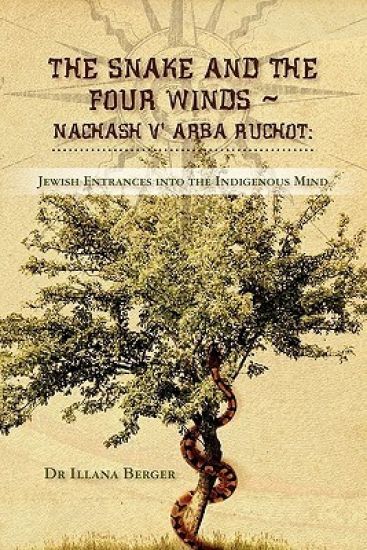
The Snake and the Four Winds Nachash v' Arba Ruchot
Illana L Berger
Createspace Independent Publishing Platform
2010
pokkari
The Snake and the Four Winds explores the ancient tribal traditions, ritual, ceremonies and mind of the ancient tribal Jews called Ivrim. Dr. Berger shares with the reader a new way of understanding Judaism as a tribal tradition. Resourcing the Kabbalah, Torah, Talmud and the teachings of the ancient shamans Illana brings a new vision to the Jewish tradition.The book takes you into the world of Ancestors, ancient meditation practices, Jewish shamanic practices, Jewish healing and a process of remembering that is quite profound.The vision for this book is to revive the traditional tribal ways of the ancient Jewish culture and to re-awaken the balance of the masculine and feminine aspects of wisdom, knowledge, and Divinity inherent in Jewish traditional ways of life. It is intended to affect and stimulate the healing of the soul through a process of remembering the old ways of being/knowing embraced by ancient Jewish people. It is designed to inspire the cultural and ancestral memory of readers to become conscious of their connection to the living world just as their ancient ancestors did and begin to cultivate this consciousness and awareness in their daily lives.The Snake and the Four Winds is a book also a personal story that contextualizes the author's life and the changes that have transpired during the course of her life within the shamanic tribal tradition of the Jewish culture. These narratives also chronicle the lives of her Ancestors . Using indigenous science and methods for remembering her indigenous mind, Illana discovered a deep and profound healing in her own life. This book carries the stories of her journey, the teachings of her ancestors, elders, mentors, guides, G-ds, and G-ddesses and embodies the story of her own healing, from colonization, within the healing paradigm of her ancient Ancestral tradition.

High Times & Rough Rides of a Bipolar Addict
Kerry L Barger
Createspace Independent Publishing Platform
2010
pokkari
"If anyone can prevent even a single child or teenager from repeating the mistakes described in this book... or help a loved one or family member avoid unnecessary future suffering... then my struggles will not have been in vain." Imagine being arrested, handcuffed and locked behind the bars of a dark, cold, jail cell. The next day you are forcibly dragged to a downtown high-rise and thrust into a 4' x 8' steel-walled cage. Your freedom has been ripped away, even though you haven't been charged with a single crime. The prison guard tells you, "They are going to lock you up and throw away the key " You are driven to an insane asylum where a psychiatrist orders mandatory shock treatments. You are strapped to a gurney, electrodes are stuck to your temples, and a rubber mouthpiece is forced between your teeth. When the first electric voltages pass through your brain, your heart stops. You are revived, then given a series of nine more ECT treatments without anesthesia. Each one feels like a sledge hammer to your head. Your memories fade into a fog, and you feel like a zombie... one of the walking dead. You remain confined indoors and inappropriately medicated for months, because you were misdiagnosed as a drug-induced paranoid schizophrenic. You are a teenage bipolar addict with a mood disorder, OCD, and claustrophobia The torture of your confinement, the shock therapy, and being forced to take massive daily doses of the wrong medication leaves you morbidly depressed and obsessed with suicide. While locked away, your father dies and your girlfriend abandons you. Then one day you are released and simply told to "Have a nice life " More substance abuse soon changes your obsession with your own death into a compulsion... one that leaves the blood squirting from your wrist as cold as the dirt you're lying in, while just waiting and hoping to die. The following review was written by Priscilla Estes: "Below are my five recommendations to avoid going insane (like I did) and to avoid insuring that you become some kind of worthless, pathetic, immoral, blubbering idiot in the future." The cover shows an adorable pre-school cowboy clutching matching six-shooters and grinning at the camera. The Roy Rogers image belies the misery on the pages that follow. What started as a private, therapeutic journal steamrolled into an honest account of a life derailed by grief, drugs, and addictive relationships. Barger does not apologize, make excuses or ask forgiveness for the way he lived his life. He merely tells it, exposing warts, pimples and pus. He chose to take drugs, have affairs and break the law. If this were a novel, he would not be a sympathetic main character. And he'd be the first to agree, describing himself as "moral scum," and his need for love "pathetic." Even so, Barger's unapologetic denigration of self renders him vulnerable and strangely likeable. After all, he didn't choose his broken, alcoholic family; he didn't choose institutionalization and ten electro-convulsive therapy (shock) treatments at age seventeen; he didn't choose genetic mental illness and a deep, gnawing emptiness inside. But he did choose to devote his life to working with the handicapped in state mental facilities in Texas and to write this book. Barger's factual style, callous accounts of womanizing and angry outbursts are sometimes uncomfortable to read. A drifting narrative ignores potentially insightful inroads. And the final nine pages, explaining the purpose of the book, should have come first, although we have learned that it is indeed being reorganized for production. The book is a brave chronicle of how not to live and admonishes readers to follow their bliss, go for their dreams, and never give up. --The U.S. Review (www.theusreview.com/reviews/High-Barger.html) Priscilla Estes is an Independent Writing and Editing Professional, Director of The Christian Life Center, and on the faculty of ETSU for 24 years.
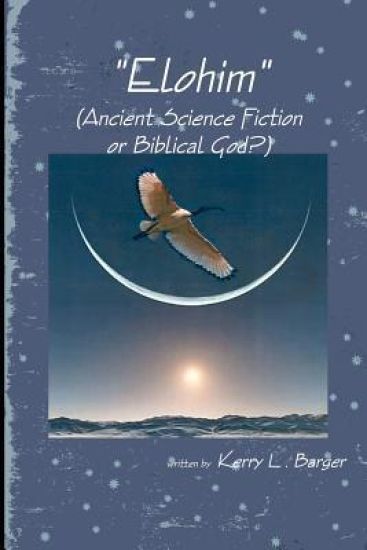
You may have wondered who first penned the biblical Genesis account and where its familiar stories originated. Many believe it was written by Moses. Others consider it merely a collection of older fables that were restructured and compiled after the Jews returned from exile in Babylon. Recently, scholars have uncovered another explanation that defies belief The first intelligent life on Earth may have arrived here from another world, according to a number of recently discovered 5,000 year-old cuneiform texts. This fantastic tale may have actually been documented by an individual who claimed to be one of many ancient explorers who traveled to Earth from another planet. In the oldest Mesopotamian myths, he is credited with having made the first humans and guiding the development of Earth's first civilization. Written in his own words, the author of this book's ancient autobiographical account may have been the creator of mankind. His influence can be found in every major religion on our planet. Each reader must decide for himself whether or not the portrayal of events in this book is plausible. You can make that decision based on the evidence described in these pages. Or... you could spend the rest of your life researching and investigating every scrap of available data. Regardless of your personal beliefs, a lingering doubt will likely remain about any final decision you make on the matter of our human origins... at least until undeniable proof is forthcoming. The following is an editorial review by Peter M. Fitzpatrick: "I have sought to find additional truths underlying biblical texts by researching historical and archeological data." Sumerian literature, lately rediscovered through archeological relics over 5,000 years old, is composed of cuneiform letters that are difficult to translate. As a result, widely varying interpretations of its meaning have fueled controversial theories, the most famous perhaps being those of Zechariah Sitchin. His ideas about ancient astronauts from a planet beyond Neptune that mine gold on Earth by genetically engineering Homo erectus with their own DNA to produce Homo Sapiens, are echoed here. Kerry frames his narrative in the recollections of the Biblical Nehemiah as he is returning to Israel after the Babylonian Captivity. His memory of the Sumerian shards he was made to translate lead to a "flashback" style of recasting the Book of Genesis retold as if "Elohim" was in fact an ancient astronaut. The planet of origin is updated to the recently mapped Eris, 27 percent] more massive than Pluto. All "tree-of life" references are interpreted as being symbolic of DNA strands. The book is very heavy on theme, of course, the Biblical language of the ancient astronauts almost a word-for-word transliteration of passages from Genesis. As such, the characters are not deeply fleshed out, their function chiefly being to argue the author's thesis. The plot is Epic, of course, the creation of modern humans, but that is not the author's concern, really. His main purpose is to re-affirm a transcendent God behind it all, and to reconcile Sitchin's theories with religious belief. Not likely to be carried by Christian bookstores, the writer is nevertheless committed to a Christian belief. --The US Review of Books @ http: //www.theusreview.com/reviews/Elohim-Barger.html
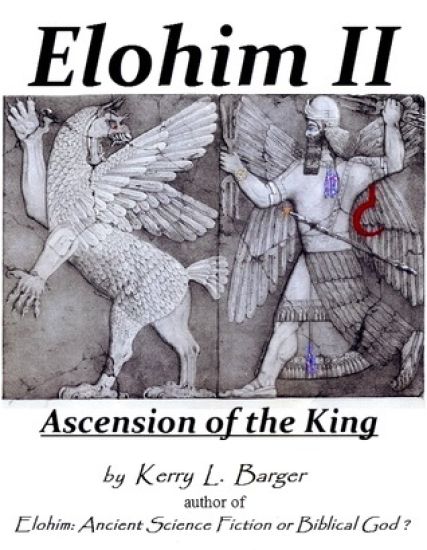
This book is the sequel to "Elohim: Ancient Science Fiction or Biblical God?" It explores what may have been and offers a glimpse at those who could soon be returning to Earth in our very near future. At the core of the facts presented within these chapters, lies a conundrum. There once existed an author who claimed to be the creator of the human race, and he wrote down his memoirs over 5,000 years ago. His tale evolved into many ancient religions. The question is, was he actually an alien being who came to Earth from another planet and wrote a truthful autobiography, or was his book a science fiction novel written by a mere mortal? Either scenario reveals a compelling reality: an ancient, pre-historic society once thrived on our planet that either rivaled or exceeded our modern achievements in science and space technology. There are many unanswered questions common to mankind: "Who or what is God?" and "Where did He come from?" The biblical book of Genesis states that God (written as "Elohim" in the original Hebrew) created the universe and all living things on our planet in six days. However, scientists now calculate that the universe has existed for around 13.8 billion years and that modern man evolved into Homo sapiens around 200,000 years ago. How can these conflicting ideas be reconciled? An author who once claimed to be the creator of the human race wrote down his memoirs over 5,000 years ago. His tale evolved into many ancient religions. Was he actually an alien being who came to Earth from another planet, or a mere mortal? You decide.
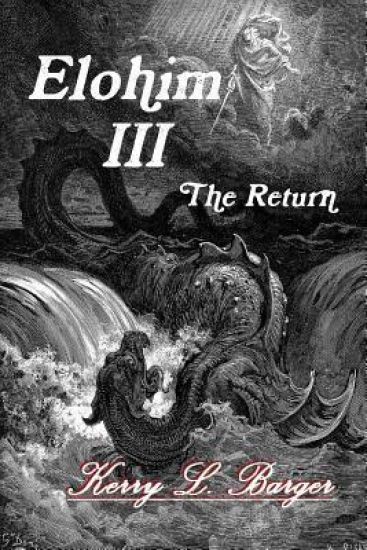
RECOMMENDED by the US Review of Books World War III has begun According to a current list of reported UFO sightings, few documented reports exist from the time of Classical antiquity until the 1940's. However, one of the first and most reliable descriptions of a mass UFO sighting was written by the historian, Josephus, following the siege and destruction of Jerusalem in 70 A.D., when he wrote the following: "...Thus there was a star resembling a sword, which stood over the city... at the ninth hour of the night, so great a light shone round the altar and the holy house, that it appeared to be bright day time; which lasted for half an hour. This light seemed to be a good sign to the unskillful, but was so interpreted by the sacred scribes, as to portend those events that followed immediately upon it... before sunsetting, chariots and troops of soldiers in their armor were seen running about among the clouds, and surrounding of cities." "Elohim III: The Return" is the third and final book in this author's controversial "Elohim" series, which began with "Elohim: Ancient Science Fiction or Biblical God?" and was recently followed by "Elohim II: Ascension of the King". It examines critical events in world history related to UFO activity and reveals the next stage in mankind's rapidly approaching evolution or ultimate extinction. "The future is here " "In humans, the immediate effect of consuming the fruit of the knowledge of good and evil (Dragon Fire fruit or its extracts) is an increase in aggression." "In the stunning conclusion to the Elohim series, the reader finds out more about the Anunna aliens and their dealings with humanity. The author describes the Anunna as a highly-advanced civilization living on the distant planet Eris, but humans have largely ignored their existence. According to the author, the Eridians have created humans by fusing their own genes with lower hominid forms. In this final installment of the trilogy, Elohim, the ruler of the Anunna, Immanuel (resurrected Jesus), and their armies are planning an invasion to Earth to completely overturn our political and economic systems and assume a complete rulership over Earth's nations. Elohim's armies want to restore order in the world, but no one will know when they will arrive because of their superior cloaking devices and technology on their ships. This fascinating book melds factual information, such as biblical facts, historical events, and technology with science fiction. The author's tone is readable and matter-of-fact, and each chapter contains inventive information, which will please SF&F aficionados, lovers of UFO mysteries and sightings, and people who like non-traditional interpretations of the Bible. Particularly of note were the author's origins of the manna, which was, according to the Bible, a food source fed to the starving Israelites in the desert. According to Barger, it is a fruit consumed by the Seraphim (dragons) on Eris. This is a fascinating portrayal of the origins of humanity and what lies ahead for us as a species, also a perfect read for lovers of UFO, biblical mysteries, and SF&F in general." --by Caroline Blaha-Black. (See the complete editorial review which is posted at theusreview.com/reviews/Elohim-Barger-3.html )
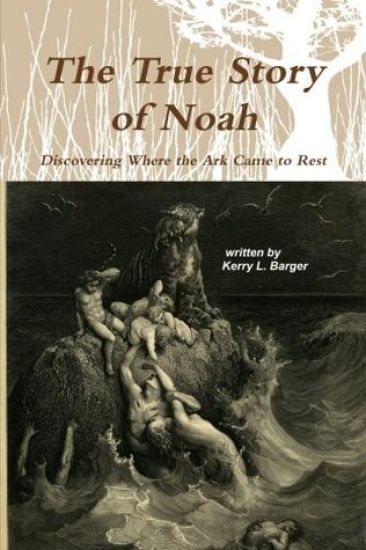
Noah's "Hill of Salvation" has been found You can examine it for yourself using modern satellite imagery. This book presents the best evidence to date as to the precise location where Noah's ark came to rest, which many throughout history have unsuccessfully attempted to identify in various, remote locations throughout the world. While every detail in the actual Noachian narrative has yet to be determined, the gaps that remain have grown more and more narrow with each new archaeological discovery related to this subject. This book presents those that are presently known, in addition to compelling new evidence for where Noah's ark came to rest following the Great Flood of Genesis. What remains is still a matter open for speculation and debate. Those gaps can be filled with the plausible or the implausible, the miraculous or the mundane. The author has chosen to fill them with what is probable, in light of the context and what has actually been discovered from the most recent scientific studies of ancient Mesopotamia. The following editorial review by Mihir Shah is posted at http: //www.theusreview.com/reviews/True-Barger.html "The ark was massive by any standard, covering an area roughly the size of a football field and 60 feet from top to bottom."The True Story of Noah: Discovering Where the Ark Came to Rest explores the origins of this well known biblical story from a unique angle. Using related literature and information provided, Barger probes further to understand the likeliest resting spot of the ark. In the process, he provides a deluge of enriching historical information that revolves around the life of Noah and the origins of man. Barger's discourse is intriguing and would particularly spark engaging conversation in a college humanities lecture. Although the text can be a bit dry, references to many familiar figures from creation myths and stories, such as The Epic of Gilgamesh, will keep the reader involved. Nevertheless, it is imperative to understand that this book is just as much about the story of how Noah came to be as it is about the final resting spot of the ark. Ultimately, the extensively detailed journey from what is essentially the beginning of mankind to the birth of Noah is necessary to understand the direction of Noah's life and why he was perceived to be made from the likeness of the gods. Barger's research uses documented dimensions in cubit units of the ark and converts them into feet. He discovers the ark to be roughly 600 feet long and 100 feet wide, which is approximately similar to the size of the scar that is visible on the Hill of Salvation near the ancient city of Shuruppak. Before delving into Noah's life, the author takes readers on an imaginary journey beginning with the search for the first man, Adam, in 5500 B.C. This first scene shows mankind at its most primitive and has the feel of the Congo jungle scenes in Joseph Conrad's Heart of Darkness. Later in the journey, yet prior to Noah's existence, readers will encounter the city of Eridu, the Enki priests and temples, and the biblical figures that form Noah's heritage. Interestingly, the author references theories that Noah may have been an albino, whose white skin made society think he was made in the likeness of the gods. The concept of white being superior to black, the story suggests, is deep rooted to ancient times. Overall, Barger ties in passages from popular narratives like The Epic of Gilgamesh and references experts of ancient literature to dig deeper and present parallels and unique insight. For serious readers of the humanities who have a passion for ancient, biblical history and how it came to be, Barger's story is a worthwhile read. --The U.S. Review

All of the photos in this version are black & white.] "Darla the Muse" is a fictional story about one man's obsession with a woman who inspires his writing. In addition to her prayers on his behalf, his letter to her eventually permits him entry into the afterlife. However, his questionable character must be tested a final time to ensure that he has developed an adequate moral compass... or face a second and final death, from which there is no return. The following editorial review was written by Anita Lock, The U.S. Review of Books: "Only the pure essence of the divine feminine lifegiver can liberate a mortal man to create the most lovely and most beautiful of all handiworks." When Erik Eckerd first meets Darla at an IHOP restaurant, he knows that there is something special about the young lady. Old enough to be Darla's father, the late fifty-year-old Erik begins to pursue Darla, and even more so after his immense research on the term "muse" and learning about Muse's powerful connection with mortal beings. Now fully enamored with Darla but not revealing his true feelings toward her, Erik finds out that Darla is engaged. Although he shares his deepest thoughts and tells her about "the secret of a happy marriage" in a letter just prior to her wedding day, the two amicably go their separate ways. Heading to Vegas and after ineffectively attempting to rekindle his previous Muse, Erik meets and marries a prostitute. What follows is a bizarre turn of events that eventually leads him back to the woman of his dreams, Darla the Muse. Author of numerous history-related novels, Kerry L. Barger spins a tale that is sated with spirituality. Barger's third-person narrative focuses on one man's journey in search of the one woman in the form of a Muse who can inspire him "to heavenly pursuits". Amid Erik's conversations with Darla and his personal musings about the young goddess, Barger covers a vast amount of information from celebrity relationships (i.e., Woody Allen and Soon-Yi Previn); Greek and Roman history; Greek, Chinese, and various Middle-Eastern mythology and legends; to all things erotica and beyond into the astral realm. Barger's novel is well written and researched. Yet readers who hope to delve into a light yet spicy story will be greatly disappointed since Barger's novel weighs heavier on the philosophical than on the story's plot. Indeed, Darla the Muse is earmarked for readers who desire nothing less than the deeper spiritual aspects of erotica. RECOMMENDED by the USR at http: //www.theusreview.com/reviews/Darla-Barger.html (This book deals with mature subject matter and is only recommended for adults over 18 years of age.)