Kirjojen hintavertailu. Mukana 11 348 683 kirjaa ja 12 kauppaa.

Kirjahaku

Etsi kirjoja tekijän nimen, kirjan nimen tai ISBN:n perusteella.

1000 tulosta hakusanalla Blaise Cendrars

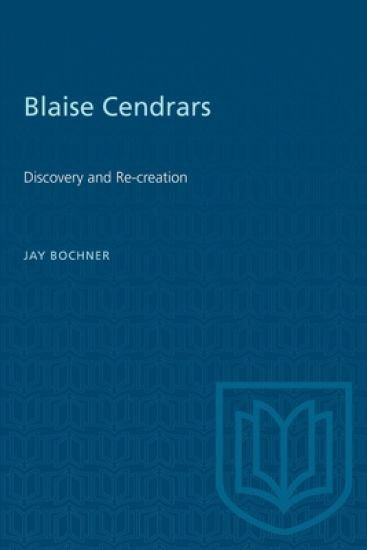
Blaise Cendrars

Blaise Cendrars

Jay Bochner

UNIVERSITY OF TORONTO PRESS
1978
pokkari
In Blaise Cendrars: Discovery and Re-creation, Jay Bochner presents a revealing account of Cendrars' life and established the imoprtance of his work in the mainstream of modern literature. Prolific and versatile, Cendrars wrote poetry, radio plays, novels, essays, autobiography, and books on the cinema. An early contributor to the Dada movement, he was at the forefront of the Paris avant-garde before and after the first world war, and his powerful poetic style influenced such writers as Apollinaire, Henry Miller, and John Dos Passos. Although he was well known to the French reading public, lavishly praised by his peers, and well received by the important critics of his day, Cendrars' critical reputation has not endured. The first part of the book is biographical, and in this section Professor Bochner suggests that the reasons for Cendrars' obscurity have more to do with his life than his works. Cendrars himself cared little about his reputation. Although he knew most of the important writers and artists working in Paris, he spent relatively little time actively engaged in the literary life there, frequently disappearing to work on films in southern France and Italy, to travel with gypsies, or to live in isolation. In fact the attention he attracted as an adventurer has perhaps overwhelmed and obscured his stature as a writer. The critical analysis of Cendrars' writing is divided into seven chapters, each corresponding to a period in which a particular genre dominated his publications. Professor Bochner's premise is that the serious reading of Cendrars shows that for him bourlinguer, knocking about the world, was discovery, not only of the world at large but of the shelf. He believed writing to be a re-creation of the self as well as the creation of a mythical world for an alternately disbelieving and enchanged reader. The title of his collected poetry, Du monde entier au coeur du monde, expresses the essential fusion of this writer's life and art. Professor Bochner's study is both a major contribution to the critical history of modern literature and an absorbing account of a fascinating personality.
Blaise Cendrars

Blaise Cendrars

Eric Robertson

REAKTION BOOKS
2022
sidottu
In 1912 the young Frédéric-Louis Sauser arrived in France, carrying an experimental poem and a new identity: Blaise Cendrars was born. Over the next half-century, Cendrars wrote innovative poems, novels, essays, film scripts and autobiographical prose. His ground-breaking books and collaborations with artists such as Sonia Delaunay and Fernand Léger remain astonishingly modern today. Cendrars’s writings reflect his insatiable curiosity, his vast knowledge, which was largely self-taught, and his love of everyday life.In this new account Eric Robertson examines Cendrars’s work against a turbulent historical background and reassesses his contribution to twentieth-century literature. Cendrars is as relevant today as ever before, and deserves a wider readership in the English-speaking world.
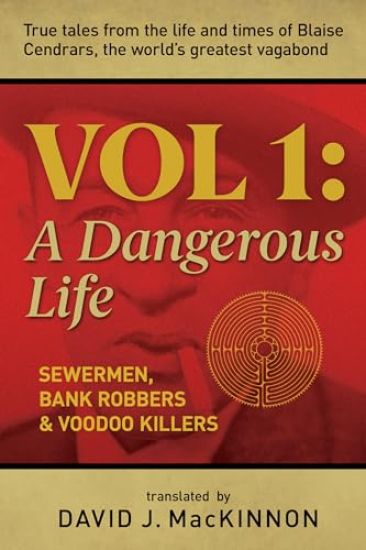
Voodoo killers, Bank Robbers & Sewermen: True tales from the life and times of Blaise Cendrars, the world's greatest vagabond
Features seven Cendrars works: The Sewerman of London: a tale of a secret passage leading to the Bank of England, gleaned from a fellow legionnaire while trapped in the trenches of the Great War; River of Blood (J'ai saign?«): the 1st-hand narrative of the killing fields of Champagne, and the day in 1916 he lost his writing hand to a German machine-gunner; F?«bronio: Cendrars' chilling and compelling interview with Brazil's most infamous serial voodoo killer; The Diamond Circle: the tale of the discovery of a diamond with a curse; Hip-flask of blood (Bidon de sang): translation by Cendrars of an unpublished spaghetti-western novel by the bank robber lawyer Al Jennings; Le Saint Inconnu (The Anonymous Saint); Anecdotique: On Saint-Exup?«ry.
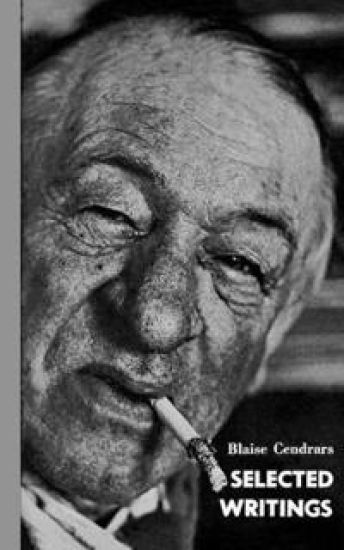
SELECTED WRIT CENDRARS PA

SELECTED WRIT CENDRARS PA

Blaise Cendrars

New Directions Publishing Corporation
2010
nidottu
One of the great figures of modern French literature. Swiss-born in 1887, but French to the core in spirit, Cendrars roamed the world for many years, a restless seeker who made life an adventure and his novels and poems the record of a never-satisfied appetite for human experience. As a young man he reached the Orient across Russia, and “The Transsiberian,” one of his finest long poems is included in this volume. Over the years, a number of Cendrars’ works were translated into English––early among them, in 1931, John Dos Passos’ brilliant version of “Panama, or the Adventures of My Seven Uncles” (reprinted in this collection)––but all are now out of print here, so that this selection from the whole range of Cendrars is most timely. It has been prepared by Professor Walter Albert of Brandeis University, whose long introductory essay is the most detailed biographical and critical study of Cendrars now available in English. While the greater part of the selection is concentrated on Cendrars’ poetry (with the French text printed en face), there are also representative excerpts from the major novels and other prose books, as well as several essays, including impressions of Chagall and Picasso.
Complete Poems

Complete Poems

Blaise Cendrars

University of California Press
1993
pokkari
Blaise Cendrars was a pioneer of modernist literature. The full range of his poetry--from classical rhymed alexandrines to "cubist" modernism, and from feverish, even visionary, depression to airy good humor--offers a challenge no translator has accepted until now. Here, for the first time in English translation, is the complete poetry of a legendary twentieth-century French writer. Cendrars, born Frederick Louis Sauser in 1887, invented his life as well as his art. His adventures took him to Russia during the revolution of 1905 (where he traveled on the Trans-Siberian Railway), to New York in 1911, to the trenches of World War I (where he lost his right arm), to Brazil in the 1920s, to Hollywood in the 1930s, and back and forth across Europe. With Guillaume Apollinaire and Max Jacob he was a pioneer of modernist literature, working alongside artist friends such as Chagall, Delaunay, Modigliani, and Leger, composers Eric Satie and Darius Milhaud, and filmmaker Abel Gance. The range of Cendrars's poetry--from classical rhymed alexandrines to "cubist" modernism, and from feverish, even visionary, depression to airy good humor--offers a challenge no translator has accepted until now.
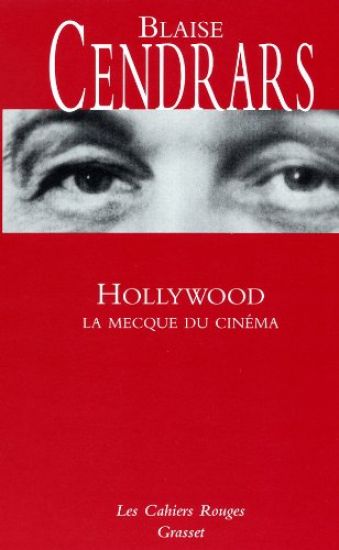
Hollywood

Hollywood

Blaise Cendrars

University of California Press
1995
sidottu
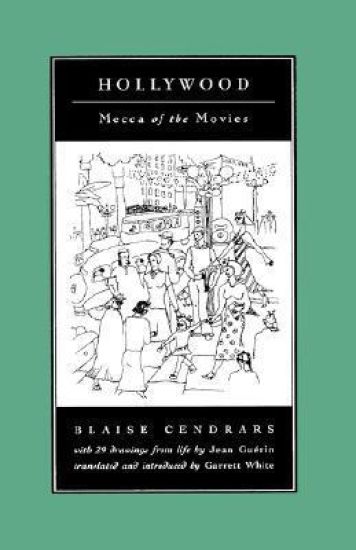
Blaise Cendrars, one of twentieth-century France's most gifted men of letters, came to Hollywood in 1936 for the newspaper "Paris-Soir". Already a well-known poet, Cendrars was a celebrity journalist whose perceptive dispatches from the American dream factory captivated millions. These articles were later published as "Hollywood: Mecca of the Movies", which has since appeared in many languages. Remarkably, this is its first translation into English. Hollywood in 1936 was crowded with stars, moguls, directors, scouts, and script girls. Though no stranger to filmmaking (he had worked with director Abel Gance), Cendrars was spurned by the industry greats with whom he sought to hobnob. His response was to invent a wildly funny Hollywood of his own, embellishing his adventures and mixing them with black humor, star anecdotes, and wry social commentary. Part diary, part tall tale, this book records Cendrars' experiences on Hollywood's streets and at its studios and hottest clubs. His impressions of the town's drifters, star-crazed sailors, and undiscovered talent are recounted in a personal, conversational style that anticipates the 'new journalism' of writers such as Tom Wolfe. Perfectly complemented by his friend Jean Guerin's witty drawings, and following the tradition of European travel writing, Cendrars' 'little book about Hollywood' offers an astute, entertaining look at 1930s America as reflected in its unique movie mecca.
Moravagine

Moravagine

Blaise Cendrars

The New York Review of Books, Inc
2004
pokkari
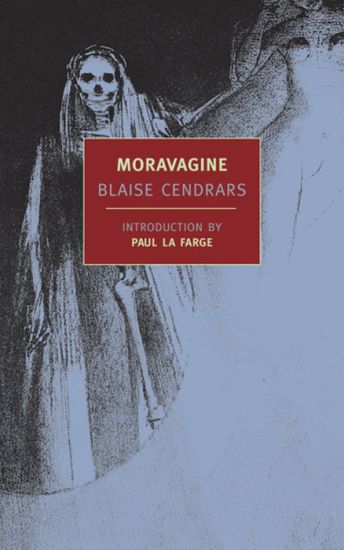
At once truly appalling and appallingly funny, Blaise Cendrars's Moravagine bears comparison with Naked Lunch--except that it's a lot more entertaining to read. Heir to an immense aristocratic fortune, mental and physical mutant Moravagine is a monster, a man in pursuit of a theorem that will justify his every desire. Released from a hospital for the criminally insane by his starstruck psychiatrist (the narrator of the book), who foresees a companionship in crime that will also be an unprecedented scientific collaboration, Moravagine travels from Moscow to San Antonio to deepest Amazonia, engaged in schemes and scams as, among other things, terrorist, speculator, gold prospector, and pilot. He also enjoys a busy sideline in rape and murder. At last, the two friends return to Europe--just in time for World War I, when "the whole world was doing a Moravagine." This new edition of Cendrars's underground classic is the first in English to include the author's afterword, "How I Wrote Moravagine."
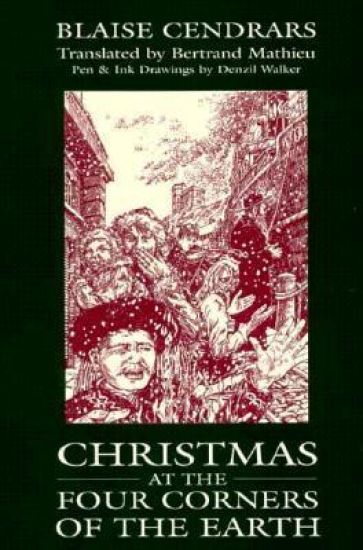
Christmas at the Four Corners of the Earth

Christmas at the Four Corners of the Earth

Blaise Cendrars

BOA Editions, Limited
1994
sidottu
The twelve trans-realist prose sketches in "Christmas at the Four Corners of the Earth" take the reader to Paris, Rio de Janeiro, Bahia, Rotterdam, China, New Mexico, New Zealand, the Ardennes Forest, and the south Atlantic ocean.Working together they are antithesis to sentimental Christmas stories.