Kirjojen hintavertailu. Mukana 11 244 527 kirjaa ja 12 kauppaa.

Kirjahaku

Etsi kirjoja tekijän nimen, kirjan nimen tai ISBN:n perusteella.

1000 tulosta hakusanalla Blake D. Richards

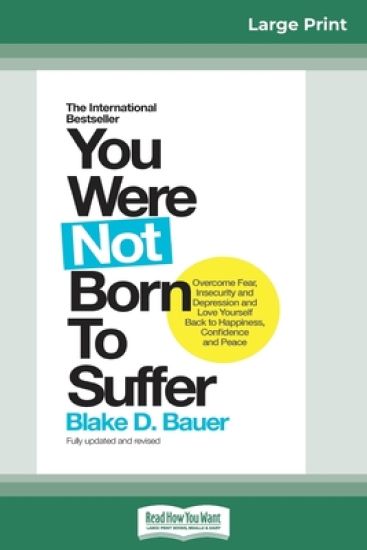
You Were Not Born to Suffer

You Were Not Born to Suffer

Blake D Bauer

ReadHowYouWant
2017
pokkari
Simply, logically and from the heart, You Were Not Born To Suffer intimately guides you through the most challenging obstacles you face in your search for lasting peace, health, and happiness. This book offers practical advice that will help you transform suffering, fear and insecurity in the present and find the strength and courage necessary to enjoy your life, fulfil your purpose and be true to yourself in every situation. You'll discover why all depression, addiction and illnesses are simply cries asking you to stop pleasing others. These pages effectively outline how to relate to yourself with acceptance, honesty and compassion as the key to self-healing, self-confidence, self-worth and self-respect. Having already helped thousands of people around the world who could not find lasting solutions from conventional medicine, psychiatry, or religion, this book offers practical wisdom, synthesized from various spiritual and medical traditions, that goes straight to the heart of our deepest wounds, needs, desires, and dreams. Once there, it inspires understanding, forgiveness and clarity in the places that are universally the most difficult to transform. It also clarifies how to effectively direct your thoughts, words, and actions toward creating an authentic life, free from guilt, self-pity, and regret. If you're tired of settling for crumbs of love, health, happiness, connection or peace, this book offers the answers you've been waiting for.
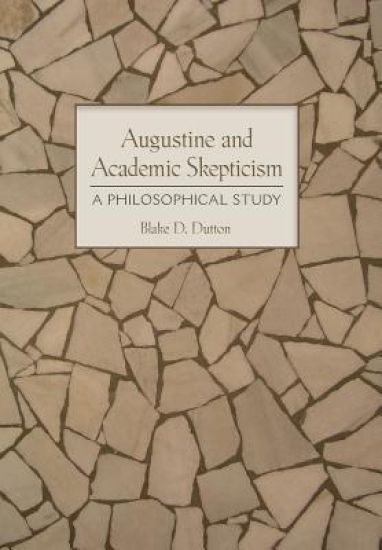
Augustine and Academic Skepticism

Augustine and Academic Skepticism

Blake D. Dutton

Cornell University Press
2016
sidottu
Among the most important, but frequently neglected, figures in the history of debates over skepticism is Augustine of Hippo (354–430 CE). His early dialogue, Against the Academics, together with substantial material from his other writings, constitutes a sustained attempt to respond to the tradition of skepticism with which he was familiar. This was the tradition of Academic skepticism, which had its home in Plato's Academy and was transmitted to the Roman world through the writings of Cicero (106–43 BCE). Augustine and Academic Skepticism: A Philosophical Study is the first comprehensive treatment of Augustine's critique of Academic skepticism. In clear and accessible prose, Blake D. Dutton presents that critique as a serious work of philosophy and engages with it precisely as such. While Dutton provides an extensive review of Academic skepticism and Augustine's encounter with it, his primary concern is to articulate and evaluate Augustine's strategy to discredit Academic skepticism as a philosophical practice and vindicate the possibility of knowledge against the Academic denial of that possibility. In doing so, he sheds considerable light on Augustine's views on philosophical inquiry and the acquisition of knowledge.
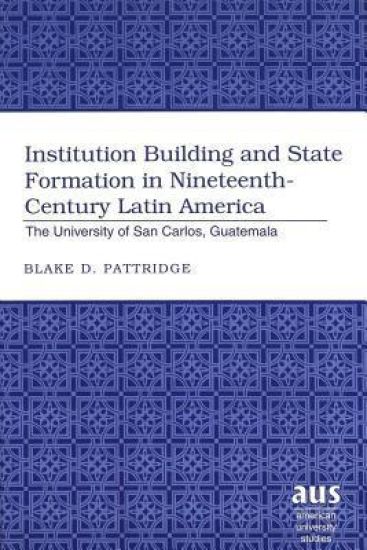
Institution Building and State Formation in Nineteenth-century Latin America
This book, based on years of research, including extensive work in Guatemalan archives, illuminates the social, political, and cultural life of Guatemala and Central America during the nineteenth century through the lens of the University of San Carlos, Guatemala, the period's only institution of higher learning in Guatemala and the most prestigious one on the Central American isthmus. The major issues addressed include the relationships between institution-building and state formation; between the university and the development of a national and regional identity; and between modernism and Catholicism (still a central tension in the region's culture), including the discursive process of constructing an ideology that fused elements from the Enlightenment and the tradition of scholasticism. This book contributes to a growing body of revisionism by challenging a flawed liberal historiographical narrative that demarcates changes during the period along the lines of political transitions and insisting that this era be viewed within a broader context of fluidity and continuity in the region's history.
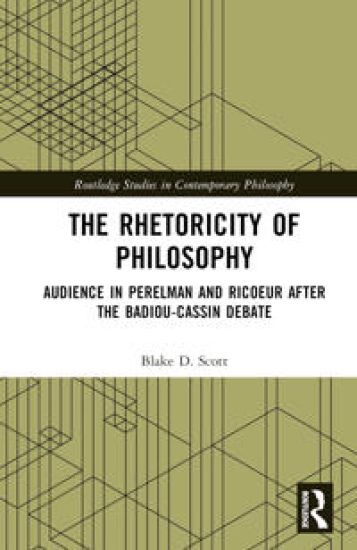
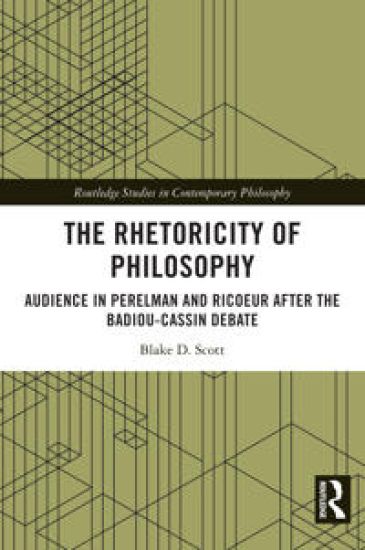
The Rhetoricity of Philosophy

The Rhetoricity of Philosophy

Blake D. Scott

TAYLOR FRANCIS LTD
2024
sidottu
This book aims to recast the way that philosophers understand rhetoric. Rather than follow most philosophers in conceiving rhetoric as a specific way of speaking or writing, it shows that rhetoric is better understood as a dimension of all human discourse and action—what the author calls “rhetoricity”.This book provides the first philosophical treatment of rhetoricity. It is motivated by two ongoing developments. The first is the debate between Alain Badiou and Barbara Cassin about philosophy’s relation to rhetoric. Both Badiou and Cassin are critical of rhetoric, albeit for different reasons. Second, there has been a growing resurgence of interest in rhetoric considering the recent rise in authoritarian politics as well as new forms of propaganda driven by “persuasive technologies”. This book identifies the common target of Badiou’s and Cassin’s otherwise incompatible critiques: rhetoric’s conception of audience. It offers a fresh take on the “new rhetoric” project of Chaïm Perelman and Lucie Olbrechts-Tyteca, putting their work into conversation with the Badiou-Cassin debate. The book then turns to the hermeneutic philosophy of Paul Ricoeur in search of an expanded conception of audience. It shows that Ricoeur’s hermeneutic philosophy allows us to extend Perelman and Olbrechts-Tyteca’s psychological notion of audience to texts themselves and to argue that human beings have a rhetorical capacity to reflect on audiences in search of what is potentially persuasive.The Rhetoricity of Philosophy will be of interest to scholars and advanced students working in contemporary European philosophy, rhetoric, argumentation studies, and social theory.
The Rhetoricity of Philosophy

The Rhetoricity of Philosophy

Blake D. Scott

TAYLOR FRANCIS LTD
2025
nidottu
This book aims to recast the way that philosophers understand rhetoric. Rather than follow most philosophers in conceiving rhetoric as a specific way of speaking or writing, it shows that rhetoric is better understood as a dimension of all human discourse and action—what the author calls “rhetoricity”. This book provides the first philosophical treatment of rhetoricity. It is motivated by two ongoing developments. The first is the debate between Alain Badiou and Barbara Cassin about philosophy’s relation to rhetoric. Both Badiou and Cassin are critical of rhetoric, albeit for different reasons. Second, there has been a growing resurgence of interest in rhetoric considering the recent rise in authoritarian politics as well as new forms of propaganda driven by “persuasive technologies”. This book identifies the common target of Badiou’s and Cassin’s otherwise incompatible critiques: rhetoric’s conception of audience. It offers a fresh take on the “new rhetoric” project of Chaïm Perelman and Lucie Olbrechts-Tyteca, putting their work into conversation with the Badiou-Cassin debate. The book then turns to the hermeneutic philosophy of Paul Ricoeur in search of an expanded conception of audience. It shows that Ricoeur’s hermeneutic philosophy allows us to extend Perelman and Olbrechts-Tyteca’s psychological notion of audience to texts themselves and to argue that human beings have a rhetorical capacity to reflect on audiences in search of what is potentially persuasive. The Rhetoricity of Philosophy will be of interest to scholars and advanced students working in contemporary European philosophy, rhetoric, argumentation studies, and social theory.
Microbes to Ecosystems

Microbes to Ecosystems

Blake D. Edgar

University Press of Florida
2017
nidottu
The University of Florida has an ambitious goal: to harness the power of its faculty, staff, students, and alumni to solve some of society’s most pressing problems and to become a resource for the state of Florida, the nation, and the world.In Microbes to Ecosystems, follow the scientists, researchers, and staff of the University of Florida’s Biodiversity Institute as they marshal unprecedented amounts of biological data to help us conserve species, adapt to climate change, and solve pressing environmental problems.With a twenty-first-century, interdisciplinary approach, the Biodiversity Institute unites some of the most prominent researchers and state-of-the-art resources in the biological sciences, genomics, and informatics. Together they innovate new methods and technologies to accelerate discovery, communicate data and understanding, and determine potential solutions for maintaining sustainable environments.Connections are critical to both ecological and computational systems, and the institute aims to build connections that can help us more effectively study and save biological diversity, including connecting perspectives between the natural sciences and social sciences and connecting scientific research to regulatory policy. Central to the institute’s efforts is the Florida Museum of Natural History—the second largest university-based natural history museum in the country and home to more than 40 million specimens and artifacts—and iDigBio, the national center for creating a digital catalog of the earth’s flora and fauna.The stories chronicled in Gatorbytes span all colleges and units across the UF campus. They detail the far reaching impact of UF’s research, technologies, and innovations—and the UF faculty members dedicated to them. Gatorbytes describe how UF is continuing to build on its strengths and extend the reach of its efforts so that it can help even more people in even more places.
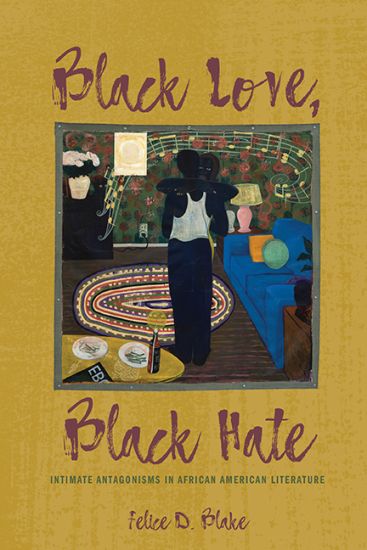
Black Love, Black Hate

Black Love, Black Hate

Felice D Blake

Ohio State University Press
2018
sidottu
Felice D. Blake's Black Love, Black Hate: Intimate Antagonisms in African American Literature highlights the pervasive representations of intraracial deceptions, cruelties, and contempt in Black literature. Literary criticism has tended to focus on Black solidarity and the ways that a racially linked fate has compelled Black people to counter notions of Black inferiority with unified notions of community driven by political commitments to creative rehumanization and collective affirmation. Blake shows how fictional depictions of intraracial conflict perform necessary work within the Black community, raising questions about why racial unity is so often established from the top down and how loyalty to Blackness can be manipulated to reinforce deleterious forms of subordination to oppressive gender, sexual, and class norms. Most importantly, the book shows how literature constitutes an alternative public sphere for Black people. In a society largely controlled by white supremacist actors and institutions, Black authors have conjured fiction into a space where hard questions can be asked and answered and where the work of combatting collective, racist suppression can occur without replicating oppressive hierarchies. Intimate Antagonisms uncovers a key theme in Black fiction and argues that literature itself is a vital institutional site within Black life. Through the examination of intimate conflicts in a wide array of twentieth- and twenty-first-century novels, Blake demonstrates the centrality of intraracial relations to the complexity and vision of Black social movements and liberation struggles and the power and promise of Black narrative in reshaping struggle.
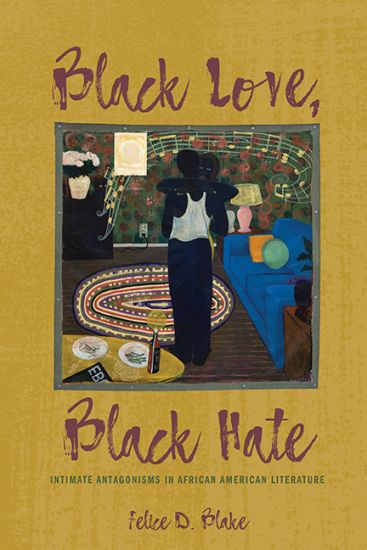
Black Love, Black Hate

Black Love, Black Hate

Felice D Blake

Ohio State University Press
2018
pokkari
Felice D. Blake's Black Love, Black Hate: Intimate Antagonisms in African American Literature highlights the pervasive representations of intraracial deceptions, cruelties, and contempt in Black literature. Literary criticism has tended to focus on Black solidarity and the ways that a racially linked fate has compelled Black people to counter notions of Black inferiority with unified notions of community driven by political commitments to creative rehumanization and collective affirmation. Blake shows how fictional depictions of intraracial conflict perform necessary work within the Black community, raising questions about why racial unity is so often established from the top down and how loyalty to Blackness can be manipulated to reinforce deleterious forms of subordination to oppressive gender, sexual, and class norms. Most importantly, the book shows how literature constitutes an alternative public sphere for Black people. In a society largely controlled by white supremacist actors and institutions, Black authors have conjured fiction into a space where hard questions can be asked and answered and where the work of combatting collective, racist suppression can occur without replicating oppressive hierarchies. Intimate Antagonisms uncovers a key theme in Black fiction and argues that literature itself is a vital institutional site within Black life. Through the examination of intimate conflicts in a wide array of twentieth- and twenty-first-century novels, Blake demonstrates the centrality of intraracial relations to the complexity and vision of Black social movements and liberation struggles and the power and promise of Black narrative in reshaping struggle.
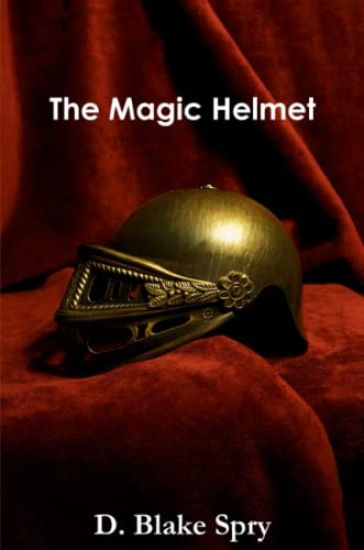
The Magic Helmet

The Magic Helmet

D Blake Spry

Lulu.com
2011
pokkari
A fantasy Adventure story that features two middle school boys, Tyson and Conner, who discover a helmet that changes their lives. Everything seems perfect at first, until complications begin to arise, and they discover that things are not always as simple as they appear.
First Ladies, Own Your Day!

First Ladies, Own Your Day!

Rachel D Blake

Christian Living Books
2021
pokkari
From the bedroom to the pew to the pulpit - practical help from a first lady who knowsAre you a first lady suffering from depression, anxiety, and loneliness? Have you lost yourself in the shadows of your husband's ministry? Are you at your wit's end struggling to fit in and be accepted? Are you ready to quit?In this illuminating, inspiring, and straight-talking book, the author reaches out to pastors' wives to offer hope, encouragement, and help. As a pastor's kid and first lady herself, she knows, firsthand, the physical, emotional, and spiritual ordeals that come with the title. Having walked the walk, she candidly shares from Scripture and her own experiences how to...Rise from the abyss of despair and own your daySurvive constant scrutiny and mischaracterizationFind healing in your marital and other relationshipsRediscover yourself: dreams, ministry, and purposePartner with your husband for successful ministryKeep love, sex, and intimacy alive in your marriageDeal with congregational and other conflictsTake care of youYou are more than the pastor's wife and his children's mother - more than designer suits, hats, red-bottom shoes, expensive handbags with matching gloves, and iced out rings. You are a special lady who deserves to be as happy, confident, and at peace on the inside as you look on the outside. It's time to own your day.
Imprisoned

Imprisoned

R D Blake

Independently Published
2018
pokkari
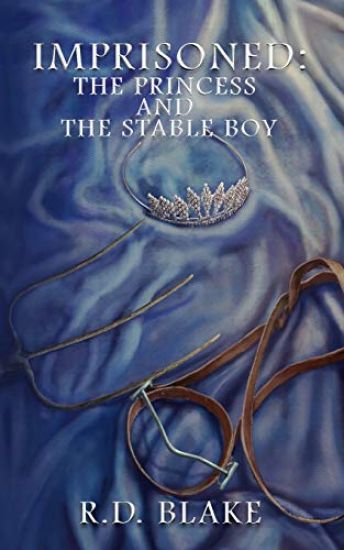
Broderick knew who he was: a peasant, a commoner, a nobody, at best a stable boy. Why couldn't everyone else see him for who he truly was? Especially her Ever since Princess Charlotte had ordered him to ride with her to the old mill, his life had been turned upside down with no one granting him the right to choose his own future. With every new situation that befell him with the princess, Broderick only felt the chains tightening about him, the cell door in the castle dungeon looming that much closer, and the hangman's noose appearing more and more a sure certainty to soon be draping about his neck.And what was all this nonsense that the princess kept repeating that she herself was no different than the animals under his care: that she was only something to be bartered for, and that none of her own dreams for herself could ever be attained? Why had she chosen him of all the people in the castle to share her deepest sentiments and hopes with, continuing to intrude into what had once been a simple life, and vexing him to no end with all of her questions?A simple life? A certain, if forgettable and humble future? Was that not what most men only hoped for? Yet, it appeared as the months and the years passed by, despite his assured unworthiness, Broderick found himself being forced into becoming someone he was not and being given responsibilities for the realm that were far beyond his humble beginnings and lesser abilities. Truly, all he had a talent for was the care of the horses and the barns.But far direr than these troubling circumstances were Princess Charlotte's own words to him: "When all is done. When you have accomplished all that I ask. Come for me. Come for me for I will be waiting. Only for you, Broderick. For no other."How could she make such claims upon him and attest to possessing feelings for him that he had no right to? Did she not understand her lofty station in life and his own total absence of such? Yet. it was not only Princess Charlotte who would deny him his true status. There were others of royal position who had other plans for Broderick too.
Michael Liddle

Michael Liddle

R D Blake

Independently Published
2018
pokkari
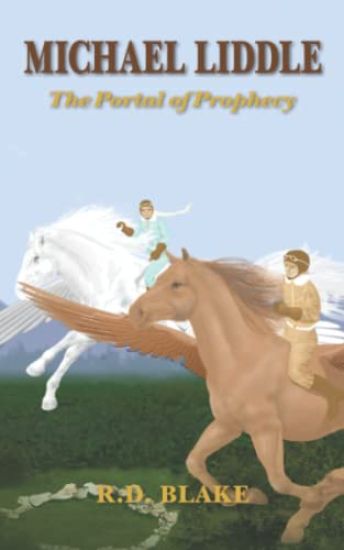
What if you discovered that your own past is not what you thought? In fact like no other on Earth? That you alone have no common ancestry with the human race? And that your destiny had been set out for you from choices made by others who existed eons ago? What if you were eleven year old Michael Liddle?None of these questions ever occurred to Michael to ask of himself. When he walked alone into Cantonville Junior High on the first day of school, all he wondered about was if he would make some new friends, fit in with his classmates, and do well enough at his sixth grade school subjects. But unknown to him, a web of fate and hope had been spun around him from long ago that was soon going to ensnare him. He discovers that much of what he thought he knew about himself wasn't true at all and that secrets concerning both his past and his future have been kept for millennia. And further, that the dreams he had for his new life in Cantonville were soon to be replaced by other ones.A forgotten ancient prophecy of a race of bestial giants who live in seclusion on a planet at the some other end of the galaxy has resurfaced: a prophecy concerning the Chosen and the Cast-Out and an approaching dark force that now threatens many worlds and other civilizations.Salvation of the races in the path of this ominous galactic evil rests on the unlikely shoulders of Michael and an elfin-like Tylani princess. Whether the prophecy of the Chosen and the Cast-Out applies to these two children is uncertain but what seems sure is that the convoluted and murky future vision of the giants tells of a time of great conflict and calls to the Chosen and the Cast-Out to seek out the "Gift of the Ideema."This first book of a seven volume series tells the story of how Michael first becomes aware of his true family, the abilities his birth father intended to give him, and the manner in which he meets the Tylani princess. Few know of or understand the pivotal role he and she are expected to take within a few years in this age old conflict. Yet as the sixth year of school unfolds, what Michael learns of who he really is - and each discovery he makes only results in more questions and mysteries - and what his destiny might be, he must keep secret not only from his mother but also from his new friends. His secret life only adds to the complications he is facing at school with his teachers, two girls who express budding romantic interests in him, and a bully who has Michael firmly in his sights.
Michael Liddle

Michael Liddle

R D Blake

Independently Published
2018
pokkari
Michael Liddle wants to yank the hair right out of his head It's bad enough that he and Alowyn, the Tylani princess, are included in the Ideema prophecy. Now the Procifi are naming him the "Arribahur" - "the one who opens the bridge" to their home world. All Michael and Alowyn really know is that they are expected to find the "Gift of the Ideema," a device that will save the worlds of the Tylani. It's a lot of pressure for a seventh-grader.In the last year alone, Michael has discovered that he's not human, that in fact he was born more than 20,000 years ago, a child of an alien race called the Uhala, a people who along with his birth parents were annihilated by the Elhadra. This vast and ominous galactic empire has only one purpose: to conquer, destroy and enslave all whom they meet. But perhaps most amazing of all is the ability given to Michael to portal anywhere in the galaxy It's a lot to take in.But there's more: now the Elhadra are threatening the Tylani worlds - and to Michael's growing consternation they know about him.When Michael is told that there's another Uhala on Earth, he vows to find him or her. With the help of his mentor, Mr. Gooden - and a little bit of alien technology - they start their hunt. But Michael finds himself searching for more than the Uhala: for a strange "Bastion" which will lead him to the Procifi bridge, for a way out of terrifying dangers, and for the Ideema Gift itself. And along the way, Michael encounters enough mysterious creatures - good, bad, ugly, and sometimes downright hideous - to stretch his imagination to its limits.But it's possible that the strangest creatures of all are the ones right in front of him: girls. There's Alowyn, with her hot-then-cold moodiness; there's Kate Robbins, whose wish to get closer to him is both alluring and alarming; and then there's Maddy Ellis, whose friendship raises feelings in Michael even he doesn't understand. Throw in the fact that Michael has to keep his true identity a secret from almost everyone on Earth, and you've got the recipe for one very tumultuous school year.
Michael Liddle

Michael Liddle

R D Blake

Independently Published
2018
pokkari
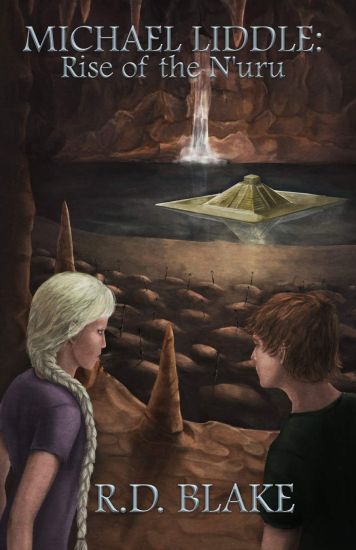
Michael Liddle and Alowyn face more than one set-back in their quest to find the Ideema Gift. It appears that no matter what they discover, the real truth seems to be something else entirely. They had located the Bastion, which had led them to another world where the trail of the Gift was picked up once more, but the clues uncovered there pointed them back to Earth. But where is the Gift? The means to find it fail and Michael believes the search is now hopeless. Despite these difficulties, there are more - for the princess herself eventually disappears and Michael, despite his growing powers, cannot find her. Now he is facing two desperate searches.Before all of that happens, Michael and the princess encounter several new mysteries. First with the Nomi, the tiny, fairylike creatures who live on the same planets as the princess' own people. There is a new Ideema prophecy which appears to link these small pixie-like creatures and the second Uhala together. And the prophecy adds a third name, possibly even a fourth one, to the Chosen and Cast-Out: The Lost and The Forsaken.And a new warning is received: "Beware the N'uru," an ancient Yeddura word meaning "Death." Adding to this troubling message, the Elhadra have located Earth though Michael and Mr. Gooden are unaware of that fact and them.Besides that danger, there are other difficulties just as close to home that Michael can't escape. His mother is suspecting more and more that "something" is going on with him. Scott Watson, his former best friend, is still at odds with him, suspecting Michael of more lies and wrong-doings which Michael cannot prove otherwise if he wishes to hold onto his secrets. And the high hopes that Maddy Ellis has for the coming year - she finds them all dashed, including her growing feelings for Michael. Despite his best efforts to keep her at a distance and his own well-intentioned actions, she becomes caught up with him in his "other" life.Beyond and through all of this, as this third book in the series comes to an end, Mr. Gooden discovers the truth about them all and this promises to change everything.
Unvanquished

Unvanquished

R D Blake

Independently Published
2018
pokkari
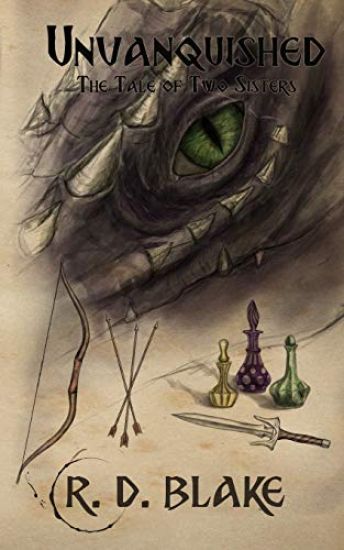
King Sylvian Jolivet slowly rose from his prostrated position before the icons of his faith. Despite the past hour of baring his soul before his Lord, he felt little peace. He had allowed no priest to accompany him or to act to intercede on his behalf. There were secrets, no, not of the kingdom, that he wished no clergy, no wife, no man or trusted advisor to be privy to. These were to be kept within his own heart and shared only with God.The king stood staring at the sacred emblems, willing himself to believe, to have faith, to find the inner resolve to carry on, to not lose hope.His world was changing. No, that was not true. It was reverting to what it has once been. Mankind had gained ascendancy millennia ago in this world and had ruled unopposed, but that was very much in doubt now, perhaps had always been. Those creatures believed to have been defeated and later obliterated, were now reappearing in pockets about his world and on this continent, even within his own kingdom.Was that not why he had agreed to what he had with his daughter? With Kara? Initially, the king had brushed off those words of the seeress, believing them sheer foolishness, but the advent of the trolls in the northern mountains had begun to cause to him waver. At word of the return of another ancient threat in the fastness of far distant Sk neland, he had sought out the seeress once again and had taken her counsel.Still, the king didn't understand it. His daughter, his head-strong, mannish and difficult child, Kara, was predicted to stand at the fulcrum of what was to come. And the irony of it all was that he had granted her her most fervent wish. He had agreed to her training, though he had insisted that she be kept ignorant of the reasons for his acquiescence, not that he truly comprehended what she might ultimately face.A bitter and rueful smile crossed the king's face. He had grudgingly acceded to surrendering his one daughter to a prophecy, but in no way had he agreed to sacrifice his other child: Margaux.King Jolivet moved to grasp the handle to the door into this room that seemed his only remaining sanctum. He had prayed, begged, pleaded. Still, he had no found no boon of calmness here before his Lord. Disarmingly, he discovered he was a mere man, as every other within his kingdom, holding little faith and less trust. Yet he must find the means to instil it and cause it to rise within all the men and women of his kingdom. He felt a failure, inadequate to carry out what a king and a leader must do.But foremost, in his heart and in his soul, he was a father, a father who had abandoned his two daughters to a vague prophecy and to a fate worse than that: to Darkspur, the black dragon.