Kirjojen hintavertailu. Mukana 11 244 527 kirjaa ja 12 kauppaa.

Kirjahaku

Etsi kirjoja tekijän nimen, kirjan nimen tai ISBN:n perusteella.

484 tulosta hakusanalla Blevins Juliette

Evolutionary Phonology

Evolutionary Phonology

Blevins Juliette

Cambridge University Press
2007
pokkari
Evolutionary Phonology is a theory of sound patterns which synthesizes results in historical linguistics, phonetics and phonological theory. In this book, Juliette Blevins explores the nature of sounds patterns and sound change in human language over the past 7000–8000 years, the time depth for which the comparative method is reasonably reliable. This book presents an approach to the problem of how genetically unrelated languages, from families as far apart as Native American, Australian Aboriginal, Austronesian and Indo-European, can often show similar sound patterns, and also tackles the converse problem of why there are notable exceptions to most of the patterns that are often regarded as universal tendencies or constraints. It argues that in both cases, a formal model of sound change that integrates phonetic variation and patterns of misperception can account for attested sound systems without reference to markedness or naturalness within the synchronic grammar.

Advances in Proto-Basque Reconstruction with Evidence for the Proto-Indo-European-Euskarian Hypothesis
This book presents a new reconstruction of Proto-Basque, the mother language of modern Basque varieties, historical Basque, and Aquitanian, grounded in traditional methods of historical linguistics. Building on a long tradition of Basque scholarship, the comparative method and internal reconstruction, informed by the phonetic bases of sound change and phonological typology, are used to explain previously underappreciated alternations and asymmetries in Basque sound patterns, resulting in a radically new view of the proto-language. The comparative method is then used to compare this new Proto-Basque with Proto-Indo-European, revealing regular sound correspondences in basic vocabulary and grammatical formatives. Evaluation of these results supports a distant genetic relationship between Proto-Basque and Proto-Indo-European, and offers new insights into specific linguistic properties of these two ancient languages. This comprehensive volume, which includes a detailed appendix including Proto-Basque/Proto-Indo-European cognate sets, will be of general interest to linguists, archeologists, historians, and geneticists, and of particular interest to scholars in historical linguistics, phonetics and phonology, language change, and Basque and Indo-European studies.Errata for the book can be found at: https://julietteblevins.ws.gc.cuny.edu/proto-basque/
Evolutionary Phonology

Evolutionary Phonology

Juliette Blevins

Cambridge University Press
2004
sidottu
Evolutionary Phonology is a theory of sound patterns which synthesizes results in historical linguistics, phonetics and phonological theory. In this book, Juliette Blevins explores the nature of sounds patterns and sound change in human language over the past 7000–8000 years, the time depth for which the comparative method is reasonably reliable. This book presents an approach to the problem of how genetically unrelated languages, from families as far apart as Native American, Australian Aboriginal, Austronesian and Indo-European, can often show similar sound patterns, and also tackles the converse problem of why there are notable exceptions to most of the patterns that are often regarded as universal tendencies or constraints. It argues that in both cases, a formal model of sound change that integrates phonetic variation and patterns of misperception can account for attested sound systems without reference to markedness or naturalness within the synchronic grammar.

Advances in Proto-Basque Reconstruction with Evidence for the Proto-Indo-European-Euskarian Hypothesis
This book presents a new reconstruction of Proto-Basque, the mother language of modern Basque varieties, historical Basque, and Aquitanian, grounded in traditional methods of historical linguistics. Building on a long tradition of Basque scholarship, the comparative method and internal reconstruction, informed by the phonetic bases of sound change and phonological typology, are used to explain previously underappreciated alternations and asymmetries in Basque sound patterns, resulting in a radically new view of the proto-language. The comparative method is then used to compare this new Proto-Basque with Proto-Indo-European, revealing regular sound correspondences in basic vocabulary and grammatical formatives. Evaluation of these results supports a distant genetic relationship between Proto-Basque and Proto-Indo-European, and offers new insights into specific linguistic properties of these two ancient languages. This comprehensive volume, which includes a detailed appendix including Proto-Basque/Proto-Indo-European cognate sets, will be of general interest to linguists, archeologists, historians, and geneticists, and of particular interest to scholars in historical linguistics, phonetics and phonology, language change, and Basque and Indo-European studies.Errata for the book can be found at: https://julietteblevins.ws.gc.cuny.edu/proto-basque/
Tyler Ninja Blevins: Pro Gaming Star

Tyler Ninja Blevins: Pro Gaming Star

Heather E. Schwartz

Lerner Publications (Tm)
2022
nidottu
Tyler "Ninja" Blevins is a gaming superstar This famous streamer knows what it takes to be the best. Find out how he went pro, how he rose to the top, and what he might do next. Read about your favorite stars in the In the Spotlight series--part of the UpDog Books(TM) collection. Dive into some of their greatest achievements and how they rose to fame. Special features include important stats on the stars and a reflection page about how you can do great things too
North Carolina's Barrier Islands

North Carolina's Barrier Islands

Blevins David

The University of North Carolina Press
2017
sidottu
In this stunning book, nature photographer and ecologist David Blevins offers an inspiring visual journey to North Carolina's barrier islands as you have never seen them before. These islands are unique and ever-changing places with epic origins, surprising plants and animals, and an uncertain future. From snow geese mid-flight to breathtaking vistas along otherworldly dunes, Blevins has captured the incredible natural diversity of North Carolina's coast in singular detail. His photographs and words reveal the natural character of these islands, the forces that shape them, and the sense of wonder they inspire.Featuring over 150 full-color images from Currituck Banks, the Cape Hatteras and Cape Lookout National Seashores, and the islands of the southern coast, North Carolina's Barrier Islands is not only a collection of beautiful images of landscapes, plants, and animals, but also an appeal for their conservation.
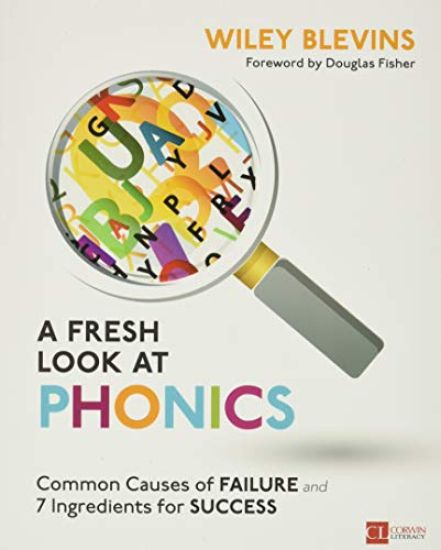
A Fresh Look at Phonics, Grades K-2

A Fresh Look at Phonics, Grades K-2

Blevins Wiley W.

Corwin Press Inc
2016
nidottu
Using the authors’ expertise from 25 years in the field, as well as current research and evaluation of phonics programs in schools, A Fresh Look at Phonics provides the ingredients needed for success, and underlines the common reasons for failure. It is full of tips, tech recommendations, teacher training ideas and a wealth of how-tos. Divided into two sections: success and common causes of failures, it allows users to easily dip in and out when necessary. Each ingredient of success offers: background, sample instruction; lists of best practices; common instructional pitfalls; and a section that prompts educators to look at and reflect on specific aspects of their teaching.
Arkansas/Arkansaw

Arkansas/Arkansaw

Blevins Brooks

University of Arkansas Press
2009
sidottu
Who are you calling a hillbilly? What do Scott Joplin, John Grisham, General Douglas MacArthur, Maya Angelou, Brooks Robinson, Helen Gurley Brown, Johnny Cash, Alan Ladd, and Sonny Boy Williamson have in common? They're all Arkansans. What do hillbillies, rednecks, slow trains, bare feet, moonshine, and double-wides have in common? For many in America these represent Arkansas more than any Arkansas success stories do. In 1931 H. L. Mencken described AR (not AK, folks) as the 'apex of moronia'. While, in 1942 a "Time" magazine article said Arkansas had 'developed a mass inferiority complex unique in American history'. "Arkansas/Arkansaw" is the first book to explain how Arkansas' image began and how the popular culture stereotypes have been perpetuated and altered through succeeding generations. Brooks Blevins argues that the image has not always been a bad one. He discusses travel accounts, literature, radio programs, movies, and television shows that give a very positive image of the Natural State. From territorial accounts of the Creole inhabitants of the Mississippi River Valley to national derision of the state's triple-wide governor's mansion to Li'l Abner, the Beverly Hillbillies, and Slingblade, Blevins leads readers on an entertaining and insightful tour through more than two centuries of the idea of Arkansas. One discovers along the way how one state becomes simultaneously a punch line and a source of admiration for progressives and social critics alike.
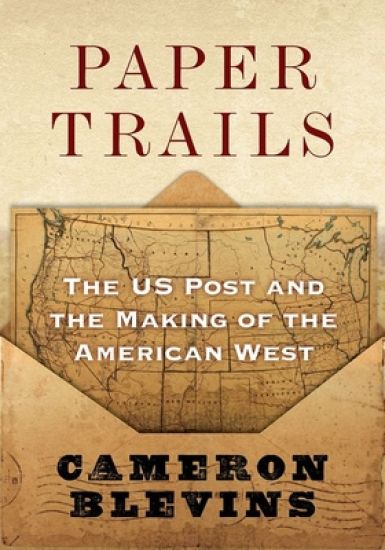
Paper Trails

Paper Trails

Cameron Blevins

Oxford University Press Inc
2021
sidottu
A groundbreaking history of how the US Post made the nineteenth-century American West. There were five times as many post offices in the United States in 1899 than there are McDonald's restaurants today. During an era of supposedly limited federal government, the United States operated the most expansive national postal system in the world. In this cutting-edge interpretation of the late nineteenth-century United States, Cameron Blevins argues that the US Post wove together two of the era's defining projects: western expansion and the growth of state power. Between the 1860s and the early 1900s, the western United States underwent a truly dramatic reorganization of people, land, capital, and resources. It had taken Anglo-Americans the better part of two hundred years to occupy the eastern half of the continent, yet they occupied the West within a single generation. As millions of settlers moved into the region, they relied on letters and newspapers, magazines and pamphlets, petitions and money orders to stay connected to the wider world. Paper Trails maps the spread of the US Post using a dataset of more than 100,000 post offices, revealing a new picture of the federal government in the West. The western postal network bore little resemblance to the civil service bureaucracies typically associated with government institutions. Instead, the US Post grafted public mail service onto private businesses, contracting with stagecoach companies to carry the mail and paying local merchants to distribute letters from their stores. These arrangements allowed the US Post to rapidly spin out a vast and ephemeral web of postal infrastructure to thousands of distant places. The postal network's sprawling geography and localized operations forces a reconsideration of the American state, its history, and the ways in which it exercised power.
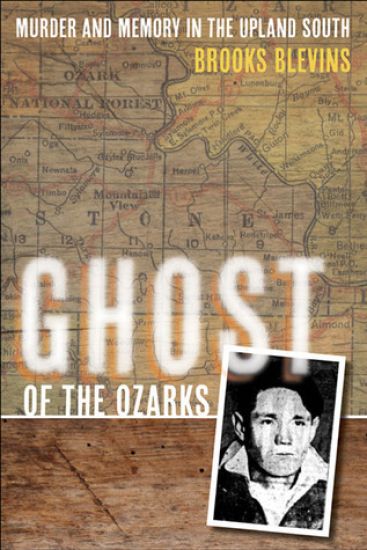
Ghost of the Ozarks

Ghost of the Ozarks

Brooks Blevins

University of Illinois Press
2012
sidottu
In 1929, in a remote county of the Arkansas Ozarks, the gruesome murder of harmonica-playing drifter Connie Franklin and the brutal rape of his teenaged fiancée captured the attention of a nation on the cusp of the Great Depression. National press from coast to coast ran stories of the sensational exploits of night-riding moonshiners, powerful "Barons of the Hills," and a world of feudal oppression in the isolation of the rugged Ozarks. The ensuing arrest of five local men for both crimes and the confusion and superstition surrounding the trial and conviction gave Stone County a dubious and short-lived notoriety. Closely examining how the story and its regional setting were interpreted by the media, Brooks Blevins recounts the gripping events of the murder investigation and trial, where a man claiming to be the murder victim--the "Ghost" of the Ozarks--appeared to testify. Local conditions in Stone County, which had no electricity and only one long-distance telephone line, frustrated the dozen or more reporters who found their way to the rural Ozarks, and the developments following the arrests often prompted reporters' caricatures of the region: accusations of imposture and insanity, revelations of hidden pasts and assumed names, and threats of widespread violence. Locating the past squarely within the major currents of American history, Ghost of the Ozarks: Murder and Memory in the Upland South paints a convincing backdrop to a story that, more than 80 years later, remains riddled with mystery.
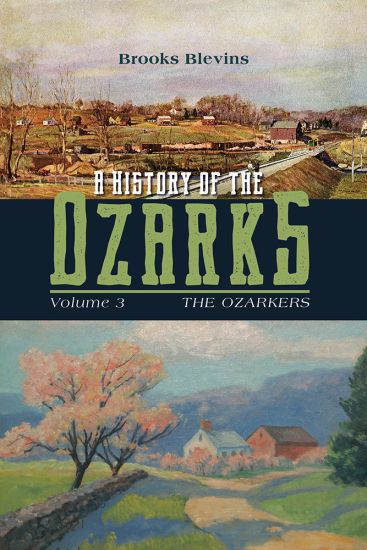
A History of the Ozarks, Volume 3

A History of the Ozarks, Volume 3

Brooks Blevins

University of Illinois Press
2021
sidottu
Between the world wars, America embraced an image of the Ozarks as a remote land of hills and hollers. The popular imagination stereotyped Ozarkers as ridge runners, hillbillies, and pioneers—a cast of colorful throwbacks hostile to change. But the real Ozarks reflected a more complex reality. Brooks Blevins tells the cultural history of the Ozarks as a regional variation of an American story. As he shows, the experiences of the Ozarkers have not diverged from the currents of mainstream life as sharply or consistently as the mythmakers would have it. If much of the region seemed to trail behind by a generation, the time lag was rooted more in poverty and geographic barriers than a conscious rejection of the modern world and its progressive spirit. In fact, the minority who clung to the old days seemed exotic largely because their anachronistic ways clashed against the backdrop of the evolving region around them. Blevins explores how these people's disproportionate influence affected the creation of the idea of the Ozarks, and reveals the truer idea that exists at the intersection of myth and reality. The conclusion to the acclaimed trilogy, The History of the Ozarks, Volume 3: The Ozarkers offers an authoritative appraisal of the modern Ozarks and its people.
Ghost of the Ozarks

Ghost of the Ozarks

Brooks Blevins

University of Illinois Press
2017
nidottu
In 1929, in a remote county of the Arkansas Ozarks, the gruesome murder of harmonica-playing drifter Connie Franklin and the brutal rape of his teenaged fiancée captured the attention of a nation on the cusp of the Great Depression. National press from coast to coast ran stories of the sensational exploits of night-riding moonshiners, powerful "Barons of the Hills," and a world of feudal oppression in the isolation of the rugged Ozarks. The ensuing arrest of five local men for both crimes and the confusion and superstition surrounding the trial and conviction gave Stone County a dubious and short-lived notoriety. Closely examining how the story and its regional setting were interpreted by the media, Brooks Blevins recounts the gripping events of the murder investigation and trial, where a man claiming to be the murder victim--the "Ghost" of the Ozarks--appeared to testify. Local conditions in Stone County, which had no electricity and only one long-distance telephone line, frustrated the dozen or more reporters who found their way to the rural Ozarks, and the developments following the arrests often prompted reporters' caricatures of the region: accusations of imposture and insanity, revelations of hidden pasts and assumed names, and threats of widespread violence. Locating the past squarely within the major currents of American history, Ghost of the Ozarks: Murder and Memory in the Upland South paints a convincing backdrop to a story that, more than 80 years later, remains riddled with mystery.
A History of the Ozarks, Volume 1 Volume 1

A History of the Ozarks, Volume 1 Volume 1

Brooks Blevins

University of Illinois Press
2020
nidottu
Winner of the Missouri History Book Award, from the State Historical Society of Missouri Winner of the Arkansiana Award, from the Arkansas Library Association Geologic forces raised the Ozarks. Myth enshrouds these hills. Human beings shaped them and were shaped by them. The Ozarks reflect the epic tableau of the American people—the native Osage and would-be colonial conquerors, the determined settlers and on-the-make speculators, the endless labors of hardscrabble farmers and capitalism of visionary entrepreneurs. The Old Ozarks is the first volume of a monumental three-part history of the region and its inhabitants. Brooks Blevins begins in deep prehistory, charting how these highlands of granite, dolomite, and limestone came to exist. From there he turns to the political and economic motivations behind the eagerness of many peoples to possess the Ozarks. Blevins places these early proto-Ozarkers within the context of larger American history and the economic, social, and political forces that drove it forward. But he also tells the varied and colorful human stories that fill the region's storied past—and contribute to the powerful myths and misunderstandings that even today distort our views of the Ozarks' places and people. A sweeping history in the grand tradition, A History of the Ozarks, Volume 1: The Old Ozarks is essential reading for anyone who cares about the highland heart of America.
A History of the Ozarks, Volume 2

A History of the Ozarks, Volume 2

Brooks Blevins

UNIVERSITY OF ILLINOIS PRESS
2022
nidottu
The Ozarks of the mid-1800s was a land of divisions. The uplands and its people inhabited a geographic and cultural borderland straddling Midwest and west, North and South, frontier and civilization, and secessionist and Unionist. As civil war raged across the region, neighbor turned against neighbor, unleashing a generation of animus and violence that lasted long after 1865. The second volume of Brooks Blevins's history begins with the region's distinctive relationship to slavery. Largely unsuitable for plantation farming, the Ozarks used enslaved persons on a smaller scale or, in some places, not at all. Blevins moves on to the devastating Civil War years where the dehumanizing, personal nature of Ozark conflict was made uglier by the predations of marching armies and criminal gangs. Blending personal stories with a wide narrative scope, he examines how civilians and soldiers alike experienced the war, from brutal partisan warfare to ill-advised refugee policies to women's struggles to safeguard farms and stay alive in an atmosphere of constant danger. The war stunted the region's growth, delaying the development of Ozarks society and the processes of physical, economic, and social reconstruction. More and more, striving uplanders dedicated to modernization fought an image of the Ozarks as a land of mountaineers and hillbillies hostile to the idea of progress. Yet the dawn of the twentieth century saw the uplands emerge as an increasingly uniform culture forged, for better and worse, in the tumult of a conflicted era.
A History of the Ozarks, Volume 3

A History of the Ozarks, Volume 3

Brooks Blevins

UNIVERSITY OF ILLINOIS PRESS
2024
nidottu
Between the world wars, America embraced an image of the Ozarks as a remote land of hills and hollers. The popular imagination stereotyped Ozarkers as ridge runners, hillbillies, and pioneers—a cast of colorful throwbacks hostile to change. But the real Ozarks reflected a more complex reality. Brooks Blevins tells the cultural history of the Ozarks as a regional variation of an American story. As he shows, the experiences of the Ozarkers have not diverged from the currents of mainstream life as sharply or consistently as the mythmakers would have it. If much of the region seemed to trail behind by a generation, the time lag was rooted more in poverty and geographic barriers than a conscious rejection of the modern world and its progressive spirit. In fact, the minority who clung to the old days seemed exotic largely because their anachronistic ways clashed against the backdrop of the evolving region around them. Blevins explores how these people's disproportionate influence affected the creation of the idea of the Ozarks, and reveals the truer idea that exists at the intersection of myth and reality. The conclusion to the acclaimed trilogy, The History of the Ozarks, Volume 3: The Ozarkers offers an authoritative appraisal of the modern Ozarks and its people.
Christianity’s Role in United States Global Health and Development Policy
In recent years, the role of religion in influencing international health policy and health services provision has been seen as increasingly important. This book provides a social history of the relationship between religion and America's international health policy and practice from the latter 19th century to the present. The book demonstrates that the fields of religion and public health have distinct moral frameworks, each with their own rationales, assumptions, and motivations. While these two frameworks share significant synergies, substantial tensions also exist, which are negotiated in political contexts. The book traces the origins of religion’s influence on public health to the Progressive Era in the latter half of the 19th century, examines tensions that arose in the first half of the 20th century, describes the divorce between religion and international health from the 1940s through the 1980s, identifies the sources of the renewed interest in the relationship between religion and international health, and anticipates the future contours of religion and international health in light of contemporary political and economic forces.While the influence of religion on international health practice and policy in the United States serves as the focus of the book, the effects of US policies on international health policies in general are also explored in depth, especially in the book’s later chapters.This ambitious study of religion’s social history in the United States over the last 150 years will be of interest to researchers in global health, politics, religion and development studies.
Trevor Lee and the Big Uh-Oh!

Trevor Lee and the Big Uh-Oh!

Wiley Blevins

Readhowyouwant
2021
pokkari
If there's one thing everyone knows, it's that Trevor Lee and school don't mix. Like pickles and peanut butter. When his new teacher announces all the third graders must read in front of everyone at Parents Night, Trevor Lee and his best friend Pinky take action before his secret of not being able to read gets out. After several over-the-top attempts at getting out of Parents Night, Trevor Lee enlists the help of his Mamaw. ''Some days are just bad. You gotta hold your head high and keep moving, '' she always says. Can Trevor Lee remember her advice as he stands in front of a crowd on the biggest night of third grade
Midwife of the Blue Ridge

Midwife of the Blue Ridge

Christine Blevins

BERKLEY BOOKS
2008
nidottu
A stirring debut novel-of love, struggle, and savagery on America's colonial frontier- (Bernard Cornwell). They call her Dark Maggie for her thick black hair, but the name also has a more sinister connotation. As the lone survivor of an attack on her village, she was thought to be cursed, and unfit for marriage. Maggie is also gifted with quick wits and skilled in medicine, trained as a midwife. Venturing to the colonies as an indentured servant, she hopes to escape the superstitions of the old country, and find a home of her own. But what she discovers is a New World fraught with new dangers.
The Tory Widow

The Tory Widow

Christine Blevins

BERKLEY BOOKS
2009
nidottu
From the "talented"(Bertrice Small) author of Midwife of the Blue Ridge, a stirring novel set on the brink of the American Revolution. On a bright May day in New York City, Anne Peabody receives an unexpected kiss from a stranger. Bringing news of the repeal of the Stamp Act, Jack Hampton, a member of the Sons of Liberty, abruptly sweeps Anne into his arms, kisses her-and then leaves her to her fate of an arranged marriage... 1775: Nearly ten years have passed and Anne, now the Widow Merrick, continues her late husband's business printing Tory propaganda, not because she believes in the cause, but because she needs the money to survive. When her shop is ransacked by the Sons of Liberty, Anne once again comes face to face with Jack and finds herself drawn to the ardent patriot and his rebel cause. As shots ring out at Lexington and war erupts, Anne is faced with a life-altering decision: sit back and watch her world torn apart, or stand and fight for both her country's independence and her own.