Kirjojen hintavertailu. Mukana 12 456 351 kirjaa ja 12 kauppaa.

Kirjahaku

Etsi kirjoja tekijän nimen, kirjan nimen tai ISBN:n perusteella.

1000 tulosta hakusanalla Blick Elaine

Miranda

Miranda

Blick Elaine

Balboa Press
2017
nidottu
Miranda is a black ex-slave, now the owner of a sugar plantation in Jamaica in the late eighteenth century. Her battle to overcome prejudice and to raise the status of African slaves by teaching them to read and write makes compelling reading. Her personal struggle with an overseer who preys on black women to satisfy his sexual appetite has far-reaching consequences.
Miranda

Miranda

Blick Elaine

Balboa Press
2017
sidottu
Miranda is a black ex-slave, now the owner of a sugar plantation in Jamaica in the late eighteenth century. Her battle to overcome prejudice and to raise the status of African slaves by teaching them to read and write makes compelling reading. Her personal struggle with an overseer who preys on black women to satisfy his sexual appetite has far-reaching consequences.
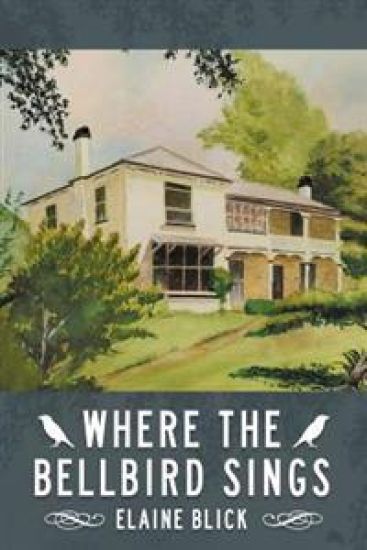
Where the Bellbird Sings

Where the Bellbird Sings

Elaine Blick

Strategic Book Publishing Rights Agency, LLC
2011
pokkari
Nearly fifty years have passed since Elizabeth last saw the colonial house in Nelson, New Zealand, where she once boarded as a young teacher in 1962. Where the Bellbird Sings takes Elizabeth back in time to her memories of the house and the peace that she felt when she heard the call of the bellbird. Now widowed and seventy years old, Elizabeth returns when she hears the house is for sale. As she is shown through the rooms, she recalls in detail what the house had been like when her great-aunts and great-uncle lived there. Elizabeth hears the bellbird sing and is comforted, as its song always represented hope and continuity. When she is told by the agent that the living room is locked because the owners are using it for storage, this link with the past makes her feel faint. As she sits outside on the verandah, she remembers why the mysterious door is locked. Where the Bellbird Sings is an intriguing family saga, a remembrance of lost love and times past, but is foremost an unforgettable story. About the Author: Born in Salisbury, England, Elaine Blick moved to New Zealand after World War II. She is a retired teacher and now divides her time between both countries.Although her book is fiction, it is based on her teaching experiences. "When I heard that our old home in Nelson, which had been in the family since 1842 was going to be sold, I felt compelled to preserve its memory by writing a story set there." She is now writing her next book. Publisher's website: http://sbpra.com/ElaineBlick
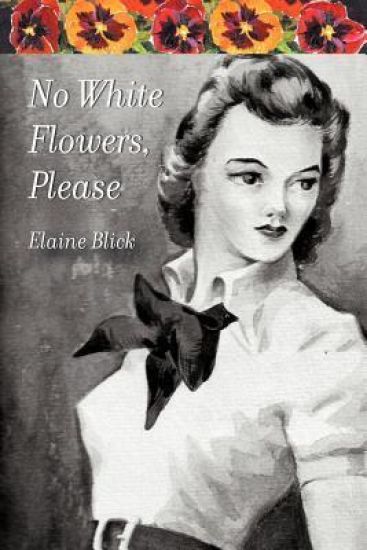
No White Flowers, Please

No White Flowers, Please

Elaine Blick

Strategic Book Publishing Rights Agency, LLC
2012
pokkari
The "Roaring Twenties" was the era of the flappers, those bright young things who cut their hair and raised their hemlines. But for Rhoda Pritchard, growing up in a mining town in the North Island of New Zealand, life wasn't easy. On her 11th birthday, Rhoda and her younger brothers and sisters stood by their mother's grave. The strong-smelling white flowers surrounding the coffin ever afterwards became the smell of death to Rhoda. But she was a girl who loved life, and from an early age learned a simple way to survive. This helped her through every setback and disappointment, especially when she and the other children were sent to England without their father, accompanied only by an unmarried aunt. In the new and unfamiliar English environment, Rhoda faces every challenge with courage. Though set in the 1920s, this heart-warming story will resonate with readers today who admire a character with grit and determination. About the Author: Born in Salisbury, England, Elaine Blick moved to New Zealand after World War II. She is a retired schoolteacher and divides her time between both countries. Her previous novel is Where the Bellbird Sings. Publisher's Website: http://sbpra.com/ElaineBlick
Here Today, Gone Tomorrow

Here Today, Gone Tomorrow

Elaine Blick

Strategic Book Publishing Rights Agency, LLC
2020
pokkari
Here Today, Gone Tomorrow is a travelogue with a difference. Two retired women set off in a campervan from London to tour Europe. Neither has driven a campervan before, much less had any experience driving on the right.They journey through four countries and cover 4,000 miles, often bewildered by one-way systems and rapid changes of language, yet meeting kindness wherever they go. The women's varied and often bizarre escapades make for entertaining reading from start to finish. They experience being locked in an underground toilet in France, finding distant relatives in Germany quite by chance, and spending a frightening night freedom camping on the Riviera.For those who love to read about the touring experiences of others, and are pining to get out on the open road themselves, it's all here in this true and eccentric account. About the Author: Elaine Blick lived in England for many years and taught school in London. "Although I grew up in New Zealand and had my education here, I now live beside a beach outside of Auckland, which is rather different from London." Now retired, she enjoys travelling and researching the historical novels she writes. This is her eleventh book.
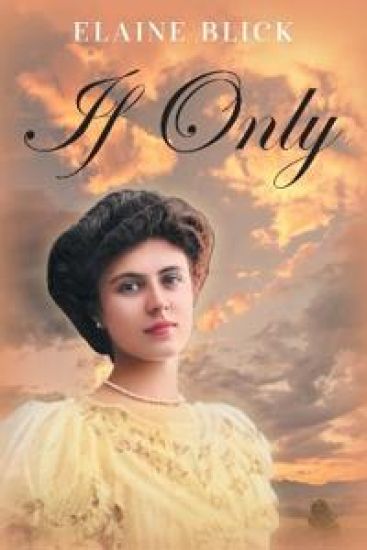
If Only

If Only

Elaine Blick

Strategic Book Publishing
2022
pokkari
The pampered daughter of a wealthy man, Alice has the choice between two eligible and attractive men. But this is the era of suffragettes, and Alice is looking for satisfaction in a career rather than marriage.A succession of hard knocks changes the once spoilt beauty into a compassionate woman, willing to put others before herself in a life of service.Set against the dramatic background of the Boer War, Alice's private story unfolds. Even in the midst of dirt, disease, and death, love is able to blossom.This epic wartime romance is played out under the South African sun.(About the Author)Elaine Blick lived in England for many years and taught school in London. "Although I grew up in New Zealand and had my education here, I now live beside a beach outside of Auckland, which is rather different from London." Now retired, she enjoys travelling and researching the historical novels she writes. This is her 13th book.
Call of the Kookaburra

Call of the Kookaburra

Elaine Blick

Strategic Book Publishing
2023
pokkari
Call of the Kookaburra is the third and final book in a series following several British convict women who were transported to Australia in the 19th century. Sent to a country with a harsh climate and environment, different in every way from what was familiar, the story relates how these women survived when they were uprooted from their homeland. Friendship grew among three women who were very different in background and temperament. Louise was from a middle-class background and was well educated. Lucy is sensitive and fearful. Peggy was born in a slum and is shrewd and streetwise. Yet all three became united under the teaching of the well-known Quaker prison reformer, Mrs Elizabeth Fry. This third book continues from A Shining Path. It begins in Bath, England, with Peggy's wedding in Bath Abbey, where she marries a French aristocrat. The emphasis then shifts to Jane Bell, one of Peggy's bridesmaids. Jane is not a convict but had been sent to New South Wales by her father, a vicar, because she was an embarrassment to the family. In the small school where she is posted, Jane gets involved with the headmaster and becomes pregnant. She doesn't tell him before he returns to England, although they become engaged the day before he sails. Jane is spared the scandal of having an illegitimate baby when her son is adopted at birth by Louise, who is now married to an officer who owns a farm outside Sydney.(About the Author)Elaine Blick was born in Salisbury, England, and moved with her parents to New Zealand when she was five. A retired schoolteacher, the author now lives in a small beach community. This is her thirteenth book.
Beyond the Horizon

Beyond the Horizon

Elaine Blick

Strategic Book Publishing Rights Agency, LLC
2020
nidottu
Torn from all that is familiar and dear, Louise finds herself in Newgate, that most notorious of British prisons. Here the innocent young woman must survive amongst thieves, prostitutes, and forgers, where catfights, drunkenness, hunger, and cold are a daily reality.But the worst is yet to come: a five-month sea journey to Botany Bay in Australia. In this male-dominated prisoner society on the other side of the world, women are regarded as a commodity, and those transported for minor crimes are treated as prostitutes.How can any woman retain her self-respect in such a setting? Yet one group of women coming out of Newgate managed it. Under the influence of Mrs Elizabeth Fry, a gentle Quaker, the female inmates in Newgate are taught to knit and sew, gaining confidence in themselves. Mrs Fry also opens a school for the prison's children.But most important of all, the Quaker woman shares a message from the Bible so these women can face their future with hope.About the Author: Born in England, Elaine Blick moved with her family to New Zealand when she was five. The retired teacher attended Auckland Teachers' College and Auckland University. This is her eighth novel. "I was inspired to write this book after reading a couple of biographies about Elizabeth Fry, the prison reformer. I was so impressed by the impact she had on the women prisoners in Newgate, when she went amongst them fearlessly taking only a Bible with her. I felt a book needed to be written showing how she affected their individual lives. I then went on to read widely about transportation to Australia."
Just Fancy

Just Fancy

Elaine Blick

Strategic Book Publishing
2025
pokkari
After writing about many fictional characters over the years, author Elaine Blick has at last told her own story.In many ways it has the surprising twists and turns of a plot of one of her novels, and will have readers exclaiming "Just fancy "There is the time she fell twelve feet from a tree and got up unscathed; the time she dealt with the unwelcome attentions of a stalker; and more dramatic still, her time in Soviet Russia when she narrowly escaped being held by the KGB.Her love of adventure has gotten her into some awkward situations, but through it all, Elaine attributes her remarkable escapes to supernatural intervention. As her father once said, "Elaine's guardian angel works overtime."Born in England during the Second World War, Elaine moved to New Zealand with her parents in 1947, where they lived in the same house in Auckland for twenty-six years. Elaine's dream had always been to return to England, and she finally did in 1969. Many of her amazing adventures began there.Today Elaine once again lives in New Zealand, at Clarks Beach, where her family spent every holiday while she was growing up.
Elaine Black Yoneda

Elaine Black Yoneda

Rachel Schreiber

Temple University Press,U.S.
2021
sidottu
During World War II, Elaine Black Yoneda, the daughter of Russian Jewish immigrants, spent eight months in a concentration camp—not in Europe, but in California. She did this voluntarily and in solidarity, insisting on accompanying her husband, Karl, and their son, Tommy, when they were incarcerated at the Manzanar Relocation Center. Surprisingly, while in the camp, Elaine and Karl publicly supported the United States’ decision to exclude Japanese Americans from the coast.Elaine Black Yoneda is the first critical biography of this pioneering feminist and activist. Rachel Schreiber deftly traces Yoneda’s life as she became invested in radical politics and interracial and interethnic activism. In her work for the International Labor Defense of the Communist Party, Yoneda rose to the rank of vice president. After their incarceration, Elaine and Karl became active in the campaigns to designate Manzanar a federally recognized memorial site, for redress and reparations to Japanese Americans, and in opposition to nuclear weapons.Schreiber illuminates the ways Yoneda’s work challenged dominant discourses and how she reconciled the contradictory political and social forces that shaped both her life and her family’s. Highlighting the dangers of anti-immigrant and anti-Asian xenophobia, Elaine Black Yoneda recounts an extraordinary life.
Elaine Black Yoneda

Elaine Black Yoneda

Rachel Schreiber

Temple University Press,U.S.
2021
nidottu
During World War II, Elaine Black Yoneda, the daughter of Russian Jewish immigrants, spent eight months in a concentration camp—not in Europe, but in California. She did this voluntarily and in solidarity, insisting on accompanying her husband, Karl, and their son, Tommy, when they were incarcerated at the Manzanar Relocation Center. Surprisingly, while in the camp, Elaine and Karl publicly supported the United States’ decision to exclude Japanese Americans from the coast.Elaine Black Yoneda is the first critical biography of this pioneering feminist and activist. Rachel Schreiber deftly traces Yoneda’s life as she became invested in radical politics and interracial and interethnic activism. In her work for the International Labor Defense of the Communist Party, Yoneda rose to the rank of vice president. After their incarceration, Elaine and Karl became active in the campaigns to designate Manzanar a federally recognized memorial site, for redress and reparations to Japanese Americans, and in opposition to nuclear weapons.Schreiber illuminates the ways Yoneda’s work challenged dominant discourses and how she reconciled the contradictory political and social forces that shaped both her life and her family’s. Highlighting the dangers of anti-immigrant and anti-Asian xenophobia, Elaine Black Yoneda recounts an extraordinary life.
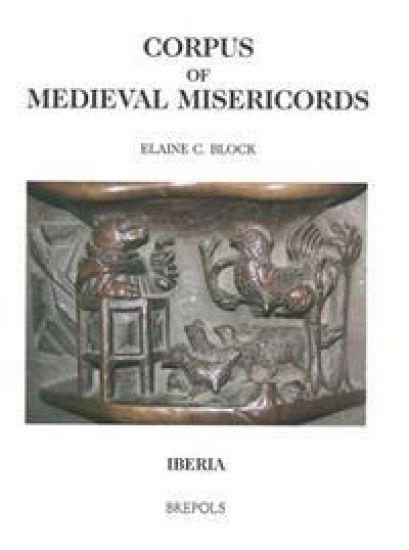
Corpus of Medieval Misericords. Iberia

Corpus of Medieval Misericords. Iberia

Elaine C Block

Brepols N.V.
2005
sidottu
The Corpus of Medieval Misericords (XIII-XXVI) consists of five volumes; the first four focus on the misericords and related choir stall carvings in specific regions of Europe. The fifth includes an extensive iconographic index of themes common to various countries as well as themes that are unique to a single country. Volume I of this series, Medieval Misericords in France, covers approximately 300 churches that still contain gothic misericords with carved figures and narratives inspired by oral traditions suh as proverbs and folk tales, as well as by manuscript marginalia, romanesque capitals, illustrated bibles, engravings, playing cards... A vast portrayal of medieval life - rural activities, urban occupations, conjugal relationships, monastic life -- is displayed in these carvings under the seats of choir stalls along with costumes of the times, town and collegiate architecture, mechanical devices. Puns and rebuses are often intertwined with these themes to produce comic and, to twenty-first century eyes, mysterious puzzles. The global view of misericord carvings, generally ignored in studies of medieval art, is here presented as a multidisciplinary basis for further research by sociologists, historians, archeologists and other medieval scholars. Following volumes include misericords in Iberia, Flemish and borthen Europe, Great Britain. This volume examines the medieval choir stalls, especially their misericords, in the Iberian Peninsula: Portugal and Spain, most of which are extraordinarily beautiful. Fourteen churches in Spain and two in Portugal still have sets of Gothic choir stalls. These sixteen cathedrals, churches and monasteries compare with over two hundred churches with medieval choir stalls in France. The Iberian choir stalls are mainly the original sets for that church. Those at Belmonte, however, were moved from Cuenca but they were the original set at Cuenca where they were replaced by Baroque stalls. The set that was destroyed at Tomar has also not been replaced with Gothic stalls. It should also be noted that while fewer churches are surveyed in this second volume, the percentage of narrative carvings is higher in Spain than in France where many of the early carvings are foliate. 750 misericords with narrative motifs have been identified on the Iberian stalls as compared with over one thousand in France. Such comparisons indicate the richness of the Iberian stalls, which have over twice as many narrative carvings per ensemble as the French stalls. This profusion of carvings necessitates a rather lengthy iconographic index in this volume. Most of the motifs on stalls in north and central Europe are repeated on the Iberian stalls. There are, however, fewer examples of some themes and more of others. It is rare in Iberia to find a carving of a New Testament scene. No set is concerned totally with the Old Testament as at Amiens and the former set at St Victor of Paris. However, Aristotle still carries Phyllis on his back, the fox preaches to the barnyard animals, the mermaid carries her mirror and comb and the peasant carries his sack to ease the burden on the donkey. The proverbs in Spain and Portugal are mainly Flemish with some additional local sayings. We see more of Hercules in Iberia and more illness. In addition to carved misericords in Iberia, sculptures adorn the arms, dorsal panels, canopies, and partitions between the seats, arm-rests and other structural components. Some of these elements, such as canopies on the base stalls and canopy dividers (roundels or teardrop-shaped projections at the junction of the canopy with the dorsal panel on both base and high stalls) do not even exist on the choir stalls of other countries. Arm-rests in Iberia are usually elaborate and complement the motifs on the misericords. The profane carvings on these parts of the stalls are listed briefly in this volume since they are usually directly related to the misericord motifs. The battling couple may be seen not only on misericords but also on arm-rests, jouee panels, dorsal friezes and interdorsal roundels. The fable of The Fox and the Stork is repeated no less than four times on different parts of the Oviedo choir stalls. The men who carry the riches from the Promised Land on a Toledo misericord, show their fatigue by dropping their burden on a capping rail frieze. A mermaid swims on a misericord but attacking monsters surround her on a dorsal frieze. The repetition of profane carvings is unusual on choir stalls in other countries. At Hoogstraten in Belgium, however, a man gapes before the oven on a misericord and also on an arm-rest. "Blocks Corpus ist ebenso relevant fur die Theologiegeschichte, die Volkskunde oder die Motivforschung in der Buchmalerei wie fur die Kunstgeschichte mittelalterlicher Skulptur." (S. Wartena in Sehepunkte, 5 (2005), nr. 12, 15.12.2005)
Black Jack Anderson

Black Jack Anderson

Elaine Forrestal

Elaine Forrestal
2021
pokkari
Black Jack Anderson was a real-life pirate who was, at one time, known as 'the scourge of the Southern Ocean. He was the leader of a motley gang of escaped convicts, ticket-of-leave men and adventurers of all descriptions. For ten years, from 1825 to 1835, he lived on Middle Island, which is six nautical miles off the south coast of Western Australia. He and his fluctuating band of men regularly raided ships as they made their way, tentatively, through the treacherous rocky islands and narrow straights of the Recherche Archipelago.' He had chosen Middle Island as his base because it's only sheltered bay was well hidden from any approach from the sea, however, he obeyed the unwritten rule of the sea that, should anyone be in peril of their life he must give them the basic necessities. However, when Dorothea Newell and her party of survivors virtually washed up on his shore Anderson's life would change forever.This is an exciting story of a real historical figure from the era of sailing ships, uncharted oceans and rugged coastlines unexplored by Europeans. It is suitable for everyone interested in excitement, danger and surviving against the odds.
Contemporary Black American Ceramic Artists

Contemporary Black American Ceramic Artists

Chotsani Elaine Dean; donald a clark

SCHIFFER PUBLISHING LTD
2022
sidottu
A visual celebration of the contributions, presence, and experiences of 38 Black artists who are part of the contemporary clay community Readers will gain a deeper knowledge of 38 of today's top African American artists in clay, the earlier Black artists who paved their paths, and how their work fits into the 21st-century conversation. Authors Donald A Clark and Chotsani Elaine Dean begin by grounding us in history and context taking us from the colonial era of South Carolina to the Harlem Renaissance to today. This book features an introduction and an interview with each artist plus more than 300 stunning photos of their work. Sharing their insights in compelling interviews, today’s Black ceramists demonstrate a diversity of studio practices and ways of using clay, ranging from new artists to the medium, to the more experienced, and producing everything from tableware to sculpture. Contemporary Black American Ceramic Artists is a long overdue deeper look at Black makers, their work, and how it fits in the 21st-century art conversation.
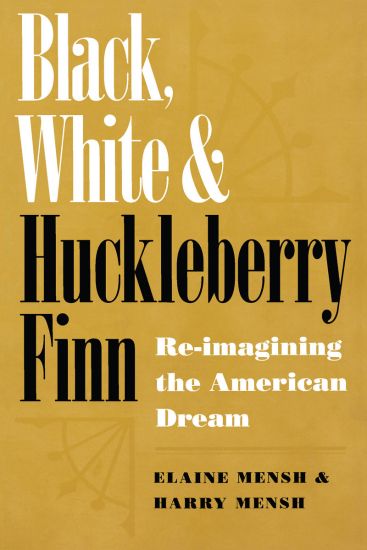
Black, White and ""Huckleberry Finn

Black, White and ""Huckleberry Finn

Elaine Mensh; Harry Mensh

The University of Alabama Press
2001
nidottu
Huckleberry Finn, one of the most widely taught novels in American literature, has long been the subject of debates over issues such as immorality to racism. This work enters the debate with an examination of racial messages imbedded in the tale of Huck and Jim. Using a gauge for analysis the historical record left by both slaves and slaveholders, this work compares Twain's depiction with historical reality, attempting to determine where the book either undermines or upholds traditional racial attitudes. Surveying the opinions of fellow critics, it challenges the consensus that ""Huckleberry Finn"" fosters rapport between blacks and whites, arguing that the book does not subvert ingrained beliefs about race, and showing that the argument over black-white relations in the novel is also an argument over non-fictional racial relations and conflicting perceptions of racial harmony. Reading the novel in its historical context, the text concludes that Twain, in the character of Huck, never questions the institution of slavery, and even supports it in both thought and action. In response to student and parent challenges to the inclusion of the book in literature classes, they suggest that it should remain in school libraries but not be required reading.