Kirjojen hintavertailu. Mukana 11 392 612 kirjaa ja 12 kauppaa.

Kirjahaku

Etsi kirjoja tekijän nimen, kirjan nimen tai ISBN:n perusteella.

193 tulosta hakusanalla Bohr Niels

Niels Bohr on the Application of the Quantum Theory to Atomic Structure, Part 1, The Fundamental Postulates
Niels Bohr (1885–1962) was a Danish physicist who played a key role in the development of atomic theory and quantum mechanics, he was awarded the Nobel Prize for Physics in 1922. First published in 1924, this concise volume provides an English translation of a 1923 German language essay which appeared in the Zeitschrift für Physik journal. It concerns itself with the fundamental postulates of quantum theory, aiming to present the principles of the theory in such a way that their application appears free from contradiction. This book will be of value to anyone with an interest in Bohr's contribution to physics.
Atomic Theory and the Description of Nature

Atomic Theory and the Description of Nature

Bohr Niels

Cambridge University Press
2011
pokkari
Niels Bohr (1885–1962) was a Danish physicist who played a key role in the development of atomic theory and quantum mechanics, he was awarded the Nobel Prize for Physics in 1922. First published in 1934, and reprinted in 1961, this collection contains four articles and an introductory survey. Originally written for various journals during the 1920s, the articles concern themselves with the epistemological significance of discoveries in quantum physics. Although aimed at physicists, they are generally non-technical, with only one using some elementary mathematics. This book will be of value to anyone with an interest in Bohr's contribution to physics.
The Theory of Spectra and Atomic Constitution

The Theory of Spectra and Atomic Constitution

Bohr Niels

Cambridge University Press
2011
pokkari
Niels Bohr (1885–1962) was a Danish physicist who played a key role in the development of atomic theory and quantum mechanics, he was awarded the Nobel Prize for Physics in 1922. First published in 1924, this second edition of a 1922 original contains three essays by Bohr dealing with the application of quantum theory to problems of atomic structure: the first essay is on the spectrum of hydrogen; the second is on the series spectra of the elements; the third is on the structure of the atom and the physical and chemical properties of the elements. The essays do not aim at a comprehensive treatment of their subjects, instead providing the reader with a more accessible, generalised viewpoint. This book will be of value to anyone with an interest in Bohr's contribution to physics.
Niels Bohr

Niels Bohr

J.L. Heilbron

Oxford University Press
2020
nidottu
Niels Bohr, who pioneered the quantum theory of the atom, had a broad conception of his obligations as a physicist. They included not only a responsibility for the consequences of his work for the wider society, but also a compulsion to apply the philosophy he deduced from his physics to improving ordinary people's understanding of the moral universe they inhabit. In some of these concerns Bohr resembled Einstein, although Einstein could not accept what he called the "tranquilizing philosophy" with which Bohr tried to resolve such ancient conundrums as the nature (or possibility) of free will. In this Very Short Introduction John Heilbron draws on sources never before presented in English to cover the life and work of one of the most creative physicists of the 20th century. In addition to his role as a scientist, Heilbron considers Bohr as a statesman and Danish cultural icon, who built scientific institutions and pushed for the extension of international cooperation in science to all nation states. As a humanist he was concerned with the cultivation of all sides of the individual, and with the complementary contributions of all peoples to the sum of human culture. Throughout, Heilbron considers how all of these aspects of Bohr's personality influenced his work, as well as the science that made him, in the words of Sir Henry Dale, President of the Royal Society of London, probably the "first among all the men of all countries who are now active in any department of science." ABOUT THE SERIES: The Very Short Introductions series from Oxford University Press contains hundreds of titles in almost every subject area. These pocket-sized books are the perfect way to get ahead in a new subject quickly. Our expert authors combine facts, analysis, perspective, new ideas, and enthusiasm to make interesting and challenging topics highly readable.
Niels Bohr and the Quantum Atom

Niels Bohr and the Quantum Atom

Helge Kragh

Oxford University Press
2012
sidottu
Niels Bohr and the Quantum Atom is the first book that focuses in detail on the birth and development of Bohr's atomic theory and gives a comprehensive picture of it. At the same time it offers new insight into Bohr's peculiar way of thinking, what Einstein once called his 'unique instinct and tact'. Contrary to most other accounts of the Bohr atom, the book presents it in a broader perspective which includes the reception among other scientists and the criticism launched against it by scientists of a more conservative inclination. Moreover, it discusses the theory as Bohr originally conceived it, namely, as an ambitious theory covering the structure of atoms as well as molecules. By discussing the theory in its entirety it becomes possible to understand why it developed as it did and thereby to use it as an example of the dynamics of scientific theories.
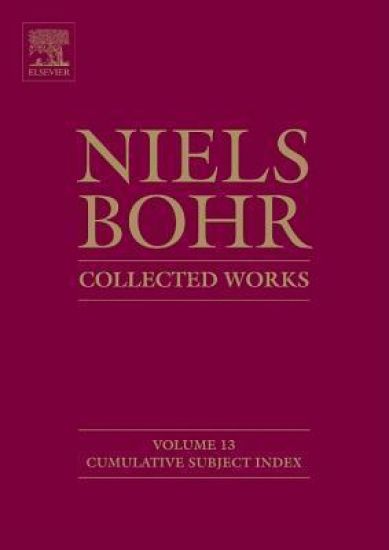
Niels Bohr - Collected Works
Niels Bohr: Collected Works, Volume 13: Cumulative Subject Index documents aspects of Niels Bohr's varied life and work in the form of a cumulative subject index, with emphasis on his scientific contributions in the field of physics. The general organization of the material is thematic rather than strictly chronological, allowing for the presentation of each paper (or group of papers) along with other relevant material such as drafts, notes, letters, and other items. The book is illustrated with rare photos and includes explanatory notes as well as a bibliography. The bibliography is restricted to the versions of Bohr's publications reproduced in this volume and encompasses a wide range of topics in physics, from the determination of the surface tension of water by the method of jet vibration to the electron theory of metals and of thermoelectric phenomena; the theory of the decrease of velocity of moving electrified particles on passing through matter; the constitution of atoms and molecules; and the spectra of helium and hydrogen. Bohr's other papers focus on the effect of electric and magnetic fields on spectral lines; the quantum theory of radiation and the structure of the atom; the polarization of radiation in the quantum theory; and collisions between atomic systems and free electrical particles. This monograph will be useful to students, practitioners, and researchers interested in Bohr's life and work in general and in quantum mechanics in particular.
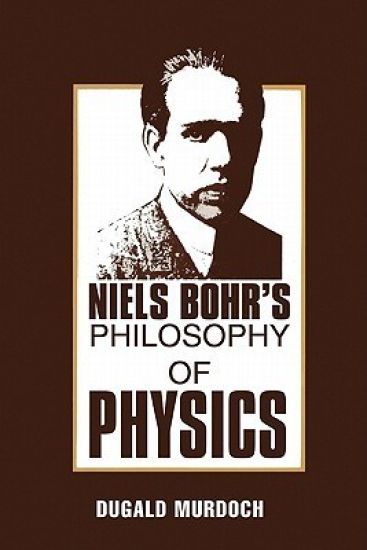
Niels Bohr's Philosophy of Physics

Niels Bohr's Philosophy of Physics

D. R. Murdoch

Cambridge University Press
1989
pokkari
This book gives a clear and comprehensive exposition of Niels Bohr’s philosophy of physics. Bohr’s ideas are of major importance, for they are the source of the Copenhagen interpretation of quantum physics; yet they are obscure, and call for the sort of close analysis that this book provides. The book describes the historical background of the physics from which Bohr’s ideas grew. The core of the book is a detailed analysis of Bohr’s arguments for complementarity and of the interpretation which he put upon it. Special emphasis is placed throughout on the contrasting views of Einstein, and the great debate between Bohr and Einstein is thoroughly examined. The book traces the philosophical influences on Bohr, and unravels the realist and anti-realist strands in his thinking. Bohr’s philosophy is critically assessed in the light of recent developments in the foundations of quantum physics (the work of Bell and others) and in philosophy (the realism-anti-realism debate) and it is revealed as being much more subtle and sophisticated than it is generally taken to be. While the book will be of interest to specialists, it is written in a style that will make it accessible to those who have no specialist knowledge of the relevant physics and philosophy.
Niels Bohr: His Heritage and Legacy
The bulk of the present book has not been published previously though Chapters II and IV are based in part on two earlier papers of mine: "The Influence of Harald H!1lffding's Philosophy on Niels Bohr's Interpretation of Quantum Mechanics", which appeared in Danish Yearbook of Philosophy, 1979, and "The Bohr-H!1lffding Relationship Reconsidered", published in Studies in History and Philosophy of Science, 1988. These two papers comple­ ment each other, and in order to give the whole issue a more extended treatment I have sought, in the present volume by drawing on relevant historical material, to substantiate the claim that H!1lffding was Bohr's mentor. Besides containing a detailed account of Bohr's philosophy, the book, at the same time, serves the purpose of making H!1lffding' s ideas and historical significance better known to a non-Danish readership. During my work on this book I have consulted the Royal Danish Library; the National Archive of Denmark and the Niels Bohr Archive, Copenhagen, in search of relevant material. I am grateful for permission to use and quote material from these sources. Likewise, I am indebted to colleagues and friends for commenting upon the manuscript: I am especially grateful to Professor Henry Folse for our many discussions during my visit to New Orleans in November-December 1988 and again here in Elsinore in July 1990.
Niels Bohr and Contemporary Philosophy
Since the Niels Bohr centenary of 1985 there has been an astonishing international surge of scholarly analyses of Bohr's philosophy. Now for the first time in Niels Bohr and Contemporary Philosophy Jan Faye and Henry Folse have brought together sixteen of today's leading authors who have helped mould this new round of discussions on Bohr's philosophy. In fifteen entirely new, previously unpublished essays we discover a surprising variety of the different facets of Bohr as the natural philosopher whose `framework of complementarity' shaped the final phase of the quantum revolution and influenced two generations of the century's leading physicists. There is much on which the authors included here agree; but there are also polar disagreements, which assure us that the philosophical questions revolving around Bohr's `new viewpoint' will continue to be a subject of scholarly interest and discussion for years to come. This collection will interest all serious students of history and philosophy of science, and foundations of physics.
Niels Bohr: Physics and the World
Containing the proceedings of the symposium held by the American Academy of Arts and Sciences to celebrate the 100th anniversary of the birth of Niels Bohr, this collection was first published in 1988. More than any other individual, Bohr was responsible for the development of quantum mechanics and for many of its applications in the pursuit of fundamental understanding of physical reality. In addition to his unique role in the discovery and elucidation of quantum theory, Bohr led the study of the fission of nuclei and was greatly concerned with the impact of the existence of the atomic bomb in the post-World War II era. This unique volume provides a panoramic view of modern physics, some of the philosophical issues associated with quantum theory, the impact of this momentous scientific development on the political circumstance of the Cold War Era and the qualities of a superlative scientist.
Niels Bohr: Physics and the World
Containing the proceedings of the symposium held by the American Academy of Arts and Sciences to celebrate the 100th anniversary of the birth of Niels Bohr, this collection was first published in 1988. More than any other individual, Bohr was responsible for the development of quantum mechanics and for many of its applications in the pursuit of fundamental understanding of physical reality. In addition to his unique role in the discovery and elucidation of quantum theory, Bohr led the study of the fission of nuclei and was greatly concerned with the impact of the existence of the atomic bomb in the post-World War II era. This unique volume provides a panoramic view of modern physics, some of the philosophical issues associated with quantum theory, the impact of this momentous scientific development on the political circumstance of the Cold War Era and the qualities of a superlative scientist.
Niels Bohr and the Philosophy of Physics
Niels Bohr and Philosophy of Physics: Twenty-First Century Perspectives examines the philosophical views, influences and legacy of the Nobel Prize physicist and philosophical spokesman of the quantum revolution, Niels Bohr.The sixteen contributions in this collection by some of the best contemporary philosophers and physicists writing on Bohr’s philosophy today all carefully distinguish his subtle and unique interpretation of quantum mechanics from views often imputed to him under the banner of the “Copenhagen Interpretation.” With respect to philosophical influences on Bohr’s outlook, the contributors analyse prominent similarities between his viewpoint and Kantian ways of thinking, the views of the Danish philosopher Harald Høffding, and themes characteristic of American pragmatism. In recognizing the importance of Bohr’s epistemological naturalism they examine his defence of the indispensability of classical concepts from a variety of different perspectives.This collection shows us that Bohr’s interpretation of quantum mechanics, now nearly a century old, still has the power to shed light on a variety of issues that have arisen only since his lifetime, as well as decoherence theory and other non-collapse interpretations. Balancing historical themes with contemporary discussions, Niels Bohr and the Philosophy of Physics establishes Bohr’s on-going contribution to the philosophy of physics and examines his place in the history of philosophy.
Niels Bohr and the Philosophy of Physics
Niels Bohr and Philosophy of Physics: Twenty-First Century Perspectives examines the philosophical views, influences and legacy of the Nobel Prize physicist and philosophical spokesman of the quantum revolution, Niels Bohr.The sixteen contributions in this collection by some of the best contemporary philosophers and physicists writing on Bohr’s philosophy today all carefully distinguish his subtle and unique interpretation of quantum mechanics from views often imputed to him under the banner of the “Copenhagen Interpretation.” With respect to philosophical influences on Bohr’s outlook, the contributors analyse prominent similarities between his viewpoint and Kantian ways of thinking, the views of the Danish philosopher Harald Høffding, and themes characteristic of American pragmatism. In recognizing the importance of Bohr’s epistemological naturalism they examine his defence of the indispensability of classical concepts from a variety of different perspectives.This collection shows us that Bohr’s interpretation of quantum mechanics, now nearly a century old, still has the power to shed light on a variety of issues that have arisen only since his lifetime, as well as decoherence theory and other non-collapse interpretations. Balancing historical themes with contemporary discussions, Niels Bohr and the Philosophy of Physics establishes Bohr’s on-going contribution to the philosophy of physics and examines his place in the history of philosophy.
Niels Bohr and Complementarity

Niels Bohr and Complementarity

Arkady Plotnitsky

Springer-Verlag New York Inc.
2012
nidottu
This book offers a discussion of Niels Bohr’s conception of “complementarity,” arguably his greatest contribution to physics and philosophy. By tracing Bohr’s work from his 1913 atomic theory to the introduction and then refinement of the idea of complementarity, and by explicating different meanings of “complementarity” in Bohr and the relationships between it and Bohr’s other concepts, the book aims to offer a contained and accessible, and yet sufficiently comprehensive account of Bohr’s work on complementarity and its significance.
Niels Bohr

Niels Bohr

Springer Nature Switzerland AG
2022
sidottu
Niels Bohr’s atomic theory of 1913 is one of the absolute highlights in the history of modern science. It was only with this work that physicists realized that quantum theory is an essential ingredient in atomic physics, and it was also only with this work that Rutherford’s nuclear model dating from 1911 was transformed into a proper theory of atomic structure. In a longer perspective, Bohr’s quantum atom of 1913 gave rise to the later Heisenberg-Schrödinger quantum mechanics and all its marvellous consequences. This book is a detailed account of the origin of the Bohr atom centred around his original scientific articles of 1913 which are here reproduced and provided with the necessary historical background. In addition to the so-called trilogy – the three papers published in Philosophical Magazine – also two other and less well-known yet important papers are included. The present work starts with a condensed biographical account of Bohr’s life and scientific career,from his birth in Copenhagen in 1885 to his death in the same city 77 years later. It then proceeds with a chapter outlining earlier ideas of atomic structure and tracing Bohr’s route from his doctoral dissertation in 1911 over his stays in Cambridge and Manchester to the submission in April 1913 of the first part of the trilogy. The reproduction of Bohr’s five articles is followed by notes and comments directly related to the texts, with the aim of clarifying some of the textual passages and to explicate names and subjects that may not be clear or well known. The reception of Bohr’s radically new theory by contemporary physicists and chemists is discussed in a final chapter, which deals with the immediate reactions to Bohr's theory 1913-1915 mostly among British, German and American scientists. Historians of science have long been occupied with Bohr’s atomic theory, which was the subject of careful studies in connection with its centenary in 2013. The present work offers an extensive source-based account of the original theory aimed at a non-specialist audience with an interest in the history of physics and the origin of the quantum world. In 1922 Bohr was awarded the Nobel Prize for his theory. The coming centenary will undoubtedly cause an increased interest in how he arrived at his revolutionary picture of the constitution of atoms and molecules.