Eloge historique de Louis, Dauphin de France, pere de Louis XVI, par M. l'abbe ***Date de l'edition originale: 1780Ce livre est la reproduction fidele d une uvre publiee avant 1920 et fait partie d une collection de livres reimprimes a la demande editee par Hachette Livre, dans le cadre d un partenariat avec la Bibliotheque nationale de France, offrant l opportunite d acceder a des ouvrages anciens et souvent rares issus des fonds patrimoniaux de la BnF.Les uvres faisant partie de cette collection ont ete numerisees par la BnF et sont presentes sur Gallica, sa bibliotheque numerique.En entreprenant de redonner vie a ces ouvrages au travers d une collection de livres reimprimes a la demande, nous leur donnons la possibilite de rencontrer un public elargi et participons a la transmission de connaissances et de savoirs parfois difficilement accessibles.Nous avons cherche a concilier la reproduction fidele d un livre ancien a partir de sa version numerisee avec le souci d un confort de lecture optimal. Nous esperons que les ouvrages de cette nouvelle collection vous apporteront entiere satisfaction.Pour plus d informations, rendez-vous sur www.hachettebnf.fr
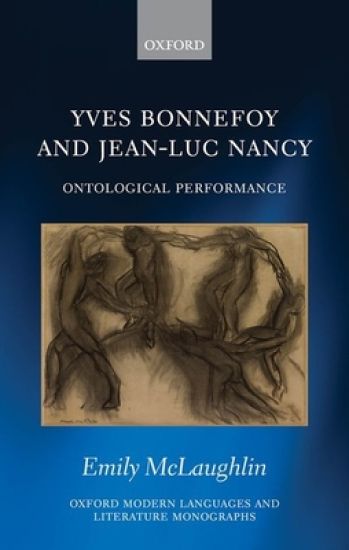
This volume explores how poets use different kinds of formal experimentation to change the way we think, and to allow us to try out new ways of perceiving existence and positioning ourselves within the world. Yves Bonnefoy and Jean-Luc Nancy: Ontological Performance examines the affinities that exist between Bonnefoy's poetry and Nancy's philosophy. It analyses how Bonnefoy experiments with the poem's act of address, its material disposition, and sonorous performance. It scrutinises how he foregrounds the bodily and material forces that are at play within language in order to makes us feel the diverse worldly forces that are active within us and to make us perceive our own human existence in more interconnected ways. Exploring how Bonnefoy and Nancy share the desire to resist detached ways of perceiving existence, this book analyses how they present interaction as the generative dynamic that drives all existence and use the text's resonant play to make us aware of how all bodies--human, material, or poetic--emerge from a complex interplay of worldly forces.
Der aus Tours stammende Yves Bonnefoy (geb. 1923) sieht sich als legitimen Nachfahren der drei Grossen der franzosischen Poesie des 19. Jahrhunderts: Baudelaire, Rimbaud und Mallarme. Das vorliegende Werk will diesen Anspruch kritisch analysieren, dabei aber dem Leser auch den Einstieg in Bonnefoys Oeuvre anhand einiger Gedichtinterpreta- tionen erleichtern. Einige Daten zu Bonnefoys Leben und Werk sowie eine komplette Bibliographie runden das Ganze ab."
Yves Bonnefoy is the most important and influential French poet to have emerged since the Second World War. Poet, art critic, historian, translator (particularly of Shakespeare), specialist in the problem of the relation of poetry to the visual arts and to the history of religions, Bonnefoy is now considered one of the most distinguished men of letters of his generation. Though Bonnefoy's work is familiar to American scholars, the complexity of his thought and style has created a need for a critical introduction to his work. This first major study of Bonnefoy written in English provides an overview of his entire literary career. Naughton situates Bonnefoy in the context of the existential philosophical tradition that nurtured him and in the poetic and artistic tradition that includes Dante and Shakespeare, Piero and Poussin, Baudelaire and Rimbaud. Bonnefoy's poems appear in both French and English, and all quotations from his prose have been translated. This book will appeal not only to the growing number of students and scholars of French literature interested in Bonnefoy's work, but also to those who study comparative poetry and the relation of poetry to art and to contemporary religious thought.
Methode de la soeur Bonnefoy...: guerison par les plantes des maladies chroniques sans poisons... / publ. par Frederic Bouyer]Date de l'edition originale: 1911Ce livre est la reproduction fidele d'une oeuvre publiee avant 1920 et fait partie d'une collection de livres reimprimes a la demande editee par Hachette Livre, dans le cadre d'un partenariat avec la Bibliotheque nationale de France, offrant l'opportunite d'acceder a des ouvrages anciens et souvent rares issus des fonds patrimoniaux de la BnF.Les oeuvres faisant partie de cette collection ont ete numerisees par la BnF et sont presentes sur Gallica, sa bibliotheque numerique.En entreprenant de redonner vie a ces ouvrages au travers d'une collection de livres reimprimes a la demande, nous leur donnons la possibilite de rencontrer un public elargi et participons a la transmission de connaissances et de savoirs parfois difficilement accessibles.Nous avons cherche a concilier la reproduction fidele d'un livre ancien a partir de sa version numerisee avec le souci d'un confort de lecture optimal. Nous esperons que les ouvrages de cette nouvelle collection vous apporteront entiere satisfaction.Pour plus d'informations, rendez-vous sur www.hachettebnf.fr
The essays of Yves Bonnefoy (1923-2016) form a far larger body of work than his poetry, but his undoubted stature as a poet has led scholars to see the essays almost entirely as secondary works: as offshoots of the poems, or hints for understanding them, or even just as an ars poetica. All of this is to overlook that Bonnefoy showed great dedication to the essay as a form of communication, valuing its vibrant potential to connect people and ideas in the contemporary world. As Roesler shows in this ground-breaking study, the essay, for Bonnefoy, may indeed be a bridge between philosophy and poetry, but it is also itself. Its stylistic malleability integrates an eminently modern position, and provides Bonnefoy with a platform from which, beneath his characteristic humility, he constantly guides and directs the reader.Layla Roesler teaches at the Ecole Normale Sup rieure of Lyon. Her fields include French and English literature as well as translation studies and theory.
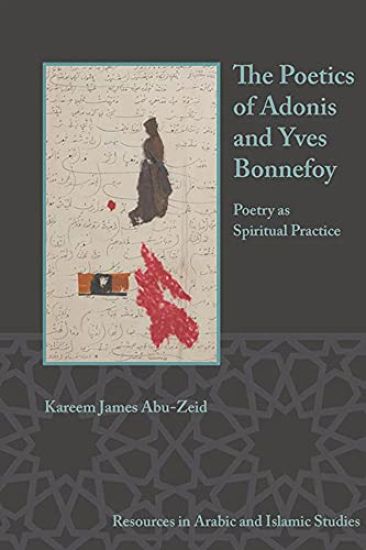
This book examines the work of two major poets who wrote in the second half of the twentieth century, Yves Bonnefoy of France and the Syrian-born Adonis (born Ali Ahmed Saïd). In conducting close readings of key moments from their respective poetry, the author illustrates how both of these writers, in their own unique ways, construct poetry as a form of spiritual practice, that is, as a way of transforming both the poet's and the implied reader's ontological, perceptual and creative relationships with their internal and external worlds.
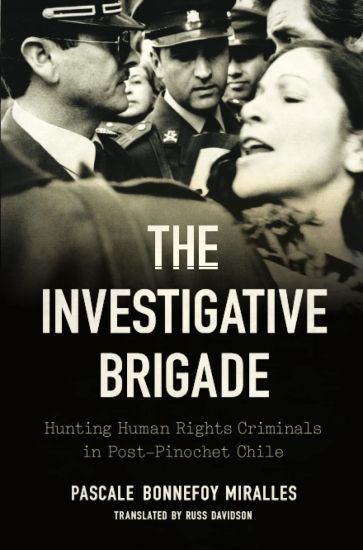
During the seventeen-year Pinochet dictatorship, more than three thousand Chileans were murdered or disappeared without a trace. In 1991, a year after the brutal military regime ended, the new civilian government tasked the nation's detective force to investigate these crimes. Chilean journalist Pascale Bonnefoy tells the dramatic story of the detectives who hunted down and attempted to bring human rights violators to account. Led by a tiny group called Department V, the effort took place in the context of a frail transition to democracy and while the force itself was undergoing profound reforms. With Pinochet still in charge of the army, a center-left government tested how far it could go to bring criminals to justice without risking military backlash.To uncover this story, Bonnefoy gained the trust of detectives assigned to the cases and drew on their direct testimony. She excavated investigative files, witness testimony, and previously secret documents that helped her chronicle the dedicated brigade's dangerous mission. While substantial justice and institutional change took another decade to kick in, the detectives' work made it possible. Still unfolding, the post-Pinochet example is admired by many working for transitional justice around the globe.
During the seventeen-year Pinochet dictatorship, more than three thousand Chileans were murdered or disappeared without a trace. In 1991, a year after the brutal military regime ended, the new civilian government tasked the nation's detective force to investigate these crimes. Chilean journalist Pascale Bonnefoy tells the dramatic story of the detectives who hunted down and attempted to bring human rights violators to account. Led by a tiny group called Department V, the effort took place in the context of a frail transition to democracy and while the force itself was undergoing profound reforms. With Pinochet still in charge of the army, a center-left government tested how far it could go to bring criminals to justice without risking military backlash.To uncover this story, Bonnefoy gained the trust of detectives assigned to the cases and drew on their direct testimony. She excavated investigative files, witness testimony, and previously secret documents that helped her chronicle the dedicated brigade's dangerous mission. While substantial justice and institutional change took another decade to kick in, the detectives' work made it possible. Still unfolding, the post-Pinochet example is admired by many working for transitional justice around the globe.
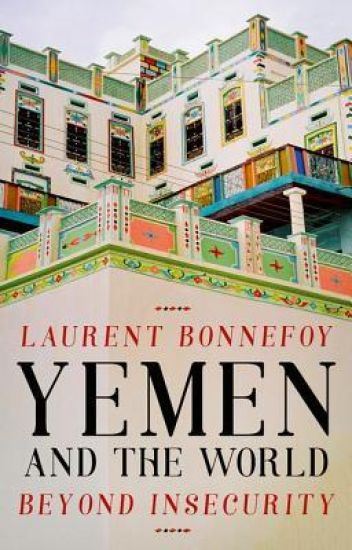
Winner of the Acad mie Fran aise's Prix Eug ne Colas Contemporary Yemen has an image problem. It has long fascinated travelers and artists, and to many embodies both Arab and Muslim authenticity; it stands at important geostrategic and commercial crossroads. Yet, strangely, global perceptions of Yemen are of an entity that is somehow both marginal and passive, yet also dangerous and problematic. The Saudi offensive launched in 2015 has made Yemen a victim of regional power struggles, while the global 'war on terror' has labelled it a threat to international security. This perception has had disastrous effects without generating real interest in the country or its people. On the contrary, Yemen's complex political dynamics have been largely ignored by international observers--resulting in problematic, if not counterproductive, international policies. Yemen and the World offers a corrective to these misconceptions and omissions, putting aside the nature of the world's interest in Yemen to focus on Yemen's role on the global stage. Laurent Bonnefoy uses six areas of modern international exchange--globalization, diplomacy, trade, migration, culture and militant Islamism--to restore Yemen to its place at the heart of contemporary affairs. To understand Yemen, he argues, is to understand the Middle East as a whole.
Title: Histoire de l'administration civile dans la province d'Auvergne et le de partement du Puy-de-Do me ... suivie d'une revue biographique illustre e des membres de l'e tat politique moderne, etc.Publisher: British Library, Historical Print EditionsThe British Library is the national library of the United Kingdom. It is one of the world's largest research libraries holding over 150 million items in all known languages and formats: books, journals, newspapers, sound recordings, patents, maps, stamps, prints and much more. Its collections include around 14 million books, along with substantial additional collections of manuscripts and historical items dating back as far as 300 BC.The HISTORY OF EUROPE collection includes books from the British Library digitised by Microsoft. This collection includes works chronicling the development of Western civilisation to the modern age. Highlights include the development of language, political and educational systems, philosophy, science, and the arts. The selection documents periods of civil war, migration, shifts in power, Muslim expansion into Central Europe, complex feudal loyalties, the aristocracy of new nations, and European expansion into the New World. ++++The below data was compiled from various identification fields in the bibliographic record of this title. This data is provided as an additional tool in helping to insure edition identification: ++++ British Library Bonnefoy, Georges; 1895-1902. 4 vol.; 8 . 010169.k.6.