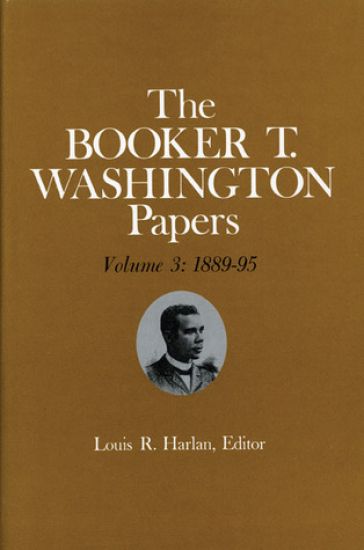
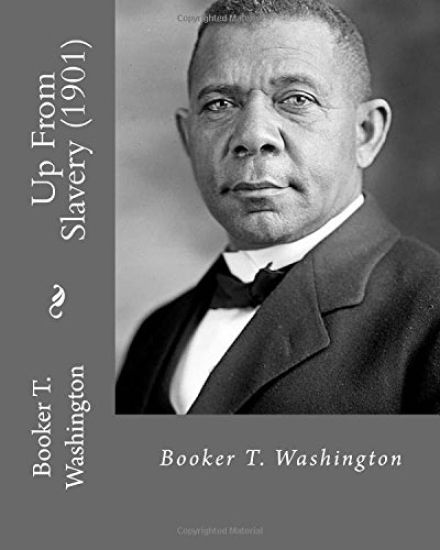
Here is the first of fifteen volumes in a project C. Vann Woodward called "the single most important research enterprise now under way in the field of American black history." Volume 1 contains Washington's Up from Slavery, one of the most widely read American autobiographies, in addition to The Story of My Life and Work, and six other autobiographical writings. Together, the selections provide readers with a first step toward understanding Washington and his immense impact. These writings reveal the moral values he absorbed from his mid-nineteenth-century experiences and teachers. As importantly, they present him to the world as he wished to be seen: as the black version of the American success hero and an exemplar of the Puritan work ethic that he believed to be the secret of his success. These works, along with so much of Washington's writing, served as a model for many black Americans striving to overcome poverty and prejudice.
The memoirs and accounts of the Black educator are presented with letters, speeches, personal documents, and other writings reflecting his life and career.
Discover the inspiring life of one of America's most influential figures in "Booker T. Washington: Builder of a Civilization." This biography chronicles the extraordinary journey of Booker T. Washington, the African American educator who rose from humble beginnings to become a towering force in civil rights and education. Explore Washington's pivotal role in founding the Tuskegee Institute, a landmark institution that empowered generations through practical training and academic excellence. Emmett J. Scott and Lyman Beecher Stowe meticulously detail Washington's tireless dedication to fostering self-reliance and economic opportunity within the African American community. A historical account of a transformative life, this biography offers profound insights into the challenges and triumphs of an era, showcasing Washington's enduring legacy as a builder of not just an institution, but a civilization. A must-read for anyone interested in American history, education, and the ongoing quest for equality.This work has been selected by scholars as being culturally important, and is part of the knowledge base of civilization as we know it.This work is in the public domain in the United States of America, and possibly other nations. Within the United States, you may freely copy and distribute this work, as no entity (individual or corporate) has a copyright on the body of the work.Scholars believe, and we concur, that this work is important enough to be preserved, reproduced, and made generally available to the public. We appreciate your support of the preservation process, and thank you for being an important part of keeping this knowledge alive and relevant.
Discover the inspiring life of one of America's most influential figures in "Booker T. Washington: Builder of a Civilization." This biography chronicles the extraordinary journey of Booker T. Washington, the African American educator who rose from humble beginnings to become a towering force in civil rights and education. Explore Washington's pivotal role in founding the Tuskegee Institute, a landmark institution that empowered generations through practical training and academic excellence. Emmett J. Scott and Lyman Beecher Stowe meticulously detail Washington's tireless dedication to fostering self-reliance and economic opportunity within the African American community. A historical account of a transformative life, this biography offers profound insights into the challenges and triumphs of an era, showcasing Washington's enduring legacy as a builder of not just an institution, but a civilization. A must-read for anyone interested in American history, education, and the ongoing quest for equality.This work has been selected by scholars as being culturally important, and is part of the knowledge base of civilization as we know it.This work is in the public domain in the United States of America, and possibly other nations. Within the United States, you may freely copy and distribute this work, as no entity (individual or corporate) has a copyright on the body of the work.Scholars believe, and we concur, that this work is important enough to be preserved, reproduced, and made generally available to the public. We appreciate your support of the preservation process, and thank you for being an important part of keeping this knowledge alive and relevant.
An illuminating historical biography for students and scholars alike, this book gives readers insight into the life and times of Booker T. Washington.Booker T. Washington was an integral figure in mid-19th to early-20th century America who successfully transitioned from a life in slavery and poverty to a position among the Black elite. This book highlights Washington's often overlooked contributions to the African and African American experience, particularly his support of higher education for Black students through fundraising for Fisk and Howard universities, where he served as a trustee. A vocal advocate of vocational and liberal arts alike, Washington eventually founded his own school, the Tuskegee Institute, with a well-rounded curriculum to expand opportunities and encourage free thinking for Black students. While Washington was sometimes viewed as a "great accommodator" by his critics for working alongside wealthy, white elites, he quietly advocated for Black teachers and students as well as for desegregation. This book will offer readers a clearly written, fully realized overview of Booker T. Washington and his legacy.
This is not a Booker T. Washington biography in the ordinary sense. The exhaustive "Life and Letters of Booker T. Washington" remains still to be compiled. In this more modest work we have simply sought to present and interpret the chief phases of the life of this man who rose from a slave boy to be the leader of ten millions of people and to take his place for all time among America's great men. Booker Taliaferro Washington (April 5, 1856 - November 14, 1915) was an American educator, author, orator, and advisor to presidents of the United States. Between 1890 and 1915, Washington was the dominant leader in the African-American community. Washington was from the last generation of black American leaders born into slavery and became the leading voice of the former slaves and their descendants. They were newly oppressed in the South by disenfranchisement and the Jim Crow discriminatory laws enacted in the post-Reconstruction Southern states in the late 19th and early 20th centuries. Washington was a key proponent of African-American businesses and one of the founders of the National Negro Business League. His base was the Tuskegee Institute, a historically black college in Alabama. As lynchings in the South reached a peak in 1895, Washington gave a speech, known as the "Atlanta compromise", which brought him national fame. He called for black progress through education and entrepreneurship, rather than trying to challenge directly the Jim Crow segregation and the disenfranchisement of black voters in the South. Washington mobilized a nationwide coalition of middle-class blacks, church leaders, and white philanthropists and politicians, with a long-term goal of building the community's economic strength and pride by a focus on self-help and schooling. But, secretly, he also supported court challenges to segregation and restrictions on voter registration, passing on funds to the NAACP for this purpose. 1] Black militants in the North, led by W. E. B. Du Bois, at first supported the Atlanta compromise but after 1909, they set up the NAACP to work for political change. They tried with limited success to challenge Washington's political machine for leadership in the black community but also built wider networks among white allies in the North. 2] Decades after Washington's death in 1915, the civil rights movement of the 1950s took a more active and militant approach, which was also based on new grassroots organizations based in the South, such as CORE, SNCC and SCLC. Booker T. Washington mastered the nuances of the political arena in the late 19th century, which enabled him to manipulate the media, raise money, develop strategy, network, push, reward friends, and distribute funds, while punishing those who opposed his plans for uplifting blacks. His long-term goal was to end the disenfranchisement of the vast majority of African Americans, who then still lived in the South.
Up from Slavery is the 1921 autobiography of Booker T. Washington sharing his personal experience of having to work to rise up from the position of a slave child during the Civil War, to the difficulties and obstacles he overcame to get an education at the new Hampton Institute, to his work establishing vocational schools-most notably the Tuskegee Institute in Alabama-to help black people and other disadvantaged minorities learn useful, marketable skills and work to pull themselves, as a race, up by the bootstraps. He reflects on the generosity of both teachers and philanthropists who helped in educating blacks and Native Americans. He describes his efforts to instill manners, breeding, health and a feeling of dignity to students. His educational philosophy stresses combining academic subjects with learning a trade (something which is reminiscent of the educational theories of John Ruskin). Washington explained that the integration of practical subjects is partly designed to reassure the white community as to the usefulness of educating black people. This book was first released as a serialized work in 1900 through The Outlook, a Christian newspaper of New York. This work was serialized because this meant that during the writing process, Washington was able to hear critiques and requests from his audience and could more easily adapt his paper to his diverse audience. First Cover of The Outlook newspaper Washington was a controversial figure in his own lifetime, and W. E. B. Du Bois, among others, criticized some of his views. The book was, however, a best-seller, and remained the most popular African American autobiography until that of Malcolm X. In 1998, the Modern Library listed the book at No. 3 on its list of the 100 best nonfiction books of the 20th century, and in 1999 it was also listed by the conservative Intercollegiate Review as one of the "50 Best Books of the Twentieth Century".Up from Slavery chronicles more than forty years of Washington's life: from slave to schoolmaster to the face of southern race relations. In this text, Washington climbs the social ladder through hard, manual labor, a decent education, and relationships with great people. Throughout the text, he stresses the importance of education for the black population as a reasonable tactic to ease race relations in the South (particularly in the context of Reconstruction). Booker Taliaferro Washington (April 5, 1856 - November 14, 1915) was an American educator, author, orator, and advisor to presidents of the United States. Between 1890 and 1915, Washington was the dominant leader in the African-American community. Washington was from the last generation of black American leaders born into slavery and became the leading voice of the former slaves and their descendants. They were newly oppressed in the South by disenfranchisement and the Jim Crow discriminatory laws enacted in the post-Reconstruction Southern states in the late 19th and early 20th centuries. Washington was a key proponent of African-American businesses and one of the founders of the National Negro Business League.