Kirjojen hintavertailu. Mukana 11 244 527 kirjaa ja 12 kauppaa.

Kirjahaku

Etsi kirjoja tekijän nimen, kirjan nimen tai ISBN:n perusteella.

1000 tulosta hakusanalla Boris Pasternak

Boris Pasternak

Boris Pasternak

Christopher Barnes

Cambridge University Press
2004
pokkari
This authoritative new biography of the Russian poet and prose writer Boris Pasternak is the first part of a two-volume set, covering the period 1890-1928. Drawing on archives and many eyewitness accounts, Barnes' study sheds light on currently unexplored aspects of Pasternak's character and family background, and his artistic, social and historical environment. He combines biographical investigation with detailed textual analysis of translated quotations in verse and prose to reveal the source of Pasternak's extraordinary writings. The book examines a wide range of topics that include his musical enthusiasm and relations with Scriabin, his philosophical studies, his activities in World War I and his response to the 1917 revolutions, and his stance as a liberal artistic intellectual in the 1920s.
Boris Pasternak

Boris Pasternak

Christopher Barnes

Cambridge University Press
2004
pokkari
This concluding volume of Christopher Barnes’s acclaimed biography of the Russian poet and prose-writer Boris Pasternak covers the period from 1928 to his death, during which he wrote the famous Dr Zhivago and was awarded the Nobel Prize for Literature. Drawing on archive material (including the Pasternak family archive), eyewitness accounts and a huge range of biographical and background information, Barnes brings to light many aspects of Pasternak’s personality and private life, while illuminating his relations with the Communist régime and the literary establishment. There is a detailed discussion of Pasternak’s original writing (with ample quotation in English translation), and his translations of Goethe, Shakespeare and others. The growth story of Dr Zhivago is traced, and the personal and political implications of the novel’s controversial publication explored. The biography concludes with a discussion of Pasternak’s Nobel Prize award, final years and death, with a brief account of his posthumous and artistic legacy.
Boris Pasternak

Boris Pasternak

Lazar Fleishman

Harvard University Press
1990
sidottu
Boris Pasternak has generally been regarded as an artist who was indifferent to the literary and political storms of his time. Lazar Fleishman gives the great writer's life a new perspective. He shows that Pasternak's entire literary career should be regarded as a complex and passionate response to constant changes in Russian cultural and social life. Drawing on a vast array of sources, Fleishman's chronicle encompasses both the familiar and the little-known aspects of the poet's life and work. He describes the formative role played by Pasternak's father, a prominent Russian painter, and the intellectual endeavors of the young man before his literary debut. He explores the intricate relations of Pasternak to the main movements of literary modernism, including symbolism and futurism. Particularly informative are the chapters devoted to the postrevolutionary years. Fleishman untangles the poet's contacts with leading political figures (Stalin, Trotsky, Bukharin) and fellow writers (Gorky, Mayakovsky, Tsvetaeva, Akhmatova, Mandelshtam), and examines his changes in fortune during the purges and World War II. He shows how Pasternak was perceived by Western contemporaries and how significant their moral support was for him during the darkest years of Stalin's regime. He provides explanations for the Christian themes in Pasternak's later work, as well as the poet's peculiar view of Jewry. Finally, Fleishman recreates the vicissitudes of the publication of "Doctor Zhivago" and the ensuing Nobel Prize scandal in 1958. A fascinating description of the writer's career in broad context, this book will be welcomed by everyone interested in Pasternak and in twentieth-century literature.
Selected Poetry of Boris Pasternak

Selected Poetry of Boris Pasternak

Boris Pasternak

Bibliotech Press
2022
pokkari
Boris Pasternak was a Nobel Prize and gret modern russian poet and writer. Pasternak's first book of poems, My Sister, Life (1917), is one of the most influential collections ever published in the Russian language. When it finally was published in 1921, the book revolutionised Russian poetry. It made Pasternak the model for younger poets, and decisively changed the poetry of Osip Mandelshtam, Marina Tsvetayeva and others. He continued to change his poetry, simplifying his style and language through the years, as expressed in his next book, Early Trains (1943). Pasternak's post-Zhivago poetry probes the universal questions of love, immortality, and reconciliation with God. Boris Pasternak wrote his last complete book, When the Weather Clears, in 1959. Pasternak was awarded the Nobel Prize for Literature in 1958, an event which both humiliated and enraged the Communist Party of the Soviet Union, which forced him to decline the prize, though his descendants were later to accept it in his name in 1988.
Selected Poetry of Boris Pasternak

Selected Poetry of Boris Pasternak

Boris Pasternak

Bibliotech Press
2022
sidottu
Boris Pasternak was a Nobel Prize and gret modern russian poet and writer. Pasternak's first book of poems, My Sister, Life (1917), is one of the most influential collections ever published in the Russian language. When it finally was published in 1921, the book revolutionised Russian poetry. It made Pasternak the model for younger poets, and decisively changed the poetry of Osip Mandelshtam, Marina Tsvetayeva and others. He continued to change his poetry, simplifying his style and language through the years, as expressed in his next book, Early Trains (1943). Pasternak's post-Zhivago poetry probes the universal questions of love, immortality, and reconciliation with God. Boris Pasternak wrote his last complete book, When the Weather Clears, in 1959. Pasternak was awarded the Nobel Prize for Literature in 1958, an event which both humiliated and enraged the Communist Party of the Soviet Union, which forced him to decline the prize, though his descendants were later to accept it in his name in 1988.
Boris Pasternak. Stikhotvorenija

Boris Pasternak. Stikhotvorenija

Boris Pasternak

Zvonnitsa-MG
2018
sidottu
Boris Leonidovich Pasternak - voshel v russkuju poeziju nezametno. Kazhetsja, chto on vsegda v nej byl. Predlagaemyj sbornik predstavljaet chitatelju izbrannoe poeta, chtoby pokazat dvizhenie ot eksperimentov s formoj k "eksperimentu" s myslju. Na ravnykh pravakh s izvestnymi stikhami i, bolee togo, kak zakljuchenie knigi stikhov, predlagajutsja chitatelju stikhotvorenija, ne vkljuchennye v osnovnoe sobranie, drugie redaktsii i varianty. Dolgoe vremja ignoriruemyj, a vposledstvii i gonimyj na rodine ne tolko ofitsialnoj vlastju, no i obolvanennymi neobrazovannymi massami, on byl udostoen vysshej literaturnoj nagrady - Nobelevskoj premii (1958).
Boris Pasternak: Volume 1, 1890–1928

Boris Pasternak: Volume 1, 1890–1928

Christopher Barnes

Cambridge University Press
1989
sidottu
This authoritative new biography of the Russian poet and prose writer Boris Pasternak is the first part of a two-volume set, covering the period 1890-1928. Drawing on archives and many eyewitness accounts, Barnes' study sheds light on currently unexplored aspects of Pasternak's character and family background, and his artistic, social and historical environment. He combines biographical investigation with detailed textual analysis of translated quotations in verse and prose to reveal the source of Pasternak's extraordinary writings. The book examines a wide range of topics that include his musical enthusiasm and relations with Scriabin, his philosophical studies, his activities in World War I and his response to the 1917 revolutions, and his stance as a liberal artistic intellectual in the 1920s.
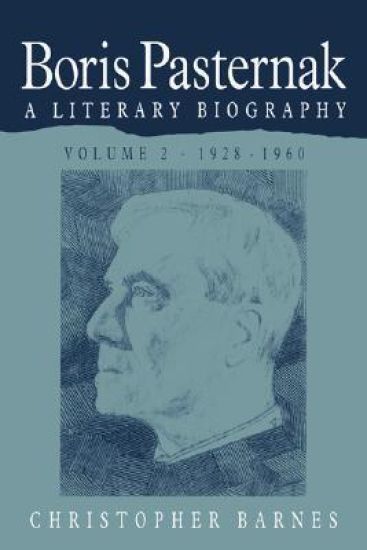
Boris Pasternak: Volume 2, 1928–1960

Boris Pasternak: Volume 2, 1928–1960

Christopher Barnes

Cambridge University Press
1998
sidottu
This concluding volume of Christopher Barnes’s acclaimed biography of the Russian poet and prose-writer Boris Pasternak covers the period from 1928 to his death, during which he wrote the famous Dr Zhivago and was awarded the Nobel Prize for Literature. Drawing on archive material (including the Pasternak family archive), eyewitness accounts and a huge range of biographical and background information, Barnes brings to light many aspects of Pasternak’s personality and private life, while illuminating his relations with the Communist régime and the literary establishment. There is a detailed discussion of Pasternak’s original writing (with ample quotation in English translation), and his translations of Goethe, Shakespeare and others. The growth story of Dr Zhivago is traced, and the personal and political implications of the novel’s controversial publication explored. The biography concludes with a discussion of Pasternak’s Nobel Prize award, final years and death, with a brief account of his posthumous and artistic legacy.
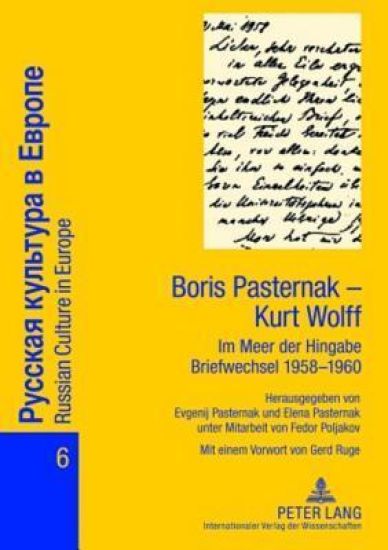
Boris Pasternak - Kurt Wolff - Im Meer Der Hingabe. Briefwechsel 1958-1960
Diese kommentierte Edition vereint erstmals 66 Briefe - von Mai 1958 bis Mai 1960 - sowie weitere Materialien aus dem Privatarchiv der Familie Pasternak (Moskau), dem Deutschen Literaturarchiv (Marbach) und dem Nachlass von Helen und Kurt Wolff an der Yale University (New Haven, CT). Der Briefwechsel zwischen Boris Pasternak und seinem amerikanischen Verleger Kurt Wolff, der massgeblich an der weltweiten Anerkennung Pasternaks beteiligt war, spiegelt die sowohl gluckliche als auch tragische Geschichte seiner letzten Lebensjahre wider - der Jahre seines Ruhmes im Westen und einer Hetzkampagne gegen ihn in seiner Heimat, der Zeit der Veroeffentlichung des "Doktor Zivago" im Ausland, der Verleihung des Nobelpreises fur Literatur 1958.
Boris Pasternak v pismakh, dnevnikakh i vospominanijakh sovremennikov
"Osobennost etogo sobranija v ego mnogolikosti, v popytke obedinit v nem kak mozhno bolshee kolichestvo sovershenno raznykh po obemu i shirote materialov. I, konechno, bez osnovopolagajuschikh vospominanij blizkikh k Pasternaku sovremennikov ono obojtis ne moglo. V etot tom dobavleno znachitelnoe kolichestvo novykh tekstov, libo ne publikovavshikhsja nikogda, libo opublikovannykh na inostrannykh jazykakh v sluchajnykh periodicheskikh izdanijakh davnej pory. Chasche vsego - zarubezhnykh" (A.Ju. Sergeeva-Kljatis).Sostaviteli E. V. Pasternak, A.Ju. Sergeeva-Kljatis.
Boris Pasternaks Monadische Poetik

Boris Pasternaks Monadische Poetik

Reinhold Vogt; Elise Vogt

Peter Lang AG
1997
nidottu
Boris Pasternak (1890-1960) hat sich wahrend seines Philosophiestudiums auch mit der Philosophie Leibniz' beschaftigt. Die Studie geht den Analogien zwischen Pasternaks kunstlerischem Weltmodell und Leibniz' philosophischem Weltentwurf nach. Dieser Vergleich zeigt, dass Pasternaks poetische Welt in der Tradition eines metaphysischen Optimismus steht, der das Universum als aktuelle Sinnfulle modelliert. Das die "condition moderne" kennzeichnende Bewusstsein der epochalen Krise, der Auflosung des Ganzen und des -grossen Stils- (Nietzsche) wendet Pasternak positiv um: Gegen die mit dem Krisenbewusstsein einhergehenden Entfremdungserfahrungen fuhrt er stets aufs neue den Beweis der Integrierbarkeit des Fremden ins Eigene."
The Poetic World of Boris Pasternak

The Poetic World of Boris Pasternak

Olga Raevsky Hughes

Princeton University Press
2015
pokkari
The dramatic political struggle of Boris Pasternak and the continued success of his novel. Dr. Zhivago, have often taken center stage in discussions of this writer. Olga Raevsky Hughes chooses instead to focus on the aesthetics underlying Pasternak's snuggles and successes to explore the ways in which his views of art and the artist were applied in his writings. Professor Hughes examines those aspects of Pasternak's views on art that he himself considered crucial: the beginnings of poetry in his life, the relation of his art to life, his relationship to his time, and his responsibility to lite and to society. Pasternak's views on art are analyzed as he himself saw them in his autobiographies, critical essays, and letters; and also as they were reflected in his work. Pasternak is allowed to speak for himself: accordingly, all of his published works are used, including letters, little-known works, and available variants of his early poems. Originally published in 1975. The Princeton Legacy Library uses the latest print-on-demand technology to again make available previously out-of-print books from the distinguished backlist of Princeton University Press. These editions preserve the original texts of these important books while presenting them in durable paperback and hardcover editions. The goal of the Princeton Legacy Library is to vastly increase access to the rich scholarly heritage found in the thousands of books published by Princeton University Press since its founding in 1905.
The Poetic World of Boris Pasternak

The Poetic World of Boris Pasternak

Olga Raevsky Hughes

Princeton University Press
2016
sidottu
The dramatic political struggle of Boris Pasternak and the continued success of his novel. Dr. Zhivago, have often taken center stage in discussions of this writer. Olga Raevsky Hughes chooses instead to focus on the aesthetics underlying Pasternak's snuggles and successes to explore the ways in which his views of art and the artist were applied in his writings. Professor Hughes examines those aspects of Pasternak's views on art that he himself considered crucial: the beginnings of poetry in his life, the relation of his art to life, his relationship to his time, and his responsibility to lite and to society. Pasternak's views on art are analyzed as he himself saw them in his autobiographies, critical essays, and letters; and also as they were reflected in his work. Pasternak is allowed to speak for himself: accordingly, all of his published works are used, including letters, little-known works, and available variants of his early poems. Originally published in 1975. The Princeton Legacy Library uses the latest print-on-demand technology to again make available previously out-of-print books from the distinguished backlist of Princeton University Press. These editions preserve the original texts of these important books while presenting them in durable paperback and hardcover editions. The goal of the Princeton Legacy Library is to vastly increase access to the rich scholarly heritage found in the thousands of books published by Princeton University Press since its founding in 1905.
February: Selected Poetry of Boris Pasternak

February: Selected Poetry of Boris Pasternak

Andrey Kneller

Createspace Independent Publishing Platform
2008
nidottu
One of the greatest poets of the Silver Age, Boris Pasternak (February 10, 1890 - May 30, 1960) became known in the west after he was awarded the 1958 Nobel Laureate in Literature and was forced by the Russian authorities to decline the prize. This scandal won him a large audience in the west and his novel, Dr. Zhivago became an instant success. However, contrary to popular belief, Boris Pasternak has never actively rebelled against the Soviet regime. His poetry has always reflected his inner self and was not dictated by the atmosphere of the epoch. In Russia, where the novel, Dr, Zhivago, had been banned until the late 1980's, Boris Pasternak was primarily known for his work as a poet. Boris Pasternak, whose first true love was music, brings a unique sense of melody to his poetry. Barely a whisper, one almost needs to overhear the subtle song in his words. It is this quality of his poetry that sets him apart from his contemporaries and makes his work moving and unforgettable.Nearly all of the poems from Dr. Zhivago (with the exceptions of "Wedding," "Star of Nativity," and "The Miracle," which proved to be too difficult to translate adequately) are included in this dual-language edition, as well as some other poetry written throughout his life. Great emphasis has been placed on retaining the musical quality of the work, without sacrificing the content.