Kirjojen hintavertailu. Mukana 11 244 527 kirjaa ja 12 kauppaa.

Kirjahaku

Etsi kirjoja tekijän nimen, kirjan nimen tai ISBN:n perusteella.

94 tulosta hakusanalla Bozwick Abel

Domingo

Domingo

Bozwick Abel

Bozwick Abel
2020
pokkari
After gaining independence from Spain in 1821, many Mexican civilians made their way into the Nuevo Territory in search of good fortune promised by their government in the interest of populating the territory now known as New Mexico.After receiving a land grant right before the Mexican-American War, Domingo moves his family just south of the Gila river to fulfil his lifelong dream of being a wealthy ranchero. He soon realizes the key to survival is not only in keeping a low profile but also in knowing who your friends and enemies are, and that today's friend can easily become tomorrow's enemy.As great Apache warriors struggle to keep their land and way of life, The American and Mexican armies collide, destroying everything in their path in the name of independence and control of the territory. The two armies terrorize the countryside while Apache tribes attack anyone who comes near. The Mexican civilians struggle to survive at the mercy of each side and their loyalties are tested.As the battles inch their way closer to Domingo's home, will he stay and fight to achieve his dream, or will his dream become his worst nightmare?
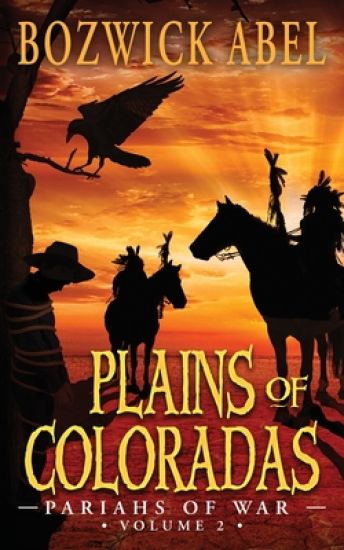
Plains of Coloradas

Plains of Coloradas

Bozwick Abel

Bozwick Abel
2020
pokkari
In the spring of 1847, with the end of the Mexican-American War in sight, many people in the New Mexico territory struggle to adapt to American rule. The newly acquired territory brings many challenges and an uncertain stability to the already divided America. Old paths are destroyed while new ones begin to take shape with disorder and vigilante justice paving the way. Mexican Rancheros and Apache Indians struggle to keep their land while being continuously threatened by a flood of American soldiers as they quell the last areas of Mexican resistance. Chaos reigns as the livelihoods of many hang in the balance. After a daring escape from Santa Fe, Chief Red Sleeves knows war is on the horizon. But first he needs to avenge those who perished while still protecting those still living. The darkest days are far from over for the mighty chief now being sought by bounty hunters. Only a small light of hope still flickers for his people as he sets his sights on his tribe's most feared enemies. In his quest, the most unlikely partnerships will form and the chance of lasting peace will be all but lost.
The Last of the Tasmanians (1870) by: James Bonwick

The Last of the Tasmanians (1870) by: James Bonwick

James Bonwick

Createspace Independent Publishing Platform
2018
nidottu
James Bonwick (8 July 1817 - 6 October 1906) was an English-born Australian historical and educational writer.Bonwick was born Lingfield, Surrey, England, the eldest son of James Bonwick, carpenter, and his second wife Mary Ann n e Preston. James Bonwick, the elder, was a man of some mechanical ability, but he suffered from ill health, and his children were brought up in poor circumstances. His eldest son was educated at the Borough Road school, Southwark, and at 17 years of age began teaching at a school at Hemel Hempstead and similar positions followed at Bexley and Liverpool. In April 1840 he married Esther Ann Beddow, the daughter of a Baptist clergyman, and in the following year obtained a position at the Normal School, Hobart, Tasmania.Bonwick and his wife arrived at Hobart on 10 October 1841. He was a successful teacher in Hobart for eight years and published the first of his many school books Geography for the Use of Australian Youth in 1845. He went to Adelaide in 1850, and opened a private school. In 1852 made his way to the Victorian gold diggings after finding himself in debt. He did not find much gold, but his health benefited. He then went to Melbourne where he published The Australian Gold-Diggers' Monthly Magazine from October 1852 until its final edition in May 1853. In 1852 he also published "Notes of a gold digger: and gold digger's guide". He then established a successful boarding school at Kew now a suburb of Melbourne. He had already published several school books and pamphlets, when in 1856 he published his Discovery and Settlement of Port Phillip,
English Radicals and the American Revolution

English Radicals and the American Revolution

Bonwick Colin

The University of North Carolina Press
2011
nidottu
Bonwick brings together related elements that have been treated separately on previous occasions--English radicals as personalities, their relations with one another, their connections with Americans; the imperial controversy between England and the colonies; the movement for parliamentary reform in England; and the campaign for civil rights for Dissenters. The study brings fresh meaning to English radicalism and ideas about liberty during the revolutionary era.A UNC Press Enduring Edition -- UNC Press Enduring Editions use the latest in digital technology to make available again books from our distinguished backlist that were previously out of print. These editions are published unaltered from the original, and are presented in affordable paperback formats, bringing readers both historical and cultural value.
American Revolution

American Revolution

Bonwick

University of Virginia Press
1991
nidottu
This book traces the development of the United States from the 1760s to the consolidation of the federal government during the 1790s. The author argues that the creation of the American republic was a major revolution; by the time it was complete the United States was radically different from Britain and the colonies out which it had emerged. Extensive coverage is given to the establishment of governments, first in the states then at the national level, and to social development in the states. It is argued that many of of the most significant changes took place at this level.
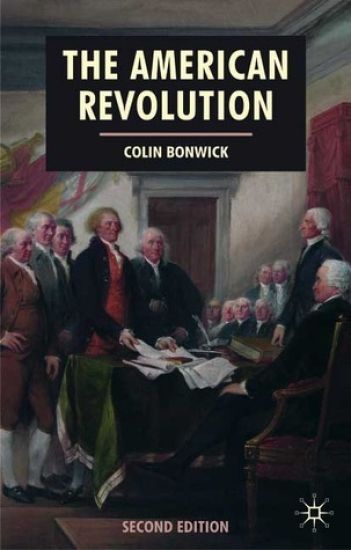
The American Revolution

The American Revolution

Colin Bonwick

Red Globe Press
2005
nidottu
Colin Bonwick expands and updates the well-received first edition, and incorporates fresh material drawn from recent scholarship. The structure and argument of the book remain as before, but in particular Bonwick pays greater attention to Native Americans, African Americans, and white women. Though the book traces the attainment of independence, it focuses especially on the internal revolution that created republican governments, and considers the extent of social change. It concludes by examining the development of the American union.
How To Disappear Completely

How To Disappear Completely

David Bowick

Wood and Lead
2008
nidottu
Sitting at the top of a Ferris wheel overlooking the Boston skyline, Josh's life takes an unexpected turn, and things will never be the same. Along with the many surprises on his life's new path, he'll come to take life advice from a family of ducks, get in a bloody war with a dog, lose his job over a spilled drink, wake up in the hospital, apply to work at an adult-themed novelty bakery, and find out that people often aren't what they seem. When you're at the top of the world, there's nowhere to go but down.
RF Circuit Design

RF Circuit Design

Christopher Bowick

Newnes (an imprint of Butterworth-Heinemann Ltd )
2007
nidottu
It’s Back! New chapters, examples, and insights; all infused with the timeless concepts and theories that have helped RF engineers for the past 25 years! RF circuit design is now more important than ever as we find ourselves in an increasingly wireless world. Radio is the backbone of today’s wireless industry with protocols such as Bluetooth, Wi-Fi, WiMax, and ZigBee. Most, if not all, mobile devices have an RF component and this book tells the reader how to design and integrate that component in a very practical fashion. This book has been updated to include today's integrated circuit (IC) and system-level design issues as well as keeping its classic "wire lead" material. Design Concepts and Tools Include •The Basics: Wires, Resistors, Capacitors, Inductors •Resonant Circuits: Resonance, Insertion Loss •Filter Design: High-pass, Bandpass, Band-rejection •Impedance Matching: The L Network, Smith Charts, Software Design Tools •Transistors: Materials, Y Parameters, S Parameters •Small Signal RF Amplifier: Transistor Biasing, Y Parameters, S Parameters •RF Power Amplifiers: Automatic Shutdown Circuitry , Broadband Transformers, Practical Winding Hints •RF Front-End: Architectures, Software-Defined Radios, ADC’s Effects •RF Design Tools: Languages, Flow, Modeling Check out this book’s companion Web site at: http://www.elsevierdirect.com/companion.jsp?ISBN=9780750685184 for full-color Smith Charts and extra content!
Developing a Skilled Workforce for the Oil and Natural Gas Industry

Developing a Skilled Workforce for the Oil and Natural Gas Industry

Robert Bozick; Gabriella C Gonzalez; Cordaye Ogletree

RAND
2017
nidottu
Horizontal drilling and hydraulic fracturing to tap natural gas are predicted to bring significant long-term benefits to Ohio, Pennsylvania, and West Virginia. To inform policy decisions on how best to expand and sustain the pool of workers with knowledge and skills needed by oil and natural gas employers in the tristate region, this report summarizes findings from surveys administered to oil and gas employers and education providers.
Building Communities, Not Audiences

Building Communities, Not Audiences

Doug Borwick

Artsengaged
2012
pokkari
Building Communities, Not Audiences: The Future of the Arts in the U.S, written and edited by Doug Borwick, holds that established arts organizations, for practical and moral reasons, need to be more deeply connected to their communities. It serves as an essential primer for any member of the arts community-artist, administrator, board member, patron, or friend-who is interested in the future of the arts in the U.S. It also provides new ways of looking at the arts as a powerful force for building better communities and improving lives. For the companion "how to" book, see Engage Now A Guide to Making the Arts Indispensable]It is from community that the arts developed and it is in serving communities that the arts will thrive . . . Communities do not exist to serve the arts; the arts exist to serve communities.Building Communities, Not Audiences identifies the factors that serve to isolate established arts organizations from their communities, points out the trends that loom as imminent threats to the long-term viability of the artistic status quo, and presents principles and mechanisms whereby arts organizations can significantly extend their reach into the community, supporting enhanced sustainability. Included are case studies and examples of successful community engagement work being conducted by arts organizations from around the U.S.Twenty-three contributors, representing chamber music, dance, museums, opera, orchestras, and theatre as well as an array of arts administration perspectives provide breadth of coverage.The economic, social, and political environments out of which the infrastructure for Western 'high arts' grew have changed. Today's major arts institutions, products of that legacy, no longer benefit from relatively inexpensive labor, a nominally homogeneous culture, or a polity openly managed by an elite class. Expenses are rising precipitously and competition for major donors is increasing; as a result, the survival of established arts organizations hinges on their ability to engage effectively with a far broader segment of the population than has been true to date.From the Foreword by Rocco Landesman, Chairman, National Endowment for the Arts: I think the days of the arts in ivory towers are behind us; the very best arts organizations are . . . connecting communities with artists . . . . Not only can the arts build communities, I think we must.From the Foreword by Robert L. Lynch, President & CEO, Americans for the Arts: Doug Borwick calls for substantive rather than superficial efforts, authentic and systemic changes. . . . The challenge is not whether to build communities or audiences but how to build communities and audiences together.
Engage Now!

Engage Now!

Doug Borwick

Artsengaged
2015
pokkari
Arts organizations cannot long survive without earning impassioned support from the communities they serve.Communities cannot reach their full potential without the benefits the arts can provide.For some, the arts as indispensable is a preposterous idea, yet nearly every stakeholder in the industry believes the arts' value to be unquestionable. That gap accounts for most of the challenges arts organizations face. As long as the arts are seen as an amenity (at best), they will struggle in a world that only has time for that which is necessary. "Mere" relevance will not suffice. To compete in the marketplace of public value the required standard is indispensability. Engage Now is a "how to" manual for the arts organization seeking to become invaluable. For the companion book, see Building Communities, Not Audiences: The Future of the Arts in the United States]Engage Now is a "how to" manual for the arts organization seeking to become invaluable. ItPresents basic principles and practices of effective community engagement, Provides guidance for achieving systemic focus on engagement, andOutlines a process for becoming a universally recognized community asset.This book is intended for anyone with a vested interest in the arts. Since the arts are essential for healthy individuals and healthy communities, it is for everyone. However, far too few people are aware of their "vested interest." That makes Engage Now important for us all.TABLE OF CONTENTSPart I: The Mission of Arts OrganizationsChapter One: Systemic Challenges and Internal IssuesChapter Two: What Is the Arts Business?Chapter Three: The Way Forward: New Understanding of MissionPart II: A Community Engagement PrimerChapter Four: Engagement EssentialsThe Practice of EngagementChapter Five: The Engagement Process: Principles and PracticeChapter Six: Engaged Arts: OrganizationsChapter Seven: Engaged Arts: Artists (Entrepreneurship)Chapter Eight: The Engagement Process: An Operational BlueprintConclusionA playbook for arts organizations to become as indispensable as the corner storeJamie Bennett, Executive Director, ArtPlace AmericaAn eloquent and persuasive voice in a global conversation about the power of the arts to transform our societySimon Brault, author, No Culture, No Future Director and CEO, Canada Council for the ArtsGreat advice about engaging more of the population, growing your organization and increasing opportunity for successful operations and artistic expression Janet Brown, President & CEO Grantmakers in the ArtsA distinctively valuable guide for how to integrate arts management and community developmentJonathan Katz, former CEO, National Assembly of State Arts AgenciesBorwick probes arts organizations to evaluate their relationship with their community and provides action steps to building a stronger, more sustainable connection with the people we] serveRobert Lynch, President & CEO, Americans for the ArtsA guiding light for nonprofit arts organizations seeking to be relevant, responsive, and indispensable to the communities we exist to benefitJosephine Ramirez, Arts Program Director, James Irvine FoundationBorwick leaves no question unasked, proving why he is the authority on community engagement workAlan Salzenstein, President, Association of Arts Administration Educators and Professor of Performing Arts Management/Arts Leadership, DePaul University