Kirjahaku
Etsi kirjoja tekijän nimen, kirjan nimen tai ISBN:n perusteella.
1000 tulosta hakusanalla Br Ericjon Thomas


Lynchburg Virginia. The former site of a thriving cotton mill is now an impoverished neighborhood. Deeply affected by all the recent killings of young black men like himself Ruffrino a 14-year-old militant incites riots at school and online. As Ruffrino grows more and more at odds with his mother and grandfather his anger builds beyond containment. Meanwhile the family home literally sinks into the cotton field and no one but Ruffrino seems to notice.
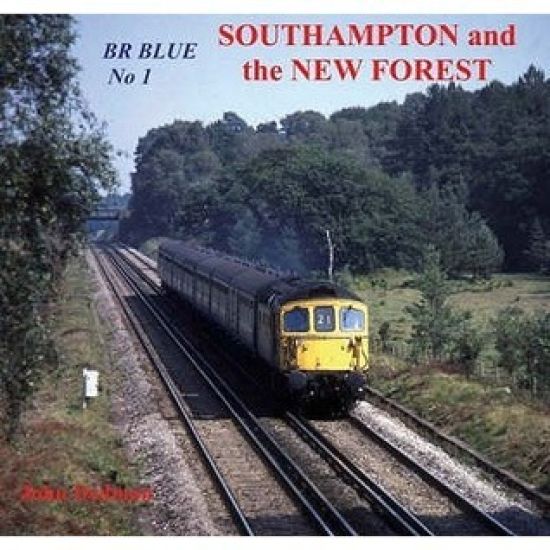
Following the demise of steam, there was for a while the impression that the contemporary railway scene would be of little interest to the enthusiast. This book is an exercise in nostalgia featuring the early diesel area, which is now as much a part of history, as the steam age.

Br to Brou: Assorted Correspondence and Ephemera File
Eric P Newman
Hassell Street Press
2021
nidottu
This work has been selected by scholars as being culturally important and is part of the knowledge base of civilization as we know it.This work is in the public domain in the United States of America, and possibly other nations. Within the United States, you may freely copy and distribute this work, as no entity (individual or corporate) has a copyright on the body of the work.Scholars believe, and we concur, that this work is important enough to be preserved, reproduced, and made generally available to the public. To ensure a quality reading experience, this work has been proofread and republished using a format that seamlessly blends the original graphical elements with text in an easy-to-read typeface.We appreciate your support of the preservation process, and thank you for being an important part of keeping this knowledge alive and relevant.
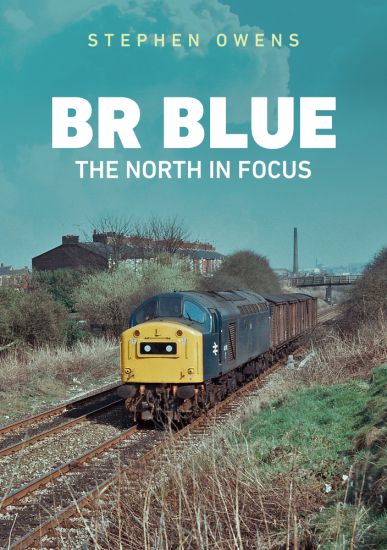
From 1978 onwards, during the period often referred to as BR Blue, Stephen Owens was able to photograph for posterity some of what he saw on the railway. Some might suggest the period didn’t have the interest of the steam era – how could it? It was an era when the railway appeared neglected and threadbare; it was being run on a shoestring, and it looked and felt like it. Be that as it may, it had its devotees and supporters. Some rail enthusiasts instinctively recognised that the situation couldn’t and wouldn’t last. In a way it was similar to the end of steam: the clock was ticking, but this time no-one knew when it would stop, nor what would follow. With a wonderful selection of images, this nostalgic look back at the era of Rail Blue in northern England and Scotland will delight rail enthusiasts both young and old.

This book is a portrait of the period that became known as the era of BR Blue – the 1970s and 1980s. The railway appeared to be caught up in a world of its own. It was still recognisably the one from the steam era, and happy to be living in the past rather than making strides toward the future. As with most of the nationalised industries, labour relations were somewhat fraught. The railway invested in electrification and everything else was standardised to minimise costs. Unsurprisingly, stagnation haunted the network. Some would suggest the railway was doing a particularly fine job given the circumstances. It was fortunate to be blessed with a dedicated workforce and supported by thousands of people who travelled by train. For those of us who remember those days fondly, this is how we would prefer to remember that time.
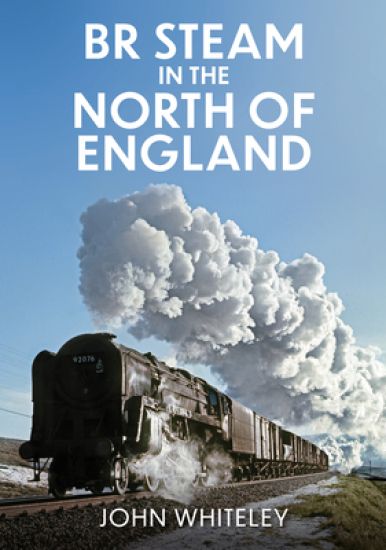
In this book John Whiteley provides a photographic survey of the last years of steam on British Railways in the North of England. The photographs cover the period from c. 1959/60 to the end of steam in the area in 1968. By the early 1960s British Rail was rapidly replacing steam with modern traction, but before the last steam locomotives were withdrawn the decade witnessed a glorious swansong for steam in the North of England. The area covered ranges from northern Derbyshire and northern Cheshire to include the last days of steam in the Peak District, Yorkshire, Lancashire and Cumbria up to the Scottish border. The use of GWR locomotives around Chester in the early 1960s is also included as well as steam in and around Manchester. This photographic survey of the last years of steam on BR in the North of England will appeal to all those with an interest in the history of the railways of this region.
BR Swindon Type 1 0-6-0 Diesel-Hydraulic Locomotives - Class 14
Anthony P Sayer
PEN SWORD BOOKS LTD
2022
sidottu
In 1957 the Western Region of BR identified a need for 400 Type 1 diesel locomotives for short-haul freight duties but it was 1964 before the first was introduced. General-purpose Type 1s were being delivered elsewhere but WR management regarded these as too expensive for their requirements. After completion of design work on the Western' locomotives, Swindon turned to creating a cheap no-frills' Type 1. At 65% of the cost of the Bo-Bo alternative, the Swindon 0-6-0 represented a better fit' for the trip-freight niche. Since 1957 the privatised road-haulage industry had decimated BR's wagon-load sector; whilst the 1962 Transport Act released BR from its financially-debilitating public-service obligations, the damage had been done, and the 1963 Beeching Plan focused on closing unprofitable routes and associated services. By 1963 the original requirement for 400 Type 1s had been massively reduced. Fifty-six locomotives were constructed in 1964/65. Continuing traffic losses resulted in the whole class becoming redundant by 1969. Fortuitously, a demand for high-powered diesels on the larger industrial railway systems saw the bulk of the locomotives finding useful employment for a further twenty years. This companion book to "Their Life on British Railways" provides an extensive appraisal of "Their Life in Industry" for the forty-eight locomotives which made the successful transition after withdrawal from BR in 1968/69.
![[Br]other](/covers/9781431429783.jpg)
A strongly truthful book. Oatway and Skuy have brought together this collection of photographs in a way that forces us to view the individuals as human. Unsettling and disturbing, it is unapologetic about the job of work it has been tasked to do. Xenophobia has to be considered, not just as another example of lawlessness, even though our leaders have responded by predominantly labelling xenophobia a crime. This is true. In an obvious sense. But also only partly true. The bigger, more horrendous truth is that it is crime-with-an-edge – anti-migrant crime, anti-African-migrant crime. As Edwin Cameron writes in his foreword, we are directed to view just whose stories are told – and whose are obscured; who is allowed to be visible – and who is erased? Photography entails more than record-keeping. It engages processes of world-making that organise how we understand our worlds, and ourselves, and how we engage with our communities. By engaging our attention on certain sites and away from others it frames what and who are worth seeing. In this way, the photographer helps produce a public knowledge about who should be made visible. South Africans know this acutely, for photographers, some of them heroic, some at cost to their own lives, made apartheid visible.
BR Swindon Type 1 0-6-0 Diesel-Hydraulic Locomotives - Class 14
Anthony P Sayer
PEN SWORD BOOKS LTD
2022
sidottu
In 1957 the Western Region of BR identified a need for 400 Type 1 diesel locomotives for short-haul freight duties but it was 1964 before the first was introduced. General-purpose Type 1s were being delivered elsewhere but WR management regarded these as too expensive for their requirements. After completion of design work on the Western' locomotives, Swindon turned to creating a cheap no-frills' Type 1\. At 65% of the cost of the Bo-Bo alternative, the Swindon 0-6-0 represented a better fit' for the trip-freight niche. Since 1957 the privatised road-haulage industry had decimated BR's wagon-load sector; whilst the 1962 Transport Act released BR from its financially-debilitating public-service obligations, the damage had been done, and the 1963 Beeching Plan focused on closing unprofitable routes and associated services. By 1963 the original requirement for 400 Type 1s had been massively reduced. Fifty-six locomotives were constructed in 1964/65\. Continuing traffic losses resulted in the whole class becoming redundant by 1969\. Fortuitously, a demand for high-powered diesels on the larger industrial railway systems saw the bulk of the locomotives finding useful employment for a further twenty years. This book covers the life of these locomotives on British Railways; a companion volume will provide an extensive appraisal of "Their Life in Industry" for the forty-eight locomotives which made the successful transition after withdrawal from BR

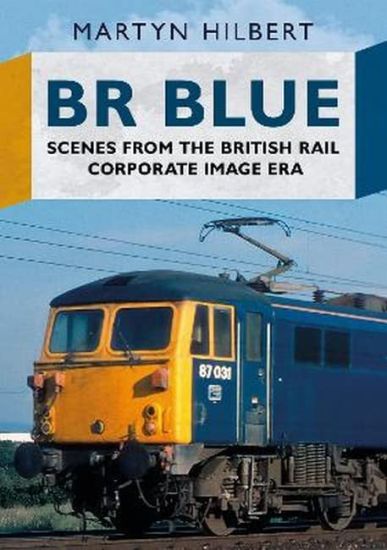
The British Rail Corporate Image and its Rail Blue livery was the longest lived colour scheme carried by the trains of Britain in the forty-eight-year life of the nationalized railway system. During this period there was an immense variety of locomotives, rolling stock and infrastructure across the network, that is all now part of history.
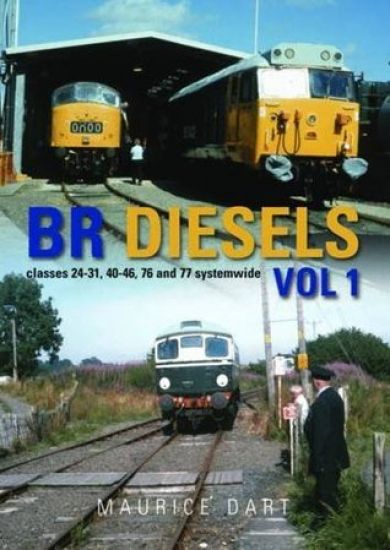
BR Diesels Classes
HALSGROVE
2010
sidottu
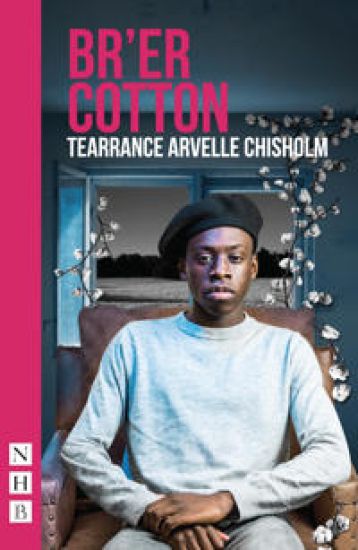
‘We talkin’ about life. We talkin’ about being treated as equals. We talkin’ about not being shot down in the streets and motherfuckers gettin’ off scot-free.’ Lynchburg, Virginia, on the former site of a cotton mill. Fourteen-year-old Ruffrino is struggling to make sense of his place in an impoverished world filled with seemingly random killings of young black men. As his anger towards reality grows, he moves further away from his family. Losing himself online, Ruffrino’s world sinks around him while he battles to wake up the zombies and prove by any means necessary that Black Lives Matter. Tearrance Arvelle Chisholm's play Br’er Cotton was first seen at Kitchen Dog Theatre, Texas, in 2017, and received its UK premiere at Theatre503, London, in 2018. It was shortlisted for both the Theatre503 Playwriting Award 2016 and the Relentless Award, and won the 2019 Off-West End Award for Best New Play.
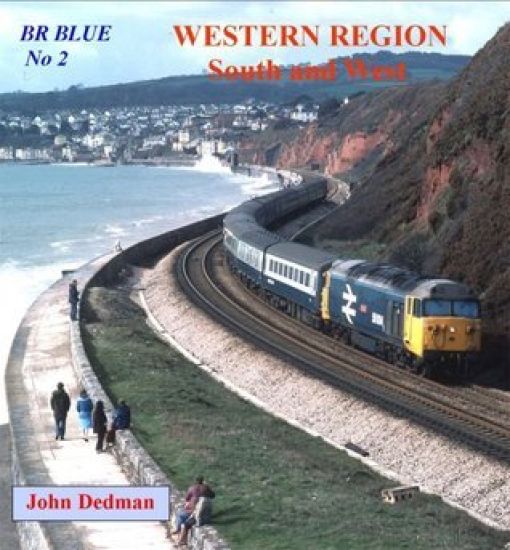
John Dedman turns his attention to the former Western Region, and in particular the area from Paddington through to Bristol, South Wales and the West Country. Covering the period from 1976 to 1990, he explores in depth the second era of 'modern' motive power.
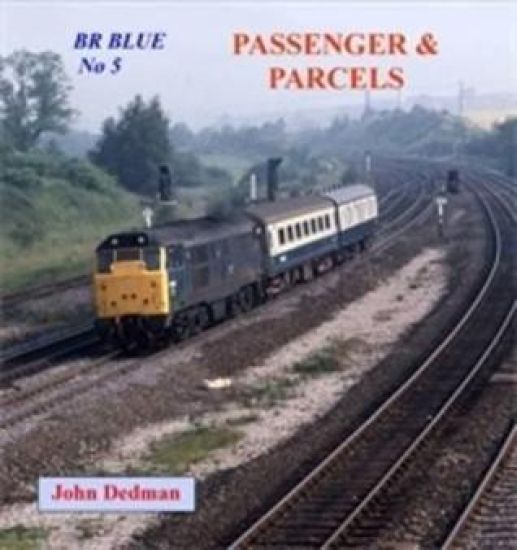
The BR Blue period continues to grow in popularity, a mark of this being that is now the fifth volume in what is a popular series. Regular author John Dedman - whose previous volumes in the series have been, "Southampton and the New Forest", "Western Region South and West", and "Freight in the 1980's" - now turns his attention to the passenger traffic of the period, both locomotive hauled and DMU operated. In the compilation of any book there is always a decision to be made between portraying the regular or unusual. John has opted to do both, hence we see the standard locomotive hauled 'Inter-City' and cross country services, as well as the DMU, including occasions when a locomotive and perhaps two coaches might have replaced a DMU or a rake of DMU's replaced a locomotive hauled train! The coverage is almost country wide although the majority feature in area where locomotive and DMU operation was prominent.
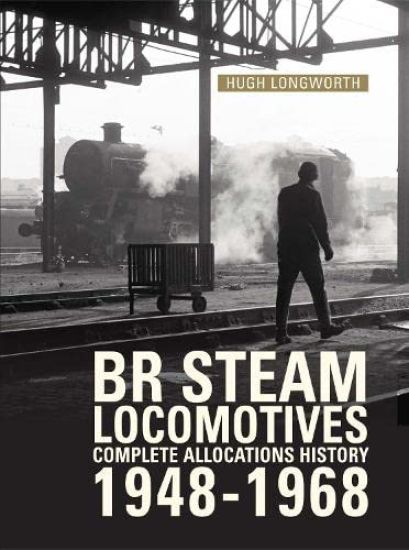
BR Steam Locomotives Complete Allocations History 1948-1968
Hugh (Author) Longworth
Crecy Publishing
2021
sidottu