Kirjojen hintavertailu. Mukana 12 016 292 kirjaa ja 12 kauppaa.

Kirjahaku

Etsi kirjoja tekijän nimen, kirjan nimen tai ISBN:n perusteella.

1000 tulosta hakusanalla Brad Richard

Turned Earth

Turned Earth

Brad Richard

LOUISIANA STATE UNIVERSITY PRESS
2025
pokkari
Turned Earth, the fifth collection of poems by Brad Richard, offers a portrait of the artist as a grieving son who is also a husband, teacher, gardener, and attentive witness to our precarious world. Navigating life after his mother's death, the speaker uses memory and imagination to understand, as one poem's title declares, "How I Came to This." Tender and trenchant, elegiac yet often livened by humor, Richard's poems affirm the sustaining power of hope and love.
Motion Studies

Motion Studies

Brad Richard

Word Works
2010
nidottu
Investigating time, memory, and loss, Brad Richard takes us from 19th century daguerreotypes and the work of painter Thomas Eakins to post-Katrina New Orleans. Scholarly yet yeasty, forceful yet kind, Motion Studies reunites the broken and the silenced with the living, with hope.
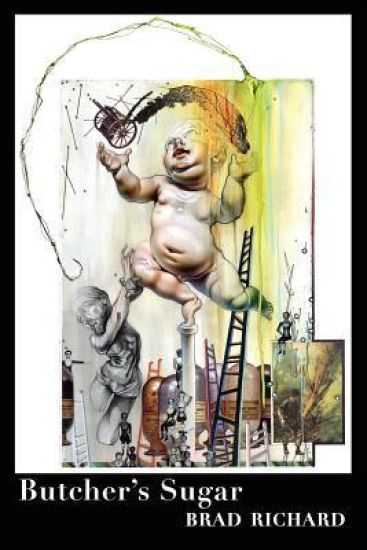
Butcher's Sugar

Butcher's Sugar

Brad Richard

Sibling Rivalry Press
2012
pokkari
Poetry. LGBT Studies. With a beauty purged of sweetness, the voices of BUTCHER'S SUGAR sing of the sublime in the debased, violence and desire, the truth of whatever is "rank with the carcass of mystery." Moving from childhood through adulthood, these poems re-inhabit and reclaim myths about the body and the self."Perhaps one turns to Christ or the pagan gods as an escape from the abject real of the body's stench. Perhaps to make love to a man is to always make love to the boy hidden underneath, forgotten. This need to both adore and kill what we no longer recognize within ourselves. Our bodies broken into, publicly shamed. Unmask the centurions, the butchers, and perhaps you'd instantly recognize their faces, Brad Richard suggests, if only you had his eyes to see."--Timothy Liu
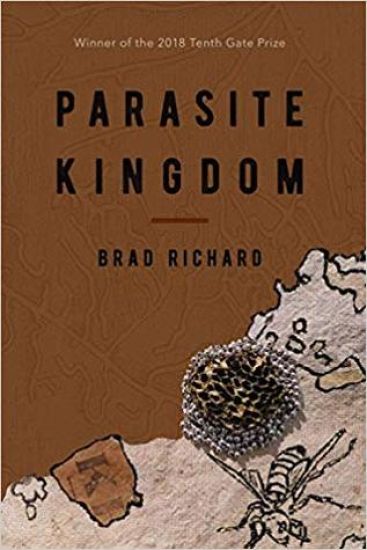
Parasite Kingdom

Parasite Kingdom

Brad Richard

Word Works
2019
nidottu
Poetry. Winner of the Tenth Gate Prize, 2018. In these poems Brad Richard creates a mythos that at first appears to be a warning about where our world is headed, yet reveals itself as a dirge for a way of being that we've not yet realized is gone. Richard's poems construct underground caverns where poetry moves dangerously. This collection is the accretion of decades of reading, thinking, and writing, borne out of long gestation."A cart rattles into the palace courtyard and explodes. A doomed king blesses the children, then commands the citizens of his ruined nation to root out invaders. Sentries fix their sights on a little girl. And, burrowed among tunnels beneath the capitol, and enormous wasp wasp flicks her antennae, pivots, and tests the air. In Parasite Kingdom, Brad Richard conjures up a wrecked world that is the twin of our own, but sifted through nightmare and apocalypse. Richly imagined and terrifying, this is a first-rate collection of poems."--Kevin Prufer, author of How He Loved Them and Churches "When insanity reigns in high places, and the culture has commodified human depths into glittering surfaces, when the Dow Jones serves as oracle, and reality reads from a script, perhaps we need most what Brad Richard works toward in Parasite Kingdom: a radical and instantaneous mytho-poesis that might give us perspective by breaking the whole damn thing apart. Taking both inspiration and refuge in Herman Melville--that fundamental chronicler of American unconscious--Richard gives us new apocrypha to ward off current apocalypse, offers us new symbols by which we might come to understand ourselves. Here the White Whale is replaced by the Parasitic Wasp, and the questions of unfathomable depths are replaced by questions of what has planted her eggs in our heads, and what life from them might emerge. Some of those lives, no doubt, are these very poems--as intricate and precise in their formal lives as the elegant casques of their totem wasps, as urgent as a sting, and furthering of genuine care--as a bee tends a field by burying itself in blossom--in the most unexpected of ways. As antidote is often made from the poison it counters, Parasite Kingdom gives us our needed dose, bitter to taste, but in the end, the truer vermifuge."--Dan Beachy-Quick, author of Circle's Apprentice and This Nest, Swift Passerine
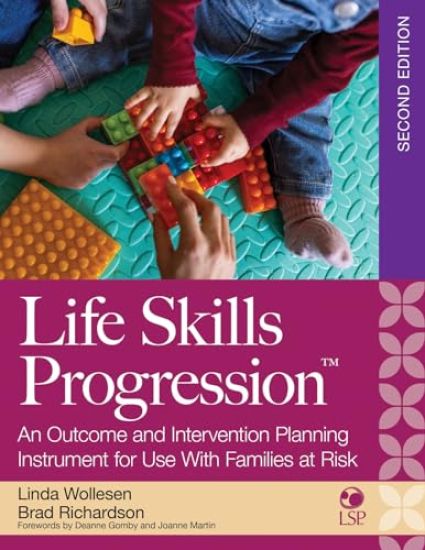
Life Skills Progression

Life Skills Progression

Linda Wollesen; Brad Richardson

BROOKES PUBLISHING CO
2024
nidottu
A must for home visiting programs, the updated second edition of the LSP is the most efficient, reliable way to evaluate a parent’s life skills: the abilities, behaviors, and attitudes they need to achieve a healthy and satisfying family life. For use with at-risk, low-income pregnant and parenting individuals with children from birth to 5 years of age, the LSP is a field-tested, validated, and reliable tool that generates a broad, accurate portrait of the life skills of parents, caregivers, and young children. Easy to complete in about 10 minutes, the LSP will help your program establish baseline and ongoing assessment profiles of clients, identify strengths and needs, plan interventions, and demonstrate the effectiveness of your practices through monitoring of outcomes.How it WorksHome visitors, including public health nurses, social workers, mental health care providers, and family development and family support workers, use the LSP to evaluate a variety of important life skills. An experienced professional familiar with the family records information on 43 items in eight important domains:Relationships with Family and FriendsRelationships with ChildrenRelationships with Supportive ResourcesEducation and EmploymentHealth and Medical CareMental Health and Substance AbuseBasic EssentialsInfant/Toddler DevelopmentHome visitors rate each competency from 1 to 5 on a simple-to-complete form, where they can also record important case data in the notes section. No judgment of families is implied—the LSP is used only to track the progress of children and parents or caregivers, and can be repeated every six months until the child is 5.What's NewNew chapter on using the LSP to promote maternal health literacyGuidance on completing the LSP during virtual home visitsLSP Instrument and downloads now provided as fillable PDFsUpdated research, citations, and information throughoutUpdates and improvements based on customer surveys and feedback from the fieldScoring descriptions updated for clarityAncillary materials now provided as convenient downloadsUse the LSP with ASQ®-3 & ASQ®:SE-2! With items that match the ASQ developmental areas, the LSP makes it easy to summarize the developmental data you gathered with the ASQ system.
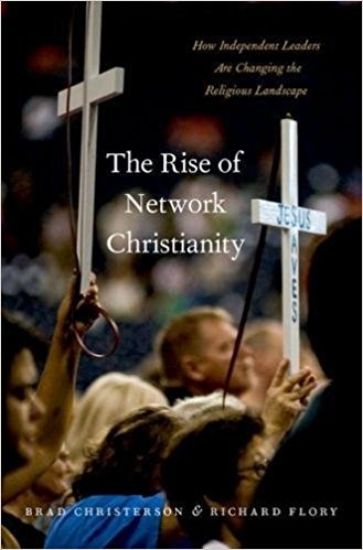
The Rise of Network Christianity

The Rise of Network Christianity

Brad Christerson; Richard Flory

Oxford University Press Inc
2017
sidottu
Why, when traditionally organized religious groups are seeing declining membership and participation, are networks of independent churches growing so explosively? Drawing on in-depth interviews with leaders and participants, The Rise of Network Christianity explains the social forces behind the fastest growing form of Christianity in the U.S., which Brad Christerson and Richard Flory have labeled "Independent Network Christianity" (INC). This form of Christianity emphasizes aggressive engagement with the supernatural, including healing, direct prophecies from God, engaging in "spiritual warfare" against demonic spirits, and social transformation. Christerson and Flory argue that large-scale social changes since the 1970s, including globalization and the digital revolution have given competitive advantages to religious groups organized by networks rather than traditionally organized congregations and denominations. Network forms of church governance allow for experimentation with controversial supernatural practices, innovative finances and marketing, and a highly participatory, unorthodox, and experiential faith, which is attractive in today's unstable religious marketplace. Christerson and Flory argue that as more religious groups imitate this type of governance, religious belief and practice will become more experimental, more oriented around practice than belief, more shaped by the individual religious "consumer" and that authority will become more highly concentrated in the hands of individuals rather than institutions.
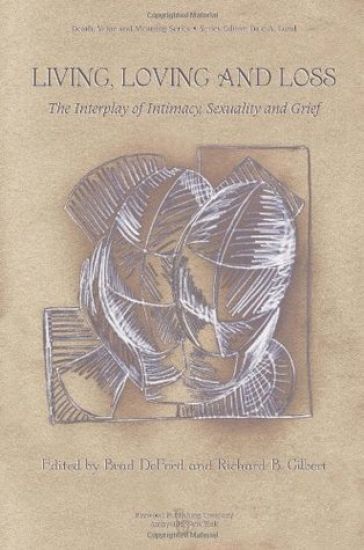
Living, Loving and Loss

Living, Loving and Loss

Brad DeFord; Richard Gilbert

Baywood Publishing Company Inc
2013
sidottu
One of the unspoken aspects of mourning concerns the ways that loss affects our intimate relationships and our sexual expressiveness. This text opens these subjects for conversation, with the aim of promoting the trust, care, and respect that enable us to be vulnerable. It purposefully covers a range of topics, including: (1) the meaning of intimacy and the significance of sexuality, providing a basis for the use of these terms throughout the book; (2) death, grief, and differences in sexual orientation, including death and intimacy in the lesbian, gay, bisexual, and transgender (LGBT) community and the losses endured by young people due to gender issues; (3) loss of relationship and restoration of intimacy in families, including pharmacological effects on the grief processes of widowers; grieving a not-so-loved parent; the "layered losses" of infertility and intimacy; and the tolls of war--intimacy and sexuality challenges for soldiers and their families; (4) adjusting to life's losses associated with aging or illness or infirmity, including Alzheimer's and dementia-related illnesses, physical health losses after 50, and intimacy, sex, and hospice--self-determination and dignity at the end of life; and (5) religious bases that have shaped our perspectives for understanding intimacy, sexuality, and healing after loss, and which give us hope--including the spiritual reflections of a rabbi and a Christian voice in defining what is right. Set in a framework that is both psychological and spiritual, the well-researched contributions are intended to acknowledge these experiences both professionally and personally. The book concludes with an extensive bibliography, valuable for research and reference. This book will be of value in undergraduate and graduate courses on thanatology, as well as for anyone interested in knowing more about grief--both those currently bereaved and those who wish to support others in mourning. The contributors appreciate both the importance of our capacities for intimacy and sexuality and our inhibitions and hesitations in giving voice to our needs and concerns, perhaps especially when we are grieving. The information and compassionate understanding they provide encourage us to bridge the gap between the secret and the private and to share what is close to our hearts.
Living, Loving and Loss

Living, Loving and Loss

Brad DeFord; Richard Gilbert

Baywood Publishing Company Inc
2013
nidottu
One of the unspoken aspects of mourning concerns the ways that loss affects our intimate relationships and our sexual expressiveness. This text opens these subjects for conversation, with the aim of promoting the trust, care, and respect that enable us to be vulnerable. It purposefully covers a range of topics, including: (1) the meaning of intimacy and the significance of sexuality, providing a basis for the use of these terms throughout the book; (2) death, grief, and differences in sexual orientation, including death and intimacy in the lesbian, gay, bisexual, and transgender (LGBT) community and the losses endured by young people due to gender issues; (3) loss of relationship and restoration of intimacy in families, including pharmacological effects on the grief processes of widowers; grieving a not-so-loved parent; the "layered losses" of infertility and intimacy; and the tolls of war--intimacy and sexuality challenges for soldiers and their families; (4) adjusting to life's losses associated with aging or illness or infirmity, including Alzheimer's and dementia-related illnesses, physical health losses after 50, and intimacy, sex, and hospice--self-determination and dignity at the end of life; and (5) religious bases that have shaped our perspectives for understanding intimacy, sexuality, and healing after loss, and which give us hope--including the spiritual reflections of a rabbi and a Christian voice in defining what is right. Set in a framework that is both psychological and spiritual, the well-researched contributions are intended to acknowledge these experiences both professionally and personally. The book concludes with an extensive bibliography, valuable for research and reference. This book will be of value in undergraduate and graduate courses on thanatology, as well as for anyone interested in knowing more about grief--both those currently bereaved and those who wish to support others in mourning. The contributors appreciate both the importance of our capacities for intimacy and sexuality and our inhibitions and hesitations in giving voice to our needs and concerns, perhaps especially when we are grieving. The information and compassionate understanding they provide encourage us to bridge the gap between the secret and the private and to share what is close to our hearts.
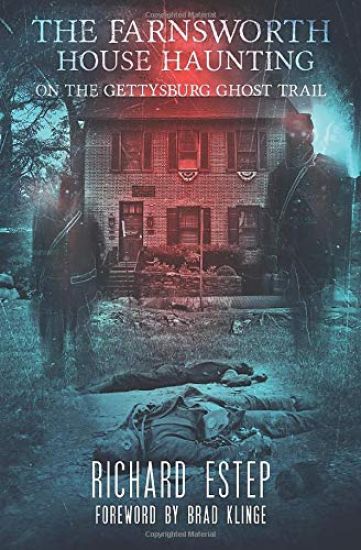
The Farnsworth House Haunting

The Farnsworth House Haunting

Brad Klinge; Richard Estep

Independently Published
2019
pokkari
July, 1863. The small Pennsylvania town of Gettysburg is torn apart when two armies collide. Over the next three days, more than 50,000 men will become casualties, while the residents of Gettysburg take shelter in their cellars. On the southern edge of town, a brick house, owned by one Harvey Sweney, is taken over by Confederate skirmishers. From upstairs in the attic, snipers pour a withering hail of fire down on the Union position at Cemetery Hill. The Union soldiers fight back, peppering the south wall of the Sweney House with hundreds of bullet holes. The numbers of dead begin to mount on both sides, until General Lee finally withdraws his forces. Now, more than 150 years later, the Sweney House has become the Farnsworth House Inn. Echoes of those bloody days still linger. Phantom boots thud across the attic floor. Apparitions and shadow figures haunt the guest rooms and prowl the hallways. Join TV's Richard Estep (Haunted Case Files, Haunted Hospitals, Paranormal 911) as he learns why the Farnsworth House is rightly regarded as one of Gettysburg's most haunted places.
The Fairfield Haunting

The Fairfield Haunting

Brad Klinge; Richard Estep

Createspace Independent Publishing Platform
2018
pokkari
July 1-3, 1863. Two mighty armies clash outside the small town of Gettysburg, Pennsylvania. In the aftermath, tens of thousands lay dead or wounded, many of the poor souls left abandoned on the battlefield for weeks or days. The Battle of Fairfield, a short but brutal cavalry engagement, is fought nearby. The victims are brought to the Fairfield Inn, now hastily pressed into service as a field hospital, where the surgeons ply their bloody trade. The Army of Northern Virginia then retreats through this small town southwest of Gettysburg, where Generals Robert E, Lee and Jeb Stuart also stop at the Fairfield Inn. Originally built circa 1757, the Fairfield Inn was also a stop on the Underground Railroad, used to hide runaway slaves who were fleeing to freedom in the North. Little wonder that it developed a reputation for being haunted that persists to this very day. Shadow figures and apparitions roam the hallways. Footsteps and disembodied voices disturb the sleeping guests late at night. Doors open and close of their own accord. Cold spots abound and objects are moved by invisible hands. Join author Richard Estep ("The Haunting of Asylum 49," "The World's Most Haunted Hospitals") as he and a small team of paranormal investigators move into the Fairfield Inn and work to uncover its many secrets. Accompany them on a tour of the most haunted parts of the Gettysburg Battlefield, from Devil's Den and Little Round Top to the Slaughter Pen, the Valley of Death, and finally to Pickett's Charge, where the ghosts of long-dead Civil War soldiers are said to still march, eternal spirit guardians of America's most hallowed ground.
Gelatos and Sorbettos

Gelatos and Sorbettos

Richard L Heller; Brad Jeffreys

Lulu.com
2018
pokkari
Not only are Gelatos and Sorbettos easy to prepare, they are rich in flavor and texture. The best part is, despite the similarity to premium ice creams and sorbets that you can find in just about any grocery store, they are also lower in calories due to not being made with exorbitant amounts of sugar and by replacing half of the heavy cream with whole milk instead. You won't feel quite as guilty after finishing your second serving.
A Shared Future

A Shared Future

Richard L. Wood; Brad R. Fulton

University of Chicago Press
2015
sidottu
Faith-based community organizers have spent decades working for greater equality in American society, and more recently have become significant players in shaping health care, finance, and immigration reform at the highest levels of government. In A Shared Future, Richard L. Wood and Brad R. Fulton draw on a new national study of community organizing coalitions and in-depth interviews of key leaders in this field to show how faith-based organizing is creatively navigating the competing aspirations of America's universalist and multiculturalist democratic ideals, even as it confronts three demons bedeviling American politics: economic inequality, federal policy paralysis, and racial inequity. With a broad view of the entire field and a distinct empirical focus on the PICO National Network, Wood and Fulton's analysis illuminates the tensions, struggles, and deep rewards that come with pursuing racial equity within a social change organization and in society. Ultimately, A Shared Future offers a vision for how we might build a future that embodies the ethical democracy of the best American dreams.
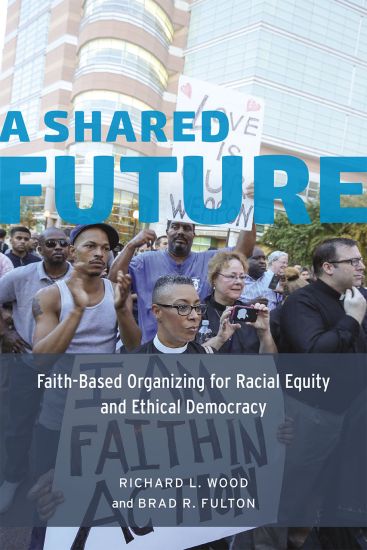
A Shared Future

A Shared Future

Richard L. Wood; Brad R. Fulton

University of Chicago Press
2015
nidottu
Faith-based community organizers have spent decades working for greater equality in American society, and more recently have become significant players in shaping health care, finance, and immigration reform at the highest levels of government. In A Shared Future, Richard L. Wood and Brad R. Fulton draw on a new national study of community organizing coalitions and in-depth interviews of key leaders in this field to show how faith-based organizing is creatively navigating the competing aspirations of America's universalist and multiculturalist democratic ideals, even as it confronts three demons bedeviling American politics: economic inequality, federal policy paralysis, and racial inequity. With a broad view of the entire field and a distinct empirical focus on the PICO National Network, Wood and Fulton's analysis illuminates the tensions, struggles, and deep rewards that come with pursuing racial equity within a social change organization and in society. Ultimately, A Shared Future offers a vision for how we might build a future that embodies the ethical democracy of the best American dreams.
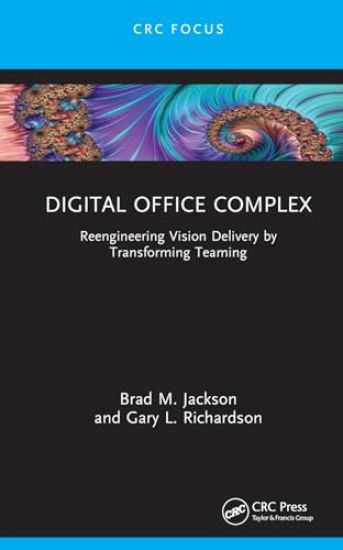
Digital Office Complex

Digital Office Complex

Brad M. Jackson; Gary L. Richardson

TAYLOR FRANCIS LTD
2024
sidottu
With ever-increasing competitive pressures, the need to reduce the time-to-value (or time-to-bail) of a “big idea” – a new product, an organizational transformation, a healthcare initiative, or a humanitarian development project – has never been greater. Unfortunately, the current digital infrastructure for vision delivery teams is woefully inadequate. Improvement opportunities lie in replacing it with one that is designed to support teams working together in a unifying manner. The focus of this book is describing the Digital Office Complex and the accompanying digital teaming and governing capabilities needed to reengineer vision delivery.Digital Office Complex: Reengineering Vision Delivery by Transforming Teaming offers an in-depth understanding of the elements of “digital teaming and governing” and how they can be applied to vision delivery to accelerate and improve performance. The book identifies and describes the requirements for an integrated infrastructure to support: team goal management, teamwork coordination, team decision support, team “work product” support, and approval workflow capabilities in addition to “team-to-team” navigation, “team-to-team” coordination, and “team-to-team” data exchange. The aim for this book is to describe and illustrate “digital teaming and governing” practices using the Digital Office Complex to improve performance. The book goes on to a team-centric delivery method for initiatives and artificial intelligence capabilities to augment teamwork. The book concludes with critical success factors for implementation and an approach for reengineering vision delivery.Written for people who desire to implement the next level of high-performance teaming to improve organizational performance, this book is an ideal read for management consultants, executives, strategy managers, project managers, HR managers, team leaders, team members, and students in business and engineering programs.
Digital Office Complex

Digital Office Complex

Brad M. Jackson; Gary L. Richardson

TAYLOR FRANCIS LTD
2025
nidottu
With ever-increasing competitive pressures, the need to reduce the time-to-value (or time-to-bail) of a “big idea” – a new product, an organizational transformation, a healthcare initiative, or a humanitarian development project – has never been greater. Unfortunately, the current digital infrastructure for vision delivery teams is woefully inadequate. Improvement opportunities lie in replacing it with one that is designed to support teams working together in a unifying manner. The focus of this book is describing the Digital Office Complex and the accompanying digital teaming and governing capabilities needed to reengineer vision delivery. Digital Office Complex: Reengineering Vision Delivery by Transforming Teaming offers an in-depth understanding of the elements of “digital teaming and governing” and how they can be applied to vision delivery to accelerate and improve performance. The book identifies and describes the requirements for an integrated infrastructure to support: team goal management, teamwork coordination, team decision support, team “work product” support, and approval workflow capabilities in addition to “team-to-team” navigation, “team-to-team” coordination, and “team-to-team” data exchange. The aim for this book is to describe and illustrate “digital teaming and governing” practices using the Digital Office Complex to improve performance. The book goes on to a team-centric delivery method for initiatives and artificial intelligence capabilities to augment teamwork. The book concludes with critical success factors for implementation and an approach for reengineering vision delivery. Written for people who desire to implement the next level of high-performance teaming to improve organizational performance, this book is an ideal read for management consultants, executives, strategy managers, project managers, HR managers, team leaders, team members, and students in business and engineering programs.
Growing Up in America

Growing Up in America

Richard Flory; Korie L. Edwards; Brad Christerson

Stanford University Press
2010
sidottu
People's experiences of racial inequality in adulthood are well documented, but less attention is given to the racial inequalities that children and adolescents face. Growing Up in America provides a rich, first-hand account of the different social worlds that teens of diverse racial and ethnic backgrounds experience. In their own words, these American teens describe, conflicts with parents, pressures from other teens, school experiences, and religious beliefs that drive their various understandings of the world. As the book reveals, teens' unequal experiences have a significant impact on their adult lives and their potential for social mobility. Directly confronting the constellation of advantages and disadvantages white, black, Hispanic, and Asian teens face today, this work provides a framework for understanding the relationship between socialization in adolescence and social inequality in adulthood. By uncovering the role racial and ethnic differences play early on, we can better understand the sources of inequality in American life.
Growing Up in America

Growing Up in America

Richard Flory; Korie L. Edwards; Brad Christerson

Stanford University Press
2010
pokkari
People's experiences of racial inequality in adulthood are well documented, but less attention is given to the racial inequalities that children and adolescents face. Growing Up in America provides a rich, first-hand account of the different social worlds that teens of diverse racial and ethnic backgrounds experience. In their own words, these American teens describe, conflicts with parents, pressures from other teens, school experiences, and religious beliefs that drive their various understandings of the world. As the book reveals, teens' unequal experiences have a significant impact on their adult lives and their potential for social mobility. Directly confronting the constellation of advantages and disadvantages white, black, Hispanic, and Asian teens face today, this work provides a framework for understanding the relationship between socialization in adolescence and social inequality in adulthood. By uncovering the role racial and ethnic differences play early on, we can better understand the sources of inequality in American life.