
Kirjahaku
Etsi kirjoja tekijän nimen, kirjan nimen tai ISBN:n perusteella.
1000 tulosta hakusanalla Bradley L Boyd



Grammatical Competence and Parsing Performance
Bradley L. Pritchett
University of Chicago Press
1992
sidottu
How does a parser, a device that imposes an analysis on a string of symbols so that they can be interpreted, work? More specifically, how does the parser in the human cognitive mechanism operate? Using a wide range of empirical data concerning human natural language processing, Bradley Pritchett demonstrates that parsing performance depends on grammatical competence, not, as many have thought, on perception, computation, or semantics. Pritchett critiques the major performance-based parsing models to argue that the principles of grammar drive the parser; the parser, furthermore, is the apparatus that tries to enforce the conditions of the grammar at every point in the processing of a sentence. In comparing garden path phenomena, those instances when the parser fails on the first reading of a sentence and must reanalyze it, with occasions when the parser successfully functions the first time around, Pritchett makes a convincing case for a grammar-derived parsing theory.
Grammatical Competence and Parsing Performance
Bradley L. Pritchett
University of Chicago Press
1992
nidottu
How does a parser, a device that imposes an analysis on a string of symbols so that they can be interpreted, work? More specifically, how does the parser in the human cognitive mechanism operate? Using a wide range of empirical data concerning human natural language processing, Bradley Pritchett demonstrates that parsing performance depends on grammatical competence, not, as many have thought, on perception, computation, or semantics. Pritchett critiques the major performance-based parsing models to argue that the principles of grammar drive the parser; the parser, furthermore, is the apparatus that tries to enforce the conditions of the grammar at every point in the processing of a sentence. In comparing garden path phenomena, those instances when the parser fails on the first reading of a sentence and must reanalyze it, with occasions when the parser successfully functions the first time around, Pritchett makes a convincing case for a grammar-derived parsing theory.

How did the Bhagavadgãtà first become an object of German philosophical and philological inquiry? How were its foundational concepts initially interpreted within German intellectual circles, and what does this episode in the history of cross-cultural encounter teach us about the status of comparative philosophy today? This book addresses these questions through a careful study of the figures who read, translated and interpreted the Bhagavadgãtà around the turn of the nineteenth century in Germany: J.G. Herder, F. Majer, F. Schlegel, A.W. Schlegel, W. von Humboldt, and G.W.F. Hegel. Methodologically, the study attends to the intellectual contexts and prejudices that framed the early reception of the text. But it also delves deeper by investigating the way these frameworks inflected the construction of the Bhagavadgãtà and its foundational concepts through the scholarly acts of excerpting, anthologization, and translation. Overall, the project contributes to the pluralization of Western philosophy and its history while simultaneously arguing for a continued critical alertness in cross-cultural comparison of philosophical and religious worldviews.

How did the Bhagavadgãtà first become an object of German philosophical and philological inquiry? How were its foundational concepts initially interpreted within German intellectual circles, and what does this episode in the history of cross-cultural encounter teach us about the status of comparative philosophy today? This book addresses these questions through a careful study of the figures who read, translated and interpreted the Bhagavadgãtà around the turn of the nineteenth century in Germany: J.G. Herder, F. Majer, F. Schlegel, A.W. Schlegel, W. von Humboldt, and G.W.F. Hegel. Methodologically, the study attends to the intellectual contexts and prejudices that framed the early reception of the text. But it also delves deeper by investigating the way these frameworks inflected the construction of the Bhagavadgãtà and its foundational concepts through the scholarly acts of excerpting, anthologization, and translation. Overall, the project contributes to the pluralization of Western philosophy and its history while simultaneously arguing for a continued critical alertness in cross-cultural comparison of philosophical and religious worldviews.
Many organizations believe that high-functioning teams hold the key to breakthrough thinking, superior customer service, and high-quality products. But, all too often, leaders and managers fail to support teams so that they can deliver on their promises. For instance, many leaders ask for teamwork, but only reward and evaluate individual performance; focus on the group at the expense of individual members; or leave team members to sort out their differences, leading to the formation of unhealthy cliques. In 3D Team Leadership, Bradley L. Kirkman and T. Brad Harris present a dynamic new model for maximizing team performance. Previous books have treated teams as groups of people working interdependently, an approach that overlooks two crucial components: the individuals who make up the team and the subgroups that form within and between teams. To create a fuller portrait of team behavior, Kirkman and Harris propose an innovative "3D" framework that takes into account all three factors. Drawing on their own research, best-in-class studies, and extensive consulting, they show leaders how to properly diagnose the state of their teams, hone in on the element that needs attention, and seamlessly shift focus among the three components of teamwork as time goes on. Delivering practical guidance rooted in scholarship, 3D Team Leadership is a thoughtful and straightforward guide for the complex challenge of teaming today.
Ancient Edom is best known as the southeastern neighbor of Iron Age Judah that appears in the Hebrew Bible either as Israel's sibling or its reviled enemy. Edom at the Edge of Empire offers an interdisciplinary approach to southern Levantine history that combines biblical, epigraphic, archaeological, and comparative evidence to reconstruct the history of a collection of nomadic tribes and workers in the Wadi Faynan as it relates to the later polity centered around the city of Busayra in the mountains of southern Jordan. This is the first book to incorporate the important evidence from the Wadi Faynan copper mines into a comprehensive account of Edom's history, providing a key resource for students and scholars of the ancient Near East and the Hebrew Bible.

Captain Jack is looking forward to a kickback life on the Florida coast, surrounded by his loving family, magnificent scenery, and good friends. Having entrusted his marketing business to his children, he begins a new life as a charter boat operator running tours for dolphin watchers. Sounds safe, sounds relaxing...until all hell breaks loose. After a young friend dies under mysterious circumstances, Jack finds himself embroiled in murder, acts of terrorism, and threats to his safety that not even Homeland Security can control. In Bradley L. Campbell's The Death Blow to America, readers follow his intrepid protagonist from Cuba to Brazil, from Jamaica to the Florida Everglades, in a frantic race against time.

Otology and Otic Disease, An Issue of Veterinary Clinics: Small Animal Practice
Bradley L. Njaa; Lynette K. Cole
W B Saunders Co Ltd
2012
sidottu
A comprehensive update on ear disease for the small animal practitioner! Topics will include updates on otic anatomy and physiology, preparation and histologic examination of the inner ear, neurologic manifestations of ear disease, canine hearing loss management, feline deafness, electrodiagnostic evaluation of auditory function, hearing aids in dogs, primary secretory otitis media of cavalier King Charles spaniels, ear masses, ototoxicity in dogs and cats, and much more!
How should we understand and interpret the strange but familiar thing that we call “religion”? What are the foundations of a methodical approach to this subject, and what theoretical tools are available to students who are new to this area of inquiry? A Beginner's Guide to the Study of Religion provides an accessible, wide-ranging introduction to theories and basic methodology in the field. Now in its second edition and updated throughout, this concise but comprehensive book includes:- - A case for the urgency and relevance of studying religion today- Discussion of the role and perspective of the student of religion- Description of the nature of theory and its function- An accessible survey of classic theorists in the modern study of religion- Feature boxes highlighting essential quotations and guiding principles for application of theories An expanded consideration of contemporary issues in the field, including gender, sexuality, race, ethnicity, globalization, violence, science, and new media.- Recommended further reading A Beginner's Guide to the Study of Religion offers a thorough but concise body of material suitable for introductory courses on the study of religion, or to provide theoretical context for survey courses. Study questions and worksheets can be found on the book's webpage.
How should we understand and interpret the strange but familiar thing that we call “religion”? What are the foundations of a methodical approach to this subject, and what theoretical tools are available to students who are new to this area of inquiry? A Beginner's Guide to the Study of Religion provides an accessible, wide-ranging introduction to theories and basic methodology in the field. Now in its second edition and updated throughout, this concise but comprehensive book includes:- - A case for the urgency and relevance of studying religion today- Discussion of the role and perspective of the student of religion- Description of the nature of theory and its function- An accessible survey of classic theorists in the modern study of religion- Feature boxes highlighting essential quotations and guiding principles for application of theories An expanded consideration of contemporary issues in the field, including gender, sexuality, race, ethnicity, globalization, violence, science, and new media.- Recommended further reading A Beginner's Guide to the Study of Religion offers a thorough but concise body of material suitable for introductory courses on the study of religion, or to provide theoretical context for survey courses. Study questions and worksheets can be found on the book's webpage.

Midnight Snacks: a horror anthology
Bradley L. Bodeker
Createspace Independent Publishing Platform
2013
nidottu
A collection of short horror stories I've written since i was 14. Some sci-fi, horror, dark humor, etc. From zombies, deadly camping trips, satanic road trips, and the legend of "the anti-claus". It's all wrapped up here in this ride through the funhouse of my brain. inside: The Empty Cell: an strange inmate at the Moon Valley County Jail opens a portal to meet his "god". It's not who you think it is. The Hurdy Gurdy Man: a young boy pesters his parents enough to pull over to a gas station to relieve himself. At an old abandoned looking gas station, he meets an ancient evil. A Few Bumps with the Big G: Mr. Delaney is fed up with the Big G getting away with everything and in a meeting at a St. Paul Pub, he confronts the most powerful man on Earth. Row 137: a farmer witnesses strange sounds in the sky and then suddenly watches the world around him fall apart. Alien invasion or government conspiracy? The Ballad of Lou Bradford: A Fair Lakes Police officer is killed in the line of duty, in the afterlife he is given two choices. Midnight Snacks: a vampire and a zombie have a moral catfight in a nightclub bathroom. Road Trip: a business trip to New Orleans during the mardi gras turns into a nightmare and it's a long way home to Minnesota when everyone wants you dead. Anti-Claus is comin' to town: The Gilbertson family finds out what happens to all the boys and girls on Santa's "naughty list". The Ballad of Memphis: Disaster strikes when multi-billionaire Memphis Burroughs launches "The Memphis Belle", the world's first star plane into orbit. 27: What do Janis Joplin, Jimi Hendrix, Jim Morrison, Amy Winehouse and Stu Graham have in common? The Last Stronghold: humanity is ravaged by a virus, and takes it's last stand against a hungry horde of infected. Nex Lacus: a family camping trip to a cursed lake really does turn into their "last vacation" of the year.

Living in Light of the Victory
Bradley L. Jones
Createspace Independent Publishing Platform
2012
nidottu
Zechariah 14: 12: Humanity's Last Stand
Bradley L. Bodeker
Createspace Independent Publishing Platform
2013
nidottu
In the small rural town of Fair Lakes, MN. Len Emerson wakes up, takes his ritual morning pee, makes a pot of coffee, and then takes his dog Jack out for his own bit of business. That's when it all goes wrong.A virus that makes its home in the frontal lobes of its host and turns them into ravenous eating machines has infected the United States and most of the world.Len must rescue his kids and their grandmother and make it to the hospital where his wife works. But the R.A.C.-V (ReAnimated Corpse-Virus) has run rampant in the hospital and Kris Emerson must escape the ravaged hospital. In a series of faltering "safe zones" in his small town, Len is running out of options and time to save and reunite his family, and make one last stand for humanity.Not your typical gore fest of zombiedom, but a real look into the hearts and minds of those trying to survive a world gone mad. You won't want to put this book down

The broken mirror reflected...: a new version of old beats
Bradley L. Bodeker
Createspace Independent Publishing Platform
2013
nidottu
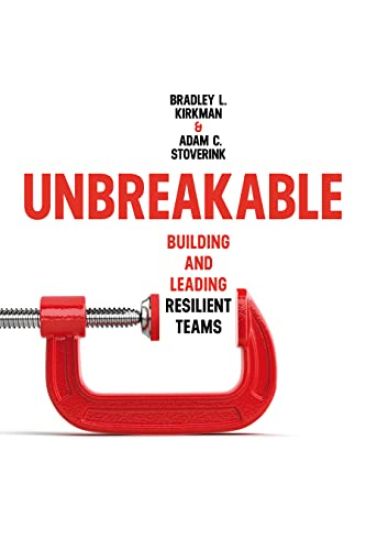
An essential guide for managers and leaders on building resilient teams in turbulent times. As a result of global economic changes, new technologies, and increased competition, business environments are becoming increasingly turbulent and unpredictable, requiring new forms of resilient work teams. Due in part to the increasing complexity of business environments, more and more organizations worldwide are using teams of employees to respond to adversity. Whether it be new product development teams; business crisis response teams in companies; front line response teams such as fire, emergency medical technicians, or emergency room teams; research and development teams; or pharmaceutical development teams, employees can no longer rely on their own knowledge, skills, and abilities to get their work done. Rather, employees have to work collaboratively with one another and combine their expertise to achieve the synergy and breakthrough thinking that is necessary to be successful at completing complex tasks in today's dynamic environments. Today more than ever before, work teams must demonstrate resilience. In the face of volatile, complex, and ambiguous business environments, all teams inevitably suffer setbacks. Bradley L. Kirkman and Adam C. Stoverink provide in their new book the hands-on practical tips for building and leading resilient teams equipped to bounce back from those challenges. They highlight four team resources that are essential to any resilient team, including: team confidence, teamwork roadmaps, capacity to improvise, and psychological safety. These four resources are brought to life through compelling stories of teams that performed well in the face of adversity—and a few that didn't. They also provide leaders with step-by-step guidance for how to grow these resources in their own teams, whether they're in-person, remote, or hybrid. This book delivers all the tools necessary to build and lead resilient teams that are virtually unbreakable.

Nyctophobia: Another anthology of horror
Bradley L. Bodeker
Createspace Independent Publishing Platform
2016
nidottu
Alien abduction, cannibalistic mechanics, existential hotels, zombie apocalypse, ancient evil awakened to feed on mankind, a parade for Armageddon and nightmarish road trips all brought together to send you on a roller coaster ride through the hellish catacombs of the author's mind. Bradley L. Bodeker's second volume of short horror fiction including the short story sequel to his best-selling "Zechariah 14:12-humanity's last stand".