Kirjojen hintavertailu. Mukana 11 699 587 kirjaa ja 12 kauppaa.

Kirjahaku

Etsi kirjoja tekijän nimen, kirjan nimen tai ISBN:n perusteella.

1000 tulosta hakusanalla Bradley R. Clampitt

The Confederate Heartland

The Confederate Heartland

Bradley R. Clampitt

Louisiana State University Press
2011
sidottu
Bradley R. Clampitt's The Confederate Heartland examines morale in the Civil War's western theater -- the region that witnessed the most consistent Union success and Confederate failure, and the battleground where many historians contend that the war was won and lost. Clampitt's western focus provides a glimpse into the hearts and minds of Confederates who routinely witnessed the defeat of their primary defenders, the Army of Tennessee. This book tracks morale through highs and lows related to events on and off the battlefield, and addresses the lingering questions of when and why western Confederates recognised and admitted defeat. Clampitt digs beneath the surface to illustrate the intimate connections between battlefield and home front, and demonstrates a persistent dedication to southern independence among residents of the Confederate heartland until that spirit was broken on the battlefields of Middle Tennessee in late 1864.The western Confederates examined in this study possessed a strong sense of collective identity that endured long past the point when defeat on the battlefield was all but certain. Ultimately, by authoring a sweeping vision of the Confederate heartland and by addressing questions related to morale, nationalism, and Confederate identity within a western context, Clampitt helps to fashion a more balanced historical landscape for Civil War studies.
Occupied Vicksburg

Occupied Vicksburg

Bradley R. Clampitt

Louisiana State University Press
2016
sidottu
During the Civil War, Vicksburg, Mississippi, assumed almost mythic importance in the minds of Americans: northerners and southerners, soldier and civilian. The city occupied a strategic and commanding position atop rocky cliffs above the Mississippi River, from which it controlled the great waterway. As a result, Federal forces expended enormous effort, expense, and troops in many attempts to capture Vicksburg. The immense struggle for this southern bastion ultimately heightened its importance beyond its physical and strategic value. Its psychological significance elevated the town's status to one of the war's most important locations. Vicksburg's defiance dismayed northerners and delighted Confederates, who saw command of the river as a badge of honor. Finally, after a six-week siege that involved intense military and civilian suffering amid heavy artillery bombardment, Union forces captured the ""Gibraltar of the Confederacy,"" ending the bloody campaign. While many historians have told the story of the fall of Vicksburg, Bradley R. Clampitt is the first to offer a comprehensive examination of life there after its capture by the United States military. In the war-ravaged town, indiscriminate hardships befell soldiers and civilians alike during the last two years of the conflict and immediately after its end. In Occupied Vicksburg, Clampitt shows that following the Confederate withdrawal, Federal forces confronted myriad challenges in the city including filth, disease, and a never-ending stream of black and white refugees. Union leaders also responded to the pressures of newly free people and persistent guerrilla violence in the surrounding countryside. Detailing the trials of blacks, whites, northerners, and southerners, Occupied Vicksburg stands as a significant contribution to Civil War studies, adding to our understanding of military events and the home front. Clampitt's astute research provides insight into the very nature of the war and enhances existing scholarship on the experiences of common people during America's most cataclysmic event.
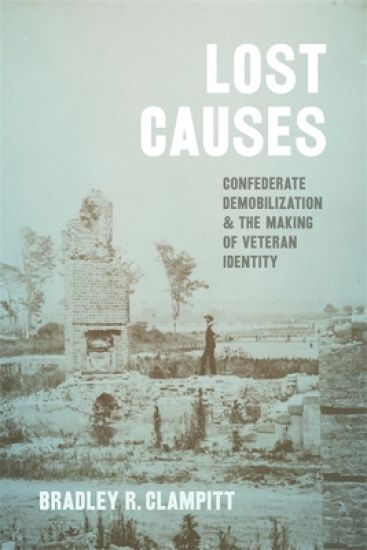
Lost Causes

Lost Causes

Bradley R. Clampitt

LOUISIANA STATE UNIVERSITY PRESS
2022
sidottu
This groundbreaking analysis of Confederate demobilization examines the state of mind of Confederate soldiers in the immediate aftermath of war. Having survived severe psychological as well as physical trauma, they now faced the unknown as they headed back home in defeat. Lost Causes analyzes the interlude between soldier and veteran, suggesting that defeat and demobilization actually reinforced Confederate identity as well as public memory of the war and southern resistance to African American civil rights. Intense material shortages and images of the war's devastation confronted the defeated soldiers-turned-veterans as they returned home to a revolutionized society. Their thoughts upon homecoming turned to immediate economic survival, a radically altered relationship with freed people, and life under Yankee rule—all against the backdrop of fearful uncertainty. Bradley R. Clampitt argues that the experiences of returning soldiers helped establish the ideological underpinnings of the Lost Cause and create an identity based upon shared suffering and sacrifice, a pervasive commitment to white supremacy, and an aversion to Federal rule and all things northern. As Lost Causes reveals, most Confederate veterans remained diehard Rebels despite demobilization and the demise of the Confederate States of America.
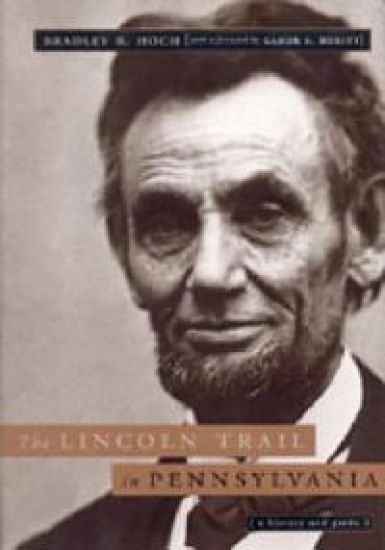
The Lincoln Trail in Pennsylvania

The Lincoln Trail in Pennsylvania

Bradley R. Hoch

Pennsylvania State University Press
2001
sidottu
What is the Lincoln Trail in Pennsylvania? It is the story of Abraham Lincoln in the Keystone State—the chronicle of where he went, what he did, and what he said in the state. The trail begins with Lincoln's Pennsylvania ancestors, moves on to his travels, public appearances, and speeches, and concludes with his funeral train in 1865. The Lincoln Trail in Pennsylvania tells a story for the reader, but it is also a guide for those who would travel the state figuratively or literally, to recover the memory of America's sixteenth president. The Lincoln Trail in Pennsylvania transports the reader back in time to key moments in Lincoln's public life. In 1846, at the age of thirty-seven, Lincoln was elected to the U.S. House of Representatives. Using mileage that Lincoln claimed for his trip, available routes, duration of the journey, and average speeds, Bradley Hoch is the first to establish the probable route Lincoln followed on his way from Illinois to Washington, D.C. Hoch concludes that he traveled by steamboat along the Ohio and Monongahela Rivers and by stagecoach on the National Road into Maryland.After Lincoln was elected president in November 1860, he transformed his inaugural journey from Springfield to Washington into a grand railroad tour of northern cities, hoping to cement the people's loyalty to the Union and to himself. His inaugural train, the first of its kind, made several stops in Pennsylvania. Hoch follows Lincoln throughout his journey, including the dramatic last leg—the "secret night train"—when Allan Pinkerton and his agents, determined to protect Lincoln from would-be assassins, cut telegraph lines and sidetracked trains in order to spirit him safely from Harrisburg to Washington.Hoch recovers symbolic moments, none more moving than Lincoln's funeral train as it stopped in several Pennsylvania cities, including York, Harrisburg, Lancaster, and Erie. In Philadelphia, the Liberty Bell was placed at the head of Lincoln's coffin when it lay in Independence Hall. As more than one hundred thousand mourners passed by, the bell's inscription memorialized his life: "Proclaim LIBERTY throughout all the Land unto all the inhabitants thereof."Rarely seen photographs, engravings, and maps enrich this illuminating volume. In the final chapter, Hoch offers a guide of sites to visit in present-day Pennsylvania, making The Lincoln Trail in Pennsylvania a welcome book for a wide range of readers interested in American history.
The Lincoln Trail in Pennsylvania

The Lincoln Trail in Pennsylvania

Bradley R. Hoch

Pennsylvania State University Press
2013
pokkari
What is the Lincoln Trail in Pennsylvania? It is the story of Abraham Lincoln in the Keystone State—the chronicle of where he went, what he did, and what he said in the state. The trail begins with Lincoln's Pennsylvania ancestors, moves on to his travels, public appearances, and speeches, and concludes with his funeral train in 1865. The Lincoln Trail in Pennsylvania tells a story for the reader, but it is also a guide for those who would travel the state figuratively or literally, to recover the memory of America's sixteenth president. The Lincoln Trail in Pennsylvania transports the reader back in time to key moments in Lincoln's public life. In 1846, at the age of thirty-seven, Lincoln was elected to the U.S. House of Representatives. Using mileage that Lincoln claimed for his trip, available routes, duration of the journey, and average speeds, Bradley Hoch is the first to establish the probable route Lincoln followed on his way from Illinois to Washington, D.C. Hoch concludes that he traveled by steamboat along the Ohio and Monongahela Rivers and by stagecoach on the National Road into Maryland.After Lincoln was elected president in November 1860, he transformed his inaugural journey from Springfield to Washington into a grand railroad tour of northern cities, hoping to cement the people's loyalty to the Union and to himself. His inaugural train, the first of its kind, made several stops in Pennsylvania. Hoch follows Lincoln throughout his journey, including the dramatic last leg—the "secret night train"—when Allan Pinkerton and his agents, determined to protect Lincoln from would-be assassins, cut telegraph lines and sidetracked trains in order to spirit him safely from Harrisburg to Washington.Hoch recovers symbolic moments, none more moving than Lincoln's funeral train as it stopped in several Pennsylvania cities, including York, Harrisburg, Lancaster, and Erie. In Philadelphia, the Liberty Bell was placed at the head of Lincoln's coffin when it lay in Independence Hall. As more than one hundred thousand mourners passed by, the bell's inscription memorialized his life: "Proclaim LIBERTY throughout all the Land unto all the inhabitants thereof."Rarely seen photographs, engravings, and maps enrich this illuminating volume. In the final chapter, Hoch offers a guide of sites to visit in present-day Pennsylvania, making The Lincoln Trail in Pennsylvania a welcome book for a wide range of readers interested in American history.
Armed Forces and Political Power in Eastern Europe

Armed Forces and Political Power in Eastern Europe

Bradley R. Gitz

Praeger Publishers Inc
1992
sidottu
This timely study analyzes the inner workings of the political and military control system used by the USSR and former communist regimes in Eastern Europe to rule the region until recent times. It then shows how these controls collapsed and were swept away by the revolutions in 1989. This up-to-date work describes current problems in East European security and points to future needs. This appraisal of the use of military and political power in the area is written for political scientists, military historians and analysts, for students and experts in East European studies and in international organization.Certain coercive and socializing mechanisms define the Soviet/Communist control system which was the key to the effectiveness of the Warsaw Treaty Organization and to the reliability of East European armed forces. The history covers the period from the end of World War II to the present. The work describes the disintegration of the system of controls during the 1980s and its collapse and the end of the WTO and previous military arrangements in 1989. The study analyzes the 1989 revolutions and points to new problems and uncertainties facing East European states as they depoliticize their armed forces and renationalize their foreign security policies.
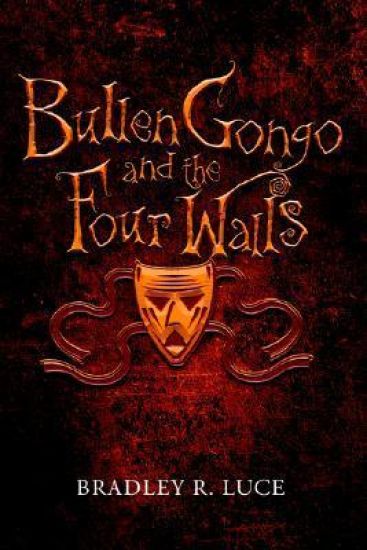
Bullen Gongo and the Four Walls

Bullen Gongo and the Four Walls

Bradley R Luce

iUniverse
2005
pokkari
When ten-year-old Daiter Popski moves into a new house in Nevada with his family, he can't wait to see his bedroom. To his surprise, his bedroom walls are already painted with beautifully colored pictures of a giant forest, a sandy desert, a sparkling ocean, and an erupting volcano. When his father unknowingly gives him a special magic stone, the walls come to life, allowing Daiter to travel into new worlds and meet incredible creatures. Unfortunately, by opening the doorway to these new worlds, Daiter releases Bullen Gongo, an evil tribal sorcerer who is determined to steal the five magic stones that give life to each world. It's a race against time as Daiter and the friends he meets along the way-Nickel, Zardo, Bullf, and others-attempt to protect the magic stones and use them to capture Bullen Gongo. But can they stop Bullen before he becomes too powerful and destroys all the worlds, including Daiter's?
Christians Are Hate-Filled Hypocrites...and Other Lies You've Been Told

Christians Are Hate-Filled Hypocrites...and Other Lies You've Been Told

Bradley R.E. Ph.D. Wright

Bethany House Publishers, a division of Baker Publishing Group
2010
nidottu
According to the media, the church is rapidly shrinking, both in numbers and in effectiveness. But the good news is, much of the bad news is wrong. Sociologist Bradley R. E. Wright uncovers what's really happening in the church: evangelicals are more respected by secular culture now than they were ten years ago; divorce rates of Christians are lower than those who aren't affiliated with a religion; young evangelicals are active in the faith. Wright reveals to readers why and how statistics are distorted, and shows that God is still effectively working through his people today.
Economists with Guns

Economists with Guns

Bradley R. Simpson

Stanford University Press
2008
sidottu
Offering the first comprehensive history of U.S relations with Indonesia during the 1960s, Economists with Guns explores one of the central dynamics of international politics during the Cold War: the emergence and U.S. embrace of authoritarian regimes pledged to programs of military-led development. Drawing on newly declassified archival material, Simpson examines how Americans and Indonesians imagined the country's development in the 1950s and why they abandoned their democratic hopes in the 1960s in favor of Suharto's military regime. Far from viewing development as a path to democracy, this book highlights the evolving commitment of Americans and Indonesians to authoritarianism in the 1960s on.
Economists with Guns

Economists with Guns

Bradley R. Simpson

Stanford University Press
2010
pokkari
Offering the first comprehensive history of U.S relations with Indonesia during the 1960s, Economists with Guns explores one of the central dynamics of international politics during the Cold War: the emergence and U.S. embrace of authoritarian regimes pledged to programs of military-led development. Drawing on newly declassified archival material, Simpson examines how Americans and Indonesians imagined the country's development in the 1950s and why they abandoned their democratic hopes in the 1960s in favor of Suharto's military regime. Far from viewing development as a path to democracy, this book highlights the evolving commitment of Americans and Indonesians to authoritarianism in the 1960s on.
The Darkness of Treading Water

The Darkness of Treading Water

Bradley R. Spencer

Independently Published
2019
nidottu
"It has taken me a lifetime to write this as each poem within the disarray of thoughts was written during the time that they happened. This is my story, my beliefs, my struggles and how I tried to overcome them. In the beginning each chapter ends itself with an entry from my journal that I kept while in Afghanistan and within each chapter consists my poetry. This is the poetry and story of my life up until I decided to tell it. I hope if nothing else you enjoy the words I have used to express the internal struggle I have faced within myself. I am not an educated writer only a writer who does so from his heart."
Essentials of Cognitive Neuroscience

Essentials of Cognitive Neuroscience

Bradley R. Postle

John Wiley Sons Inc
2020
nidottu
Essentials of Cognitive Neuroscience introduces and explicates key principles and concepts in cognitive neuroscience in such a way that the reader will be equipped to critically evaluate the ever-growing body of findings that the field is generating. For some students this knowledge will be needed for subsequent formal study, and for all readers it will be needed to evaluate and interpret reports about cognitive neuroscience research that make their way daily into the news media and popular culture. The book seeks to do so in a style that will give the student a sense of what it's like to be a cognitive neuroscientist: when confronted with a problem, how does one proceed? How does one read and interpret research that's outside of one's sub-area of specialization? How do two scientists advancing mutually incompatible models interrelate? Most importantly, what does it feel like to partake in the wonder and excitement of this most dynamic and fundamental of sciences?
Essentials of Cognitive Neuroscience, EMEA Edition

Essentials of Cognitive Neuroscience, EMEA Edition

Bradley R. Postle

John Wiley Sons Inc
2020
nidottu
Essentials of Cognitive Neuroscience ntroduces and explicates key principles and concepts in cognitive neuroscience in such a way that the reader will be equipped to critically evaluate the ever-growing body of findings that the field is generating. For some students this knowledge will be needed for subsequent formal study, and for all readers it will be needed to evaluate and interpret reports about cognitive neuroscience research that make their way daily into the news media and popular culture. The book seeks to do so in a style that will give the student a sense of what it's like to be a cognitive neuroscientist: when confronted with a problem, how does one proceed? How does one read and interpret research that's outside of one's sub-area of specialization? How do two scientists advancing mutually incompatible models interrelate? Most importantly, what does it feel like to partake in the wonder and excitement of this most dynamic and fundamental of sciences?
The Macro Economy Today ISE

The Macro Economy Today ISE

Bradley R. Schiller; Karen Gebhardt

McGraw-Hill Education
2021
nidottu
The Macroeconomy Today is noted for three great strengths: currency, policy focus, and readability. The accessible writing style engages students and brings the excitement of domestic and global economic news into the classroom.Schiller/Gebhardt emphasizes how policymakers must choose between government intervention and market reliance to resolves the core issues of what, how, and for whom to produce. These strategic trade-offs are highlighted throughout the full range of micro, macro, and international issues, and every chapter ends with a policy issue that emphasizes the market versus government dilemma.The authors teach economics in a current and relevant context, including the COVID Pandemic of 2020, filling chapters with the real facts and applications of economic life. Schiller/Gebhardt is also the only principles text that presents all macro theory in the single consistent context of the AS/AD framework and uniquely features a full supply-side economics chapter. You will also find the current Economist and Chief, Joe Biden, featured in the opening chapter. The authors have worked to ensure The Macroeconomy Today, 16th edition, is tightly integrated with the adaptive digital tools and dynamic interactive resources available in Connect. Connect is proven to increase student engagement and success. For professors there is also an updated instructor guide to bring new ideas to your course, no matter the format.