
Kirjahaku
Etsi kirjoja tekijän nimen, kirjan nimen tai ISBN:n perusteella.
1000 tulosta hakusanalla Bradley Thomason
Bradley Thompson
OmniScriptum
2026
nidottu
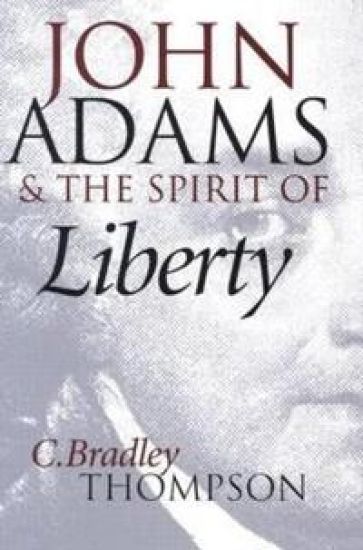
America's finest eighteenth-century student of political science, John Adams is also the least studied of the Revolution's key figures. By the time he became our second president, no American had written more about our government and not even Jefferson or Madison had read as widely about questions of human nature, natural right, political organization, and constitutional construction. Yet this staunch constitutionalist is perceived by many as having become reactionary in his later years and his ideas have been largely disregarded.In the first major work on Adams's political thought in over thirty years, C. Bradley Thompson takes issue with the notion that Adams's thought is irrelevant to the development of American ideas. Focusing on Adams's major writings, Thompson elucidates and reevaluates his political and constitutional thought by interpreting it within the tradition of political philosophy stretching from Plato to Montesquieu.This major revisionist study shows that the distinction Adams drew between "principles of liberty" and "principles of political architecture" is central to his entire political philosophy. Thompson first chronicles Adams's conceptualization of moral and political liberty during his confrontation with American Loyalists and British imperial officers over the true nature of justice and the British Constitution, illuminating Adams's two most important pre-Revolutionary essays, "A Dissertation on the Canon and Feudal Law" and "The Letters of Novanglus." He then presents Adams's debate with French philosophers over the best form of government and provides an extended analysis of his Defence of the Constitutions of Government and Discourses on Davila to demonstrate his theory of political architecture.From these pages emerges a new John Adams. In reexamining his political thought, Thompson reconstructs the contours and influences of Adams's mental universe, the ideas he challenged, the problems he considered central to constitution-making, and the methods of his reasoning. Skillfully blending history and political science, Thompson's work shows how the spirit of liberty animated Adams's life and reestablishes this forgotten Revolutionary as an independent and important thinker.

The abolitionist movement in 19th century America led directly to the end of slavery in the United States. This collection of more than 20 original documents including speeches, editorials, books and fiction, captures the deep ideological divisions within the abolitionist movement.
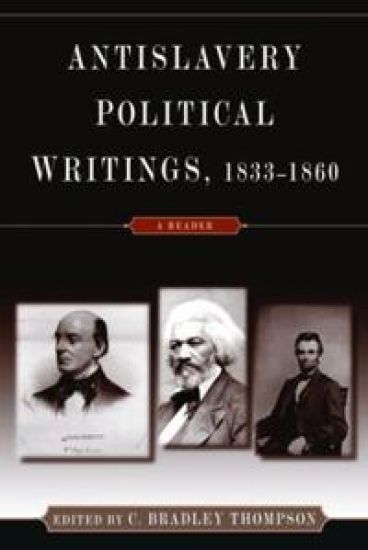
The abolitionist movement in 19th century America led directly to the end of slavery in the United States. This collection of more than 20 original documents including speeches, editorials, books and fiction, captures the deep ideological divisions within the abolitionist movement.
America's Revolutionary Mind is the first major reinterpretation of the American Revolution since the publication of Bernard Bailyn's The Ideological Origins of the American Revolution and Gordon S. Wood's The Creation of the American Republic. The purpose of this book is twofold: first, to elucidate the logic, principles, and significance of the Declaration of Independence as the embodiment of the American mind; and, second, to shed light on what John Adams once called the "real American Revolution"; that is, the moral revolution that occurred in the minds of the people in the fifteen years before 1776. The Declaration is used here as an ideological road map by which to chart the intellectual and moral terrain traveled by American Revolutionaries as they searched for new moral principles to deal with the changed political circumstances of the 1760s and early 1770s. This volume identifies and analyzes the modes of reasoning, the patterns of thought, and the new moral and political principles that served American Revolutionaries first in their intellectual battle with Great Britain before 1776 and then in their attempt to create new Revolutionary societies after 1776. The book reconstructs what amounts to a near-unified system of thought—what Thomas Jefferson called an “American mind” or what I call “America’s Revolutionary mind.” This American mind was, I argue, united in its fealty to a common philosophy that was expressed in the Declaration and launched with the words, “We hold these truths to be self-evident.”
America's Revolutionary Mind is the first major reinterpretation of the American Revolution since the publication of Bernard Bailyn's The Ideological Origins of the American Revolution and Gordon S. Wood's The Creation of the American Republic. The purpose of this book is twofold: first, to elucidate the logic, principles, and significance of the Declaration of Independence as the embodiment of the American mind; and, second, to shed light on what John Adams once called the "real American Revolution"; that is, the moral revolution that occurred in the minds of the people in the fifteen years before 1776. The Declaration is used here as an ideological road map by which to chart the intellectual and moral terrain traveled by American Revolutionaries as they searched for new moral principles to deal with the changed political circumstances of the 1760s and early 1770s. This volume identifies and analyzes the modes of reasoning, the patterns of thought, and the new moral and political principles that served American Revolutionaries first in their intellectual battle with Great Britain before 1776 and then in their attempt to create new Revolutionary societies after 1776. The book reconstructs what amounts to a near-unified system of thought—what Thomas Jefferson called an “American mind” or what I call “America’s Revolutionary mind.” This American mind was, I argue, united in its fealty to a common philosophy that was expressed in the Declaration and launched with the words, “We hold these truths to be self-evident.”


Synopsis of Lectures on Fixtures and Easements for the Junior Class
Bradley Martin Thompson
Hutson Street Press
2025
sidottu

Synopsis of Lectures on Fixtures and Easements for the Junior Class
Bradley Martin Thompson
Hutson Street Press
2025
pokkari

Synopsis of Lectures on Fixtures and Easements - For the Junior Class--Law Department is an unchanged, high-quality reprint of the original edition of 1890. Hansebooks is editor of the literature on different topic areas such as research and science, travel and expeditions, cooking and nutrition, medicine, and other genres. As a publisher we focus on the preservation of historical literature. Many works of historical writers and scientists are available today as antiques only. Hansebooks newly publishes these books and contributes to the preservation of literature which has become rare and historical knowledge for the future.

Rush Thompson's Brutal Truth
Bradley Joe Juby
Createspace Independent Publishing Platform
2015
nidottu

Empowered Women of Social Media: Over 100 Women found their Voices in Social Communities
Denise Joy Thompson; Sandra Bradley; Jacqui Letran
Createspace Independent Publishing Platform
2015
nidottu
A complete introductory text on how to integrate basic genetic principles into the practice of clinical medicineA Doody's Core Title for 2024! Medical Genetics is the first text to focus on the everyday application of genetic assessment and its diagnostic, therapeutic, and preventive implications in clinical practice. It is intended to be a text that you can use throughout medical school and refer back to when questions arise during residency and, eventually, practice. Medical Genetics is written as a narrative where each chapter builds upon the foundation laid by previous ones. Chapters can also be used as stand-alone learning aids for specific topics. Taken as a whole, this timely book delivers a complete overview of genetics in medicine. You will find in-depth, expert coverage of such key topics as:The structure and function of genesCytogeneticsMendelian inheritanceMutationsGenetic testing and screeningGenetic therapiesDisorders of organellesKey genetic diseases, disorders, and syndromesEach chapter of Medical Genetics is logically organized into three sections:Background and Systems – Includes the basic genetic principles needed to understand the medical applicationMedical Genetics – Contains all the pertinent information necessary to build a strong knowledge base for being successful on every step of the USMLE Case Study Application – Incorporates case study examples to illustrate how basic principles apply to real-world patent careToday, with every component of health care delivery requiring a working knowledge of core genetic principles, Medical Genetics is a true must-read for every clinician.



A Bibliographical Account and Collation of La Description de L'Egypte: Presented to the Library by Sir Thomas Baring
Richard Thomson; E. W. Brayley
Antigonos Verlag
2025
nidottu

Creating Citizenship Communities
I. Davies; V. Sundaram; G. Hampden-Thompson; M. Tsouroufli; G. Bramley; T. Breslin; T. Thorpe
Palgrave Macmillan
2014
sidottu
On the basis of a national research project undertaken in England, this volume explores how and why young people's engagement is so important globally in education and society, and looks at what teachers and students think about citizenship and community. The authors make recommendations to enhance understanding and the potential for engagement.

Creating Citizenship Communities
I. Davies; V. Sundaram; G. Hampden-Thompson; M. Tsouroufli; G. Bramley; T. Breslin; T. Thorpe
Palgrave Macmillan
2014
nidottu
On the basis of a national research project undertaken in England, this volume explores how and why young people's engagement is so important globally in education and society, and looks at what teachers and students think about citizenship and community. The authors make recommendations to enhance understanding and the potential for engagement.