Kirjojen hintavertailu. Mukana 11 244 527 kirjaa ja 12 kauppaa.

Kirjahaku

Etsi kirjoja tekijän nimen, kirjan nimen tai ISBN:n perusteella.

1000 tulosta hakusanalla Brands H. W.

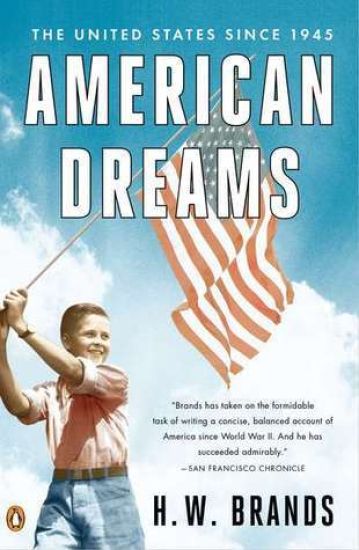
American Dreams

American Dreams

Brands H. W.

Penguin USA
2011
pokkari
The story of our nation from the A-bomb to the iPhone-from bestselling historian H.W. Brands With keen insight and an impeccable sense of the spirit of the times, H. W. Brands, one of today's preeminent historians, captures the American experience through the last six decades. As he chronicles politics, pop culture, and everything in between, Brands traces the changes we have gone through as a nation, recounting the great themes and events that have driven America- from the Yalta conference to the fall of the Berlin Wall, Apollo 11 to 9/11, My Lai to "shock and awe." In his adroit hands, movements and trends unfold through a character- driven narrative that shines a brilliant light on America's watershed moments and reveals a still unfolding legacy of dreams.
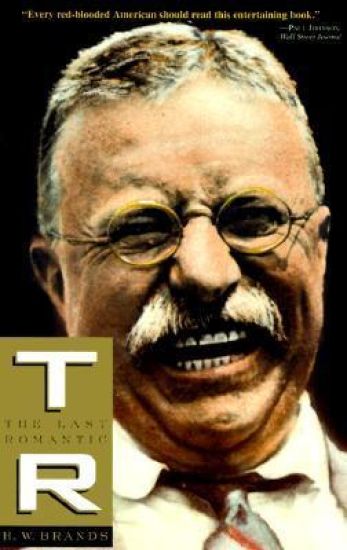
T.R.

T.R.

Brands H. W.

Basic Books
1998
pokkari
Making use of newfound letters from Theodore Roosevelt's adult sons, a biography of the twenty-sixth president reveals how his larger-than-life persona masked feelings of inadequacy
The Devil We Knew

The Devil We Knew

H. W. Brands

Oxford University Press Inc
1994
nidottu
In the late 1950s, Washington was driven by its fear of communist subversion: it saw the hand of Kremlin behind developments at home and across the globe. The FBI was obsessed with the threat posed by American communist party--yet party membership had sunk so low, writes H.W. Brands, that it could have fit "inside a high-school gymnasium," and it was so heavily infiltrated that J. Edgar Hoover actually contemplated using his informers as a voting bloc to take over the party. Abroad, the preoccupation with communism drove the White House to help overthrow democratically elected governments in Guatemala and Iran, and replace them with dictatorships. But by then the Cold War had long since blinded Americans to the ironies of their battle against communism. In The Devil We Knew, Brands provides a witty, perceptive history of the American experience of the Cold War, from Truman's creation of the CIA to Ronald Reagan's creation of SDI. Brands has written a number of highly regarded works on America in the twentieth century; here he puts his experience to work in a volume of impeccable scholarship and exceptional verve. He turns a critical eye to the strategic conceptions (and misconceptions) that led a once-isolationist nation to pursue the war against communism to the most remote places on Earth. By the time Eisenhower left office, the United States was fighting communism by backing dictators from Iran to South Vietnam, from Latin America to the Middle East--while engaging in covert operations the world over. Brands offers no apologies for communist behavior, but he deftly illustrates the strained thinking that led Washington to commit gravely disproportionate resources (including tens of thousands of lives in Korea and Vietnam) to questionable causes. He keenly analyses the changing policies of each administration, from Nixon's juggling (SALT talks with Moscow, new relations with Ccmmunist China, and bombing North Vietnam) to Carter's confusion to Reagan's laserrattling. Equally important is his incisive, often amusing look at how the anti-Soviet struggle was exploited by politicians, industrialists, and government agencies. He weaves in deft sketches of figures like Barry Goldwater and Henry Jackson (who won a Senate seat with the promise, "Many plants will be converting from peace time to all-out defence production"). We see John F. Kennedy deliver an eloquent speech in 1957 defending the rising forces of nationalism in Algeria and Vietnam; we also see him in the White House a few years later, ordering a massive increase in America's troop commitment to Saigon. The book ranges through the economics and psychology of the Cold War, demonstrating how the confrontation created its own constituencies in private industry and public life. In the end, Americans claimed victory in the Cold War, but Brands's account gives us reason to tone down the celebrations. "Most perversely," he writes, "the call to arms against communism caused American leaders to subvert the principles that constituted their country's best argument against communism." This far-reaching history makes clear that the Cold War was simultaneously far more, and far less, than we ever imagined at the time.
The Wages of Globalism

The Wages of Globalism

H. W. Brands

Oxford University Press Inc
1997
nidottu
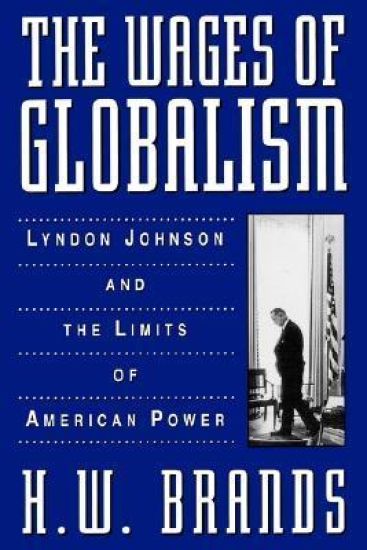
Historian H.W. Brands offers a fresh look at Johnson's handling of international relations, putting Vietnam in the context of the many crises he confronted and the outdated policies of containment he was expected to uphold. The result is a fascinating portrait of a master politician at work, manouevring through a series of successes that made his ultimate failure in Vietnam all the more tragic.
Greenback Planet

Greenback Planet

H. W. Brands

University of Texas Press
2011
sidottu
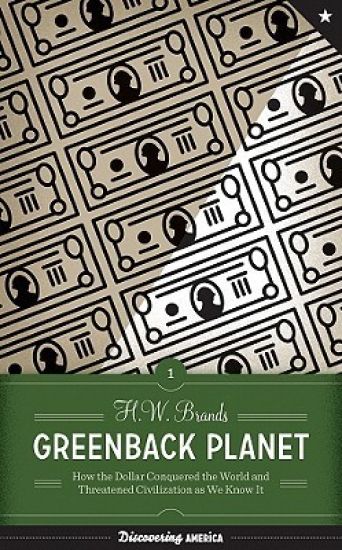
The world runs on the U.S. dollar. From Washington to Beijing, governments, businesses, and individuals rely on the dollar to conduct commerce and invest profitably and safely-even after the global financial meltdown in 2008 revealed the potentially catastrophic cost of the dollar's hegemony. But how did the greenback achieve this planetary dominance a mere century and a half after President Lincoln issued the first currency backed only by the credit-and credibility-of the federal government? In Greenback Planet, acclaimed historian H. W. Brands charts the dollar's astonishing rise to become the world's principal currency. Telling the story with the verve of a novelist, he recounts key episodes in U.S. monetary history, from the Civil War debate over fiat money (greenbacks) to the recent worldwide financial crisis. Brands explores the dollar's changing relations to gold and silver and to other currencies and cogently explains how America's economic might made the dollar the fundamental standard of value in world finance. He vividly describes the 1869 Black Friday attempt to corner the gold market, banker J. P. Morgan's bailout of the U.S. treasury, the creation of the Federal Reserve, and President Franklin Roosevelt's handling of the bank panic of 1933. Brands shows how lessons learned (and not learned) in the Great Depression have influenced subsequent U.S. monetary policy, and how the dollar's dominance helped transform economies in countries ranging from Germany and Japan after World War II to Russia and China today. He concludes with a sobering dissection of the 2008 world financial debacle, which exposed the power-and the enormous risks-of the dollar's worldwide reign.
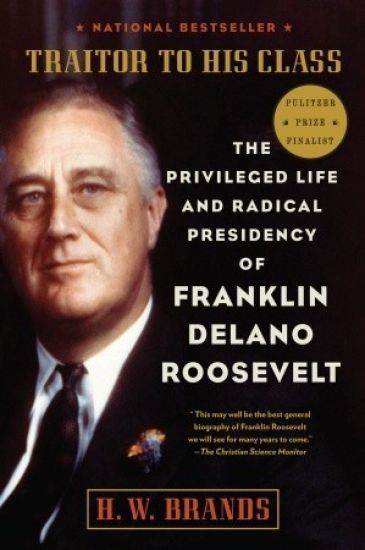
Traitor to His Class: The Privileged Life and Radical Presidency of Franklin Delano Roosevelt
NATIONAL BESTSELLER - A brilliant evocation of one of the greatest presidents in American history by the two-time Pulitzer Prize finalist, bestselling historian, and author of Our First Civil War "It may well be the best general biography of Franklin Roosevelt we will see for many years to come." --The Christian Science Monitor Drawing on archival material, public speeches, correspondence and accounts by those closest to Roosevelt early in his career and during his presidency, H. W. Brands shows how Roosevelt transformed American government during the Depression with his New Deal legislation, and carefully managed the country's prelude to war. Brands shows how Roosevelt's friendship and regard for Winston Churchill helped to forge one of the greatest alliances in history, as Roosevelt, Churchill, and Stalin maneuvered to defeat Germany and prepare for post-war Europe. Look for H.W. Brands's other biographies: THE FIRST AMERICAN (Benjamin Franklin), ANDREW JACKSON, THE MAN WHO SAVED THE UNION (Ulysses S. Grant), and REAGAN.
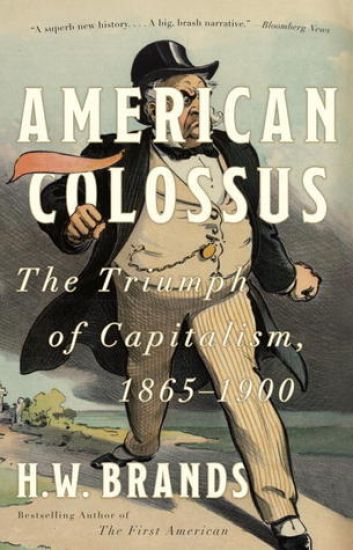
American Colossus: The Triumph of Capitalism, 1865-1900

American Colossus: The Triumph of Capitalism, 1865-1900

H. W. Brands

Knopf Doubleday Publishing Group
2011
nidottu
From the two-time Pulitzer Prize finalist, bestselling historian, and author of Our First Civil War: a "first-rate" narrative history (The New York Times) that brilliantly portrays the emergence, in a remarkably short time, of a recognizably modern America. American Colossus captures the decades between the Civil War and the turn of the twentieth century, when a few breathtakingly wealthy businessmen transformed the United States from an agrarian economy to a world power. From the first Pennsylvania oil gushers to the rise of Chicago skyscrapers, this spellbinding narrative shows how men like Morgan, Carnegie, and Rockefeller ushered in a new era of unbridled capitalism. In the end America achieved unimaginable wealth, but not without cost to its traditional democratic values.
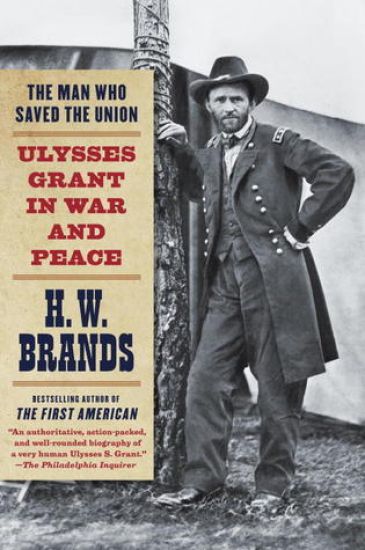
The Man Who Saved the Union

The Man Who Saved the Union

H. W. Brands

Random House USA Inc
2013
pokkari
Ulysses Grant emerges in this masterful biography as a genius in battle and a driven president to a divided country, who remained fearlessly on the side of right. He was a beloved commander in the field who made the sacrifices necessary to win the war, even in the face of criticism. He worked valiantly to protect the rights of freed men in the South. He allowed the American Indians to shape their own fate even as the realities of Manifest Destiny meant the end of their way of life. In this sweeping and majestic narrative, bestselling author H.W. Brands now reconsiders Grant's legacy and provides an intimate portrait of a heroic man who saved the Union on the battlefield and consolidated that victory as a resolute and principled political leader.
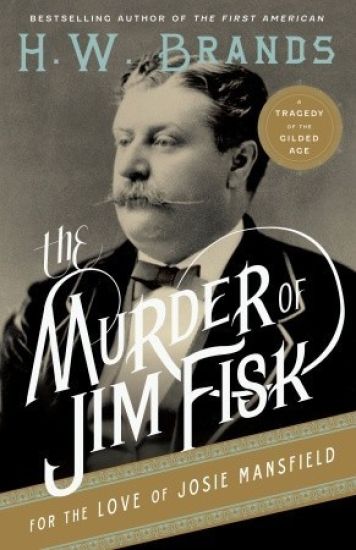
The Murder of Jim Fisk for the Love of Josie Mansfield: A Tragedy of the Gilded Age
The two-time Pulitzer Prize finalist, bestselling historian, and author of Our First Civil War traces the extraordinary downfall of financier Jubilee Jim, bringing to life New York's Gilded Age and some of its legendary players, including Boss William Tweed, Cornelius Vanderbilt, and the railroad tycoon Jay Gould.Even before he was shot dead on the stairway of the tony Grand Central Hotel in 1872, financier James "Jubilee Jim" Fisk, Jr., was a notorious New York City figure. From his audacious attempt to corner the gold market in 1869 to his battle for control of the geographically crucial Erie Railroad, Fisk was a flamboyant exemplar of a new financial era marked by volatile fortunes and unprecedented greed and corruption. But it was his scandalously open affair with a showgirl named Josie Mansfield that ultimately led to his demise.
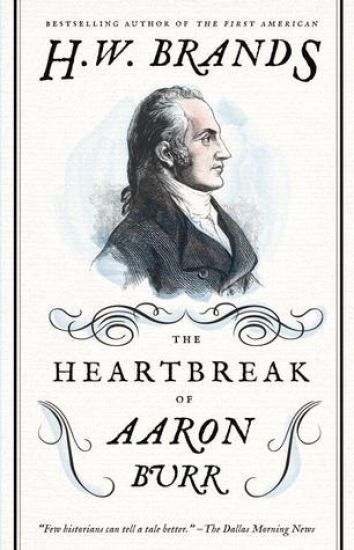
The Heartbreak of Aaron Burr

The Heartbreak of Aaron Burr

H. W. Brands

ANCHOR BOOKS
2012
nidottu
From the two-time Pulitzer Prize finalist, bestselling historian, and author of Our First Civil War--a fascinating portrait of one of the most compelling politicians in American history--a Revolutionary War hero, vice president of the United States, and the man who killed Alexander Hamilton. But as H. W. Brands demonstrates in this biography, Burr was a man before his time--a proponent of equality between the sexes well over a century before women were able to vote in the US. Through Burr's extensive, witty correspondence with his daughter Theodosia, Brands traces the arc of a scandalous political career and the early years of American politics. The Heartbreak of Aaron Burr not only dramatizes through their words his eventful life, it also tells a touching story of a father's love for his exceptional daughter, which endured through public shame, bankruptcy, and exile, and outlasted even Theodosia's tragic disappearance at sea.
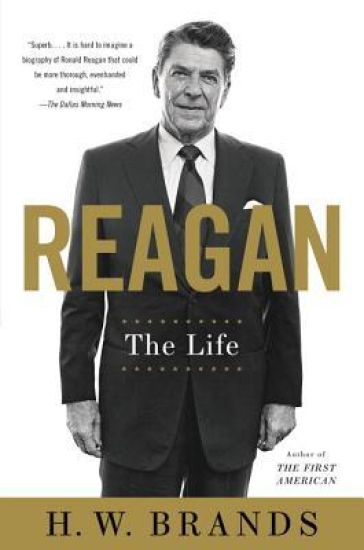
Reagan

Reagan

H. W. Brands

Alfred A. Knopf
2016
pokkari
From master storyteller and New York Times bestselling Historian H. W. Brands comes the definitive biography of a visionary and transformative president In his magisterial new biography, H. W. Brands brilliantly establishes Ronald Reagan as one of the two great presidents of the twentieth century, a true peer to Franklin Roosevelt. Reagan conveys with sweep and vigor how the confident force of Reagan's personality and the unwavering nature of his beliefs enabled him to engineer a conservative revolution in American politics and play a crucial role in ending communism in the Soviet Union. Reagan shut down the age of liberalism, Brands shows, and ushered in the age of Reagan, whose defining principles are still powerfully felt today. Employing archival sources not available to previous biographers and drawing on dozens of interviews with surviving members of Reagan's administration, Brands has crafted a richly detailed and fascinating narrative of the presidential years. He offers new insights into Reagan's remote management style and fractious West Wing staff, his deft handling of public sentiment to transform the tax code, and his deeply misunderstood relationship with Soviet leader Mikhail Gorbachev, on which nothing less than the fate of the world turned. Reagan is a storytelling triumph, an irresistible portrait of an underestimated politician whose pragmatic leadership and steadfast vision transformed the nation.
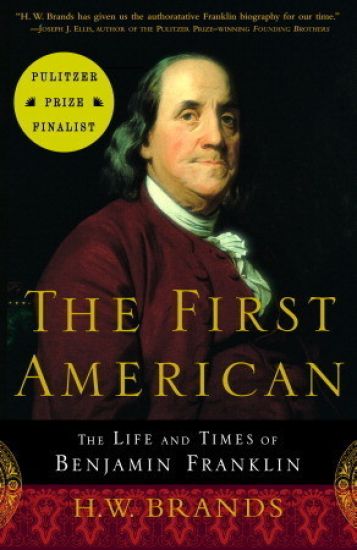
The First American: The Life and Times of Benjamin Franklin
PULITZER PRIZE FINALIST - Benjamin Franklin, perhaps the pivotal figure in colonial and revolutionary America, comes vividly to life in this "thorough biography of ... America's first Renaissance man" (The Washington Post) by the two-time Pulitzer Prize finalist, bestselling historian, and author of Our First Civil War. "The authoritative Franklin biography for our time." --Joseph J. Ellis, author of the Pulitzer Prize-winning Founding BrothersWit, diplomat, scientist, philosopher, businessman, inventor, and bon vivant, Benjamin Franklin's "life is one every American should know well, and it has not been told better than by Mr. Brands" (The Dallas Morning News). From penniless runaway to highly successful printer, from ardently loyal subject of Britain to architect of an alliance with France that ensured America's independence, Franklin went from obscurity to become one of the world's most admired figures, whose circle included the likes of Voltaire, Hume, Burke, and Kant. Drawing on previously unpublished letters and a host of other sources, acclaimed historian H. W. Brands has written a thoroughly engaging biography of the eighteenth-century genius. A much needed reminder of Franklin's greatness and humanity, The First American is a work of meticulous scholarship that provides a magnificent tour of a legendary historical figure, a vital era in American life, and the countless arenas in which the protean Franklin left his legacy. Look for H.W. Brands's other biographies: ANDREW JACKSON, THE MAN WHO SAVED THE UNION (Ulysses S. Grant), TRAITOR TO HIS CLASS (Franklin Roosevelt) and REAGAN.
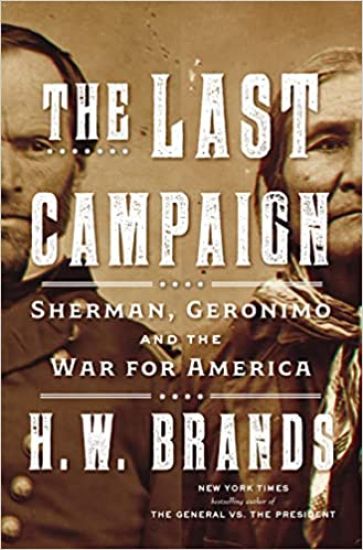
The Last Campaign

The Last Campaign

H. W. Brands

RANDOM HOUSE USA INC
2022
sidottu
Bestselling historian and Pulitzer prize finalist H. W. Brands follows the lives of General William Tecumseh Sherman and Apache war leader Geronimo to tell the story of the Indian Wars and the final fight for control of the American continent. William Tecumseh Sherman and Geronimo were keen strategists and bold soldiers, ruthless with their enemies. Over the course of the 1870s and 1880s these two war chiefs would confront each other in the final battle for what the American West would be: a sparsely settled, wild home where Indian tribes could thrive, or a more densely populated extension of the America to the east of the Mississippi. Sherman was a well-connected son of Ohio who attended West Point and rose to prominence through his scorched-earth campaigns in the Civil War. Geronimo grew up among the Apache people, hunting wild game for sustenance and roaming freely on the land. After the brutal killing of his wife, children and mother by Mexican soldiers, he became a relentless avenger, raiding Mexican settlements across the American border. When Sherman rose to commanding general of the Army, he was tasked with bringing Geronimo and his followers onto a reservation where they would live as farmers and ranchers and roam no more. But Geronimo preferred to fight. The Last Campaign is a powerful retelling of a turning point in the making of our nation and a searing elegy for a way of life that is gone.
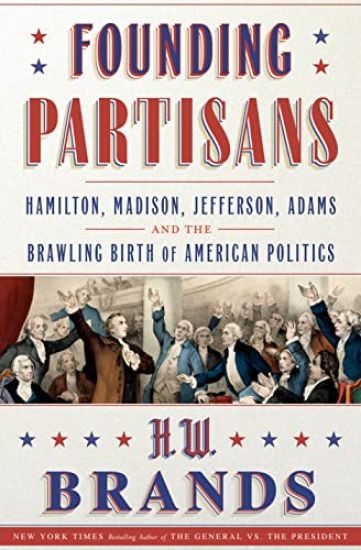
Founding Partisans

Founding Partisans

H. W. Brands

RANDOM HOUSE USA INC
2023
sidottu
From bestselling historian and Pulitzer Prize finalist H. W. Brands, a revelatory history of the shocking emergence of vicious political division at the birth of the United States Founding Partisans is a lively narrative of the early years of the republic as the Founding Fathers fought one another with competing visions of what our nation would be. To the framers of the Constitution, political parties were an existential threat to republican virtues. They had suffered the consequences of partisan politics in Britain before the American Revolution, and they wanted nothing similar for America. Yet parties emerged even before the Constitution was ratified, and they took firmer root in the following decade. The first party, the Federalists, formed around Alexander Hamilton and his efforts to overthrow the Articles of Confederation. Thomas Jefferson and the opposition organized as the Antifederalists, the precursor to the Republicans. The two factions wrestled as George Washington tried to remain above the fray. John Adams, however, our second president, was an avowed Federalist, and very much in the scrum. The country's first years unfolded in a contentious spiral of ugly elections and blatant violations of the Constitution. Still, peaceful transfers of power continued, and the nascent country made its way toward global dominance, against all odds. Founding Partisans is a powerful reminder that fierce partisanship is a problem as old as the republic, one we've survived time and time again.
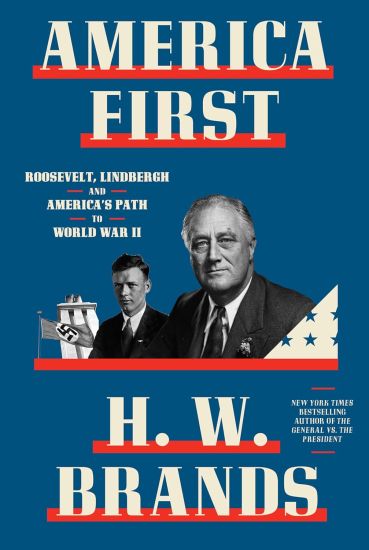
America First

America First

H. W. Brands

RANDOM HOUSE USA INC
2024
sidottu
Bestselling historian and Pulitzer Prize finalist H. W. Brands narrates the fierce debate over America's role in the world in the runup to World War II through its two most important figures: President Franklin D. Roosevelt, who advocated intervention, and his isolationist nemesis, aviator and popular hero Charles Lindbergh. Hitler's invasion of Poland in September 1939 launched a momentous period of decision-making for the United States. With fascism rampant abroad, should America take responsibility for its defeat? For popular hero Charles Lindbergh, saying no to another world war only twenty years after the first was the obvious answer. Lindbergh had become famous and adored around the world after his historic first flight over the Atlantic in 1927. In the years since, he had emerged as a vocal critic of American involvement overseas, rallying Americans against foreign war as the leading spokesman the America First Committee. While Hitler advanced across Europe and threatened the British Isles, President Franklin Delano Roosevelt struggled to turn the tide of public opinion. With great effort, political shrewdness and outright deception--aided by secret British disinformation efforts in America--FDR readied the country for war. He pushed the US onto the world stage where it has stayed ever since. In this gripping narrative, H.W. Brands sheds light on a crucial tipping point in American history and depicts the making of a legendary president.
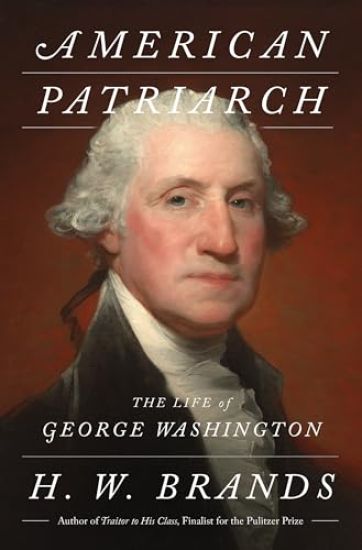
American Patriarch: The Life of George Washington
From historian and Pulitzer Prize finalist H. W. Brands comes an inspiring portrait of George Washington that examines his unrivaled leadership in the birth of America. From his early military career and role among the Virginia gentry, to his leadership during the American Revolution and reluctant return to public service as the first president of the United States, American Patriarch brings to life the man who was called on time and again by his peers to lead. With a dazzling cast of characters--from the French and Indians on the Ohio frontier; to the Marquis de Lafayette, Benedict Arnold, and Baron von Steuben on the revolutionary battlefield; to Thomas Jefferson and Alexander Hamilton locked in conflict during his presidency--American Patriarch casts Washington as the icon of American virtue who wrested America free from British control, gave credibility to the Constitution, and crafted the norms that would steady America as a nation for generations to follow. Arriving in time for the 250th anniversary of American independence, this is a masterful portrait of Washington as the unrivaled leader of his times.
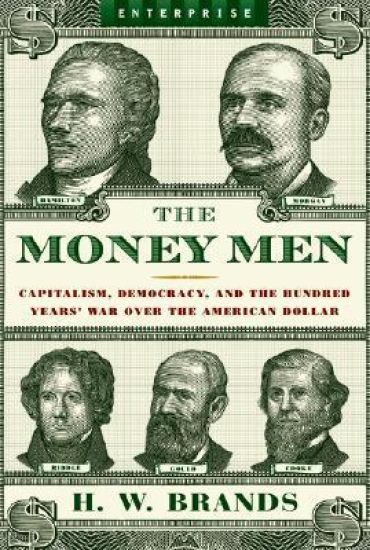
The Money Men

The Money Men

H. W. Brands

WW Norton Co
2007
nidottu
Most Americans are familiar with the political history of the United States, but there is another history woven all through it, a largely forgotten history—the story of the money men. Acclaimed historian H. W. Brands brings them back to life: J. P. Morgan, who stabilized a foundering U.S. Treasury in 1907; Alexander Hamilton, who founded the first national bank, and Nicholas Biddle, under whose directorship it failed; Jay Cooke, who helped to finance the Union war effort through his then-innovative strategy of selling bonds to ordinary Americans; and Jay Gould, who tried to corner the market on gold in 1869 and as a result brought about Black Friday and fled for his life.
What America Owes the World

What America Owes the World

H. W. Brands

Cambridge University Press
1998
sidottu
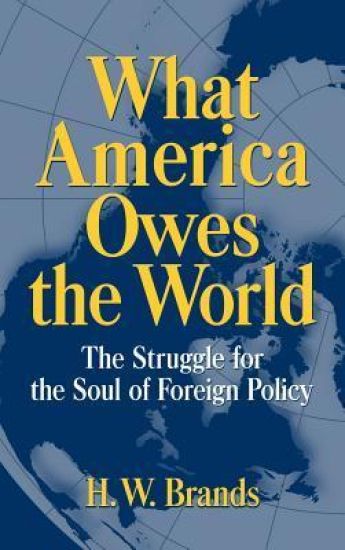
For two hundred years, Americans have believed that they have an obligation to improve the lot of humanity. This belief has consistently shaped US foreign policy. Yet within this consensus, two schools of thought have contended: the ‘exemplarist’ school (Brands’ term) which holds that what America chiefly owes the world is the benign example of a well-functioning democracy, and the ‘vindicationist’ school which argues that force must sometimes supplement a good example. In this book, H. W. Brands traces the evolution of these two schools as they emerged in the thinking and writing of the most important public thinkers of the last two centuries. This book is both an intellectual and moral history of US foreign policy and a guide to the fundamental question of America’s relations with the rest of the world - a question more pressing than ever in the confusion that has succeeded the Cold War: What does America owe the world?
What America Owes the World

What America Owes the World

H. W. Brands

Cambridge University Press
1998
pokkari
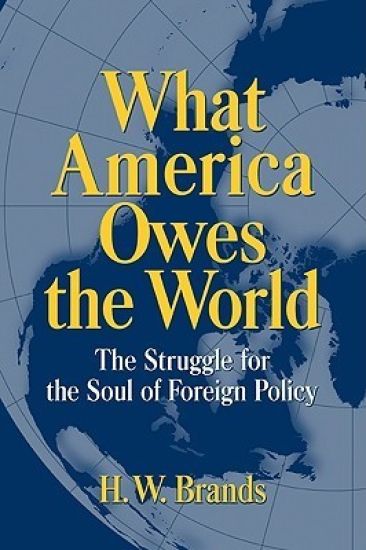
For two hundred years, Americans have believed that they have an obligation to improve the lot of humanity. This belief has consistently shaped US foreign policy. Yet within this consensus, two schools of thought have contended: the ‘exemplarist’ school (Brands’ term) which holds that what America chiefly owes the world is the benign example of a well-functioning democracy, and the ‘vindicationist’ school which argues that force must sometimes supplement a good example. In this book, H. W. Brands traces the evolution of these two schools as they emerged in the thinking and writing of the most important public thinkers of the last two centuries. This book is both an intellectual and moral history of US foreign policy and a guide to the fundamental question of America’s relations with the rest of the world - a question more pressing than ever in the confusion that has succeeded the Cold War: What does America owe the world?