Edexcel International GCSE (9–1) Further Pure Mathematics Student Book provides comprehensive coverage of the new specification and is designed to supply students with the best preparation possible for the examination. These new resource also have progression, international relevance and support at their core. Integrated exam practice throughout, with differentiated revision exercises, exam practice and learning summary sections. Provides free access to an ActiveBook, a digital version of the Student Book, which can be accessed online, anytime, anywhere supporting learning beyond the classroom. Transferable skills, needed for progression into higher education and employment, are signposted allowing students to understand, and engage with, the skills they’re gaining. A fully integrated Progression Map tool allows quick and easy formative assessment of student progress, linked to guidance on how to personalise learning solutions. Reviewed by a language specialist to ensure the book is written in a clear and accessible style for students whose first language may not be English. Glossary of key terminology. Online teacher support materials. Available: August-September 2017
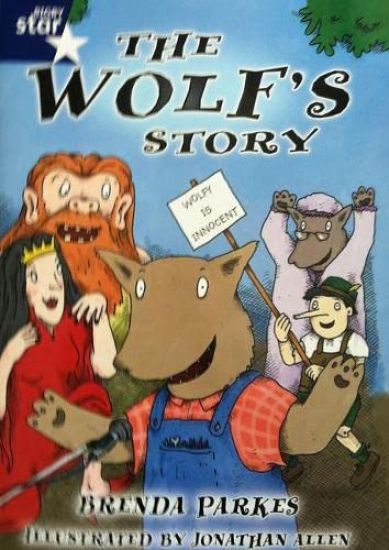
Bring Shared Reading to life! Rigby Star Shared (formerly known as Rigby Red Giant) brings you a fantastic collection of fiction and non-fiction Big Books to captivate your children during shared reading sessions. The carefully balanced words and pictures foster your children's own creative writing skills and prompt them to 'read-along' with confidence.
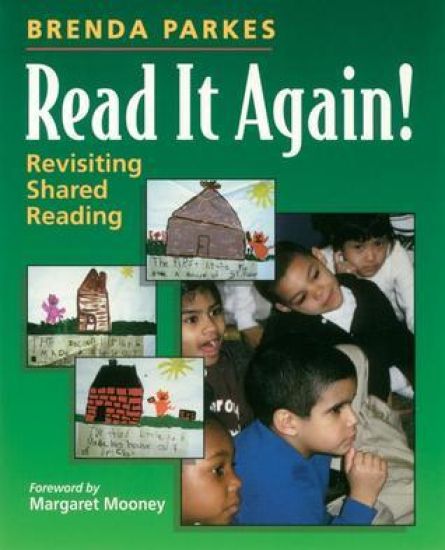
This book anchors shared reading as an essential element within a comprehensive and balanced literacy program. Margaret Mooney In this book, Brenda Parkes introduces new teachers to shared reading and helps experienced teachers revitalize this important teaching practice. Starting with the bedtime story, Read It Again! outlines the essential elements and benefits of shared reading and provides detailed examples which show how a shared reading session unfolds in the classroom. By including examples of implicit and explicit teaching, Brenda demonstrates how shared reading helps children develop a range of strategies for reading and comprehending text. You will find detailed strategies that support learners in developing self-extending systems through their understanding of content and process and several examples of independent activities that consolidate and extend learning. Good book selection is the key to successful shared reading experiences. In discussing the criteria for quality book selection, Brenda shows us how to critically assess the teaching and learning possibilities in shared reading books and how to use a variety of text types to model purpose, content, and form. The book includes an analysis of supportive text features for the different needs of emergent, early, and fluent readers. Annotated bibliographies provide a quick reference to quality books. Read It Again! refines and extends our understanding of shared reading, and shows primary teachers how to put this valuable approach into practice.
Completely revised new edition of the market-leading Biology textbook for SL, written for the new 2014 Science IB Diploma curriculum. Now with an accompanying four-year student access to an enhanced eText, containing simulations, animations, worked solutions, videos and much more. The enhanced eText is also available to buy separately and works on desktops and tablets. Follows the organizational structure of the new Biology guide, with a focus on the Essential Ideas, Understanding, Applications & Skills for complete syllabus-matching.Written by the highly experienced IB author team of Alan Damon, Randy McGonegal, Patricia Tosto and William Ward, you can be confident that you and your students have all the resources you will need for the new Biology curriculum.
Completely revised new edition of the market-leading Biology textbook for HL, written for the new 2014 Science IB Diploma curriculum. Now with an accompanying four-year student access to an enhanced eText, containing simulations, animations, worked solutions, videos and much more. The enhanced eText is also available to buy separately and works on desktops and tablets. Follows the organizational structure of the new Biology guide, with a focus on the Essential Ideas, Understanding, Applications & Skills for complete syllabus-matching. Written by the highly experienced IB author team of Alan Damon, Randy McGonegal, Patricia Tosto and William Ward, you can be confident that you and your students have all the resources you will need for the new Biology curriculum. Features: Nature of Science and ToK boxes throughout the text ensure an embedding of these core considerations and promote concept-based learning. Applications of the subject through everyday examples are described in utilization boxes, as well as brief descriptions of related industries, to help highlight the relevance and context of what is being learned. Differentiation is offered in the Challenge Yourself exercises and activities, along with guidance and support for laboratory work on the page and online. Exam-style assessment opportunities are provided from real past papers, along with hints for success in the exams, and guidance on how to avoid common pitfalls. Clear links are made to the Learner profile and the IB core values.
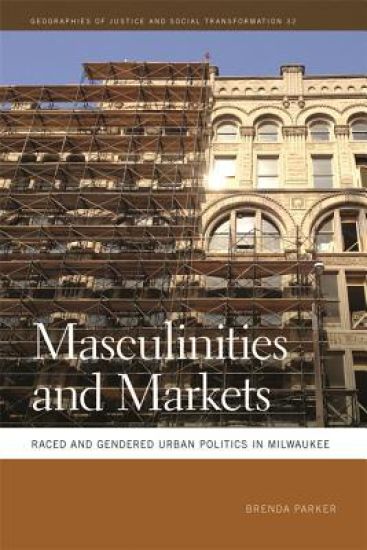
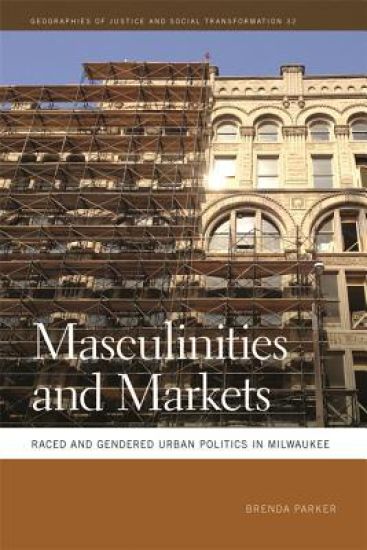
Studies of urban neoliberalism have been surprisingly inattentive to gender. Brenda Parker begins to remedy this by looking at the effect of new urbanism, “creative class,” and welfare reform discourses on women in Milwaukee, a traditionally progressive city with a strong history of political organizing. Through a feminist partial political economy of place (FPEP) approach, Parker conducts an intersectional analysis of urban politics that simultaneously pays attention to a number of power relations. She argues that in the 1990s and 2000s, the city’s business-friendly agenda—although couched in uplifting rhetoric—strengthened existing hierarchies not only in class and race but also in gender.Taking on municipal elites’ adoption of Richard Florida’s “creative class” thesis, for example, Parker looks at the group Young Professionals of Milwaukee, exposing the way that a “creative careers” focus advances fundamentally masculine values and interests. She concludes with a case study that shows how gender and race mattered in the design, enactment, and contestation of an uneven urban redevelopment project. At once a case study of the city and a theorization of urban neoliberalism, Masculinities and Markets highlights how urban politics and discourses in U.S. cities have changed over the years.
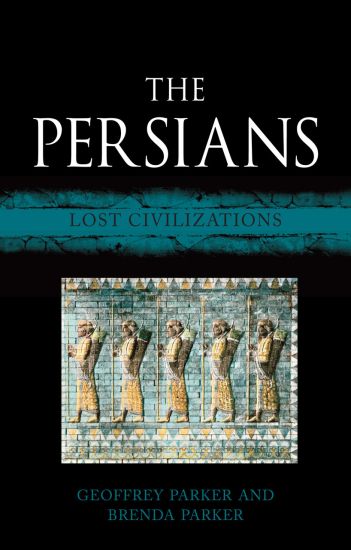
During the first and second millennia BCE a swathe of nomadic peoples migrated outward from Central Asia into the Eurasian periphery. One group of these people would find themselves encamped in an unpromising, arid region just south of the Caspian Sea. From these modest and uncertain beginnings, they would go on to form one of the most powerful empires in history: the Persian Empire. In this book, Geoffrey and Brenda Parker tell the captivating story of this ancient civilization and its enduring legacy to the world. The authors examine the unique features of Persian life and trace their influence throughout the centuries. They examine the environmental difficulties the early Persians encountered and how, in overcoming them, they were able to develop a unique culture that would culminate in the massive, first empire, the Achaemenid Empire. Extending their influence into the maritime west, they fought the Greeks for mastery of the eastern Mediterranean one of the most significant geopolitical contests of the ancient world. And the authors paint vivid portraits of Persian cities and their spectacular achievements: intricate and far-reaching roadways, an astonishing irrigation system that created desert paradises, and, above all, an extraordinary reflection of the diverse peoples that inhabited them. Informed and original, this is a history of an incomparable culture whose influence can still be seen, millennia later, in modern-day Iran and the wider Middle East. "
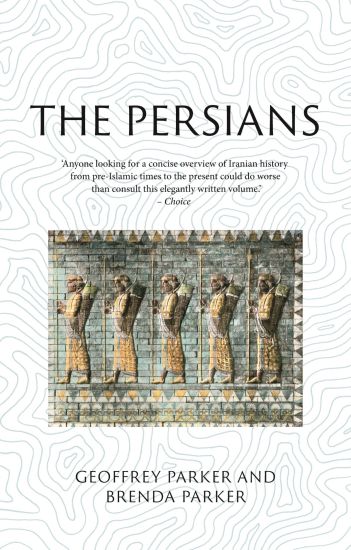
Now available in paperback, The Persians tells the story of this cultured ancient civilization, tracing the unique features of Persian life as well as their influence down the centuries. This book describes the difficulties early Persians encountered and how such challenges contributed to their unique character and the establishment of the Achaemenid Empire. It recounts the keenly fought conflicts with the Greeks for mastery of the Eastern Mediterranean, a contest which was to dominate the geopolitics of the ancient world, and it paints a vivid picture of the many great Persian cities and the civilization's spectacular achievements: an efficient road system that linked an empire together; respect for subject peoples; and advances in irrigation techniques that created a ‘paradise’ envied by its neighbours.
Clinical supervision provides a framework within which nurses can reflect on their practice, enabling them to face professional challenges with renewed energy and a clearer perspective. Clinical Supervision for Nurses is an accessible, practical guide to clinical supervision itself and implementing the supervision process in nursing practice. Clinical Supervision for Nurses explores the role of clinical supervision, its contribution to practice development and implementation in practice. It discusses the range of approaches to clinical supervision and models of supervision, organisational readiness and other factors influencing success, legal and ethical issues, and perspectives of supervisors and the supervisees.
Sue Bird and Candace Parker are basketball superstars Between the two, Bird has more career points, but Parker has more points per game. So which one is the all-time best? Young readers can decide for themselves by comparing the fantastic feats and stunning stats of two legendary pro basketball players.
Lonely Planet's Banff, Jasper and Glacier National Parks is your passport to the most relevant, up-to-date advice on what to see and skip. Hike the Skyline Trail, watch for bears, and ride the rapids; all with your trusted travel companion. Get to the heart of Banff, Jasper and Glacier National Parks and begin your journey now! Inside the Lonely Planet's Banff, Jasper and Glacier National Parks Travel Guide: User-friendly highlights and itineraries help you tailor your trip to your personal needs and interests Insider tips to save time and money and get around like a local, avoiding crowds and trouble spots Essential info at your fingertips - hours of operation, phone numbers, websites, transit tips, prices, emergency information, park seasonality, hiking trail junctions, viewpoints, landscapes, elevations, distances, difficulty levels, and durations Focused on the best hikes, drives, and cycling tours Honest reviews for all budgets - eating, sleeping, camping, sightseeing, going out, shopping, summer and winter activities, and hidden gems that most guidebooks miss Contextual insights give you a richer, more rewarding travel experience - history, geology, wildlife, and conservation Over 52 full-color trail and park maps and full-color images throughout Useful features- Travel with Children,Clothing and Equipment, andDay and Overnight Hikes Covers Banff National Park and Around, Jasper National Park, Glacier National Park and Around, Waterton Lakes National Park and more The Perfect Choice: Lonely Planet's Banff, Jasper and Glacier National Parks, our most comprehensive guide to this region's national parks, is perfect for both exploring top sights and taking roads less traveled. Looking for more extensive coverage? Check out Lonely Planet's Canada for a comprehensive look at all the country has to offer. Looking for a comprehensive guide that recommends both popular and offbeat experiences, and extensively covers all of Vancouver's neighborhoods? Check out Lonely Planet's Vancouver and Victoria city guide. About Lonely Planet: Lonely Planet is a leading travel media company, providing both inspiring and trustworthy information for every kind of traveler since 1973. Over the past four decades, we've printed over 145 million guidebooks and phrasebooks for 120 languages, and grown a dedicated, passionate global community of travelers. You'll also find our content online, and in mobile apps, videos, 12 international magazines, armchair and lifestyle books, ebooks, and more, enabling you to explore every day. 'Lonely Planet guides are, quite simply, like no other.' New York Times 'Lonely Planet. It's on everyone's bookshelves; it's in every traveler's hands. It's on mobile phones. It's on the Internet. It's everywhere, and it's telling entire generations of people how to travel the world.' Fairfax Media (Australia)