Kirjahaku
Etsi kirjoja tekijän nimen, kirjan nimen tai ISBN:n perusteella.
1000 tulosta hakusanalla Brian B Wong

Gluten-Free Goodness - Snack Recipes
Brian B
Createspace Independent Publishing Platform
2013
nidottu
If you are on a gluten-free diet, you know that every time you leave the house you're entering a veritable minefield of wheat bombs. Everywhere you turn, you are besieged by donuts, bagels, buns, rolls, tortillas, pretzels, cookies ... the list just goes on and on. It is almost impossible just to grab a snack on the run, or a quick bite while doing errands at the mall. Road trips and sporting events, not to mention long airline journeys, either become opportunities for diet disaster or have to be planned and executed so precisely that it seems easier to give up or give in. And nothing can ruin a day or a trip faster than that awful feeling of being "glutened." Not to mention what it is doing to your long-term health.Inside this recipe you'll find delicious gluten-free snacks like: - Spicy Chicken Bites- Mighty Beef Sliders- The Zucchini Rollatini- Bacon Quesadilla- Gluten-Free Chicken TaquitosAnd many more
In The Smoke Clears, there is a sudden realization of the extent of loss, the aftermath that includes detailed investigations, enquiries, inquests, trial acquittals, convictions and the recommendations put forward in the hope that similar events will never happen again. Some questions may be immediately answered, others may linger for days, sometimes weeks that turn into months and years. Some answers, unfortunately, may never be answered. The pain that is felt by those who have lost a loved one never goes away; their memory must be treasured, honoured and never forgotten. The who, what, why and when start to unravel as the experts try to form some logic for the disastrous events. If they share one thing in common, they are not restricted to any region, population, industry, activity, or country. Disasters are universal and seldom anticipated; however, when we delve into them after the fact, we sometimes come across some smoke signals that may have forwarded us. It starts with securing the scene to ensure further injuries will be prevented; care and attention to those injured; preservation of the location to protect valuable evidence and to ensure it is not altered or disturbed; notifications of police, government officials, company officials and, of course, the next of kin: spouses, mothers, fathers, grandparents, brothers, sisters, aunts and uncles. Life is very much about the choices we make, and with those choices comes an element of risk. It is all about risk; many of the victims who lost their lives never had a choice in the matter, and the risk that they were exposed to was determined by others. Whether it was through ignoring a regulation, code, rule, procedure or practice, or to enhance profits or monitory gain, it is my sincere hope that readers who may have a responsibility where they put other people's lives at risk have done so diligently and to the best of their ability. There is a lot of sadness and heartache within the pages of my books, but there is also a lot of hope and understanding that lessons that have been learned from the past will continue to provide us with the ability to reduce risk in the future. Continuous improvement is a torch that gets passed from one generation to another. It becomes a beacon of light for knowledge and understanding.
The Smelter explosion in the early hours of Aug 8th 2000 became a watershed moment for the company, its employees, family members and all residents of Flin Flon. Like 9/11, nothing would ever be the same again.We must always be open to rethinking the way we do things. Change must be constant. To go to work each day without getting hurt has to be an expectation we all have.In Flin Flon, the last fatality prior to the smelter explosion had been five years earlier. That had been the longest period between fatalities in the company's history. There has not been a work - related fatality in the 19 years since the explosion, but that is not to say the battle to create a harm-free workplace has been won. We could so easily have had fatalities many times over the years. Sometimes the outcome was a question of sheer luck or twist of fate, a matter of inches, or seconds making the difference between life and death.It is all the more important to revisit and communicate the important lessons learned from them. I have included many of them in the second part of this book under "Work Shouldn't Hurt" along with other examples I have experienced in my 49 years in the work force. Lessons can be learned every day. They can apply to everyone who goes to work. It doesn't matter if you are a CEO, Manager, supervisor or worker, everyone is an important cog in the wheel.Examples given and discussions throughout this book are not intended to demean or point a finger at any individual, group or company. They are purely used as learning opportunities to help people recognize and understand that sometimes it is only incredible luck or good fortune that they don't end up seriously injured, or even killed.The examples are mostly centred around heavy industry, but many similar occurrences lay dormant in many workplaces, and even outside the work environment. To reiterate, this book is not about blame or finger pointing. It is an attempt to capture and understand the circumstances that led up to the explosion and what goes into a recipe for such a disaster.Seldom is anything made from one ingredient. Similarly, a disaster is usually triggered by more than one single event or "ingredient".The fatality list that is included in this book demonstrates the tremendous sacrifice employees have made over the history of Hudson Bay Mining and Smelting. Many workplace safety and health regulations have been implemented as a direct result of lessons learned. The list does not cover the tremendous number of accidents that did not result in death but did inflict life-changing injuries. Every name on the list represents a son, brother, uncle, husband or father, and many represent every single one of those relationships, which left wives without husbands, children without dads.
The Smelter explosion in the early hours of Aug 8th 2000 became a watershed moment for the company, its employees, family members and all residents of Flin Flon. Like 9/11, nothing would ever be the same again.We must always be open to rethinking the way we do things. Change must be constant. To go to work each day without getting hurt has to be an expectation we all have.In Flin Flon, the last fatality prior to the smelter explosion had been five years earlier. That had been the longest period between fatalities in the company's history. There has not been a work - related fatality in the 19 years since the explosion, but that is not to say the battle to create a harm-free workplace has been won. We could so easily have had fatalities many times over the years. Sometimes the outcome was a question of sheer luck or twist of fate, a matter of inches, or seconds making the difference between life and death.It is all the more important to revisit and communicate the important lessons learned from them. I have included many of them in the second part of this book under "Work Shouldn't Hurt" along with other examples I have experienced in my 49 years in the work force. Lessons can be learned every day. They can apply to everyone who goes to work. It doesn't matter if you are a CEO, Manager, supervisor or worker, everyone is an important cog in the wheel.Examples given and discussions throughout this book are not intended to demean or point a finger at any individual, group or company. They are purely used as learning opportunities to help people recognize and understand that sometimes it is only incredible luck or good fortune that they don't end up seriously injured, or even killed.The examples are mostly centred around heavy industry, but many similar occurrences lay dormant in many workplaces, and even outside the work environment. To reiterate, this book is not about blame or finger pointing. It is an attempt to capture and understand the circumstances that led up to the explosion and what goes into a recipe for such a disaster.Seldom is anything made from one ingredient. Similarly, a disaster is usually triggered by more than one single event or "ingredient".The fatality list that is included in this book demonstrates the tremendous sacrifice employees have made over the history of Hudson Bay Mining and Smelting. Many workplace safety and health regulations have been implemented as a direct result of lessons learned. The list does not cover the tremendous number of accidents that did not result in death but did inflict life-changing injuries. Every name on the list represents a son, brother, uncle, husband or father, and many represent every single one of those relationships, which left wives without husbands, children without dads.


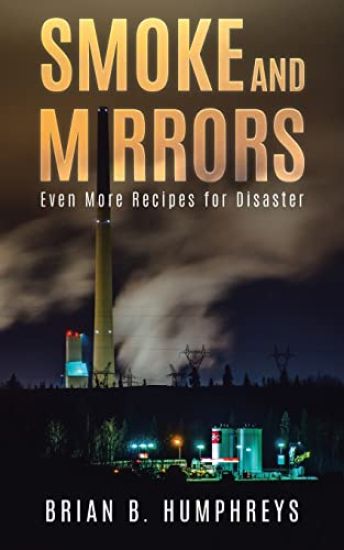
Why can we look at the same thing and differ in whether we feel safe or not?Does luck, fate, or destiny determine if we remain safe?Who are the magicians that can make a mine site disappear?Now you see it; now you don't.Is life itself a gamble, and how do we keep the odds in our favour?Snake oil for everything that ails you readily available, safety in a bottle, zero percent proof.Who are the high rollers who are prepared to bet their life on a successful outcome?The learning never stops.
Why can we look at the same thing and differ in whether we feel safe or not?Does luck, fate, or destiny determine if we remain safe?Who are the magicians that can make a mine site disappear?Now you see it; now you don't.Is life itself a gamble, and how do we keep the odds in our favour?Snake oil for everything that ails you readily available, safety in a bottle, zero percent proof.Who are the high rollers who are prepared to bet their life on a successful outcome?The learning never stops.

Pediatric Speech and Language: Perspectives on Interprofessional Practice, An Issue of Pediatric Clinics of North America
Brian B. Shulman
Elsevier - Health Sciences Division
2017
sidottu
Like many other medical and health-related professions, the speech-language pathology and audiology professions have been responding to the changes in the ways in which healthcare is delivered. These changes are occurring at the federal and state levels due to changes in legislative and regulatory policies. To this end and as a result of reports from the World Health Organization (2010, 2011, 2013) and the Institute of Medicine (2000, 2001, 2015), healthcare professionals are now addressing healthcare service delivery within an interprofessional, collaborative practice and patient outcomes context. This volume of Pediatric Clinics will present articles that address clinical care to a variety of pediatric speech and language clinical populations. While it will be the intent of each piece to address interprofessional perspectives of care, the opening and closing pieces, respectively, will introduce and then synthesize, all of the articles into a cogent volume. Articles are devoted to the following topics: The Journey to Interprofessional Practice: Are We There Yet; Late Talkers: Why the 'Wait and See' Approach is Outdated; A Pediatrician's Guide to Cleft Palate Speech and Non-Cleft Causes of Velopharyngeal Insufficiency (VPi); Supporting Children with Autism and Their Families: A Model for Interprofessional Practice; Feeding Problems in Infants and Children: Assessment and Etiology; A Multidisciplinary Team Approach to the Differential Diagnosis of Children with Communication Disorders; Open Up and Let Us In: An Interdisciplinary Approach to Oral Health; Otitis Media: Beyond the Examining Room; Clinical Perspectives on Pre-Literacy Development in Young Children; Using the ICF Framework to Achieve Interprofessional Functional Outcomes for Young Children: A Speech-Language Pathology Perspective; Developmental Care of the Pre-Term Infant: From NICU Through High-Risk Infant Follow Up; Interprofessional Collaborative Practice: What That Means for Early Intervention Service Delivery; The Role of the Speech-Language Pathologist in Creating a Model for Interprofessional Practice in an Ambulatory Care Clinic; and Identification of Speech and Language Delays in Young Children: An Important Collaborative Role for the Pediatrician.

Millions of people participate in sporting activities every day, from the daily runner to the three-times-a-week "gym rat," to members of myriad sports teams. Sports injuries are among the most commonly presenting issues in emergency rooms and physician’s offices. During these events, the most common injuries affect the skin. Cutaneous manifestations afflict all athletes from the recreational neophyte to the professional. Conditions ranging from innocuous skin injuries to skin disease that can bench a nationally ranked wrestling team occur with alarming frequency. Review articles and book chapters that discuss sports-related dermatoses are too general and often offer only cursory information. Sports Dermatology: Handbook Of Diagnosis And Management gathers the most clinically relevant and badly needed information in this emerging area of sports dermatology. With the increased emphasis on evidence-based medicine, that construct serves as the basis for much of the book, providing the most current and practical approach for treatment options. Both common and unusual disorders related to sports are reviewed in detail. Each sports-related skin condition is discussed with attention to the following subheadings: epidemiology, clinical presentation, diagnosis, treatment, and prevention. The author has separated the sports-related dermatoses into categories including infections, benign and malignant neoplasms, traumatic conditions, environmental hazards, and inflammatory reactions. On the inside covers of the book, for quick reference and easy access, we have listed dermatologic conditions affecting athletes, first by sport and then by specific skin condition. Photographs of the sports-related dermatoses will help the clinician visualize the different clinical morphologies apparent in athletes. In many cases, the use of summary tables will help the clinician organize their thinking regarding prevention and treatment of various infectious conditions.Sports Dermatology will assist the many clinicians faced with these issues to chose the most appropriate treatment and prevention plan for their specific athlete population.
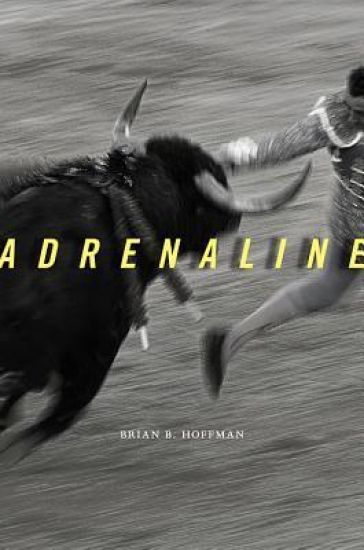
Inducing highs of excitement, anger, and terror, adrenaline fuels the extremes of human experience. A rush empowers superhuman feats in emergencies. Risk-taking junkies seek to replicate this feeling in dangerous recreations. And a surge may literally scare us to death. Adrenaline brings us up to speed on the fascinating molecule that drives some of our most potent experiences.Adrenaline was discovered in 1894 and quickly made its way out of the lab into clinics around the world. In this engrossing account, Brian Hoffman examines adrenaline in all its capacities, from a vital regulator of physiological functions to the subject of Nobel Prize–winning breakthroughs. Because its biochemical pathways are prototypical, adrenaline has had widespread application in hormone research leading to the development of powerful new drugs. Hoffman introduces the scientists to whom we owe our understanding, tracing the paths of their discoveries and aspirations and allowing us to appreciate the crucial role adrenaline has played in pushing modern medicine forward.Hoffman also investigates the vivid, at times lurid, place adrenaline occupies in the popular imagination, where accounts of its life-giving and lethal properties often leave the realm of fact. Famous as the catalyst of the “fight or flight” response, adrenaline has also received forensic attention as a perfect poison, untraceable in the bloodstream—and rumors persist of its power to revive the dead. True to the spirit of its topic, Adrenaline is a stimulating journey that reveals the truth behind adrenaline’s scientific importance and enduring popular appeal.


Trading Stocks Using Classical Chart Patterns: A Complete Tactical & Psychological Guide for Beginners and Experienced Traders
Brian B. Kim
Brian B. Kim
2014
nidottu

Stock Market IQ & EQ: The Vital, Fun, and Concisely Definitive Introduction to Investing
Brian B. Kim
Brian B. Kim
2015
nidottu
I went from Harvard Law School to being jobless and lost. What got me going again---the thing that reaffirmed life and led to new adventures---wasn't the so-called Great Books that you are supposed to read. Instead, a few words here and there from movies, popular magazines, blogs, comic strips, food labels, and other so-called "simple" or "unimportant" everyday things brought me back and helped me to a new life. It's simple: read whatever you want, especially if you're embarrassed about telling others you're reading it, and I'll show you how to think about simple words in exciting ways. This book shows you that there is encouragement and new beginnings everywhere.
Developing an Excel Decision Support System Using In-Transit Visibility to Decrease DoD Transportation Delays
Brian B Stone
Hutson Street Press
2025
sidottu

Developing an Excel Decision Support System Using In-Transit Visibility to Decrease DoD Transportation Delays
Brian B Stone
Hutson Street Press
2025
pokkari
Developing an Excel Decision Support System Using In-Transit Visibility to Decrease DoD Transportation Delays
Brian B Stone
Biblioscholar
2012
pokkari