Lead Generation for the Complex Sale arms you with a sophisticated multimodal approach to generating highly profitable leads. Brian Carroll, CEO of InTouch Incorporated and expert in lead generation solutions, reveals key strategies that you can implement immediately to win new customers, accelerate growth, and improve your sales performance.You'll start by defining your ideal leads and targeting your ideal customer. Then, you'll construct your lead generation plan, a crucial step to staying ahead of your competition long-term. To help you put your plan into action, Carroll guides you step by step to:Align sales and marketing efforts to optimize the number of leadsUse multiple lead generation vehicles, including e-mail, referrals, public relations, speaking events, webinars, and moreCreate value for the prospective customer throughout the buying processManage a large group of leads without feeling overwhelmedIdentify and prioritize your best prospectsIncrease the percentage of leads who become profitable customersAvoid lulls in the sales cycleWith Lead Generation for the Complex Sale you'll learn how to target prospects early in the buying process and make the most efficient use of sales productivity and marketing resources.
This book brings into dramatic relief the dilemma, or devil's bargain, that faced the black press in first building up black baseball, then crusading for the sport's integration and, as a result of that largely successful campaign, ultimately encouraging and even ensuring the demise of those same black leagues. Taking a thematic approach, this book focuses each of its chapters on a singular event or phenomenon from and for each decade of the period covered, a period that spans the roughly four decades of the black leagues' existence. Thus, the book drills down on a handful of representative events and phenomena to present a history of the black press and black baseball. Themes include the many ways team owners and the weekly newspapers' editors and writers worked in concert to build up the leagues, the paired fortunes of black players and black writers, the desperation to save the Negro leagues when it became clear integration threatened their survival, and finally the black press’s response to the residues of baseball's decades of segregation.
*Finalist for the 2007 Seymour Medal of the Society for American Baseball Research (SABR).* *Winner of the 2007 Robert Peterson Book Award of the Negro Leagues Committee of the Society for American Baseball*When to Stop the Cheering? documents the close and often conflicted relationship between the black press and black baseball beginning with the first Negro professional league of substance, the Negro National League, which started in 1920, and finishing with the dissolution of the Negro American League in 1957. When to Stop the Cheering? examines the multidimensional relationship the black newspapers had with baseball, including their treatment of and relationships with baseball officials, team owners, players and fans. Over time, these relationships changed, resulting in shifts in coverage that could be described as moving from brotherhood to paternalism, then from paternalism to nostalgic tribute and even regret.
*Finalist for the 2007 Seymour Medal of the Society for American Baseball Research (SABR).* *Winner of the 2007 Robert Peterson Book Award of the Negro Leagues Committee of the Society for American Baseball*When to Stop the Cheering? documents the close and often conflicted relationship between the black press and black baseball beginning with the first Negro professional league of substance, the Negro National League, which started in 1920, and finishing with the dissolution of the Negro American League in 1957. When to Stop the Cheering? examines the multidimensional relationship the black newspapers had with baseball, including their treatment of and relationships with baseball officials, team owners, players and fans. Over time, these relationships changed, resulting in shifts in coverage that could be described as moving from brotherhood to paternalism, then from paternalism to nostalgic tribute and even regret.
Writing for Digital Media teaches students how to write effectively for online audiences—whether they are crafting a story for the website of a daily newspaper or a personal blog. The lessons and exercises in each chapter help students build a solid understanding of the ways that the Internet has introduced new opportunities for dynamic storytelling as digital media have blurred roles of media producer, consumer, publisher and reader. Using the tools and strategies discussed in this book, students are able to use their insights into new media audiences to produce better content for digital formats and environments.Fundamentally, this book is about good writing—clear, precise, accurate, filled with energy and voice, and aimed directly at an audience. Writing for Digital Media also addresses all of the graphical, multimedia, hypertextual and interactive elements that come into play when writing for digital platforms. Learning how to achieve balance and a careful, deliberate blend of these elements is the other primary goal of this text. Writing for Digital Media teaches students not only how to create content as writers, but also how to think critically as a site manager or content developer might about issues such as graphic design, site architecture, and editorial consistency. By teaching these new skill sets alongside writing fundamentals, this book transforms students from writers who are simply able to post their stories online into engaging multimedia, digital storytellers. For additional resources and exercises, visit the Companion Website for Writing for Digital Media at: www.routledge.com/textbooks/9780415992015.
In this fifth edition, Brian Carroll explores writing and editing for digital media with essential information about voice, style, media formats, ideation, story planning, and storytelling.Carroll explains and demonstrates how to effectively write for digital spaces and combines hands-on, practical exercises with new material on podcasting, multi-modal storytelling, misinformation and disinformation, and writing specifically for social media. Each chapter features lessons and exercises through which students can build a solid understanding of the ways that digital communication provides opportunities for dynamic storytelling and multi-directional communication. Broadened in scope, this new edition also speaks to writers, editors, public relations practitioners, social media managers, marketers, as well as to students aspiring to these roles. Updated with contemporary examples and new pedagogy throughout, this is the ideal handbook for students seeking careers in digital media, particularly in content development and digital storytelling.It is an essential text for students of media, communication, public relations, marketing, and journalism who are looking to develop their writing and editing skills for these ever-evolving fields and professions.This book also has an accompanying eResource that provides additional weekly activities, exercises, and assignments that give students more opportunity to put theory into practice.
In this fifth edition, Brian Carroll explores writing and editing for digital media with essential information about voice, style, media formats, ideation, story planning, and storytelling.Carroll explains and demonstrates how to effectively write for digital spaces and combines hands-on, practical exercises with new material on podcasting, multi-modal storytelling, misinformation and disinformation, and writing specifically for social media. Each chapter features lessons and exercises through which students can build a solid understanding of the ways that digital communication provides opportunities for dynamic storytelling and multi-directional communication. Broadened in scope, this new edition also speaks to writers, editors, public relations practitioners, social media managers, marketers, as well as to students aspiring to these roles. Updated with contemporary examples and new pedagogy throughout, this is the ideal handbook for students seeking careers in digital media, particularly in content development and digital storytelling.It is an essential text for students of media, communication, public relations, marketing, and journalism who are looking to develop their writing and editing skills for these ever-evolving fields and professions.This book also has an accompanying eResource that provides additional weekly activities, exercises, and assignments that give students more opportunity to put theory into practice.
An essential guide to writing and editing for digital media, this sixth edition responds to the mainstreaming of genAI (Generative AI) and LLMs (Large Language Models), among many other changes in the best practices of digital storytelling. Carroll explains and demonstrates how to effectively write for digital spaces and places that typically abound with graphical content, multimedia, and hypertextual, interactive elements. He also combines hands-on, practical exercises with information on key topics such as misinformation and disinformation, and the proliferation of artificial intelligence. This new edition specifically explores the ethical questions raised by AI, as well as the new possibilities it presents. Each chapter features lessons and exercises through which students can build a solid understanding of the ways that digital communication provides opportunities for dynamic storytelling and multi-directional communication. It also speaks to writers, editors, public relations practitioners, and social media managers and marketers. Updated with contemporary examples and new pedagogy throughout, this is the ideal handbook for students seeking careers in digital media, particularly in content development and digital storytelling. It is an essential text for students of media, communication, public relations, marketing, and journalism who are looking to develop their writing and editing skills for these ever-evolving fields and professions. This book also has accompanying Support Material that offers additional weekly activities and assignments, providing students additional opportunity to put theory into practice.
An essential guide to writing and editing for digital media, this sixth edition responds to the mainstreaming of genAI (Generative AI) and LLMs (Large Language Models), among many other changes in the best practices of digital storytelling. Carroll explains and demonstrates how to effectively write for digital spaces and places that typically abound with graphical content, multimedia, and hypertextual, interactive elements. He also combines hands-on, practical exercises with information on key topics such as misinformation and disinformation, and the proliferation of artificial intelligence. This new edition specifically explores the ethical questions raised by AI, as well as the new possibilities it presents. Each chapter features lessons and exercises through which students can build a solid understanding of the ways that digital communication provides opportunities for dynamic storytelling and multi-directional communication. It also speaks to writers, editors, public relations practitioners, and social media managers and marketers. Updated with contemporary examples and new pedagogy throughout, this is the ideal handbook for students seeking careers in digital media, particularly in content development and digital storytelling. It is an essential text for students of media, communication, public relations, marketing, and journalism who are looking to develop their writing and editing skills for these ever-evolving fields and professions. This book also has accompanying Support Material that offers additional weekly activities and assignments, providing students additional opportunity to put theory into practice.
This book brings into dramatic relief the dilemma, or devil's bargain, that faced the black press in first building up black baseball, then crusading for the sport's integration and, as a result of that largely successful campaign, ultimately encouraging and even ensuring the demise of those same black leagues. Taking a thematic approach, this book focuses each of its chapters on a singular event or phenomenon from and for each decade of the period covered, a period that spans the roughly four decades of the black leagues' existence. Thus, the book drills down on a handful of representative events and phenomena to present a history of the black press and black baseball. Themes include the many ways team owners and the weekly newspapers' editors and writers worked in concert to build up the leagues, the paired fortunes of black players and black writers, the desperation to save the Negro leagues when it became clear integration threatened their survival, and finally the black press’s response to the residues of baseball's decades of segregation.
This work searches Shakespeare's history and Roman plays to find the raw materials of English national consciousness and identity. The messages of Shakespeare's history plays are not principally the plots or "facts" of the dramas but the attitudes and imaginings they elicited in audiences. Reading Shakespeare through the lens of national identity is a study almost as old as the plays themselves, and many scholars have found various articulations of nationhood in Shakespeare's plays. This book argues that Shakespeare's histories furnished modern England with a curriculum for constructing a national identity, a confidence of language and culture, and a powerful new medium through which to communicate and express this negotiated identity. Highlighting the application of semiotics, it studies the playwright's use of symbols, metonymy, symbolic codes, and metaphor. By examining what Shakespeare and playgoers remembered and forgot, as well as the ways ideas were framed, this book explores how a national identity was crafted, contested, and circulated.
10/20/Life Second Edition If you like Starting Strength or 5/3/1, you're going to LOVE 10/20/Life What is 10/20/Life? 10-and-20 weeks at a time, for a lifetime of positive momentum in training and in LIFE. This philosophy is a life-long approach for any level of lifter or athlete. Many recreational lifters utilize the protocols in this book to have a better plan in the gym, with no plans to ever compete. On the other hand, many competitive lifters from Beginner to Pro use this approach with great success From The Author, Brian Carroll: "With 10/20/Life, my objective is to teach you to get the results you want by coaching yourself-the same way a superior coach would take you through an individualized program in a great gym. We start out with a thorough examination of your weak points because that's how quality coaching works. The idea is to show you what to program, and when, based on your weaknesses in the squat, bench press, and deadlift. This sounds simple, but it's something most people don't even consider, much less put into practice. From there, the 10/20/Life system takes you through the best injury-preventative warm-up in the industry, followed by a comprehensive layout of coaching cues for each individual lift. From start to finish, you'll learn what to look for and what to do, and you'll learn the reasoning behind all of it. By the time you're finished working your way through these materials, you'll be able to coach yourself, and others, like a pro." Learn to be your own coach, attack your weaknesses and utilize a proven philosophy that is a guide to permanent success. This book includes a comprehensive WEAK POINT CHART and WARM-UP INDEX that teach you how to assess your own training and PRESCRIBE THE EXERCISES YOU NEED. 20 YEARS OF RESEARCH AND TRIALS distilled into a program you can actually use The plan is an easy five-step process: 1. Choose your schedule. (3 different)2. Determine your weak points in the main lifts. (use the coaching guide to correct form)3. Use the Weak Point and Assistance Exercise indexes to custom design your own program. (pick your assistance work as specified in the Weak Point index)4. Follow the warm-up protocol listed. (4 parts, super easy and custom)5. Determine your level of readiness, then train according to the system's RPE plan for that day or if you're in precontest, you go off of percentages. (this all depends on where you are in your phase of training)Just a few of the sizable additions to this "second edition" physical copy: - New chapter "Deload"- New chapter "Establishing a baseline"- New chapter "Speed work"Other updated features include: - A reintroduction of the 10/20/Life philosophy and update with AMAZING testimonials - male and female, raw and equipped.- The 5 main principles of 10/20/Life- How do you gain a mental edge? Tips to do so- What 10/20/Life is NOT - putting to rest speculation- RPE - a different approach- Nutrition - a closer look with detail- Coaching cues updated and expanded- Weak point index updated and expanded- Combo day updated and modified- Step-by-step set-up and the pro's and con's of a "wide base bench" vs the "traditional tucked" approach- New offseason training split "Jumbo Day" for those with little to no time to train or those who can't recover between sessions with a typical split or even the "combo day"- All new pictures and charts throughout the entire book- Percentages for pre-contest modified and addressed with suggestions- Many new exercise and section "breakouts" for explanations of movement, an important note, or simply a summary of the section- FAQ section with 15 of the most commonly asked questions.And so much more
A story that grips IrelandWhen recently widowed Jason Corbett hired a wholesome young American, Molly Martens, to care for his two young children, there was nothing to suggest she was a fantasist - and that her obsession with his children would end in his death.In 2011, Jason and Molly married and settled in her native North Carolina. Just four years later, Jason was found beaten to death on the floor of the marital bedroom. The only others in the house were Jason's children, his wife and his parents-in-law. In a stunning twist, Molly and her father Tom, a former senior FBI agent, admitted to killing Jason but claimed self-defence, saying he had a record of domestic abuse.A Deadly Marriage is the shattering story of how a wealthy and well-connected American family framed the victim of an horrific killing as the aggressor, destroyed his name and served minimal jail time. Full of fresh on-the-ground reporting by journalist Brian Carroll, who has spent months in North Carolina, it is the definitive account of an extraordinary case.
A STORY OF BETRAYAL AND DECEIT THAT GRIPPED THE NATION. When Limerick widower Jason Corbett hired a wholesome young American, Molly Martens, to care for his eighteen-month-old daughter and three and-a-half-year-old son, he could not have known that she was a troubled woman whose obsession with his children would end in his death. Three years after meeting, Jason and Molly married and settled in North Carolina. Four years later, Jason was beaten to death in their marital bedroom. Molly and her father, Tom, a former FBI agent, admitted to killing Jason but claimed self-defence. A Deadly Marriage reveals new information about this shocking case including the strange text Molly sent to Jason’s brother less than two hours after his death, how Jason told a friend he was planning to return to Ireland for good just two weeks before he died and Tom Martens’ pattern of cleaning up Molly’s mess. This is the story of how a wealthy and well-connected American family framed the victim as the aggressor in a horrific killing, blackened his name and served minimal jail time. Journalist Brian Carroll reported on the Martens’ court hearings for the Irish Times and is a co-producer of the Netflix documentary A Deadly American Marriage. He has thoroughly investigated the case, including conducting fresh reporting in North Carolina, to write the definitive account of a shattering story.
AutoGenesism is a full Theory of Everything. It's the only full Theory of Everything that exists. This is what makes it singular among the many theories that have begun to pile up within the worlds of cosmology, physics and metaphysics in recent years. It's not a unification theory addressing the profound schism between the way that macro and micro systems operate. It's not a theory focused on reducing the mathematics of material reality to an elegant (if necessarily cryptic) equation that balances one side of the "=" against the other with miraculous precision and without leaning on any infinite values or convenient absences (like gravity or time progression). It's certainly not yet another bland attempt to reveal the science behind any of the handful of traditional religions that have dominated human culture over the course of recent centuries. AutoGenesism is unlike any Theory of Everything that's ever been proposed, and yes, I fully realize how many times this claim has been published in connection with Natural Philosophy; the centuries-old and on-going effort to define the macro-system that contains everything that is real. This AutoGenesism will prove to be a very different revelation, regardless of how it is measured, compared, or contrasted, and whether it is the world's modern scientific dogmas or its traditional wisdoms that are used as contextual reference. AutoGenesism fully addresses all questions concerning the true nature of Reality. It reveals how Reality came into existence. It reveals why Reality came into existence. It reveals how spatial dimensions emerged. It reveals why spatial dimensions emerged. It reveals how Time began. It reveals why Time began. It reveals the true structure of material existence. It reveals the truth concerning precedent and its relationship with the laws of nature. It reveals the actual parameters of our universe. AutoGenesism fully addresses all questions concerning the true nature of the human being. It reveals how humanity is unique within the material realm. It reveals why humanity knows it is unique within the material realm. It reveals the eternal nature of the human being. It reveals that the full human being is not a material manifestation, and why. It reveals how easily a fully developed human being can become imprisoned and explains why it can end up being literally impossible to free such a prisoner. It offers the most plausible explanation for our species' belief in gods, demons, heavens, and hells. It reveals the false connection between deism/theism and human afterlife. It reveals the physics behind all that humanity has known to be true about itself. AutoGenesism addresses these basics, and how they each relate intimately with one another, as it completely fleshes out Reality's structural foundation without the introduction of anything that hasn't already been proven fundamental to what's reliably true as a result of the last century of scientific research. That said, all that's become common knowledge will be properly placed and accurately attributed, with the net result being a fully functional matrix that is both familiar and completely counterintuitive - well, until the utter simplicity of it as a thoroughly natural response to raw physical existence itself becomes obvious, and its conceptual elegance forever invalidates all other Reality explanations. With clarity and specificity, AutoGenesism: A Rational Theory of Everything takes on the biggest and most intractable questions that our own human race has ever confronted while making a powerful case that, when all is finally revealed, Reality is probably going to turn out to be a lot less confounding than the world's greatest minds could have ever imagined.
Step through the looking glass, into a world where logic and imagination intertwine in the most curious ways . . . This expertly-curated book collects the best puzzles written by the author of Alice in Wonderland, Lewis Carroll.Lewis Carroll was a mathematician who loved puzzles of all kinds, invented the word ladder, delighted in acrostics and riddles and posed twisty maths and logic questions in his most famous works, Alice’s Adventures in Wonderland and Through the Looking Glass.Mind-bending and utterly charming, this celebratory collection of puzzles and games includes delights such as Doublets (word ladders) and Syzygies (a more elaborate form of the word ladder), Mirror Writing, Arithmetical Croquet as well as some of the most delightfully puzzling riddles from Alice in Wonderland and Through the Looking Glass. Enough to keep even the most curious of minds entertained for hours.Plus, Chair of the Lewis Carroll Society, Brian Sibley, uses his expert knowledge to take readers inside the inimitable mind of Carroll, with a beautiful introduction and annotations throughout.Packed with wit and nostalgia and illustrated with beautiful full colour imagery from John Tenniel – the original illustrator of Alice in Wonderland - this is the ultimate celebration of one of the most famous puzzlers of all time. The Lewis Carroll Puzzle Book is the perfect gift for both seasoned puzzlers and the Carroll-curious.
Lean thinking is too often narrowly focused on physical processes, causing serious shortcomings, which limit Lean‘s substantial benefits. Lean Performance ERP Project Management: Implementing the Virtual Lean Enterprise, Second Edition presents a lean business process design and implementation project management methodology that integrates strategy, people, process, information technology, and lean to manage the project implementation of the Virtual Lean Enterprise. This book uses a conversational tone to facilitate understanding of concepts. It demonstrates the need to connect Lean Performance with IT to achieve maximum lean benefits. It discusses the best business process methodologies and how to integrate them. The text also features a lean tool kit that requires participation from all departments of an organization.
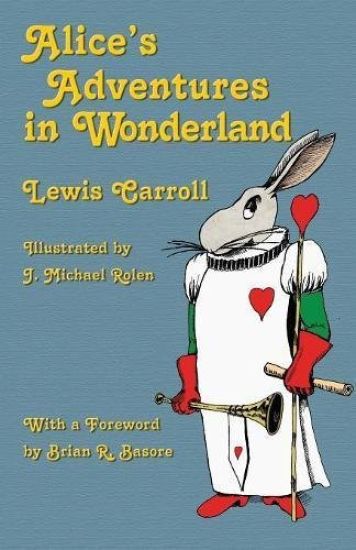
Lewis Carroll is a pen-name: Charles Lutwidge Dodgson was the author's real name and he was lecturer in Mathematics at Christ Church, Oxford. Dodgson began the story on 4 July 1862, when he took a journey in a rowing boat on the river Thames in Oxford together with the Reverend Robinson Duckworth, with Alice Liddell (ten years of age) the daughter of the Dean of Christ Church, and with her two sisters, Lorina (thirteen years of age), and Edith (eight years of age). As is clear from the poem at the beginning of the book, the three girls asked Dodgson for a story and reluctantly at first he began to tell the first version of the story to them. There are many half-hidden references made to the five of them throughout the text of the book itself, which was published finally in 1865. The text for this edition makes some alterations to Lewis Carroll's final revised text in order to correct some incon-sistencies which remained, or which appear to have been introduced, by Carroll in 1897. In the Evertype definitive text the aim has been to establish (or re-establish) clarity and consistency where it was lacking, while conserving the idio-syncrasies of Carroll's writing which have delighted readers for a century and a half. The illustrations in this volume were prepared in 1977 by J. Michael Rolen.
Pastor, the hard work of church revitalization is a unique experience and battle ground. It can feel like you’re all alone. But the trials you face are not new. Faithful preachers throughout scriptures and church history have encountered hostility, apathy, and adversity, and continue to do so today. Brian Croft and James Carroll share their personal stories and seek to encourage you to faithfully persevere in this Spirit–empowered, God–honoring, Christ–exalting work.