
Kirjahaku
Etsi kirjoja tekijän nimen, kirjan nimen tai ISBN:n perusteella.
1000 tulosta hakusanalla Brian Craig Drurey


Featuring the most current exploration of cyberlaw, CYBERLAW helps students understand the legal and policy issues associated with the Internet. Tackling a full range of legal topics, it includes discussion of jurisdiction, intellectual property, contracts, taxation, torts, computer crimes, online speech, defamation and privacy. Chapters include recent, relevant cases, discussion questions and exercises at the end of each chapter. Using a consistent voice and clear explanations, the author covers the latest developments in cyberlaw-from cases to legislation to regulations.

Stringfellow Acid Pits tells the story of one of the most toxic places in the United States, and of an epic legal battle waged to clean up the site and hold those responsible accountable. In 1955, California officials approached rock quarry owner James Stringfellow about using his land in Riverside County, east of Los Angeles, as a hazardous dump site. Officials claimed it was a natural waste disposal site because of the impermeable rocks that underlay the surface. They were gravely mistaken. Over 33 million gallons of industrial chemicals from more than a dozen of the nation’s most prominent companies poured into the site’s unlined ponds. In the 1960s and 1970s, heavy rains forced surges of chemical-laden water into Pyrite Creek and the nearby town of Glen Avon. Children played in the froth, making fake beards with the chemical foam. The liquid waste contaminated the groundwater, threatening the drinking water for hundreds of thousands of California residents. Penny Newman, a special education teacher and mother, led a grassroots army of so-called “hysterical housewives” who demanded answers and fought to clean up the toxic dump.The ensuing three-decade legal saga involved more than 1,000 lawyers, 4,000 plaintiffs, and nearly 200 defendants, and led to the longest civil trial in California history. The author unveils the environmental and legal history surrounding the Stringfellow Acid Pits through meticulous research based on personal interviews, court records, and EPA and other documents. The contamination at the Stringfellow site will linger for hundreds of years. The legal fight has had an equally indelible influence, shaping environmental law, toxic torts, appellate procedure, takings law, and insurance coverage, into the present day.

Stringfellow Acid Pits tells the story of one of the most toxic places in the United States, and of an epic legal battle waged to clean up the site and hold those responsible accountable. In 1955, California officials approached rock quarry owner James Stringfellow about using his land in Riverside County, east of Los Angeles, as a hazardous dump site. Officials claimed it was a natural waste disposal site because of the impermeable rocks that underlay the surface. They were gravely mistaken. Over 33 million gallons of industrial chemicals from more than a dozen of the nation’s most prominent companies poured into the site’s unlined ponds. In the 1960s and 1970s, heavy rains forced surges of chemical-laden water into Pyrite Creek and the nearby town of Glen Avon. Children played in the froth, making fake beards with the chemical foam. The liquid waste contaminated the groundwater, threatening the drinking water for hundreds of thousands of California residents. Penny Newman, a special education teacher and mother, led a grassroots army of so-called “hysterical housewives” who demanded answers and fought to clean up the toxic dump.The ensuing three-decade legal saga involved more than 1,000 lawyers, 4,000 plaintiffs, and nearly 200 defendants, and led to the longest civil trial in California history. The author unveils the environmental and legal history surrounding the Stringfellow Acid Pits through meticulous research based on personal interviews, court records, and EPA and other documents. The contamination at the Stringfellow site will linger for hundreds of years. The legal fight has had an equally indelible influence, shaping environmental law, toxic torts, appellate procedure, takings law, and insurance coverage, into the present day.

I Don't Like Your Kids: Childfree and Proud
Brian Craig
Createspace Independent Publishing Platform
2016
nidottu
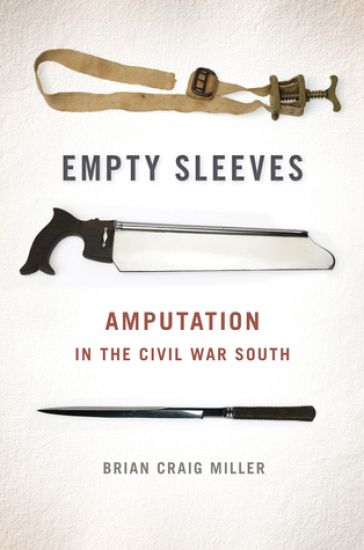
The Civil War acted like a battering ram on human beings, shattering both flesh and psyche of thousands of soldiers. Despite popular perception that doctors recklessly erred on the side of amputation, surgeons labored mightily to adjust to the medical quagmire of war. And as Brian Craig Miller shows in Empty Sleeves, the hospital emerged as the first arena where southerners faced the stark reality of what amputation would mean for men and women and their respective positions in southern society after the war. Thus, southern women, through nursing and benevolent care, prepared men for the challenges of returning home defeated and disabled.Still, amputation was a stark fact for many soldiers. On their return, southern amputees remained dependent on their spouses, peers, and dilapidated state governments to reconstruct their shattered manhood and meet the challenges brought on by their newfound disabilities. It was in this context that Confederate patients based their medical care decisions on how comrades, families, and society would view the empty sleeve. In this highly original and deeply researched work, Miller explores the ramifications of amputation on the Confederacy both during and after the Civil War and sheds light on how dependency and disability reshaped southern society.

The Civil War acted like a battering ram on human beings, shattering both flesh and psyche of thousands of soldiers. Despite popular perception that doctors recklessly erred on the side of amputation, surgeons labored mightily to adjust to the medical quagmire of war. And as Brian Craig Miller shows in Empty Sleeves, the hospital emerged as the first arena where southerners faced the stark reality of what amputation would mean for men and women and their respective positions in southern society after the war. Thus, southern women, through nursing and benevolent care, prepared men for the challenges of returning home defeated and disabled.Still, amputation was a stark fact for many soldiers. On their return, southern amputees remained dependent on their spouses, peers, and dilapidated state governments to reconstruct their shattered manhood and meet the challenges brought on by their newfound disabilities. It was in this context that Confederate patients based their medical care decisions on how comrades, families, and society would view the empty sleeve. In this highly original and deeply researched work, Miller explores the ramifications of amputation on the Confederacy both during and after the Civil War and sheds light on how dependency and disability reshaped southern society.
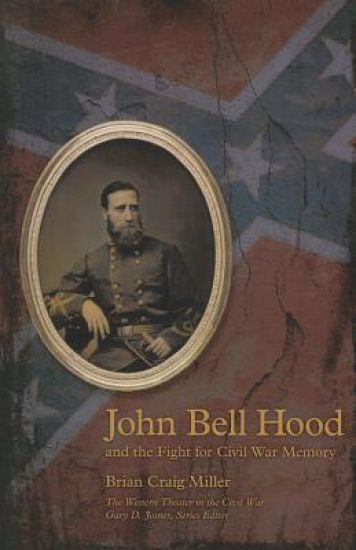
John Bell Hood and the Fight for Civil War Memory
Brian Craig Miller
University of Tennessee Press
2014
nidottu
Some Southern generals, like Lee and Jackson, have stood the test of time, celebrated in their place in history. And then there are generals like John Bell Hood, reviled and ridiculed by generations of Civil War historians as one of the inglorious architects of the Confederate disgrace in the Western Theater. The time has come to rethink this long-held notion, argues Brian Miller, in his comprehensive new biography, John Bell Hood and the Fight for Civil War Memory, and to reassess John Bell Hood as a man, a myth, and a memory.In this first biography of the general in more than twenty years, Miller offers a new, original perspective, directly challenging those historians who have pointed to Hood’s perceived personality flaws, his alleged abuse of painkillers, and other unsubstantiated claims as proof of his incompetence as a military leader. This book takes into account Hood’s entire life—as a student at West Point, his meteoric rise and fall as a soldier and Civil War commander, and his career as a successful postwar businessman. In many ways, Hood represents a typical southern man, consumed by personal and societal definitions of manhood that were threatened by amputation and preserved and reconstructed by Civil War memory. Miller consults an extensive variety of sources, explaining not only what Hood did but also the environment in which he lived and how it affected him.What emerges is a more nuanced, balanced portrait, unfettered by the one-sided perceptions of previous historical narratives. It gives Hood the fair treatment he has been denied for far too long. By looking at Hood’s formative years, his wartime experiences, and his postwar struggles to preserve his good name, this book opens up a provocative new perspective on the life of this controversial figure.

Sepiatone: A Coloring Book of 19th Century Portrait Photography
Brian Craig Ceely
Independently Published
2018
nidottu
This adult coloring book is a collection of 35 original illustrations based on authentic portrait photographs from 1866 to 1910. Enjoy the variety of detailed fashions and vibrant costumes from an age past. Colorists may mimic the sepia tones of the photographs themselves, or use a full palette to bring these images to life for the first time in over a century.
Vocal Training for Praise Singers is a training manual for Christian vocalists of all kinds. Worship leaders, choir directors and members, and Christian artists will all benefit from such practical tools as the 85 voice exercises, (with downloadable audio tracks), discussion of vocal anatomy and health issues and a primer on reading music. Richly complimented with scripture and personal experience, all sections include helpful graphics and are supported with examples from traditional and contemporary Christian music. What Readers are Saying: Here you will find a humble, vulnerable, experience-informed guide to all things having to do with leading or participating in contemporary worship, from musical notation, to vocal technique and health, to group dynamics, to spiritual counsel. Thank you, Julie, for gleaning from your years of experience as a singer, worship leader, and follower of Jesus to assemble this spiritually sensitive guide for your fellow servants of God. -Kenneth Bozeman, Professor Emeritus http: //www.kenbozeman.com Kinscheck has produced here an almost encyclopedic guide to everything pertaining to vocal excellence. Her love for God and the church bleeds off of these pages. I commend this work for anyone who sings in a worship team or choir, has ambition to sing for a living, or just wants to improve their singing technique to glorify God in the congregation. -Dave Eastman Minister and Author https: //www.lifechangingworship.com/video-lessons/ Julie Kinscheck, Assistant Professor at Berklee College of Music, Boston, MA, is a Christian artist, songwriter, worship leader, wife, Mom of teen twins and disciple of Jesus. Raised in Ithaca, NY, she holds a Bachelor of Music from Berklee College of Music and studied classical music at Oberlin Conservatory. Her Masters of Vocal Pedagogy at Westminster Choir College is expected in 2022. She has released four full length albums, gigs regularly, and runs a private voice studio in Billerica, MA. Please visit www.julieksings.com

Lone Pair of Blue Jeans in a Sea of Yoga Pants: The Life of a Stay-at-Home Dad
Brian "pete" Craig
Createspace Independent Publishing Platform
2016
nidottu
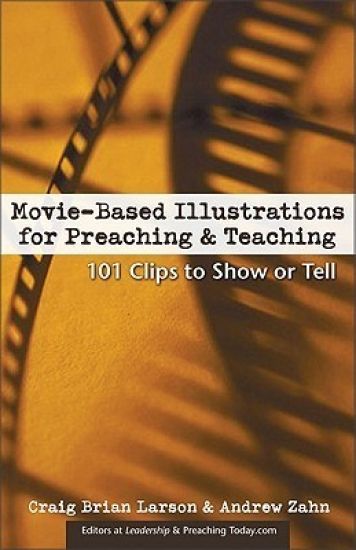
Movie-Based Illustrations for Preaching and Teaching
Craig Brian Larson; Andrew Zahn
Zondervan
2003
nidottu
Movies have become the stories of our culture. People love to discuss favorite movies and actors, and this interest can help you communicate God’s Word with power—if you have exciting, movie-based illustrations at your fingertips. Now the editors of PreachingToday.com have gathered the best movie-based illustrations, the scenes that convey biblical truth convincingly. This collection contains 101 complete illustrations straight from popular movies your listeners can relate to. Each illustration is easy to use—you don’t even have to be familiar with the movie to share the truth it portrays. ·Complete index includes multiple keywords and relevant Scripture passages for easy selection. ·Each illustration provides plot summary and detailed description of the scene—you can tell the story well even if you haven’t seen the movie. ·Exact begin and end times are given for each illustration if you wish to show the video clip. ·Each illustration gives background information on the movie—year created, MPAA rating, and more. This handy, to-the-point resource will help you add dramatic muscle to your sermons and lessons. Engage your listeners’ imaginations through the power of movies—and drive biblical truths home to their hearts.

More Movie-Based Illustrations for Preaching and Teaching
Craig Brian Larson; Lori Quicke
Zondervan
2004
nidottu
If you’ve used the original Movie-Based Illustrations for Preaching and Teaching, you already know why this sequel is a must-have. If not, you’re about to discover why More Movie-Based Illustrations for Preaching and Teaching is one of the most effective people-reachers you can add to your tool kit. Movies have become the stories of our culture, and they can help you communicate God’s Word with power—if you have exciting, movie-based illustrations at your fingertips. The editors of PreachingToday.com have gathered the best movie-based illustrations, the scenes that convey biblical truth convincingly. This collection contains 101 complete illustrations straight from popular movies your listeners can relate to. Each illustration is easy to use—you don’t even have to be familiar with the movie to share the truth it portrays. •Complete indexes includes multiple keywords, movie titles, and relevant Scripture passages for easy selection. •Each illustration provides plot summary and detailed description of the scene—you can tell the story well even if you haven’t seen the movie. •Exact begin and end times are given for each illustration if you wish to show the video clip. •Each illustration gives background information on the movie—year created, MPAA rating, and more.
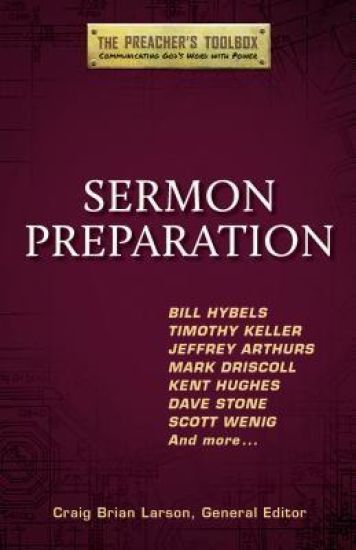
Imagine writing a sermon that must be original, insightful, useful, challenging, comforting . . . once a week. That's exactly what most preachers are called upon to do while seeing to all of the other responsibilities that comprise their vocation.Book four in "The Preacher's Toolbox" series tackles the art and craft of sitting down to face a blank computer screen and coming up with a message that feeds and even entertains the listener. Expert preachers, speakers and teachers share the results of years of doing just that.Articles include- "Writing a Good Message in a Bad Week," Scott Wenig- "Five Hammer Strokes for Creating Expository Sermon Outlines," Jeffrey Arthurs- "How Prayer Transforms Prep," Michael Lawrence- "Simply Profound," Duane Litfin- "If You Dislike Sermon Prep," Bill Hybels - "Getting Out of Preaching Ruts," Matt Woodley- "Planning Sermon Series," David Daniels- "Preparing Your Soul to Preach," Pete Scazzerro- "The Preacher's Study," Kent Hughes- "Facebook Sermon Prep," Bill WhiteThere is also a special "How I Prepare . . . " section from leading pastors, including - Timothy Keller- Mark Driscoll- Lee Eclov- Matt Chandler- Justin Buzzard- And more
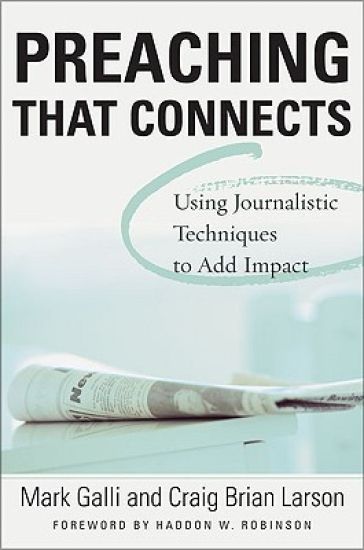
Master the craft of effective communication that grabs attention and wins hearts. Like everyone else, preachers long to be understood. Unfortunately, the rules first learned in seminary, if misapplied, can quickly turn homiletic precision into listener boredom. To capture heart and mind, Mark Galli and Craig Larsen suggest preachers turn to the lessons of journalism. In Preaching That Connects, they show how the same keys used to create effective, captivating communication in the media can transform a sermon. Amply illustrated from some of today’s best preachers, Preaching That Connects walks through the entire sermon, from the critical introduction to the bridge to illustrations and final application. Key points include the five techniques for generating creative ideas, your six options for illustrations, and the ten rules for great storytelling—and why the transition sentence is the hardest sentence you’ll write. Preaching That Connects is for all who seek to hone their craft to communicate the truth of the gospel effectively.
'The only wise prediction to make about a new Brian Moore novel is that it will be unpredictable and wise,' wrote Christopher Ricks reviewing "Black Robe", one of the twenty magnificent novels which put Brian Moore into the first rank of world writers. Northern Ireland may have shaped him, as he grew up one of nine children in a Catholic doctor's Belfast household, but World War II took him to Africa and war-ravaged Europe, and Canada freed him to become a writer. In 1955 he published "The Lonely Passion of Judith Hearne", the first of many novels which led steadily to international critical acclaim. He was a writer's writer, baffling contemporaries with how he pulled off his literary feats. Patricia Craig, who began this authorised biography with the help and blessing of Brian Moore himself, and his wife Jean, pieces together the colourful life that lay behind the novels. She also reveals the droll, romantic, cant-hating, affable and brilliant man who so disarmingly enhanced twentieth-century letters.


Shortlisted for the William Hill Sports Book of the Year Award 2022
The Psychology of Consumer Behavior
Brian Mullen; Craig Johnson
Lawrence Erlbaum Associates Inc
1990
sidottu
After years of study in the area of consumer behavior, Mullen and Johnson bring together a broad survey of small answers to a big question: "Why do consumers do what they do?" This book provides an expansive, accessible presentation of current psychological theory and research as it illuminates fundamental issues regarding the psychology of consumer behavior. The authors hypothesize that an improved understanding of consumer behavior could be employed to more successfully influence consumers' use of products, goods, and services. At the same time, an improved understanding of consumer behavior might be used to serve as an advocate for consumers in their interactions in the marketplace.