Kirjahaku
Etsi kirjoja tekijän nimen, kirjan nimen tai ISBN:n perusteella.
1000 tulosta hakusanalla Brian E. Butler
The Supreme Court is seen today as the ultimate arbiter of the Constitution. Once the Court has spoken, it is the duty of the citizens and their elected officials to abide by its decisions. But the conception of the Supreme Court as the final interpreter of constitutional law took hold only relatively recently. Drawing on the pragmatic ideals characterized by Charles Sanders Peirce, John Dewey, Charles Sabel, and Richard Posner. Brian E. Butler shows how this conception is inherently problematic for a healthy democracy. Butler offers an alternative democratic conception of constitutional law, "democratic experimentalism," and applies it in a thorough reconstruction of Supreme Court cases across the centuries, such as Brown v. Board of Education, Citizens United v. Federal Election Commission, Lucas v. South Carolina Coastal Council, and Lochner v. New York. In contrast to the traditional tools and conceptions of legal analysis that see the law as a formally unique and separate type of practice, democratic experimentalism combines democratic aims and experimental practice. Butler also suggests other directions jurisprudential roles could take: for example, adjudication could be performed by primary stakeholders with better information. Ultimately, Butler argues persuasively for a move away from the current absolute centrality of courts toward a system of justice that emphasizes local rule and democratic choice.
Främmande Folk Och Förtrollade Skogar
E. T. A. Hoffmann; Théophile Gautier; Fitz-James O'Brien; William Butler Yeats; Eric Stenbock; August Strindberg; Arthur Machen; Rickard Berghorn; Peter Fisk
Aleph Bokförlag
2014
nidottu
Jägardockan och harpspelaren stirrade med tomma ögon och fäktade runt med sina små händer. En hemsk, knarrande stämma: "Dumma stackare, enfaldiga varelser! Föraktade oss -- nu kan ni sitta där utan leksaker!" Förskräckta rusade barnen därifrån under regnet som strömmade ner, åskknallarna och stormen. Men knappt hade de kommit till den stora dammen, förrän flickans docka reste sig ur vassen och kväkte med förfärlig stämma: ?Dumma stackare, enfaldiga varelser -- nu kan ni sitta där utan leksaker! Vänta bara, vi är magister Tintes lydiga tjänare!? Felix stod inte ut med de förfärliga spökerierna, och arma Christlieb var halvdöd. Då summade och brusade det bakom dem. "Magister Tinte kommer!" skrek Felix Nio fantasifulla, mörka och bitterljuva noveller från gränslandet mellan konstsaga och fantasy. "Som helhet är Främmande folk och förtrollade skogar en njutbart fascinerande läsning som dessutom presenterar och ger utrymme åt den litteratur som genremässigt varken är saga, fantasy eller skräckberättelse utan befinner sig någonstans däremellan." -- Albin Eklund Djurberg i BTJ:s häfte 14106278.
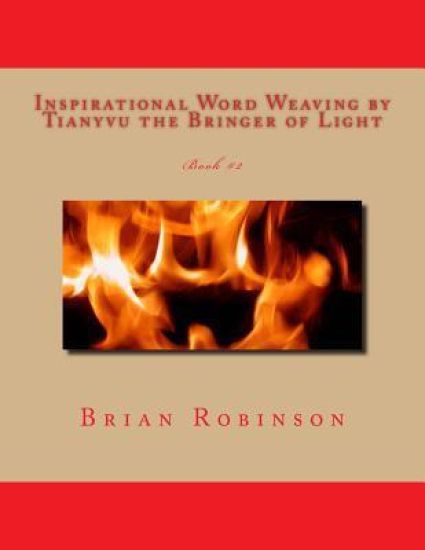
Inspirational Word Weaving by Tianyvu the Bringer of Light: Brian E. Robinson
Brian Edward Robinson
Createspace Independent Publishing Platform
2014
nidottu
This is book 2, and I would like to stimulate the mind and to think of inspiration, because of the mental and emotional state of the world, I feel that's it's imperative to inject unconditional love and honest understanding into the hearts of everyone that reads or listens to my work, with this in mind I would encourage people to share my poems with everyone with the intention of planting seeds of peace and serenity in a world full of chaos and strife, so that at the end of the day there will be more happy people in it to spread these words of peace, so with that said, may peace be with you from Tianyvu The Bringer of Light.( I can be reached at [email protected]
Village and Bureaucracy in Southern Sung China
Brian E. McKnight
University of Chicago Press
1983
nidottu
In imperial China, workers drawn from the local populace performed many of the basic functions of local administration. Standing between the rulers and the ruled, these men mediated in both directions. McKnight's study concentrates on the nature of this village-level subbureaucratic activity in the Sung period; it sheds new light on the emergence of early Chinese society while providing a background against which to assess social changes during later dynasties.
Examining a series of court decisions made during the 1980s regarding the legal claims of several Native American tribes who attempted to protect ancestrally revered lands from development schemes by the federal government, this book looks at important questions raised about the religious status of land. The tribes used the First Amendment right of free exercise of religion as the basis of their claim, since governmental action threatened to alter the land which served as the primordial sacred reality without which their derivative religious practices would be meaningless. Brown argues that a constricted notion of religion on the part of the courts, combined with a pervasive cultural predisposition towards land as private property, marred the Constitutional analysis of the courts to deprive the Native American plaintiffs of religious liberty.Brown looks at four cases, which raised the issue at the federal district and appellate court levels, centered on lands in Tennessee, Utah, South Dakota, and Arizona; then it considers a fifth case regarding land in northwestern California, which ultimately went to the U.S. Supreme Court. In all cases, the author identifies serious deficiencies in the judicial evaluations. The lower courts applied a conception of religion as a set of beliefs and practices that are discrete and essentially separate from land, thus distorting and devaluing the fundamental basis of the tribal claims. It was this reductive fixation of land as property, implicit in the rulings of the first four cases, that became explicitly sanctioned and codified in the Supreme Court's decision in Lyng v. Northwest Indian Cemetery Protective Association of 1988. In reaching such a position, the Supreme Court injudiciously engaged in a policy determination to protect government land holdings, and did so through a shocking repudiation of its own long established jurisprudential procedure in cases concerning the free exercise of religion.
This book is the author's attempt to translate his knowledge of peace studies into the language of sociology, so that the former can be grasped as a more complete whole. It aims to increase interest among sociologists in issues of war and peace because they provide food for sociological thought.
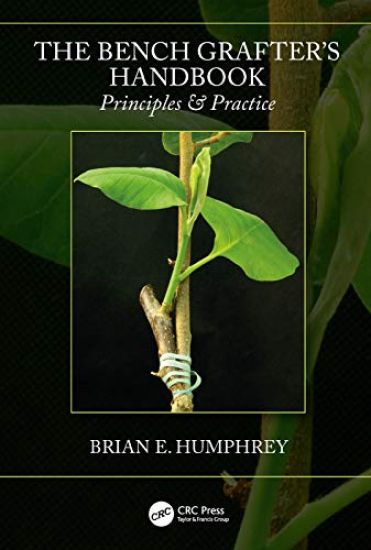
Containing 500 full color photographs and illustrations, The Bench Grafter’s Handbook: Principles and Practice presents exhaustive information on all aspects of bench grafting. It details requirements of more than 200 temperate woody plant genera, covering over 2,000 species and cultivars including important ornamental, temperate fruit, and nut crops. The book explains the principles and practices of bench grafting, new procedures to enhance grafting success, and recommendations for further scientific investigation. Practical issues to aid professionals and the beginner, include detailed accounts, supported by pictures and diagrams, of the main grafting methods, knifesmanship techniques, and methods of training. Provision and design, now and for the future, of suitable structures, grafting facilities, and equipment, to provide ideal controlled environments for grafts, are described.The book describes major grafting systems, sub-cold, cold, warm, supported warm, hot-pipe, and other grafting strategies. It provides details of health and safety issues; work stations, seat design, lighting levels; recorded output figures for various types of graft; grafting knives and tools; and methods of sharpening by hand and machine. Features:Comprehensive description, pictures, and diagrams of how to learn and utilize important grafting methods.Detailed information and scientific principles behind the selection, specification, and choice of the main graft components – the rootstock and scion. Scientific principles and practicalities of providing optimal plant material, equipment, facilities and environmental conditions for graft union development including addressing the problems of graft incompatibility.Discussion of the actual and potential role of bench grafting in woody plant conservation with suggestions for new initiatives. This book is intended for use by nurserymen; those involved in the upkeep of extensive plant collections; conservationists; plant scientists; lecturers in horticulture; horticultural students; and amateurs with an interest in grafting.
This book serves three basic purposes: (1) a tutorial-type reference for complex systems engineering (CSE) concepts and associated terminology, (2) a recommendation of a proposed methodology showing how the evolving practice of CSE can lead to a more unified theory, and (3) a complex systems (CSs) initiative for organizations to invest some of their resources toward helping to make the world a better place.A wide variety of technical practitioners—e.g., developers of new or improved systems (particularly systems engineers), program and project managers, associated staff/workers, funders and overseers, government executives, military officers, systems acquisition personnel, contract specialists, owners of large and small businesses, professional society members, and CS researchers—may be interested in further exploring these topics.Readers will learn more about CS characteristics and behaviors and CSE principles and will therefore be able to focus on techniques that will better serve them in their everyday work environments in dealing with complexity. The fundamental observation is that many systems inherently involve a deeper complexity because stakeholders are engaged in the enterprise. This means that such CSs are more difficult to invent, create, or improve upon because no one can be in total control since people cannot be completely controlled. Therefore, one needs to concentrate on trying to influence progress, then wait a suitable amount of time to see what happens, iterating as necessary. With just three chapters in this book, it seems to make sense to provide a tutorial introduction that readers can peruse only as necessary, considering their background and understanding, then a chapter laying out the suggested artifacts and methodology, followed by a chapter emphasizing worthwhile areas of application.
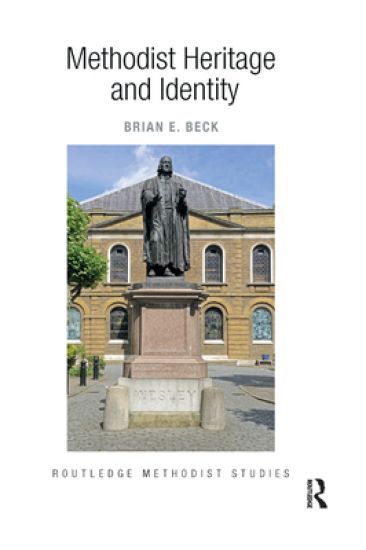
Brian Beck has had a long and distinguished career in Methodist studies, having additionally served as President of the UK Methodist Conference and helped lead the international Oxford Institute of Methodist Theological Studies. This book is the first time that Beck’s seminal work on Methodism has been gathered together. It includes eighteen essays from the last twenty-five years, covering many different aspects of Methodist thought and practice.This collection is divided into two main sections. Part I covers Methodism’s heritage and its implications, while Part II discusses wider issues of Methodism’s identity. The chapters themselves examine the work of key figures, such as John Wesley and J. E. Rattenbury, as well as past and present forms of Methodist thought and practice. As such, this book is important reading for any scholar of Methodism as well as students and academics of religious studies and theology more generally.
A unique reference on peripheral pain receptor mechanisms While considerable advances have been made on pharmacotherapies for many chronic disease states, options available to treat chronic pain have remained relatively unchanged for decades. However, utilizing the receptors involved in peripheral pain transduction mechanisms offers a significant opportunity to create novel therapies for pain. A comprehensive review of peripheral pain mechanisms, Peripheral Receptor Targets for Analgesia: Novel Approaches to Pain Management provides a unique resource that brings together a body of knowledge that was previously widely dispersed. As such, it gives readers a framework for further basic and clinical studies on potential receptor targets, as well as the development of improved topical analgesics. Coverage includes: The latest discoveries by leading researchers relating to the function of various ion channels and receptors in the peripheral nervous system Novel delivery techniques An appendix listing currently available topical analgesic medications A Foreword by Professor Lars Arendt-Nielsen of the Center for Sensory-Motor Interaction (SMI) at Aalborg University An unmatched resource for improving drug therapies and making pain management more efficient, Peripheral Receptor Targets for Analgesia supplies pharmaceutical scientists, pharmacologists, neuroscientists, and graduate and upper-level undergraduate students with a comprehensive, up-to-date reference.
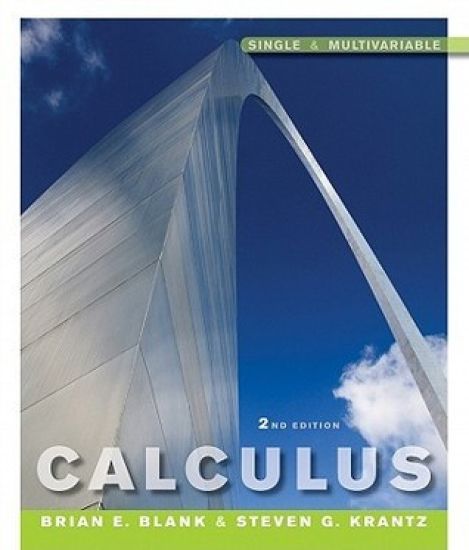
Blank and Krantz's Calculus 2e brings together time-tested methods and innovative thinking to address the needs of today's students, who come from a wide range of backgrounds and look ahead to a variety of futures. Using meaningful examples, credible applications, and incisive technology, Blank and Krantz's Calculus 2e strives to empower students, enhance their critical thinking skills, and equip them with the knowledge and skills to succeed in the major or discipline they ultimately choose to study. Blank and Krantz’s engaging style and clear writing make the language of mathematics accessible, understandable and enjoyable, while maintaining high standards for mathematical rigor. Blank and Krantz's Calculus 2e is available with WileyPLUS, an online teaching and learning environment initially developed for Calculus and Differential Equations courses. WileyPLUS integrates the complete digital textbook with powerful student and instructor resources as well as online auto-graded homework.
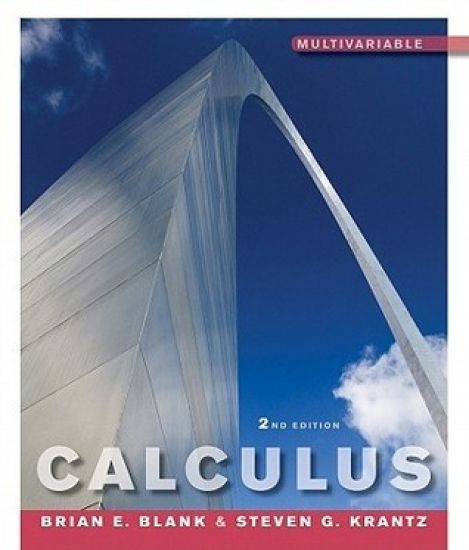
Blank and Krantz's Calculus 2e brings together time-tested methods and innovative thinking to address the needs of today's students, who come from a wide range of backgrounds and look ahead to a variety of futures. Using meaningful examples, credible applications, and incisive technology, Blank and Krantz's Calculus 2e strives to empower students, enhance their critical thinking skills, and equip them with the knowledge and skills to succeed in the major or discipline they ultimately choose to study. Blank and Krantz's engaging style and clear writing make the language of mathematics accessible, understandable and enjoyable, while maintaining high standards for mathematical rigor. Blank and Krantz's Calculus 2e is available with WileyPLUS, an online teaching and learning environment initially developed for Calculus and Differential Equations courses. WileyPLUS integrates the complete digital textbook with powerful student and instructor resources as well as online auto-graded homework.
Calculus: Single Variable, Student Study and Solutions Companion
Brian E. Blank; Steven G. Krantz
John Wiley Sons Inc
2012
nidottu
In order to show scientists and engineers how to apply calculus, this edition places a greater emphasis on conceptual understanding. It provides a nice balance between rigor and accessibility that will challenge them. Unique elements are integrated throughout that deepen the appreciation for calculus. Numerous nonstandard challenging exercises build better math skills. Innovative approaches on topics such as limits also help uncover new areas of learning for scientists and engineers.
Blank and Krantz’s Calculus 2e brings together time-tested methods and innovative thinking to address the needs of today’s students, who come from a wide range of backgrounds and look ahead to a variety of futures. Using meaningful examples, credible applications, and incisive technology, Blank and Krantz’s Calculus 2e strives to empower students, enhance their critical thinking skills, and equip them with the knowledge and skills to succeed in the major or discipline they ultimately choose to study. Blank and Krantz’s engaging style and clear writing make the language of mathematics accessible, understandable and enjoyable, while maintaining high standards for mathematical rigor. Blank and Krantz’s Calculus 2e is available with WileyPLUS, an online teaching and learning environment initially developed for Calculus and Differential Equations courses. WileyPLUS integrates the complete digital textbook with powerful student and instructor resources as well as online auto-graded homework.
Student Solutions Manual to accompany Calculus: Multivariable 2e
Brian E. Blank; Steven G. Krantz
John Wiley Sons Inc
2011
nidottu
A student manual for multivariable calculus practice and improved understanding of the subject Calculus: Multivariable Student Solutions Manual provides problems for practice, organized by specific topics, such as Vectors and Functions of Several Variables. Solutions and the steps to reach them are available for specific problems. The manual is designed to accompany the Multivariable: Calculus textbook, which was published to enhance students' critical thinking skills and make the language of mathematics more accessible.
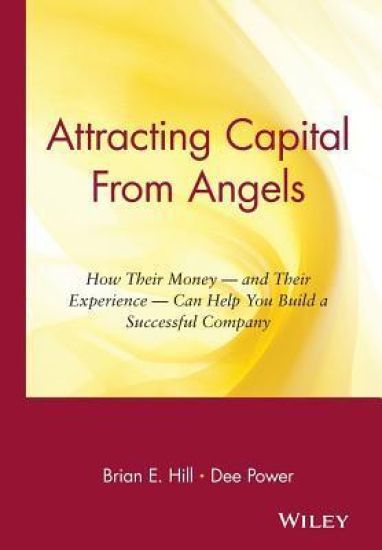
"The complexity of business in economically demanding times makes finding constructive angels that much more challenging. The advice and tips in Attracting Capital from Angels are, therefore, invaluable. The wisdom offered here is not just for start-ups or neophytes, but is a well-timed companion to already existing resources and approaches to helping a business in all phases of development. It’s also a great manual for people who want to share their knowledge (and invest capital) as an angel. I plan to recommend Attracting Capital from Angels to every entrepreneur I run into in the future who asks for mentoring sources. Great job!" (Bob Bozeman, General Partner, Angel Investors, LP) PENNIES FROM HEAVEN This book offers all the information entrepreneurs need for finding elusive angel investors. Comprehensive, eminently readable, and based on the authors’ years of experience dealing with venture capital firms, angels, and entrepreneurs, this book covers all the angles on angels: *What are angels and what do they want? *Different types of angels *Pitching and preparing for angels *Finding angels *Working with angels *The future of angel investing Attracting Capital from Angels is the ultimate guide to finding the money your business needs to get on its feet–and make a run at success.