Kirjojen hintavertailu. Mukana 11 213 693 kirjaa ja 12 kauppaa.

Kirjahaku

Etsi kirjoja tekijän nimen, kirjan nimen tai ISBN:n perusteella.

1000 tulosta hakusanalla Brian G. Martin

The Shanghai Green Gang

The Shanghai Green Gang

Brian G. Martin

University of California Press
1996
sidottu
In a remarkable example of history as detective work, Brian Martin pieces together the fascinating and complex story of the Shanghai Green Gang and its charismatic leader, Du Yuesheng. Martin sifts through a variety of fragmentary and at times contradictory evidence--from diplomatic dispatches to memoirs to police reports--to produce the most comprehensive account of this chaotic period of Chinese history. In analyzing the Green Gang's system of organized crime in Shanghai, the author broadens our understanding of a critical aspect of Chinese urban history and sheds light on the history of drug trafficking and organized crime worldwide. Martin argues that the Green Gang, the most powerful secret society in China during the first half of the twentieth century, was a resilient social organization that adapted successfully to the complex environment of a modernizing urban society. Illustrating its multilayered and complex relations with the bourgeoisie, the industrial proletariat, and the foreign and domestic political authorities, Martin demonstrates how these factors led to the Green Gang's absorption into the corporate state system after 1932.
Distribution of Losses from Large Terrorist Attacks Under the Terrorism Risk Insurance Act (2005)

Distribution of Losses from Large Terrorist Attacks Under the Terrorism Risk Insurance Act (2005)

Stephen J. Carroll; Tom LaTourrette; Brian G Chow; Gregory S. Jones; Craig Martin

RAND
2005
pokkari
The pending expiration of the Terrorism Risk Insurance Act (TRIA) of 2002 is the impetus for this assessment of how TRIA redistributes terrorism losses. The authors find that the role of taxpayers is expected to be minimal in all but very rare cases and that, even with TRIA in place, a high fraction of losses would go uninsured in each of the attack scenarios examined.
Unbreakable Love: The Brian Warren Story

Unbreakable Love: The Brian Warren Story

Brian G. Warren; D. M. Anthony

Createspace Independent Publishing Platform
2013
nidottu
Unbreakable Love is the story of one man's love for his daughter. During his divorce, Brian details the struggles that surrounded him on every side, and how this fueled him to win 2 championship title belts His story details many challenges, but Brian's ability to learn from his loses, not his wins, will inspire the reader. Known as Mr.Unbreakable in the ring and cage, Brian Warren has delivered He faced some of the best fighters in the world, including UFC fighters Cung Le, Karo Parisyan, and Ben Saunders. Whatever challenges Brian faced, he learned to ultimately surrender to God . He may have broken many bones in the ring, but his spirit remains unbreakable. Brian's story of courage, unwavering devotion to God and his daughter, and determination to rise from the ashes will both inspire and encourage you during your own personal battles. Brian's story will inspire you to be a better man, father and disciple and to never give up on yourself and certainly not on your dreams.
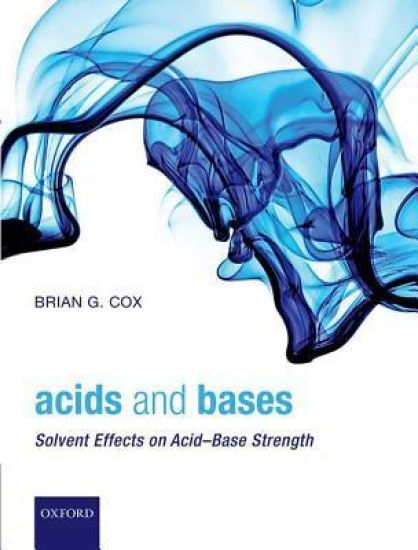
Acids and Bases

Acids and Bases

Brian G. Cox

Oxford University Press
2013
sidottu
Acids and bases are ubiquitous in chemistry. Our understanding of them, however, is dominated by their behaviour in water. Transfer to non-aqueous solvents leads to profound changes in acid-base strengths and to the rates and equilibria of many processes: for example, synthetic reactions involving acids, bases and nucleophiles; isolation of pharmaceutical actives through salt formation; formation of zwitter- ions in amino acids; and chromatographic separation of substrates. This book seeks to enhance our understanding of acids and bases by reviewing and analysing their behaviour in non-aqueous solvents. The behaviour is related where possible to that in water, but correlations and contrasts between solvents are also presented. Fundamental background material is provided in the initial chapters: quantitative aspects of acid-base equilibria, including definitions and relationships between solution pH and species distribution; the influence of molecular structure on acid strengths; and acidity in aqueous solution. Solvent properties are reviewed, along with the magnitude of the interaction energies of solvent molecules with (especially) ions; the ability of solvents to participate in hydrogen bonding and to accept or donate electron pairs is seen to be crucial. Experimental methods for determining dissociation constants are described in detail. In the remaining chapters, dissociation constants of a wide range of acids in three distinct classes of solvents are discussed: protic solvents, such as alcohols, which are strong hydrogen-bond donors; basic, polar aprotic solvents, such as dimethylformamide; and low-basicity and low polarity solvents, such as acetonitrile and tetrahydrofuran. Dissociation constants of individual acids vary over more than 20 orders of magnitude among the solvents, and there is a strong differentiation between the response of neutral and charged acids to solvent change. Ion-pairing and hydrogen-bonding equilibria, such as between phenol and phenoxide ions, play an increasingly important role as the solvent polarity decreases, and their influence on acid-base equilibria and salt formation is described.
Acids and Bases

Acids and Bases

Brian G. Cox

Oxford University Press
2013
nidottu
Acids and bases are ubiquitous in chemistry. Our understanding of them, however, is dominated by their behaviour in water. Transfer to non-aqueous solvents leads to profound changes in acid-base strengths and to the rates and equilibria of many processes: for example, synthetic reactions involving acids, bases and nucleophiles; isolation of pharmaceutical actives through salt formation; formation of zwitter- ions in amino acids; and chromatographic separation of substrates. This book seeks to enhance our understanding of acids and bases by reviewing and analysing their behaviour in non-aqueous solvents. The behaviour is related where possible to that in water, but correlations and contrasts between solvents are also presented. Fundamental background material is provided in the initial chapters: quantitative aspects of acid-base equilibria, including definitions and relationships between solution pH and species distribution; the influence of molecular structure on acid strengths; and acidity in aqueous solution. Solvent properties are reviewed, along with the magnitude of the interaction energies of solvent molecules with (especially) ions; the ability of solvents to participate in hydrogen bonding and to accept or donate electron pairs is seen to be crucial. Experimental methods for determining dissociation constants are described in detail. In the remaining chapters, dissociation constants of a wide range of acids in three distinct classes of solvents are discussed: protic solvents, such as alcohols, which are strong hydrogen-bond donors; basic, polar aprotic solvents, such as dimethylformamide; and low-basicity and low polarity solvents, such as acetonitrile and tetrahydrofuran. Dissociation constants of individual acids vary over more than 20 orders of magnitude among the solvents, and there is a strong differentiation between the response of neutral and charged acids to solvent change. Ion-pairing and hydrogen-bonding equilibria, such as between phenol and phenoxide ions, play an increasingly important role as the solvent polarity decreases, and their influence on acid-base equilibria and salt formation is described.
Ordinary Meaning

Ordinary Meaning

Brian G. Slocum

University of Chicago Press
2015
sidottu
Consider this court case: a defendant has traded a gun for drugs, and there is a criminal sentencing provision that stipulates an enhanced punishment if the defendant "uses" a firearm "during and in relation to a drug trafficking crime." Buying the drugs was obviously a crime - but can it be said that the defendant actually "used" the gun? This is the sort of question at the heart of legal interpretation. The field is built around one key question: by what standard should legal texts be interpreted? The traditional doctrine is that words should be given their "ordinary meaning": words in legal texts should be interpreted in light of accepted standards of communication. Yet often, courts fail to properly consider context, refer to unsuitable dictionary definitions, or otherwise misconceive how the ordinary meaning of words should be determined. In this book, Brian Slocum builds his argument for a new method of interpretation by asking glaring, yet largely ignored, questions. What makes one particular meaning the "ordinary" one, and how exactly do courts conceptualize the elements of ordinary meaning? Ordinary Meaning provides a much-needed, revised framework, boldly instructing those involved with the law in how the components of ordinary meaning should properly be identified and developed in our modern legal system.
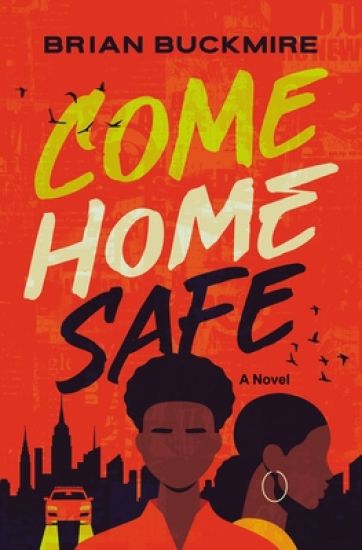
Come Home Safe

Come Home Safe

Brian G. Buckmire

HarperCollins Focus
2023
sidottu
Dad, I just want to know how to not become a hashtag. In this gripping read, biracial siblings Reed and Olive hadn’t planned on navigating racial inequality or being roughed up by police on the subway, but as they face the truths and pains of being a person of color, they also lean into knowing their rights and fostering conversations about change and acceptance.“In Come Home Safe, Brian Buckmire has crafted a story that looks the reality of police brutality in the eye and still manages to come away with hope. It is a powerful book about the necessity of ‘the talk’ and what it means to be a teenager in our times.”—New York Times bestselling author and ABC News anchor Linsey DavisOn the subway ride home, Reed just wants to watch videos of his soccer idol, but reality crashes in when police officers question him about a suspect who matches his description. With tact and poise, Reed defends himself, but ultimately knows there is no easy way out of this conflict.At a café, a woman accuses Olive of stealing her phone and demands to see it. Startled and indignant, Olive watches as the crowd forms and does nothing to help, even as the woman attempts to weaponize the police against her.This read will keep you on the edge of your seat as each teen asks themself: What should I do? What can I do? What’s going to get me home safe?Come Home Safe is perfect for:Fans of contemporary fiction and true-to-life storiesYouth and middle graders interested in social justice, societal change, and navigating police brutalityParents, teachers, and school librarians looking to start a conversation about politics, racism, or have “the talk” with their teens and middle schoolersAnyone looking to better understand the sociopolitical climate in America todayYoung adult readers of Angie Thomas, Nic Stone, Ibi Zoboi, and Jason ReynoldsBlack, brown, or marginalized families who wish to open a conversation about how to live in a world that only sees the color of their skin From ABC News legal analyst and NYC Legal Aid Society public defender Brian Buckmire, this compelling story draws from real-life advice, lessons, and conversations with attorneys, law enforcement, and the wrongfully accused to help turn the whispers and family discussions about racial inequality and mistreatment into wider conversations, healing, and one day … change.
Come Home Safe

Come Home Safe

Brian G. Buckmire

HarperCollins Focus
2024
nidottu
Dad, I just want to know how to not become a hashtag. In this gripping read, biracial siblings Reed and Olive hadn’t planned on navigating racial inequality or being roughed up by police on the subway, but as they face the truths and pains of being a person of color, they also lean into knowing their rights and fostering conversations about change and acceptance.“In?Come Home Safe, Brian Buckmire has crafted a story that looks the reality of police brutality in the eye and still manages to come away with hope. It is a powerful book about the necessity of ‘the talk’ and what it means to be a teenager in our times.”—New York Times bestselling author and ABC News anchor Linsey DavisOn the subway ride home, Reed just wants to watch videos of his soccer idol, but reality crashes in when police officers question him about a suspect who matches his description. With tact and poise, Reed defends himself, but ultimately knows there is no easy way out of this conflict.At a café, a woman accuses Olive of stealing her phone and demands to see it. Startled and indignant, Olive watches as the crowd forms and does nothing to help, even as the woman attempts to weaponize the police against her.This read will keep you on the edge of your seat as each teen asks themselves: What should I do? What can I do? What’s going to get me home safe?Come Home Safe is perfect for:Fans of contemporary fiction and true-to-life storiesYouth and middle graders interested in social justice, societal change, and navigating police brutalityParents, teachers, and school librarians looking to start a conversation about politics, racism, or have “the talk” with their teens and middle schoolers From ABC News legal analyst and NYC Legal Aid Society public defender Brian Buckmire, this compelling story draws from real-life advice, lessons, and conversations with attorneys, law enforcement, and the wrongfully accused to help turn the whispers and family discussions about racial inequality and mistreatment into wider conversations, healing, and one day … change.
Optical Spectroscopy of Lanthanides

Optical Spectroscopy of Lanthanides

Brian G. Wybourne; Lidia Smentek

CRC Press
2019
nidottu
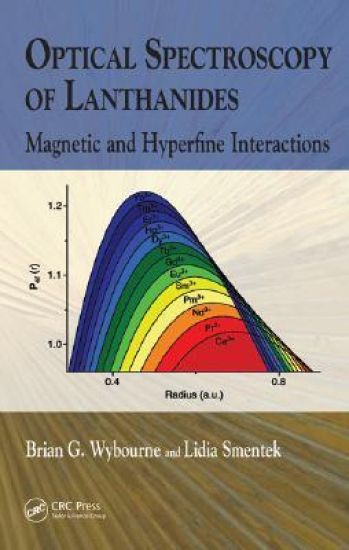
Optical Spectroscopy of Lanthanides: Magnetic and Hyperfine Interactions represents the sixth and final book by the late Brian Wybourne, an accomplished pioneer in the spectroscopy of rare earth ions, and Lidia Smentek, a leading theoretical physicist in the field. The book provides a definitive and up-to-date theoretical description of spectroscopic properties of lanthanides doped in various materials.The book integrates computer-assisted calculations developed since Wybourne’s classic publication on the topic. It contains useful Maple™ routines, discussions, and new aspects of the theory of f-electron systems. Establishing a unified basis for understanding state-of-the-art applications and techniques used in the field, the book reviews fundamentals based on Wybourne’s graduate lectures, which include the theory of nuclei, the theory of angular momentum, Racah algebra, and effective tensor operators. It then describes magnetic and hyperfine interactions and their impact on the energy structure and transition amplitudes of the lanthanide ions. The text culminates with a relativistic description of f?f electric and magnetic dipole transitions, covering sensitized luminescence and a new parametrization scheme of f-spectra. Optical Spectroscopy of Lanthanides enables scientists to construct accurate and reliable theoretical models to elucidate lanthanides and their properties. This text is ideal for exploring a range of lanthanide applications including electronic data storage, lasers, superconductors, medicine, nuclear engineering, and nanomaterials.
Beyond Mechanism

Beyond Mechanism

Brian G. Henning; Adam Scarfe

Lexington Books
2013
sidottu
It has been said that new discoveries and developments in the human, social, and natural sciences hang “in the air” (Bowler, 1983; 2008) prior to their consummation. While neo-Darwinist biology has been powerfully served by its mechanistic metaphysic and a reductionist methodology in which living organisms are considered machines, many of the chapters in this volume place this paradigm into question. Pairing scientists and philosophers together, this volume explores what might be termed “the New Frontiers” of biology, namely contemporary areas of research that appear to call an updating, a supplementation, or a relaxation of some of the main tenets of the Modern Synthesis. Such areas of investigation include: Emergence Theory, Systems Biology, Biosemiotics, Homeostasis, Symbiogenesis, Niche Construction, the Theory of Organic Selection (also known as “the Baldwin Effect”), Self-Organization and Teleodynamics, as well as Epigenetics. Most of the chapters in this book offer critical reflections on the neo-Darwinist outlook and work to promote a novel synthesis that is open to a greater degree of inclusivity as well as to a more holistic orientation in the biological sciences.
Shyness & Love

Shyness & Love

Brian G. Gilmartin

University Press of America
2012
sidottu
Shyness & Love covers the only major study conducted to date on social anxiety disorder as it is manifested in informal, unstructured, male/female dating and courtship situations. It focuses on the causes—both biomedical as well as situational—of “love-shyness” and the consequences for those afflicted with it. Gilmartin also discusses promising treatment modalities and what schools and communities can do to prevent severe love-shyness from developing in the first place. Shyness & Love examines the early family life as well as the peer group interactions of love-shy men. The book provides many statistical comparisons between the sampled love-shys and a comparison group of non-love-shy males of normal (but not superior) social self-confidence levels. These statistical comparisons allow for some informed speculations regarding the numerous interacting causes that underlie social phobia in informal, unstructured, heterosexual social situations. These statistical comparisons also provide the reader with some powerful suggestions regarding ways the American social structure (e.g., schools, family life, and communities) might be rearranged so that severe and intractable forms of love-shyness would never have an opportunity to develop in growing boys and teenagers in the first place. Since the publication of the first edition of this book, it has been determined that as many as forty percent of men afflicted with love-shyness are simultaneously comorbid for Asperger’s Syndrome, also known as high-functioning autism. As many as half of all love-shy males are comorbid for the “male lesbian syndrome,” sometimes also referred to as the “passive, non-competitive male syndrome.” This second edition contains a new foreword that presents the latest findings in love-shyness research. It is more concise than the original Shyness & Love, yet retains the most significant chapters.
Shyness & Love

Shyness & Love

Brian G. Gilmartin

University Press of America
2015
nidottu
Shyness & Love covers the only major study conducted to date on social anxiety disorder as it is manifested in informal, unstructured, male/female dating and courtship situations. It focuses on the causes—both biomedical as well as situational—of “love-shyness” and the consequences for those afflicted with it. Gilmartin also discusses promising treatment modalities and what schools and communities can do to prevent severe love-shyness from developing in the first place. Shyness & Love examines the early family life as well as the peer group interactions of love-shy men. The book provides many statistical comparisons between the sampled love-shys and a comparison group of non-love-shy males of normal (but not superior) social self-confidence levels. These statistical comparisons allow for some informed speculations regarding the numerous interacting causes that underlie social phobia in informal, unstructured, heterosexual social situations. These statistical comparisons also provide the reader with some powerful suggestions regarding ways the American social structure (e.g., schools, family life, and communities) might be rearranged so that severe and intractable forms of love-shyness would never have an opportunity to develop in growing boys and teenagers in the first place. Since the publication of the first edition of this book, it has been determined that as many as forty percent of men afflicted with love-shyness are simultaneously comorbid for Asperger’s Syndrome, also known as high-functioning autism. As many as half of all love-shy males are comorbid for the “male lesbian syndrome,” sometimes also referred to as the “passive, non-competitive male syndrome.” This second edition contains a new foreword that presents the latest findings in love-shyness research. It is more concise than the original Shyness & Love, yet retains the most significant chapters.
Black Officer in a Buffalo Soldier Regiment
"A valuable read for anyone with an interest in the final years of the frontier Army, American imperialism, African-Americans in military service, and American military history in general."-A.A. Nofi, Strategypage.comShellum’s book seeks to restore a hero to the ranks of military history; at the same time, it informs our understanding of the role of race in the history of the American military. An unheralded military hero, Charles Young (1864–1922) was the third black graduate of West Point, the first African American national park superintendent, the first black U.S. military attachÉ, the first African American officer to command a Regular Army regiment, and the highest-ranking black officer in the Regular Army until his death. Black Officer in a Buffalo Soldier Regiment tells the story of the man who-willingly or not-served as a standard-bearer for his race in the officer corps for nearly thirty years, and who, if not for racial prejudice, would have become the first African American general. Brian G. Shellum describes how, during his remarkable army career, Young was shuffled among the few assignments deemed suitable for a black officer in a white man’s army-the Buffalo Soldier regiments, an African American college, and diplomatic posts in black republics such as Liberia. Nonetheless, he used his experience to establish himself as an exceptional cavalry officer. He was a colonel on the eve of the United States’ entry into World War I, when serious medical problems and racial intolerance denied him command and ended his career.
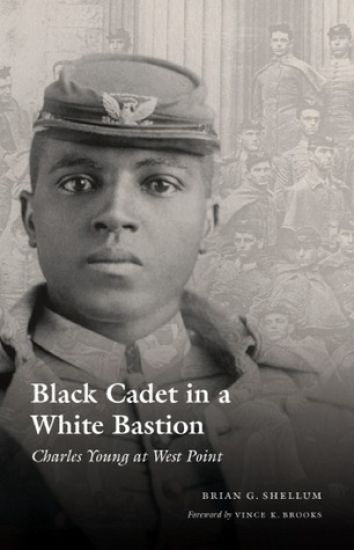
Black Cadet in a White Bastion

Black Cadet in a White Bastion

Brian G. Shellum; Vincent K. Brooks

Bison Books
2006
pokkari
Born in slavery, Charles Young (1864–1922) was the third black graduate of West Point, the first black U.S. military attaché, and the highest-ranking black officer in the Regular Army until his death. Unlike the two black graduates before him, Young went on to a long military career, eventually achieving the rank of colonel. After Young, racial intolerance closed the door to blacks at the academy, and forty-seven years passed before another African American graduated from West Point. Brian G. Shellum's biography of Young's years at West Point chronicles the enormous challenges that Young faced and provides a valuable window into life at West Point in the 1880s. Academic difficulties, hazing, and social ostracism dogged him throughout his academy years. He succeeded through a combination of focused intellect, hard work, and a sense of humor. By graduation, he had made white friends, and his motivation and determination had won him the grudging respect of many of his classmates and professors.Until now, scholars of African American and military history have neglected this important U.S. Army trailblazer. Young's experiences at the U.S. Military Academy, his triumph over adversity, and his commitment to success forged the mold for his future achievements as an Army officer, even as the United States slipped further into the degradation and waste of racial intolerance.
The Peacetime Tempo of Air Mobility Operations
Identify problems and solutions for the Air Mobility Command to meet demand and maintain readiness cost-effectively. The Air Mobility Command (AMC) has faced a host of challenges in recent years that compromise its ability to cost-effectively fulfill the dual goals of meeting peacetime demand and maintaining wartime readiness. This report compares the peacetime tempo of air mobility operations during the Cold War with that of the post-Cold War period in efforts to pinpoint the challenges AMC faces as well as to suggest corrective measures that AMC should take to address these challenges.
Toward Affordable Systems

Toward Affordable Systems

Brian G Chow; Richard Silberglitt; Scott Hiromoto

RAND
2009
pokkari
U.S. Army leadership has called for consideration of lifecycle cost at system design and technology development stages so that adjustments can be made early enough to ensure affordability. This study developed and demonstrated a method and model to incorporate lifecycle cost into the portfolio analysis and management process for Army Science and Technology programs.
Optical Spectroscopy of Lanthanides

Optical Spectroscopy of Lanthanides

Brian G. Wybourne; Lidia Smentek

CRC Press Inc
2007
sidottu
Optical Spectroscopy of Lanthanides: Magnetic and Hyperfine Interactions represents the sixth and final book by the late Brian Wybourne, an accomplished pioneer in the spectroscopy of rare earth ions, and Lidia Smentek, a leading theoretical physicist in the field. The book provides a definitive and up-to-date theoretical description of spectroscopic properties of lanthanides doped in various materials.The book integrates computer-assisted calculations developed since Wybourne’s classic publication on the topic. It contains useful Maple™ routines, discussions, and new aspects of the theory of f-electron systems. Establishing a unified basis for understanding state-of-the-art applications and techniques used in the field, the book reviews fundamentals based on Wybourne’s graduate lectures, which include the theory of nuclei, the theory of angular momentum, Racah algebra, and effective tensor operators. It then describes magnetic and hyperfine interactions and their impact on the energy structure and transition amplitudes of the lanthanide ions. The text culminates with a relativistic description of f?f electric and magnetic dipole transitions, covering sensitized luminescence and a new parametrization scheme of f-spectra. Optical Spectroscopy of Lanthanides enables scientists to construct accurate and reliable theoretical models to elucidate lanthanides and their properties. This text is ideal for exploring a range of lanthanide applications including electronic data storage, lasers, superconductors, medicine, nuclear engineering, and nanomaterials.